Managing business money requires clear records, correct reports, and timely updates. Today, many businesses accept card payments, but tracking each payment, fee, refund, and transaction can become hard without the right system. Credit card processing services give businesses a way to collect payments safely while keeping payment records ready for accounting tasks.
When payment tools connect with accounting software, companies can reduce manual work and keep financial data more organized. QuickBooks integrations allow payment details to move into accounting records, making it easier to review sales, expenses, and cash flow. This connection creates a better process for owners, accountants, and finance teams.
A good payment and accounting setup gives businesses more control over daily money tasks. It reduces errors, saves time, and allows teams to focus on planning instead of fixing records.
What You Will Learn From This Blog
- How credit card processing services work and why businesses use them.
- The common accounting issues caused by disconnected payment systems.
- How payment tools connect with accounting software through QuickBooks integrations.
- The main benefits of linking payment records with accounting systems.
- How businesses can choose the right accounting support for better financial control.
What are Credit Card Processing Services?
Credit card processing services are solutions that allow businesses to accept and process credit card payments from customers securely. They handle the complete payment transaction process, including verifying card details, obtaining approval from the card network and banks, transferring funds, and ensuring the payment reaches the business account.
When a customer makes a card payment, the transaction moves through several parties, including the merchant, payment processor, card network, and issuing bank. The processor securely communicates between these parties to authorize the payment and complete the transaction.
Credit card processing services help businesses by:
- Accepting online and in-store card payments
- Reducing manual payment handling
- Improving payment security through encryption and fraud checks
- Speeding up payment collection
- Providing transaction records for accounting and reconciliation
These services are commonly integrated with accounting platforms such as QuickBooks to automatically record sales, fees, and payment activity, making financial management more efficient.
How Does Credit Card Processing Work with QuickBooks?
Businesses can accept customer payments by connecting QuickBooks with a payment processing service. When a customer makes a payment, the transaction details are securely transferred through a payment gateway and processed by payment processors, card networks, and banking institutions before the funds reach the business account.
Credit card processing services manage transaction authorization, security checks, and communication between merchants, banks, and card networks to ensure smooth payment processing. Businesses usually pay processing fees for each transaction, which may vary depending on the provider, card type, and payment method.
QuickBooks can record payment transactions when connected with compatible payment processing tools or supported integrations. When integrated with a payment service, it supports smoother communication between the business, payment provider, and financial institutions.
Businesses can accept payments through:
- POS (Point of Sale) Systems
POS systems allow businesses to accept card payments while tracking sales and inventory. They help reduce manual errors and improve transaction accuracy. - Payment Gateway Integrations
Payment gateway plugins connect online payments with accounting systems. They securely transmit payment information between customers, businesses, card networks, and payment processors.
Common Accounting Challenges Without Integrated Payment Processing
Manual Data Entry Issues
Without connected systems, staff may need to enter every payment record by hand. This takes time and can lead to mistakes in sales reports or account balances.
Missing Transaction Details
Separate payment systems can make it hard to match deposits with customer payments, especially when businesses use different credit card processing services. Missing details may create confusion during account reviews or tax preparation.
Delayed Financial Updates
When payment records do not reach accounting systems quickly, reports may show old information. Business owners may make decisions using incomplete data.
Difficult Bank Reconciliation
Account teams must compare payment records with bank statements. Without automation, this process takes longer and may increase the chance of errors.
Limited Cash Flow Visibility
Businesses need accurate cash information to plan expenses. Poor payment tracking can make it harder to understand available funds.
QuickBooks Bank Reconciliation Feature
- The QuickBooks Bank Reconciliation feature helps businesses review and verify their financial transactions.
- This feature allows users to match transactions recorded in QuickBooks with their bank account statements.
- Businesses can compare recorded transactions with bank statements to verify deposits, identify differences, and maintain accurate financial records.
- The reconciliation process helps identify missing transactions, duplicate entries, or accounting errors.
- Regular bank reconciliation keeps financial records accurate and improves overall bookkeeping efficiency.
How Credit Card Processing Services Improve Financial Management
Better Payment Tracking
Credit card processing services help businesses maintain organized transaction records by capturing sales activity, payment details, and customer payment information.
When connected with accounting systems, these records can flow into financial reports, making it easier to review income, track fees, and manage cash flow.
Faster Record Updates
Connected payment systems transfer transaction data into accounting records faster, reducing delays and helping finance teams work with updated financial information.
Easier Expense Review
With integrated payment systems, processing fees and payment costs can be tracked more clearly. Businesses can understand the actual cost of accepting card payments and plan budgets more effectively.
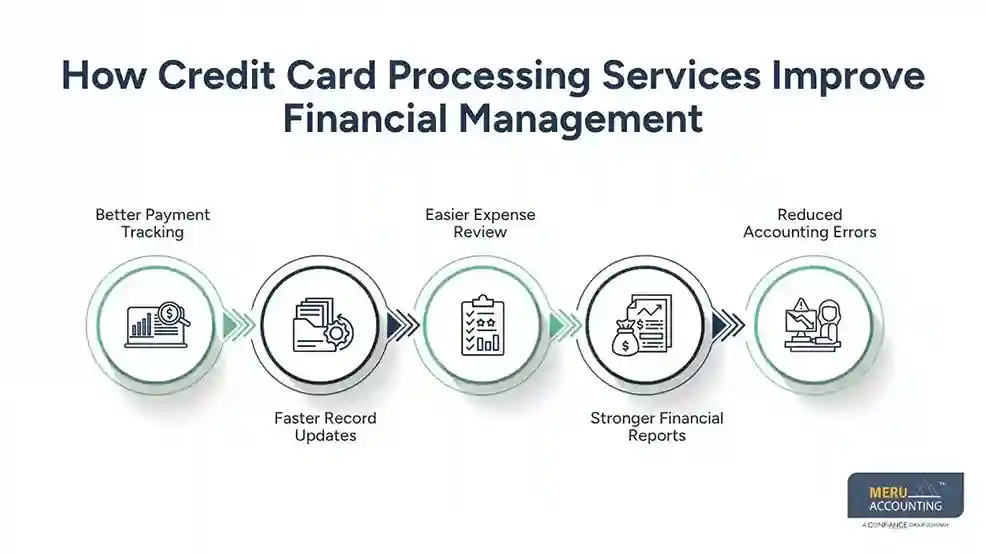
Stronger Financial Reports
Accurate payment information supports better income reports, cash flow summaries, and financial analysis. Owners can review business performance with greater confidence.
Reduced Accounting Errors
Automation lowers the need for repeated manual entries, reducing mistakes caused by missing records or incorrect data entry.
Fewer errors improve bookkeeping accuracy and create more reliable financial information for future planning.
Understanding QuickBooks Integrations and Their Importance For Businesses
Connecting Payment And Accounting Tools
QuickBooks integrations connect accounting software with other business tools. These connections allow payment data to move into accounting records without repeated manual work.
Creating Organized Records
When payment details flow into accounting systems through credit card processing services, sales and customer records stay more complete. This gives businesses a cleaner view of their finances.
Saving Time For Finance Teams
Accountants spend less time copying data between platforms. More time can be used for reviewing reports and planning financial actions.
Supporting Accurate Reporting
QuickBooks integrations allow businesses to maintain updated financial information. Reports become easier to prepare because records are already available in one place.
Improving Daily Accounting Tasks
Connected systems simplify tasks such as matching payments, reviewing income, and checking customer balances. This creates a smoother accounting routine.
How QuickBooks Integrations Connect Payment Data With Accounting Systems
Automatic Data Transfer
QuickBooks integrations transfer payment details from processing tools into accounting software. This keeps records updated and reduces repeated entry work.
Matching Customer Payments
The system can link customer payments received through credit card processing services with invoices or sales records. This makes it easier to identify paid and unpaid amounts.
Tracking Fees and Charges
Payment costs can be recorded along with sales activity. This gives businesses a clearer picture of net income.
Updating Financial Reports
As payment information enters accounting records, reports receive updated figures. Owners can review income and expenses with better accuracy.
Creating a Single Record System
A connected system keeps financial information from accounting platforms and credit card processing services in one place. This reduces confusion caused by using separate tools.
Key Benefits Of Combining Payment Processing With QuickBooks
Improved Financial Accuracy
Using credit card processing services with accounting software creates more accurate financial records. Payment details, fees, and deposits can be matched with less manual effort, which lowers the chance of reporting errors.
Better Cash Flow Tracking
Businesses need clear information about money coming in and going out. Connected systems give owners a better view of sales payments and available funds for daily needs.
Easier Tax Preparation
Accurate records make tax work simpler. Accountants can review organized payment data, check business income, and prepare reports with fewer missing details.
Stronger Customer Records
When payment information connects with customer accounts, businesses can track invoices and payments more easily. This creates better records for customer service and financial reviews.
More Time For Business Growth
Automated accounting tasks reduce the hours spent on repeated data work. Business owners and finance teams can focus more on planning and improving operations.
Better Business Decision-Making
Reliable reports allow owners to understand sales trends and spending patterns. This supports better choices about budgets, pricing, and future plans.
Choosing The Right Accounting Support For Better Results
Understanding Business Needs
Every business has different payment and accounting needs. The right solution depends on transaction volume, business type, and reporting requirements.
Selecting Suitable Tools
Companies should choose payment systems and accounting software that work well together. The right setup reduces problems and keeps records organized.
Reviewing Data Quality
Regular reviews help find missing information or unusual entries. Businesses should check reports often to maintain reliable records.
Getting Professional Guidance
Accounting experts can guide businesses in setting up accounting systems and integrating credit card processing services correctly. Professional support reduces setup mistakes and creates better financial processes.
Planning For Long-Term Use
A good accounting setup should support future business needs. Businesses should choose systems that can grow as operations expand.
Why Choose Meru Accounting?
Experienced Accounting Support
Meru Accounting provides accounting and bookkeeping services for businesses across different industries. Our team works with businesses to maintain accurate records, manage transactions, and keep financial data organized.
Expertise With Accounting Software
Our professionals understand accounting platforms and help businesses set up effective workflows. We assist with QuickBooks integrations and other accounting solutions to connect payment records with financial systems.
Accurate Payment Record Management
Managing payment data requires attention to detail. We help businesses organize sales records, track transactions, and maintain clear books while working with credit card processing services. Our team ensures payment details, fees, and deposits are properly recorded.
Customized Accounting Solutions
Every business has different needs. Meru Accounting creates accounting processes based on business size, transaction volume, and reporting needs to support better financial management.
Focus on Business Efficiency
We help businesses reduce manual accounting work by creating structured processes. This allows owners to spend less time on records and more time managing their business.
Businesses may choose payment providers such as Worldpay, Platinum Bancard, or Stripe based on their transaction needs, pricing structure, and integration requirements. These payment providers offer secure payment processing, affordable pricing options, and faster transaction solutions that work well with modern accounting systems.
Our Expert Perspective
A connected payment and accounting system helps businesses maintain accurate records, reduce manual work, and improve financial visibility. Our experts believe that combining credit card processing services with QuickBooks integrations creates a smoother workflow for better reporting, reconciliation, and business decisions.
Key Takeaways
- Credit card payments create important financial records that businesses must track correctly.
- Credit card processing services make payment collection and transaction tracking easier.
- QuickBooks integrations connect payment data with accounting systems for better record management.
- Connected tools reduce manual entries and lower the risk of accounting mistakes.
- Businesses can review sales, fees, and cash flow with more clarity.
FAQs
Credit card processing services allow businesses to accept card payments from customers. They handle payment approval, transaction records, and fund transfers.
QuickBooks integrations connect payment tools with accounting software. They allow financial data to move into records faster and reduce manual entry work.
Integrating payment processing with QuickBooks keeps financial records organized, reduces data entry work, improves transaction tracking, and makes reporting easier for businesses.
Yes, QuickBooks can track credit card payments when connected with suitable payment tools. The integration allows payment details to flow into accounting records for easier management.
Connecting payment processing with accounting software gives businesses better control over income records, payment tracking, bank reconciliation, and financial reporting.
optional anymore
on running the business