
Ecommerce business accounting plays a crucial role in helping online businesses track their financial performance, manage expenses, and stay compliant with tax regulations. As ecommerce continues to grow, proper accounting and accurate records are no longer optional but necessary for sustainable growth.
Running an online store involves multiple transactions, payment gateways, returns, and inventory movements, making financial tracking more complex than traditional businesses.
This is where bookkeeping for ecommerce business becomes essential. Without proper bookkeeping, businesses may struggle with cash flow issues, inaccurate reporting, and missed opportunities for growth.
This blog will explain how ecommerce accounting works, why it matters, and how businesses can use it to improve their financial health.
What You Will Learn From This Blog
- Importance of ecommerce business accounting for online sellers
- Key elements of bookkeeping for ecommerce business
- Differences between ecommerce and traditional accounting
- Ways to manage cash flow and inventory effectively
- Common challenges and how to solve them
- Best practices for maintaining accurate financial records
What Is Ecommerce Business Accounting
Ecommerce business accounting involves recording and managing all financial transactions related to online sales. This includes tracking payments, refunds, shipping charges, and platform fees to ensure accurate financial records.
Since online businesses often operate across multiple channels such as websites, marketplaces, and social media platforms, it is important to capture all sales data correctly. Proper accounting also includes reconciling payments received through gateways like PayPal or Stripe, ensuring that recorded transactions match actual bank deposits.
In addition to sales tracking, ecommerce accounting focuses on managing expenses such as advertising, packaging, and delivery costs to understand overall profitability.
These financial records are then used to generate reports like profit and loss statements, which help business owners evaluate performance and plan future growth. Accurate reporting gives a clear picture of the business’s financial health and supports better decision-making.
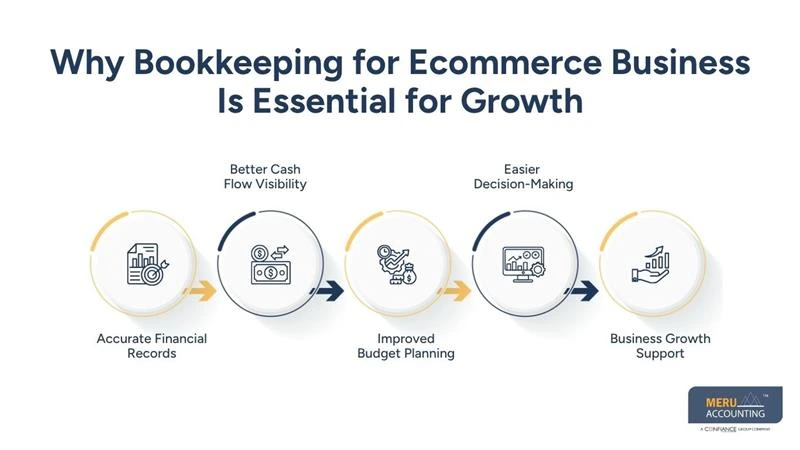
Why Bookkeeping for Ecommerce Business Is Essential for Growth
Accurate Financial Records
Bookkeeping for ecommerce business ensures that every transaction is recorded properly, reducing errors and confusion. It also creates a reliable financial history that can be used for audits and future planning.
Better Cash Flow Visibility
Clear records in ecommerce business accounting help businesses understand how much money is coming in and going out. This visibility helps avoid cash shortages and manage daily operations smoothly.
Improved Budget Planning
With accurate bookkeeping, businesses can allocate funds effectively for marketing, inventory, and operations. It also helps set realistic budgets based on actual financial data.
Easier Decision-Making
Reliable data helps business owners make informed financial decisions. This reduces guesswork and supports smarter business strategies.
Business Growth Support
Consistent bookkeeping within ecommerce business accounting helps identify growth opportunities and avoid financial risks. It also ensures the business is prepared for expansion and scaling.
How Ecommerce Business Accounting Differs from Traditional Accounting
High Volume Transactions
Ecommerce businesses handle many small transactions daily, unlike traditional businesses. This requires systems that can process and record large volumes of data efficiently.
Multiple Sales Channels
Sales come from various platforms, making tracking more complex. Each channel must be monitored separately to ensure accurate reporting.
Frequent Returns and Refunds
Refunds must be recorded properly to maintain accurate financial data. Regular tracking helps avoid errors in revenue and profit calculations.
Inventory Movement
Products are constantly moving, requiring detailed inventory tracking. Accurate records help maintain stock levels and prevent discrepancies.
Payment Delays
In ecommerce business accounting, payment gateways often delay settlements, which must be accounted for correctly. Proper tracking ensures clarity between recorded sales and actual cash received.
What Are the Key Components of Bookkeeping for Ecommerce Business?
Sales Recording
Tracking daily sales across all platforms is essential for accurate reporting. It ensures all revenue is captured and properly categorized.
Expense Tracking
Recording expenses helps control costs and improve profit margins. It also provides clarity on where money is being spent.
Bank Reconciliation
Matching bank statements with records ensures accuracy in accounts. Regular checks help identify and correct discrepancies quickly.
Inventory Tracking
Monitoring stock levels prevents overstocking or stock shortages. It also supports better planning and order management.
Tax Calculation
Proper bookkeeping helps calculate taxes correctly and avoid penalties. It ensures timely filing and compliance with tax regulations.
How to Manage Cash Flow in Ecommerce Business Accounting Effectively
Monitor Daily Cash Flow
Regular tracking helps businesses stay aware of their financial position. It ensures timely action if cash flow issues arise.
Control Expenses
Limiting unnecessary expenses improves cash flow management. It helps maintain a healthy balance between income and spending.
Plan for Seasonal Changes
Ecommerce businesses often face seasonal demand, so planning is important. Preparing in advance helps manage fluctuations in revenue and expenses.
Maintain Emergency Funds
Keeping reserves helps handle unexpected expenses. It provides financial stability during uncertain periods.
Analyze Financial Reports
Reviewing reports in ecommerce business accounting helps identify trends and improve cash flow planning. It supports better forecasting and financial control.
Why Inventory Management Matters in Bookkeeping for Ecommerce Business
Prevent Overstocking
Excess inventory ties up cash and increases storage costs. It also reduces liquidity and limits investment in other areas.
Avoid Stockouts
Proper tracking ensures products are always available for customers. It helps maintain customer satisfaction and steady sales.
Improve Order Fulfillment
Accurate inventory data helps process orders quickly. It reduces delays and improves overall customer experience.
Reduce Losses
Tracking inventory reduces risks of damage, theft, or mismanagement. It also improves accountability and stock control.
Support Financial Accuracy
Inventory values directly affect financial statements and profitability. Accurate records ensure correct valuation and reporting.
How Ecommerce Business Accounting Helps in Tax Compliance and Reporting
Accurate Tax Calculations
Ecommerce business accounting ensures taxes are calculated correctly based on sales and expenses. It reduces errors and ensures proper tax liability management.
GST and Sales Tax Management
Online businesses must manage different tax rules depending on regions. Proper systems help apply the correct tax rates consistently.
Proper Documentation
Maintaining records helps during audits and tax filing. It ensures all required documents are readily available.
Avoid Penalties
Accurate accounting reduces the risk of errors and fines. It ensures compliance with tax laws and deadlines.
Simplify Filing Process
Well-maintained books make tax filing easier and faster. It saves time and reduces stress during filing periods.
What are the Common Challenges in Ecommerce bookkeeping services?
Managing Multiple Platforms
Handling data from different sales channels can be complex. It requires proper systems to consolidate and manage information.
Tracking Returns and Refunds
Frequent returns make financial tracking more difficult. It increases the chances of errors in revenue records.
Handling Payment Delays
Delayed settlements from gateways can create confusion. It affects cash flow tracking and financial clarity.
Inventory Errors
Incorrect stock records can lead to financial inaccuracies. It impacts both operations and reporting.
Lack of Automation
Manual bookkeeping increases the risk of errors and inefficiencies. Automation helps improve accuracy and save time.
How Ecommerce Business Accounting Improves Profitability and Decision-Making
Identifying Profitable Products
Ecommerce business accounting helps track which products generate the most profit. It allows businesses to focus on high-performing items.
Cost Analysis
Understanding costs in detail helps identify unnecessary expenses and areas where spending can be reduced effectively. It improves overall profit margins by ensuring better cost control and more efficient use of business resources.
Better Pricing Strategies
Accurate data allows businesses to set competitive prices. It ensures pricing covers costs while remaining attractive to customers.
Financial Planning
Planning based on real data improves long-term success. It helps set clear financial goals and strategies.
Growth Opportunities
Clear insights help businesses expand into new markets or products. It supports informed and confident decision-making.
What Best Practices Should You Follow for Bookkeeping for Ecommerce Business?
Use Accounting Software
Automated tools simplify bookkeeping for ecommerce business and reduce errors. They also save time by handling repetitive tasks.
Maintain Regular Records
Updating records daily ensures accuracy and consistency. It prevents backlog and reduces the risk of missing data.
Separate Business and Personal Finances
Keeping accounts separate avoids confusion and improves clarity. It also simplifies tax filing and financial tracking.
Reconcile Accounts Frequently
Regular reconciliation helps identify and fix discrepancies quickly. It ensures records match actual financial data.
Work with Professionals
Hiring experts ensures compliance and accurate financial management. It provides peace of mind and allows focus on business growth.
How Meru Accounting Can Help Your Ecommerce Business
Expert Ecommerce Accounting Services
Meru Accounting provides specialized ecommerce business accounting services tailored to online sellers. Our solutions are designed to meet the unique financial needs of ecommerce businesses.
Accurate Bookkeeping Solutions
Our team ensures reliable bookkeeping for ecommerce business, helping you maintain clear and error-free records. We focus on accuracy and consistency to support better financial management.
Integration with Ecommerce Platforms
We work with platforms like Shopify, Amazon, and WooCommerce to streamline accounting processes. This helps in smooth data flow and reduces manual work.
Tax Compliance Support
Meru Accounting helps manage GST, sales tax, and other compliance requirements efficiently. We ensure timely filings and proper adherence to tax regulations.
Cost-Effective Services
Our services are designed to provide high-quality accounting support at affordable rates. This allows businesses to access expert services without increasing operational costs.
Take the next step toward better financial control with Meru Accounting’s expert ecommerce business accounting services. Contact Meru Accounting today to simplify your e-commerce bookkeeping services and support your business growth.
Key Takeaways
- Ecommerce business accounting helps track financial performance and ensure accuracy
- Bookkeeping for ecommerce business is essential for managing transactions and expenses
- Proper accounting improves cash flow and business growth
- Inventory and tax management are key parts of ecommerce accounting
- Following best practices helps maintain accurate and reliable financial records
FAQs
Ecommerce business accounting is the process of managing and recording financial transactions for online businesses to ensure accurate records and better financial control.
Ecommerce bookkeeping services helps track income and expenses clearly, which supports better decisions and steady business growth.
Bookkeeping for ecommerce business should be updated daily or weekly to maintain accuracy and avoid errors in financial data.
Small ecommerce businesses can manage accounting initially, but professional support improves accuracy and saves time
Popular tools for ecommerce business accounting include QuickBooks, Xero, and Zoho Books for efficient financial management.