The world changed fast when COVID-19 spread. Lockdowns, fear, and safety rules made businesses shut down. Companies in every country felt the shock. Some closed for good. Others fought hard to survive. These changes brought many money problems and new ways of working. These changes brought many money problems and new ways of working, showing how deeply the economic implications of coronavirus touched every part of the business world.
This blog shares how the coronavirus affected business life. From broken supply chains to lost jobs, every area took a hit. We’ll look at what happened, how it shaped different industries, and what steps can help rebuild.
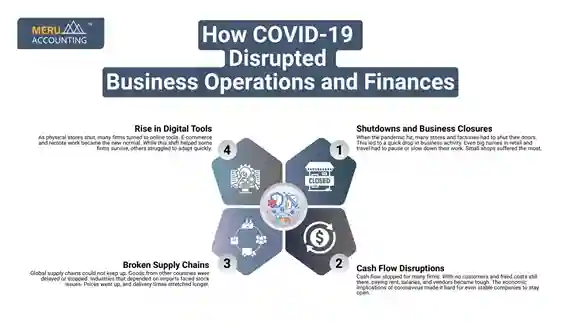
How COVID-19 Disrupted Business Operations and Finances
COVID-19 caused major problems for how firms work and manage their money. Let’s break down how the economic implications of coronavirus affected day-to-day business operations.
1. Shutdowns and Business Closures
When the pandemic hit, many stores and factories had to shut their doors. This led to a quick drop in business activity. Even big names in retail and travel had to pause or slow down their work. Small shops suffered the most.
2. Cash Flow Disruptions
Cash flow stopped for many firms. With no customers and fixed costs still there, paying rent, salaries, and vendors became tough. The economic implications of coronavirus made it hard for even stable companies to stay open.
3. Broken Supply Chains
Global supply chains could not keep up. Goods from other countries were delayed or stopped. Industries that depended on imports faced stock issues. Prices went up, and delivery times stretched longer.
4. Rise in Digital Tools
As physical stores shut, many firms turned to online tools. E-commerce and remote work became the new normal. While this shift helped some firms survive, others struggled to adapt quickly.
Impact on Employment and Workforce Dynamics
1. Layoffs and Wage Cuts
One of the biggest economic implications of the coronavirus was job loss. Many people lost their jobs or got pay cuts. Firms had to reduce staff to survive the crisis.
2. Rise of Remote Work
To stay open, many companies adopted work-from-home models. This helped save on office costs and kept people safe. But it also brought tech issues and low team bonding.
3. Changes in Job Roles
The job market shifted. Some jobs were no longer needed, while new roles in tech, delivery, and healthcare grew. People had to learn new skills to stay employed.
4. Staff Health and Safety
Keeping staff safe became a big task. Firms had to follow new rules for hygiene, distancing, and flexible work hours. These added to the cost and planning.
Industry-Specific Effects: Travel, Retail, Manufacturing, and Healthcare
Each industry faced the crisis in its way. The shock changed how they worked and made money. These changes show how deep the economic implications of coronavirus were across all sectors.
1. Travel and Tourism
The travel sector faced some of the biggest challenges. Flights stopped, hotels closed, and tour firms saw zero bookings. The impact of coronavirus on travel was huge and long-lasting.
2. Retail and E-commerce
Retail shops closed during lockdowns. Sales dropped, and many shops did not reopen. But e-commerce grew fast. Those who shifted to online sales survived better.
3. Manufacturing Sector
Factories had to stop work due to lockdowns. Later, staff shortages and supply issues caused delays. Some moved to local sources to reduce risk. But profit margins fell.
4. Healthcare Services
The demand for health workers and equipment went up. Hospitals were full, and clinics had to adopt digital methods like video calls. Though the sector grew, stress and burnout rose too.
Strategies Adopted by Businesses to Survive the Crisis
Firms had to act fast to stay open during the COVID-19 crisis. These plans helped many stay afloat while facing the economic implications of coronavirus.
1. Quick Shift to Online Sales
With stores shut, many firms moved online. E-commerce became the main way to reach buyers. This shift cut costs and kept sales going.
2. Remote Work and Digital Tools
Firms let staff work from home. They used cloud tools for chats, tasks, and files. This move reduced office costs and kept work running.
3. Cost Control and Budget Review
Many cut extra spending and reviewed all costs. This helped save cash and manage bills better. Cutting waste became key to survival.
4. Focus on Core Services
Firms focused on their best-selling items or top services. Dropping slow products helped keep things lean and clear.
5. Stronger Client Ties
Firms talked more with their clients. They used emails, calls, and offers to build trust. This helped keep customers loyal during hard times.
Steps Toward Recovery: Government Relief and Business Adaptation
1. Government Aid Programs
Many countries gave aid to help firms stay afloat. This included tax cuts, loan help, and salary support. While useful, these programs could not help everyone.
2. Business Cost Cutting
To survive, firms had to cut costs. This included laying off staff, moving to smaller offices, and cutting travel. The economic implications of coronavirus forced firms to rethink spending.
3. Shift to Digital Business Models
Online tools became key to survival. From marketing meetings, many things moved online. Cloud tools and automation helped save time and money.
4. Focus on Agility and Planning
Flexible firms did better. Having a plan for risks, better tech, and clear roles helped in recovery. Many started building backup systems and extra stock to face future issues.
Post-Pandemic Recovery Trends and Economic Outlook
As the world heals, new trends shape business growth. These long-term shifts come from the deep economic implications of coronavirus.
1. Tech Investment and Automation
Firms now invest more in tech. Tools like AI, cloud, and automation reduce costs and errors. This trend boosts speed and helps small teams do more.
2. Flexible Work Models
Many firms keep remote work options. Hybrid models now help balance work and life. This setup also saves office costs.
3. Boost in Local Sourcing
Firms now buy from local sellers to cut delay risks. This move lowers costs and builds trust with local partners.
4. Change in Buying Habits
Buyers now shop more online. They want fast delivery, good deals, and safe payment. Firms must adapt to meet these new needs.
5. Outlook for Global Growth
The global economy is growing again, but slowly. Some sectors grow fast, while others still heal. Smart plans and digital tools will shape the future.
At Meru Accounting, we help firms with smart planning. We look at your cash flow, costs, and income to give the best advice. Our team knows how to deal with the coronavirus crisis. Rules changed during COVID. We keep your taxes and reports in line with the latest laws. Our team checks your books and files on time.
FAQs
- What are the key economic implications of coronavirus for businesses?
Firms saw less income, job cuts, high costs, and supply issues. Some closed down. Others had to shift to online work to stay open. - How did the pandemic affect small businesses?
Small firms were hit the hardest. They had less cash and fewer clients. Many could not get help in time and had to shut down. - Which industries suffered the most from COVID-19?
Travel, retail, and manufacturing took a big hit. Healthcare is great, but it also faces pressure. Tech and delivery services saw growth. - Can businesses recover fully after COVID-19?
Yes, with good plans, cost control, and digital tools, firms can bounce back. Government help and smart advice also help a lot.