

Financial accounting for lawyers is a critical skill that ensures law firms maintain accurate records, stay compliant, and protect their clients’ funds. Many lawyers focus heavily on their cases but often underestimate the importance of precise financial management.
Mistakes in trust accounts or general bookkeeping can lead to serious legal and ethical issues. This blog provides practical tips to help lawyers manage their finances efficiently and prevent costly errors.
Financial accounting for lawyers also helps law firms stay prepared for audits and regulatory reviews. When trust accounts and financial records are handled correctly, lawyers reduce the risk of penalties and client disputes. A strong accounting system supports long-term stability and professional credibility for any law practice.
What You Will Learn From This Blog
- The importance of financial accounting for lawyers in managing trust accounts and overall law firm finances.
- How proper financial accounting for lawyers supports accurate reporting and helps build client trust.
- Common trust account mistakes lawyers make and practical ways to avoid them.
- Essential law firm accounting and financial management practices that support compliance and financial accuracy.
- The role of virtual legal bookkeepers in improving financial accounting for lawyers and reducing errors.
- Key financial reports that should be tracked to keep law firm finances organized and under control.
Understanding Financial Accounting for Lawyers
Financial accounting for lawyers involves recording, reporting, and managing all financial transactions within a law firm, including client funds, operating expenses, and trust accounts. It focuses on keeping financial records organized, transparent, and compliant with legal requirements.
Proper financial bookkeeping for lawyers ensures that every transaction is documented accurately and can be reviewed when needed. A clear understanding of core accounting principles, such as debits, credits, reconciliation, and financial reporting, is essential for lawyers.
Financial accounting for lawyers also requires strict separation of personal, business, and client funds, as mixing these accounts can lead to serious legal and ethical violations.
Accurate bookkeeping supports tax filing, internal reviews, and audits, making law firm accounting and financial management more reliable. Compliance plays a major role in financial bookkeeping for lawyers, as law firms must follow state and federal rules for handling trust accounts.
Even small errors can result in penalties or disciplinary action. Maintaining accuracy in every entry reduces financial risk, improves accountability, and helps law firms operate with confidence and integrity.
Importance of Financial Accounting for Lawyers
Maintaining Client Trust
Clients trust lawyers with sensitive matters and their money. Proper law firm accounting and financial management ensure that trust accounts are accurate.
Avoiding Legal Penalties
Errors in trust accounts can lead to fines, sanctions, or suspension. Robust law firm accounting and financial management help prevent such mistakes and ensure regulatory compliance.
Improving Decision Making
Accurate financial records provide insight into law firm performance, helping lawyers make better decisions.
Streamlining Operations
Financial accounting for lawyers helps organize payments, invoices, and payroll, creating smoother operations.
Reducing Stress
With accurate accounting, lawyers can focus on client matters rather than worrying about financial errors.
Enhancing Reputation
A law firm with strong law firm accounting and financial management builds a professional reputation and earns client confidence through transparency and accuracy.
Common Trust Account Mistakes Lawyers Make
Commingling Funds
Mixing client funds with personal or business funds is a frequent mistake. This violates trust account rules.
Late Deposits
Delays in depositing client funds into trust accounts can create compliance issues and errors in financial accounting for lawyers.
Incorrect Record Keeping
Failing to record transactions promptly or accurately can result in errors and audits.
Overdrawing Trust Accounts
Withdrawing more than the client’s balance can lead to serious legal consequences.
Lack of Reconciliation
Not regularly reconciling accounts increases the chance of unnoticed mistakes.
Misclassifying Expenses
Classifying personal or business expenses under client accounts can create problems during audits.
Key Tips to Prevent Trust Account Errors
Separate Accounts Clearly
Maintain separate bank accounts for clients, operations, and personal expenses. This separation prevents commingling and supports compliance with trust account rules.
Reconcile Accounts Regularly
Weekly or monthly reconciliations catch mistakes early and ensure balances are correct. Regular reviews also help identify missing or duplicate entries.
Track Every Transaction
Record deposits, withdrawals, and transfers immediately to maintain accurate books. Timely entries are essential in financial accounting for lawyers to reduce confusion during audits and reviews.
Use Accounting Software
Law firm accounting software simplifies tracking, reporting, and compliance. It also reduces manual errors and improves record consistency.
Train Staff Properly
Ensure all staff handling finances understand trust account rules and accounting practices. Proper training reduces the risk of costly human errors.
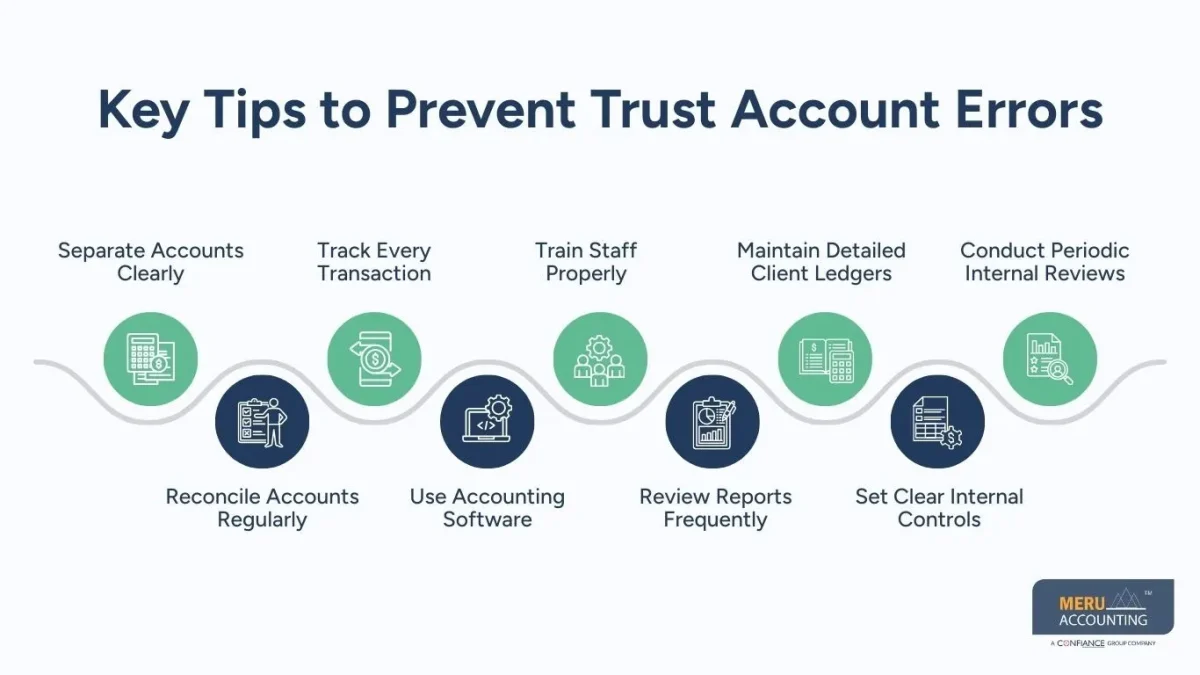
Review Reports Frequently
Regularly review financial statements to catch discrepancies early. Ongoing monitoring helps maintain control over firm finances.
Maintain Detailed Client Ledgers
Keep individual ledgers for each client’s trust funds. Detailed records make it easier to track balances and resolve issues quickly.
Set Clear Internal Controls
Establish approval processes for withdrawals and transfers. Internal controls help prevent unauthorized or incorrect transactions.
Conduct Periodic Internal Reviews
Schedule routine internal checks as part of your law firm accounting and financial management practices. Early reviews help correct issues before they become serious problems.
Essential Law Firm Accounting and Financial Management Practices
Maintain Accurate Ledgers
Keep detailed records of all client transactions to support audits and compliance checks.
Implement Expense Controls
Set limits and approval processes for firm spending to avoid misuse of funds.
Monitor Cash Flow
Track income and expenses carefully to prevent shortfalls and maintain financial health.
Conduct Internal Audits
Periodic internal reviews help identify mistakes before external audits.
Manage Accounts Payable and Receivable
Track payments due to the firm and amounts owed to ensure timely collections and payments.
Use Professional Bookkeeping Services
Outsourcing to experts improves accuracy and reduces the risk of mistakes, ensuring reliable financial accounting for lawyers.
The Role Of CPAs In Preventing Trust Account Violations
Maintain Accurate Ledgers
Keep detailed records of all client transactions to support audits and compliance checks.
Implement Expense Controls
Set limits and approval processes for firm spending to avoid misuse of funds.
Monitor Cash Flow
Track income and expenses carefully to prevent shortfalls and maintain financial health.
Conduct Internal Audits
Periodic internal reviews help identify mistakes before external audits.
Manage Accounts Payable and Receivable
Track payments due to the firm and amounts owed to ensure timely collections and payments.
Use Professional Bookkeeping Services
Outsourcing to experts improves accuracy and reduces the risk of mistakes, ensuring reliable financial accounting for lawyers.
How Accurate Law Firm Accounting and Financial Management Protects Clients
Safeguards Client Funds
Accurate records prevent misuse of client money and ensure ethical compliance. Proper tracking ensures each client’s funds are always available when needed.
Prevents Errors in Billing
Proper financial accounting ensures clients are billed correctly for services rendered. This reduces disputes and improves clarity in invoices.
Enables Transparency
Clients can trust the law firm because all transactions are documented and verifiable. Transparent records make it easier to explain charges and balances.
Reduces Legal Risks
Avoiding trust account mistakes minimizes the risk of disciplinary action or lawsuits. Strong controls also support compliance with regulatory requirements.
Improves Client Satisfaction
Clients appreciate clear and accurate financial handling, boosting loyalty. Confidence in financial practices strengthens long-term client relationships.
Builds Firm Credibility
Well-managed finances reflect professionalism and reliability, attracting more clients. A strong financial reputation supports steady growth for the law firm.
How Virtual Legal Bookkeepers Enhance Financial Accounting for Lawyers
Remote Expertise
Virtual legal bookkeepers provide skilled accounting support without the need for onsite staff.
Real-Time Reporting
They maintain up-to-date records, enabling quick financial insights and decision-making.
Reduce Errors
Specialized virtual bookkeepers strengthen law firm accounting and financial management, helping catch and prevent trust account mistakes.
Save Time
Lawyers can focus on legal work while bookkeepers handle finances accurately.
Customizable Services
Bookkeepers tailor services to your law firm’s size, client base, and accounting needs.
Integration With Software
Virtual legal bookkeepers use law firm accounting software for seamless management of accounts.
Essential Reports Every Lawyer Should Track for Financial Accuracy
Trust Account Summary
Shows all client balances and transactions, helping prevent overdrafts and errors.
Accounts Receivable Aging
Tracks unpaid invoices and ensures timely collections.
Accounts Payable Report
Keeps track of bills the firm must pay, avoiding late fees and penalties.
Profit and Loss Statement
Shows revenue, expenses, and profitability, guiding financial decisions.
Cash Flow Statement
Monitors cash entering and leaving the firm to maintain operational liquidity.
Reconciliation Reports
Compare bank statements with internal records to identify discrepancies early.
Meru Accounting Services for Law Firms
Meru Accounting supports law firms with reliable and compliant financial solutions designed specifically for legal practices. Our services focus on accuracy, transparency, and consistent financial control to help lawyers manage trust accounts and firm finances with confidence.
Expertise in Law Firm Accounting
Meru Accounting provides specialized financial accounting for lawyers, ensuring trust accounts are error-free.
Tailored Financial Solutions
We customize accounting and financial management practices to your law firm’s needs.
Regular Compliance Checks
Our team helps lawyers maintain compliance with state and federal regulations.
Virtual Legal Bookkeeping
We offer virtual legal bookkeepers who handle all your financial reporting and accounting remotely.
Transparent Reporting
Meru Accounting provides detailed reports that help lawyers understand and manage finances confidently.
Support Across Platforms
We work with multiple law firm accounting software for smooth and accurate bookkeeping.
Key Takeaways
- Financial accounting for lawyers is essential to prevent trust account mistakes and protect clients.
- Common mistakes include commingling funds, late deposits, and incorrect record-keeping.
- Regular reconciliation, accurate tracking, and proper software usage improve law firm accounting.
- Virtual legal bookkeepers enhance accuracy, save time, and provide expert financial management.
- Meru Accounting offers specialized services to ensure law firms maintain compliance and financial clarity.
FAQs
Financial accounting for lawyers records income, expenses, and client funds accurately. Proper accounting prevents trust account mistakes and ensures full compliance.
Lawyers often mix client funds with their own business funds. Late deposits and missing reconciliations lead to serious legal problems.
Accurate tracking of client funds avoids errors and financial violations. Regular reconciliations identify mistakes quickly before they cause serious issues.
Separating client money from firm funds ensures proper financial control. Detailed records guarantee ethical handling and compliance with all regulations.
Virtual bookkeepers maintain trust accounts accurately and track all transactions. Hiring experts saves lawyers time while preventing costly financial mistakes.


