
Direct-to-consumer (D2C) brands have changed how companies sell products and connect with buyers. Instead of relying on large retail stores, many startups now sell through their own websites, social media pages, and online channels. This setup gives brands more control over the customer experience and growth plans. It also creates new business challenges. Many D2C startups grow fast during the early stages. They spend heavily on marketing, inventory, software tools, hiring, and customer growth. While sales may rise, cash does not always move at the same speed. A company can report strong sales and still face many problems. This is where financial management for startups becomes important.
Good planning helps founders understand where money comes from, where it goes, and how long the business can keep running with current funds. Strong startup financial management practices help D2C businesses maintain healthy cash flow, manage spending, and reduce financial stress as they grow. In this blog, we will show you how you can control cash flow and burn rate of your D2C brand.
What You Will Learn From This Blog
In this blog, you will learn:
- Why D2C startups face unique business challenges
- What cash flow means for growing businesses
- Common cash flow issues that affect D2C brands
- Signs that show a startup is burning cash too fast
- Practical ways to improve cash flow control
- How financial management for startups supports long-term growth
Understanding the Financial Challenges D2C Startups Face
D2C businesses often place a strong focus on growth. Founders want to increase website traffic, reach more buyers, and expand product lines. Growth creates new chances, but it also brings financial pressure.
Unlike many traditional businesses, D2C companies often spend large amounts before seeing long-term returns. Marketing campaigns need upfront budgets. Inventory purchases happen before products are sold. Shipping and order costs continue to rise.
Several common issues affect D2C startups:
- High customer costs
- Inventory control issues
- Seasonal sales changes
- Rising ad costs
- Product return costs
- Limited working funds
Without strong financial management for startups, these issues can create serious cash shortages.
Early-stage companies may also focus more on sales growth than financial systems. However, sales alone do not always mean strong business health. This is why financial management for startups should become part of a company’s growth strategy from the beginning.
What Cash Flow Means for a Growing D2C Business
Cash flow refers to the movement of money into and out of a business. Positive cash flow happens when incoming money is greater than outgoing costs. Negative cash flow happens when costs are higher than cash coming in.
For D2C startups, cash flow matters because many business tasks require spending before money comes back.
Examples include:
- Buying inventory
- Paying suppliers
- Running ad campaigns
- Hiring staff
- Paying shipping costs
- Managing software plans
A startup may have strong monthly sales while still dealing with cash flow issues, which makes financial management for startups even more important.
For example, a company may spend $50,000 on inventory and marketing but receive sales income over several months. During that time, available cash can become tight.
Good startup financial management focuses on tracking these timing gaps before they become major issues.
Common Cash Flow Problems That Affect D2C Startups
Cash flow issues often build over time. Small financial problems can turn into larger problems if they are not fixed early.
Here are common cash flow problems many D2C businesses face.
Poor Inventory Planning
Inventory is one of the biggest costs for many D2C companies.
Buying too much inventory locks up money that could support other parts of the business. Buying too little inventory can create stock shortages and missed sales chances.
Finding the right balance is important.
High Marketing Spending
Digital marketing is often a key growth tool for D2C brands.
Many startups spend heavily on:
- Paid search ads
- Social media ads
- Influencer deals
- Email campaigns
The problem starts when spending grows faster than sales results.
Large ad budgets without clear tracking can reduce available cash very fast. Strong financial management for startups helps founders track spending and measure marketing returns more effectively.
Weak Forecasting
Some startups make choices based on short-term sales numbers instead of future planning.
Without forecasts, businesses may fail to prepare for:
- Slow sales periods
- Seasonal changes
- Large future costs
- Supply delays
Good financial management for startups includes regular forecasting to avoid surprises.
Fast Expansion
Growth can create excitement, but fast growth can also create financial pressure.
Adding products, hiring staff, opening new sales channels, or entering new markets can increase costs faster than profits.
Growth without planning often creates cash pressure.
Key Signs That a D2C Brand Is Burning Cash Too Quickly
Burn rate refers to how fast a startup uses available cash. Understanding burn rate helps founders know how long their current funds may last. Several warning signs may show that a D2C company is spending too much. Here are some of them:
Cash Reserves Keep Falling
A business should keep enough cash to support daily work and cover surprise costs. If reserves keep dropping each month without change, spending may be too high.
Sales Growth Does Not Raise Profit
Higher sales numbers may look good, but profit still matters. If sales increase while losses continue to grow, the business may have spending issues.
Heavy Dependence on Outside Funding
Many startups rely on investors during early growth. However, needing more funding again and again can point to weak financial control.
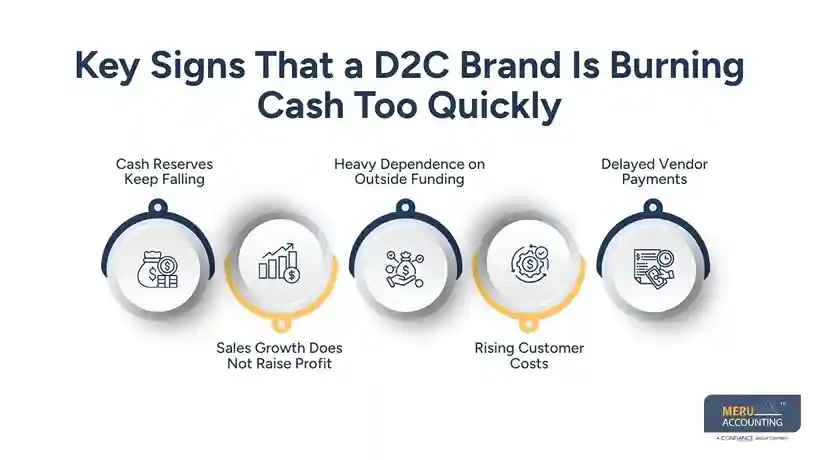
Rising Customer Costs
If getting new buyers becomes more costly while profit margins stay flat, cash pressure can rise. Marketing results matter just as much as growth.
Delayed Vendor Payments
Businesses sometimes delay supplier payments to keep cash available. Frequent payment delays may point to financial stress.
Strong startup financial management systems help businesses spot these warning signs before they become larger problems.
Practical Ways D2C Brands Can Improve Cash Flow Control
Improving cash flow does not always need major changes. Small updates often create strong results.
Build Accurate Cash Flow Forecasts
Forecasting helps founders understand future money needs.
A good forecast should estimate:
- Expected sales
- Operating costs
- Inventory purchases
- Payroll costs
- Marketing budgets
- Seasonal changes
Review forecasts often instead of treating them as one-time reports. Regular forecasting is an important part of financial management for startups because it helps reduce financial surprises.
Monitor Key Financial Metrics
Numbers provide a clear view of business performance.
Important metrics include:
- Gross profit margin
- Customer cost
- Average order value
- Cash runway
- Burn rate
- Operating costs
Tracking these numbers supports stronger financial management for startups and helps owners make better choices.
Improve Inventory Management
Inventory planning has a direct effect on cash flow.
Businesses can improve inventory control by:
- Reviewing past sales data
- Avoiding over-ordering
- Finding slow-selling products
- Tracking inventory turnover
Better inventory control prevents extra cash from sitting in storage.
Reduce Unnecessary Spending
Many startups add multiple tools and subscriptions during growth.
Over time, these costs can rise.
Review:
- Software plans
- Vendor deals
- Marketing tools
- Service providers
Removing extra costs can improve cash flow right away.
Focus on Customer Retention
Getting new customers often costs more than keeping current customers.
Customer retention steps may include:
- Reward programs
- Email campaigns
- Special offers
- Better customer support
Current customers often create stronger long-term value.
Create Spending Priorities
Not every chance needs quick spending.
Founders should separate:
- Required spending
- Growth spending
- Optional spending
This process helps create better spending habits.
How Meru Accounting Supports Financial Management for Startups
Managing startup finances while building a growing D2C business can become hard. Founders often spend most of their time on products, customers, and growth goals. Financial work sometimes gets less attention.
At Meru Accounting, we provide support built for growing businesses that need stronger financial control and visibility.
Our financial management for startups services help D2C brands:
- Track and improve cash flow
- Build clear financial forecasts
- Monitor burn rate trends
- Keep financial records organized
- Create stronger reports
- Support better business choices
We understand that strong financial management for startups and startup financial management involve more than bookkeeping. It also means building systems that help businesses make smart choices as they grow.
Whether your company is handling fast growth or planning for future goals, Meru Accounting helps create a stronger financial base.
Our Expert Insight
In our work with early-stage D2C brands, we often see that the main issue is not low sales, but weak financial structure. Many founders focus on fast growth first and only review cash when pressure starts. At that point, choices become reactive instead of planned. Strong financial management for startups works best when it is set up early, not added later. Businesses that keep simple cash tracking, monthly forecasts, and clear spend rules tend to stay more stable during fast growth.
Another key insight is that burn rate is more about habits than numbers alone. When founders track money flow on a regular basis, they gain better control over daily choices. This is where financial management for startups helps guide smarter spending, better timing, and more steady growth. Small steps like weekly cash checks and basic cost tracking can improve clarity and help the business stay healthy over time.
Key Takeaways
- D2C startups often face cash flow pressure because of inventory, marketing, and growth costs.
- Sales growth alone does not guarantee strong financial health.
- Burn rate measures how fast a company uses available cash.
- Financial forecasting helps businesses prepare for future costs.
- Tracking financial metrics supports better choices.
- Strong financial management for startups helps businesses create long-term growth.
- Better startup financial management practices improve long-term stability and financial control.
FAQs
Financial management helps startups track cash flow, manage costs, plan future growth, and reduce business risks.
Burn rate measures how fast a startup spends available cash during a set period.
D2C startups can improve cash flow through forecasting, inventory control, spending reviews, and stronger customer retention efforts.
Common causes include high operating costs, poor inventory planning, weak forecasting, and heavy marketing spending.
Startup financial management helps businesses use resources wisely, improve decision-making, and maintain financial health during growth.