

Meru Accounting

Key Metrics to Track When You Outsource Accounts Payable

Contents
Want to learn more?
Subscribe for business tips, tax updates, financial fundamental and more


    Key Metrics to Track When You Outsource Accounts Payable

    More businesses now outsource accounts payable to save time and cut costs. This frees staff from tasks like data entry, invoice checks, and follow-ups. It also helps firms avoid errors. Yet, if you do not track metrics, you may not see if outsourcing really works.

    Many managers ask, how much does it cost to outsource accounts payable. This cost can change based on invoice numbers, task difficulty, and vendor work. By tracking the right numbers, companies can know if they get true value.

    Outsourcing accounts payable also gives firms more time to focus on core tasks. Teams can spend less time on routine work and more on planning, growth, and strategy. Tracking metrics ensures that time and money are used wisely. It helps leaders spot gaps and make better decisions.

    What You Will Learn From This Blog

    • Key metrics to track when you outsource accounts payable.

    • How to check invoice speed and workflow time.

    • Ways to track costs and see how much does it cost to outsource accounts payable.

    • How to spot errors and cut mistakes in payments.

    • Ways to check the vendor’s work and their service.

    • Tips to keep cash flow smooth and work easily.

    • How to use numbers to get the most value from outsourcing.

    Key Metrics to Track When You Outsource Accounts Payable

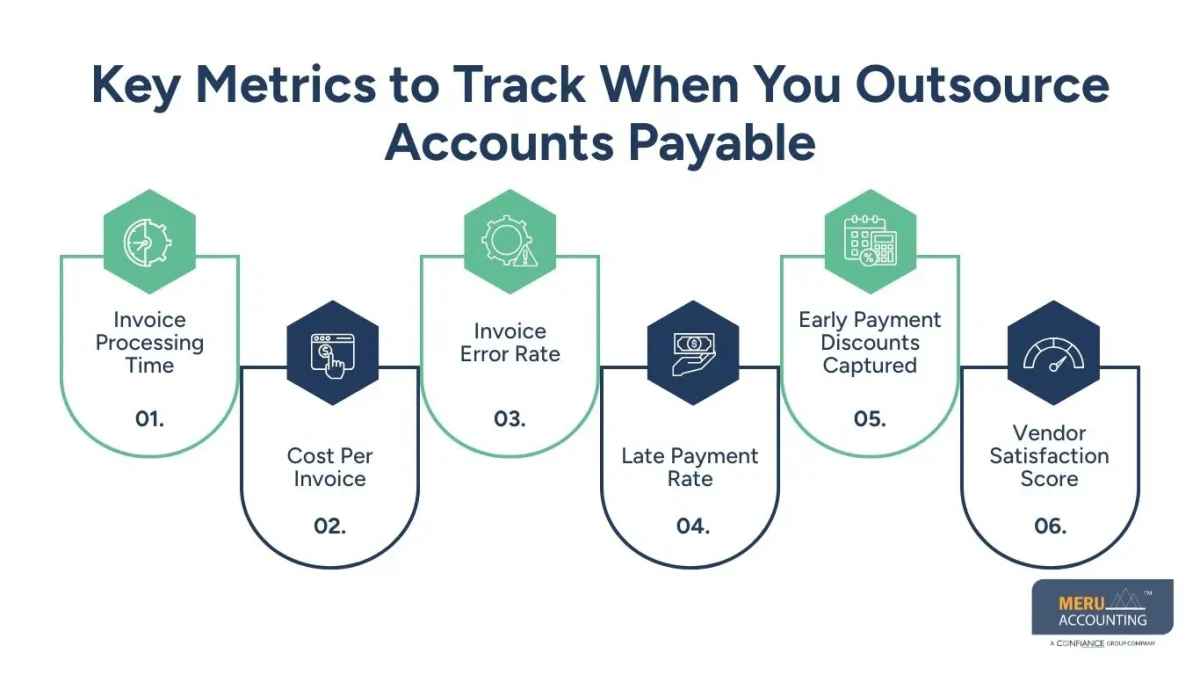
    1. Invoice Processing Time

    Invoice processing time shows how long it takes to pay each invoice when you outsource accounts payable. This metric is key to speed and efficiency.

    • Track from invoice receipt to full payment


    • Compare times for different vendors


    • Spot delays in approvals or checks


    Lower numbers show faster work. By tracking this, you see if outsourcing improves processing compared to in-house staff.

    2. Cost Per Invoice

    To know how much does it cost to outsource accounts payable, track the cost per invoice. This shows your real expense per invoice.

    • Add vendor fees, software, and small extra costs


    • Track costs each month to see trends


    • Compare with in-house costs for a clear ROI

    This metric lets firms see if outsourcing saves money and gives room to negotiate with vendors.

    3. Invoice Error Rate

    Mistakes in invoices can cause overpayment, disputes, and lost trust. Tracking the invoice error rate is very important.

    • Count invoices with wrong amounts or missing info


    • See if errors are from staff or vendors


    • Work with vendors to fix repeat errors


    A low error rate shows high work quality. It ensures that outsourcing keeps standards strong.
    outsource accounts payable

    4. Late Payment Rate

    Late payments can harm vendors and lead to fines. Check the late payment rate to keep payments on time.

    • Track invoices paid after the due date


    • Find reasons for delays, like missing approval


    • Use alerts to prevent late payments


    Keeping this rate low shows control over cash and good vendor relations.

    5. Early Payment Discounts Captured

    Some vendors give discounts for fast payment. Track early payment discounts captured to save money.

    • Compare the discounts taken with those offered


    • Use this data to improve cash flow


    • Automate payments to get more discounts


    Capturing early payment discounts shows real value from outsourcing and boosts cash efficiency.

    6. Vendor Satisfaction Score

    Even with outsourcing, vendors must be happy. Vendor satisfaction helps keep work smooth.

    • Ask vendors for feedback on payments and service


    • Track problems and resolve them fast


    • Check for trends in complaints or praise


    High satisfaction means work is accurate and prompt when you outsource accounts payable. Low scores call for process or vendor review.

    Benefits of Tracking Metrics When You Outsource Accounts Payable

    Tracking metrics when you outsource accounts payable gives many benefits. Below are the main advantages with clear subheadings:

    1. Spot Slow Tasks and Improve Workflow

    Metrics show which tasks take too long. You can see delays in approvals or payments. By spotting slow steps, you can fix them and make the work faster.

    2. Cut Errors and Avoid Double Payments

    Metrics help you catch mistakes early. Wrong invoices or repeated payments cost money. By tracking mistakes, you can avoid errors and pay correctly each time.

    3. Keep Cash Flow in Check

    Metrics help you track cash and payment dates. You can pay invoices on time. This keeps cash flow smooth and vendors happy.

    4. Follow Rules and Standards

    Metrics help make sure all work meets rules. You can stay on track with internal and legal standards. This avoids fines and keeps books in order.

    5. Build Vendor Trust

    Paying vendors on time and right builds trust. Metrics like processing time and errors help ensure vendors get paid correctly. Good trust leads to smoother work with vendors.

    6. Control Outsourced Work

    Metrics give you a clear view of all outsourced tasks. You can see if work is done on time and on budget. This helps you make smart choices and get full value from outsourcing.

    How Accounts Payable Outsourcing Works

    When a firm outsource accounts payable, the process has a few key steps:

    1. Invoice Receipt

    Vendors send invoices by email or mail. The team receives them and logs each invoice.

    2. Invoice Check

    All invoice data, amounts, and codes are checked. Mistakes are caught before approval.

    3. Approval Steps

    Invoices are sent to the right staff for approval. Each invoice must be signed off on before payment.

    4. Payment

    Payments are made by check, wire, or online transfer. The goal is to pay vendors on time.

    5. Reporting and Analysis

    Key numbers like processing time, cost, and errors are tracked. Reports help spot delays or mistakes.

    Tracking metrics at each step keeps work fast, correct, and clear. It also helps the firm see trends and make smart choices.

    Common Challenges & How to Overcome Them

    Even with outsourcing, issues may appear. Metrics help track them.

    1. Data Mistakes

    Use software to check invoices and catch all errors when you outsource accounts payable. This helps prevent mistakes that may cost money or time.

    2. Approval Delays

    Set clear approval steps for every invoice each day. This ensures work moves fast and avoids bottlenecks consistently.

    3. High Costs

    Track cost per invoice to control spending effectively when you outsource accounts payable. Negotiate fees with vendors to reduce unnecessary expenses clearly.

    4. Vendor Issues

    Keep open lines of communication with all vendors. Regular contact helps solve problems fast and build trust.

    5. Uneven Reporting

    Use dashboards to show metrics clearly every single day. Reports help spot trends and keep the workflow smooth.

    Tracking key numbers solves these problems before they grow. It also ensures work stays on track and saves money.

    Case Study

    A mid-size firm outsourced accounts payable. At first, invoices took 15 days, and errors were 8 percent. By tracking metrics like processing time, cost per invoice, and error rate, processing dropped to 5 days, and errors fell to 1 percent. Early payment discounts grew 30 percent, and cost per invoice fell 25 percent. Metrics showed clear value from outsourcing.

    Meru Accounting’s Accounts Payable Outsourcing Services

    1. Complete Invoice Processing

    Meru Accounting handles all invoices from start to end. We check each invoice for errors, approve it, and make payment on time. This full-service cuts mistakes and frees your staff from extra work.

    2. Custom Reports for Key Metrics

    When you outsource accounts payable, we provide clear reports that track all key numbers. Clients can see processing time, costs, errors, and payments. These reports help make smart choices and keep money under control.

    3. Vendor Communication and Follow-Ups

    Our team talks with vendors to solve any issues fast. We follow up to make sure all payments go smoothly. This keeps good vendor relations and cuts delays or disputes.

    4. Cost Tracking and Expense Control

    Meru Accounting tracks all costs in accounts payable. We watch expenses and find ways to save money. This makes sure outsourcing gives real value without hidden fees.

    5. Workflow Optimization

    We check your accounts payable steps to make them work faster. By clearing slow points and using the best methods, we speed approvals and improve output.

    6. Clear Outsourcing Costs

    We show clients exactly how much does it cost to outsource accounts payable. By tracking numbers and costs, businesses see that outsourcing is worth the investment.

    7. Trusted Partner for Your Business

    Working with Meru Accounting gives control, speed, and accuracy. We make sure your accounts payable run smoothly and save time and money.

    Key Takeaways

    • Metrics are key when you outsource accounts payable.

    • Track processing time, cost, errors, late payments, discounts, and vendor satisfaction.

    • Metrics reduce mistakes and improve vendor relations.

    • Metrics show ROI and help optimize costs.

    • Work with a trusted vendor for accuracy, speed, and control.

    FAQs

    Accounts payable outsourcing means hiring a vendor for invoices. This approach lets staff focus on core business tasks.

    Tracking metrics shows efficiency, costs, and vendor performance. It also helps catch delays and prevent invoice errors.

    Costs vary based on invoice volume, workflow, and vendor fees. Monitoring cost per invoice helps manage budget and save money.

    Processing speed is measured by invoice processing time. Faster processing reduces late fees and improves cash flow.

    Metrics should be reviewed monthly or quarterly for trends. Regular review improves workflow and keeps vendor performance high.