




Law Firm Accounting is a specialized system designed to meet the financial and ethical needs of legal practices. Unlike standard accounting, it focuses on client funds, legal billing methods, and strict compliance rules. Because law firms handle sensitive client money, Law Firm Accounting requires accuracy and detailed recordkeeping.
Legal professionals rely on strong Law Firm Financial Management to control expenses, manage cash flow, and support long-term stability. Proper financial planning helps law firms stay organized and avoid financial stress. This approach allows firms to make informed financial decisions.
Law Firm Accounting goes beyond basic bookkeeping and tax filing. Law firms must manage their own income while also protecting client funds in trust accounts, which makes their financial structure unique. Applying correct accounting for law firms and Law Firm Financial Management practices helps avoid audits, penalties, and reputational risks.
What You Will Learn From This Blog
- A clear understanding of what Law Firm Accounting means and why it is important in the legal industry. This helps explain how financial systems in law firms are structured and managed.
- Insight into why law firms cannot use standard accounting systems like other businesses. Legal rules and ethical responsibilities strongly influence how finances are handled.
- An explanation of how client money is protected through trust accounts. Proper handling of these funds helps reduce compliance risks and financial penalties.
- An overview of the financial rules law firms must follow when managing income and expenses. These rules form a core part of Law Firm Accounting.
- An understanding of how Law Firm Financial Management supports growth and long-term stability. Careful planning helps law firms manage cash flow and avoid financial problems.
What Is Law Firm Accounting and Why Is It Different?
Law Firm Accounting is structured to place client interests at the center of every financial process. Unlike general business accounting, it requires that all financial actions protect client rights and follow professional standards.
Law firms are responsible not only for their own income and expenses but also for handling money that belongs to clients, which adds an extra level of responsibility and care. Another reason Law Firm Accounting is different is the strict ethical requirements set by legal authorities.
Law firms must follow clear guidelines that control how money is received, held, and recorded. These rules exist to prevent misuse of funds and to maintain trust between lawyers and their clients. Even small errors can lead to serious consequences, making accuracy essential.
The use of trust accounts is one of the most important features of Law Firm Accounting. Client funds that have not yet been earned are kept in separate trust accounts and cannot be used for firm expenses. This separation ensures transparency and protects clients until legal services are fully provided. It is a practice that does not apply to most other industries.
In addition, many law firms rely on time-based billing models, where clients are charged based on hours worked or tasks completed. This approach affects how income is tracked and recognized. To support this system, law firms must maintain detailed and well-organized financial records. These records help with audits, internal reviews, and clear communication with clients, reinforcing accountability and trust.
Key Differences Between Law Firm Accounting and Traditional Accounting
Aspect | Law Firm Accounting | Traditional Accounting |
Client-Centered Accounting Structure | Focuses on protecting client interests and following legal ethics in every financial action. | Focuses mainly on business income, expenses, and profit reporting. |
Strict Ethical Requirements | Must follow ethical rules set by legal authorities that control how money is received and recorded. | Follows general accounting standards without industry-specific ethical rules. |
Use Of Trust Accounts | Uses trust accounts to hold unearned client funds safely and separately from firm money. | Does not require trust accounts or separation of customer funds. |
Time-Based Billing Models | Commonly bills clients by hours worked or legal tasks completed, affecting income tracking. | Usually bills through fixed pricing or product-based revenue models. |
Detailed Financial Records | Requires detailed records to support audits, compliance checks, and client transparency. | Maintains standard records mainly for taxes and internal reporting. |
Understanding Trust Accounting and Client Funds
Purpose Of Trust Accounts
Trust accounts keep client money safe until legally earned. They protect clients and support ethical, legal, and financial practices.
Separation Of Funds
Client funds must never mix with firm operating money. Strict separation rules are enforced under law firm regulations.
Record Keeping
Each client’s trust balance must be tracked clearly and individually. Accurate records help prevent disputes, errors, and compliance issues.
Reconciliation Process
Trust accounts require regular review and accurate balance verification. This process confirms totals match client records and ledgers.
Risk Of Errors
Small accounting mistakes can cause serious legal and ethical issues. Careful handling reduces the risk of penalties and professional damage.
Common Law Firm Accounting Rules and Compliance Requirements
Bar Association Guidelines
Legal authorities establish financial rules specifically for regulated law firms. These rules define proper trust handling and mandatory financial reporting. Compliance ensures ethical conduct and protects client financial interests.
Regular Audits
Law firms may undergo regular reviews by approved external bodies. Audits confirm adherence to Law Firm Accounting standards. They help identify errors before issues become serious problems.
Documentation Standards
Every financial transaction must be supported by clear, proper records. Accurate documentation simplifies audits and improves internal financial transparency. Strong records reduce disputes and support consistent accounting for the Law Firm.
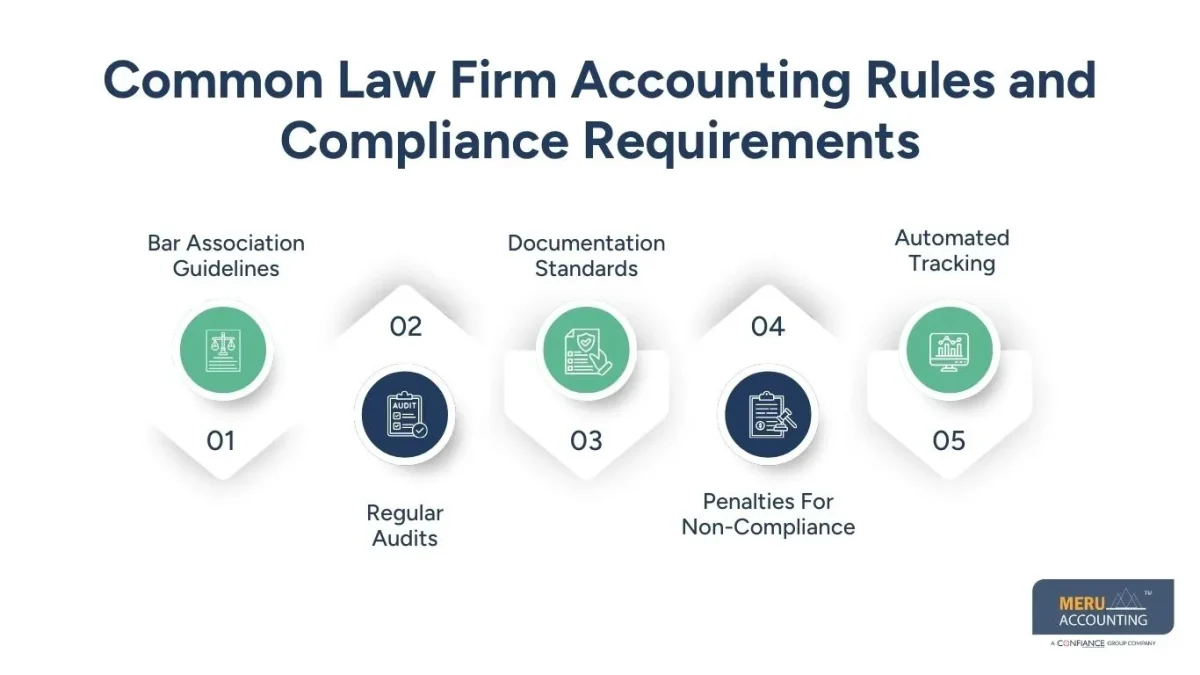
Penalties For Non-Compliance
Accounting errors can result in fines or professional disciplinary actions. Severe violations may risk license suspension or long-term damage. Compliance protects the firm’s reputation and safeguards client trust.
Role Of Accounting Systems
Proper accounting systems help manage financial data accurately daily. They reduce manual errors and improve reporting speed significantly. Reliable tools strengthen Law Firm Financial Management and compliance.
Revenue Recognition in Law Firm Accounting
Earned Vs Unearned Income
Money becomes firm income only after legal services are fully delivered. This rule ensures honest financial reporting and protects client interests. It helps law firms avoid overstating income in financial records.
Retainers And Advances
Client payments are often received before legal work officially begins. These funds stay in trust accounts until services are properly completed. This process supports ethical handling of client money.
Hourly Billing Impact
Accurate time tracking directly affects revenue accuracy and client billing. Incomplete records can lead to billing errors and lost income. This process remains a core part of Law Firm Accounting systems.
Contingency Fees
Income is recorded only after a case reaches a successful resolution. Firms may wait long periods before recognizing this type of revenue. This requires careful financial planning and cash flow awareness.
Clear Billing Policies
Clear billing rules reduce confusion, misunderstandings, and client disputes. They help clients understand charges and payment expectations clearly. These policies support effective Law Firm Financial Management practices.
Managing Expenses and Cash Flow in Law Firms
Fixed Operating Costs
Rent, salaries, utilities, and insurance must be planned carefully. These costs continue even when case revenue is delayed. They directly affect monthly cash flow and financial stability.
Case-Related Expenses
Court fees, filing costs, and research expenses need proper tracking. These costs are often billed back to clients accurately. Accurate records support correct billing and financial transparency.
Cash Flow Planning
Delayed client payments can create serious financial stress. Planning helps maintain stability during slow payment periods. Strong planning supports consistent operational funding.
Expense Monitoring
Regular expense reviews help control unnecessary or excessive spending. They allow firms to identify areas needing cost reduction. This process improves overall financial health.
Budget Discipline
Budgets guide spending decisions across departments and practice areas. They help firms avoid overspending during uncertain periods. Budgets strengthen Law Firm Financial Management systems.
Law Firm Financial Management: Core Principles for Legal Practices
Financial Planning
Planning helps law firms prepare for future expenses and growth. It supports steady operations during economic changes. Good planning improves confidence in financial decisions.
Budget Control
Budgets help manage income and expenses responsibly throughout the year. They provide limits that guide daily spending choices. This reduces financial uncertainty for partners and managers.
Profit Analysis
Tracking profit by case improves pricing and staffing decisions. It helps identify high-performing practice areas clearly. This is key to Law Firm Financial Management success.
Risk Management
Financial planning reduces exposure to financial loss and uncertainty. It prepares firms for unexpected expenses or delays. This approach supports long-term success.
Use Of Financial Reports
Reports show financial performance clearly and consistently. They highlight trends that support informed decisions. Reports guide smarter business and growth planning.
How Law Firm Accounting Impacts Profitability
Accurate Billing
Correct billing improves cash flow and strengthens client trust. It ensures all completed work is billed properly. Accurate billing reduces revenue loss.
Expense Control
Knowing costs helps increase profit margins over time. It allows firms to adjust spending when needed. This supports better planning and decision-making.
Cash Flow Stability
Strong Law Firm Accounting reduces payment gaps and delays. Predictable cash flow supports daily operations smoothly. It helps firms meet financial obligations on time.
Partner Transparency
Clear financial data builds trust among firm partners. It ensures everyone understands firm performance. Transparency improves internal communication and planning.
Long-Term Growth
Good accounting supports expansion and hiring plans. It provides confidence when investing in new opportunities. Strong systems keep the firm financially stable.
How Meru Accounting Supports Law Firms
Legal Industry Knowledge
Meru Accounting understands the financial needs of modern legal practices clearly. Our team has experience working with law firms of different sizes. We follow legal accounting rules closely to maintain ethical compliance.
Trust Accounting Support
We help law firms manage client funds safely and responsibly. Our processes ensure strict separation between client money and firm funds. This structured approach reduces compliance risk and accounting errors.
Compliance Assistance
Our team supports proper documentation and accurate financial reporting. We help law firms meet bar association and regulatory requirements. This ongoing support helps firms remain audit-ready throughout the year.
Custom Financial Reports
Reports are designed to support informed legal and business decision-making. We provide clear insights into revenue, expenses, and case performance. These reports support better Law Firm Financial Management outcomes.
Reliable Accounting Services
We deliver accurate and ethical Law Firm Accounting services consistently. Our systems improve clarity and reduce manual accounting errors. This support reduces stress for legal teams and firm leadership.
Key Takeaways
- Law Firm Accounting follows strict legal and ethical requirements that differ from standard business accounting.
- Trust accounting is essential because client funds must be handled with special care to avoid serious consequences.
- Compliance rules protect both law firms and clients while reducing financial and regulatory risk.
- Proper accounting systems help maintain accuracy and support reliable financial reporting.
- Strong Law Firm Financial Management improves stability, cash flow control, and long-term growth.
- Professional accounting support reduces errors and builds confidence in financial decisions.
FAQs
Law Firm Accounting is a special accounting system used by law firms to manage income, expenses, and client funds. It follows legal and ethical rules that do not apply to other businesses.
Accounting for law firms is different because law firms must handle client trust funds, follow bar association rules, and record income only when it is earned.
Trust accounting is a key part of Law Firm Accounting where client money is kept in a separate trust account until legal services are completed.
Common mistakes include mixing client funds with firm money, poor recordkeeping, and incorrect revenue tracking. These errors can harm Law Firm Financial Management.
Law Firm Financial Management helps law firms control expenses, manage cash flow, and plan finances better, which leads to improved profitability.


