




Law firms handle many money tasks every day. They track client funds, billable hours, retainers, costs, and payroll. Even small bookkeeping mistakes can cause fines or loss of trust. This is why strong law firm bookkeeping systems are key for every legal office. These tasks involve many types of funds that are easy to mix. Without proper systems, small errors can become big problems fast. Law firm bookkeeping tracks, checks, and controls all money flows. It helps law firms see where money comes from, how it is spent, and which cases bring in profit.
With good law firm bookkeeping, offices get clear view of finances and smooth control. This view helps better choices and daily tasks. It also helps lawyers, staff, and accountants work together. This blog shows the main law firm bookkeeping practices and how QuickBooks can make tasks simple. It also shows why hiring outside help can save time and stress. Each part is simple and easy to use. The goal is to help law firms get firm control of money step by step.
What You Will Learn From This Blog
By reading this blog, law firms will get useful ideas on bookkeeping and QuickBooks. It fits offices of all sizes, from small to growing firms.
In this blog, you will learn:
- What law firm bookkeeping is and how it works
- Why clear bookkeeping is key for safe funds and money flow
- Common bookkeeping issues lawyers face
- How QuickBooks for law firms bookkeeping makes work easy
- The benefits of hiring outside help for bookkeeping
What Is Law Firm Bookkeeping?
Law firm bookkeeping is a type of accounting made for legal offices. It tracks all client and office funds carefully, like trust accounts and bills. These records are checked daily to stay correct. This gives a clear view of finances and stops errors.
Law firm bookkeeping includes:
- Managing client trust accounts
- Tracking billing and retainers
- Recording costs and payroll
- Tracking case income and costs
Unlike general accounting, law firm bookkeeping follows strict rules. Clear bookkeeping helps firms see case profit, keep client funds safe, and plan cash flow. It also helps with reports and audits. With proper bookkeeping, lawyers can work on cases without money worry.
Why Law Firm Bookkeeping Is Crucial for Every Firm
Law firm bookkeeping is key because legal money work is complex and changes fast. Client funds must stay separate from office money. Billable hours must be tracked right to avoid lost cash. Office and case costs change all the time. A strong bookkeeping plan keeps all money info correct. Without it, mistakes can grow and risk can rise.
Importance of good law firm bookkeeping:
- Keeps rules with client funds and office money
- Stops billing mistakes that lose cash or cause disputes
- Keeps cash flow by tracking income, costs, and unpaid bills
- Gives right reports for audits and review
- Helps staff work well with lawyers and accountants
Bad bookkeeping can hurt pricing, cut profit, and slow work. Over time, it can harm trust and growth.
Common Bookkeeping Challenges Faced by Attorneys
Law firms face many bookkeeping issues. Each issue can hurt accuracy and work.
- Trust account errors: Mixing client and office funds is common. This can lead to fines. QuickBooks for law firms bookkeeping keeps trust accounts separate and checked automatically.
- Wrong billing: Manual time tracking may miss billable hours or count wrong fees. Automation makes sure all hours are correct and cuts disputes.
- Cost tracking issues: Tracking office and case costs by hand can cause mistakes. QuickBooks links costs to cases and bills for accuracy.
- Poor reports: Without clear reports, firms can’t see case profit or costs. Bookkeeping tools give timely and right info.
- Growth problems: As firms grow, spreadsheets or manual tracking fail. QuickBooks can grow with the firm to handle more cases and staff.
How Law Firm Bookkeeping Differs From Standard Accounting
Law firm bookkeeping is not the same as regular accounting. It has legal, rule, and office needs.
- Trust account rules: Client money must stay separate and checked often. Normal accounting does not do this automatically.
- Case tracking: Income and costs are tracked by case or client for right profit data.
- Records needed: Each transaction needs proof. QuickBooks lets you add receipts and notes.
- Report rules: Firms must give correct statements to clients and officials. Proper bookkeeping gives right reports.
- Work with legal software: Linking with legal tools makes time, billing, and reports automatic and less error-prone.
Overview of QuickBooks for Law Firms Bookkeeping
QuickBooks for law firms bookkeeping is popular because it is easy to use, can grow, and tracks all money. It records income, costs, bank moves, and bills in one place. Linking with legal software makes billing and time data flow right into accounting. This cuts mistakes and keeps data correct. QuickBooks can automate work like cost entry, bank checks, and report prep. Small and mid-size firms get a cheap, strong tool that grows with them. With setup done right, QuickBooks makes daily bookkeeping smooth and simple.
QuickBooks for law firms bookkeeping also helps firms stay organized as work volume increases. It gives a clear view of client balances, unpaid bills, and daily cash use. Law firms can check reports at any time to see where money stands. This helps avoid cash gaps and billing delays. Built in tools reduce manual work and save staff time. With steady use, firms gain better control and fewer bookkeeping issues.
Benefits of QuickBooks for Law Firm Bookkeeping
QuickBooks helps law firms manage daily bookkeeping tasks with less effort and fewer errors. It brings all money related work into one clear system that supports better control and planning.
- Better accuracy and control: QuickBooks cuts manual work and keeps records the same. Bank feeds and auto checks cut errors, and trust account tracking keeps rules.
- Clear cash view: Firms see income, costs, and unpaid bills in real time. This helps plan payments, avoid short cash, and manage money well.
- Easy billing and cost tracking: Time, costs, and bills in one tool keeps billing correct and cuts disputes.
- Grows with the firm: QuickBooks can add features and link to other tools as the firm grows.
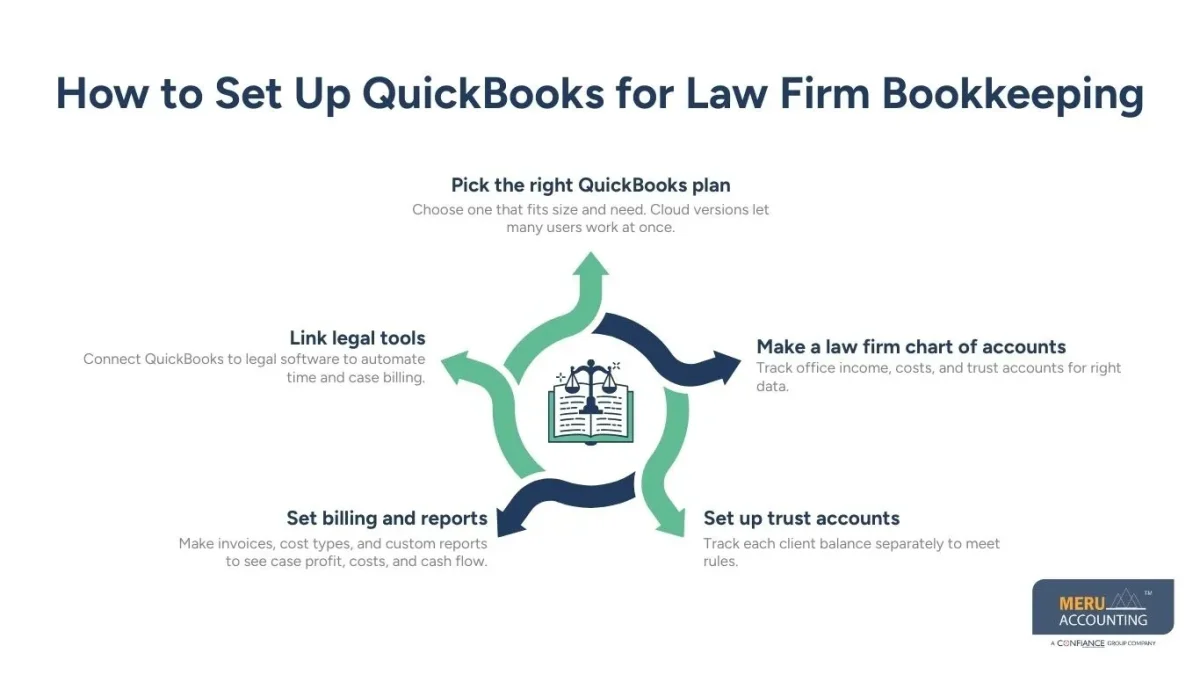
How to Set Up QuickBooks for Law Firm Bookkeeping
Setting up QuickBooks the right way is key for smooth law firm bookkeeping. A clear setup helps avoid errors and keeps daily work easy to manage.
- Pick the right QuickBooks plan: Choose one that fits size and need. Cloud versions let many users work at once.
- Make a law firm chart of accounts: Track office income, costs, and trust accounts for right data.
- Set up trust accounts: Track each client balance separately to meet rules.
- Set billing and reports: Make invoices, cost types, and custom reports to see case profit, costs, and cash flow.
- Link legal tools: Connect QuickBooks to legal software to automate time and case billing.
Meru Accounting’s Law Firm Bookkeeping Services
Meru Accounting gives special bookkeeping help for law firms. We focus on rules, accuracy, and steady reports. Our team helps firms set up and use QuickBooks for law firms bookkeeping well.
Our services include:
- Trust account help: Setup, checks, and rule tracking to avoid mistakes.
- Daily bookkeeping: Record all income, costs, and transactions right to keep up-to-date.
- Billing and invoice support: Track billable hours, make invoices, and link to cases.
- Custom reports and insights: Showcase profit, cash flow, and work efficiency.
- Ongoing help: Keep giving bookkeeping guidance to cut stress and help decisions.
With Meru Accounting, law firm bookkeeping is simple, right, and ready for growth. Systems grow with the firm, and data is correct and ready to use.
Key Takeaways
- Law firm bookkeeping keeps rules, correct records, and smooth work.
- QuickBooks links income, costs, bills, and trust accounts to make work easy.
- Automation cuts mistakes, saves time, and improves cash flow.
- Reports show case profit and firm health.
- Hiring outside help improves accuracy, rules, and work flow.
FAQs
It tracks client funds, office costs, billing, and payroll. It keeps rules and correct reports.
It improves cash flow, stops trust account mistakes, supports rules, and keeps billing correct.
QuickBooks for law firms bookkeeping tracks income, costs, bills, and trust accounts in one place. It cuts errors and saves time.
Mixing client and office funds, wrong billing, poor reports, and manual cost tracking.
Meru Accounting offers setup, trust account help, daily bookkeeping, reports, and ongoing support to make work simple.


