

Running a law firm is not only about winning cases. It is also about managing money the right way. Law firm bookkeeping services help legal practices stay organized, avoid cash flow problems, and meet compliance rules. When accounts payable and accounts receivable are handled properly, law firms gain better control over their finances and reduce stress.
In this blog, we explain how law firm bookkeeping services support better management of payables and receivables. We also discuss how accounting and bookkeeping for law firms improve accuracy, planning, and profitability.
Law firms handle complex financial transactions daily, including client trust accounts, vendor payments, retainers, and delayed client payments. Without clear records, managing these finances can quickly become confusing.
Law firm bookkeeping services help track every dollar and maintain accuracy. Proper accounting and bookkeeping for law firms prevent errors that could lead to late payments, billing disputes, or compliance risks.
What You Will Learn From This Blog
- Understand the basics of law firm bookkeeping and how law firm bookkeeping services support daily financial operations in legal practices.
- Learn how to track, manage, and control accounts payable to ensure timely and accurate outgoing payments.
- Discover effective ways to improve accounts receivable and collect client payments faster and more efficiently.
- See how proper bookkeeping helps law firms stay compliant with legal, trust accounting, and regulatory requirements.
- Learn how accounting and bookkeeping for law firms support smarter financial decisions and boost overall profitability.
Introduction To Law Firm Bookkeeping Services
Law firm bookkeeping services involve recording, organizing, and monitoring financial transactions that are unique to legal practices. Unlike general bookkeeping, law firms must manage trust accounts, retainers, and client funds with strict accuracy to comply with legal and ethical rules. This is why accounting and bookkeeping for law firms require specialized knowledge that goes beyond standard financial recordkeeping.
Professional law firm bookkeeping services support daily financial tracking by accurately monitoring expenses, income, and account balances.
With consistent and reliable bookkeeping, law firms can maintain compliance, reduce financial errors, and develop strong financial habits that support long-term stability and growth.
In addition, specialized bookkeeping gives law firms better visibility into their financial health. Clear and up-to-date records make it easier to manage cash flow, plan budgets, and make informed business decisions.
By relying on professional law firm bookkeeping services, firms can focus more on legal work while ensuring their finances remain organized, compliant, and under control.
What Are Accounts Payable In Law Firms?
Accounts payable in law firms refer to the money a firm owes to others for day-to-day operations. This includes payments to office suppliers, legal software providers, IT support teams, and other service vendors that help the firm run smoothly. Keeping track of these payments ensures vendors are paid correctly and on time.
Another major part of accounts payable is employee and contractor compensation. Salaries, benefits, freelance legal support, and outsourced services must be recorded accurately.
Clear tracking helps law firms avoid payroll errors and maintain trust with staff and contractors. Operational expenses also form a large portion of accounts payable.
Rent, utilities, insurance, and maintenance costs are regular obligations that must be monitored closely. Managing the timing of these payments is important so bills are settled on time without putting pressure on cash flow.
Accurate recordkeeping is essential in accounts payable management. Proper records help prevent duplicate payments, missed bills, and financial confusion.
Well-maintained accounts payable give law firms better control over expenses and support overall financial stability.
Best Practices To Manage Accounts Payable Efficiently
Clear Vendor Records
Maintain updated vendor names, contact details, and payment terms to avoid delays or confusion. This also helps law firms resolve billing questions quickly and maintain good vendor relationships.
Approval Process
Set clear approval steps for all expenses before payments are made. A proper approval process improves accountability and reduces the risk of incorrect payments.
Payment Scheduling
Plan payments based on invoice due dates and available funds. Timely scheduling helps avoid late fees and supports smoother cash flow management.
Expense Categorization
Categorizing expenses correctly improves financial reports and makes cost review easier. It also supports accurate budgeting and expense analysis.
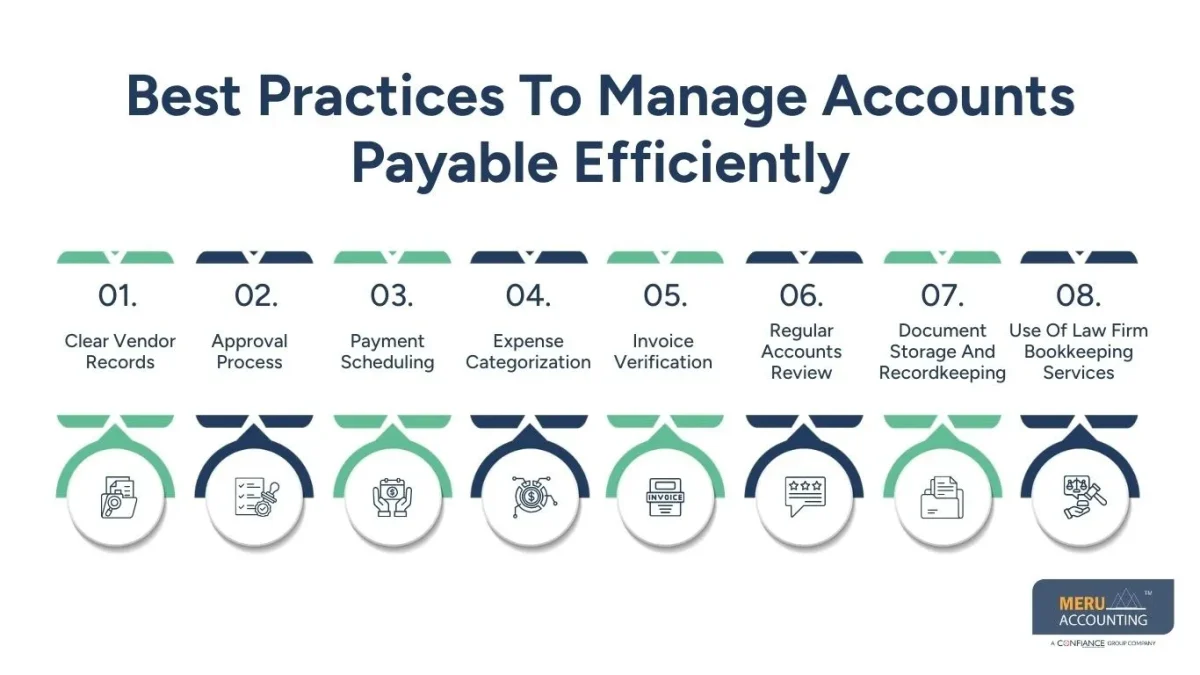
Invoice Verification
Review invoices carefully to confirm amounts, services, and due dates. This step helps law firms catch errors early and avoid unnecessary payments.
Regular Accounts Review
Review accounts payable reports on a regular basis to identify pending or overdue payments. Frequent reviews help maintain accurate records and financial control.
Document Storage And Recordkeeping
Store invoices, receipts, and payment records in an organized manner. Proper documentation supports audits and simplifies future reference.
Use Of Law Firm Bookkeeping Services
Professional law firm bookkeeping services ensure accounts payable remain organized, accurate, and compliant. Expert support also saves time and reduces the risk of costly mistakes.
What Are Accounts Receivable In Legal Accounting?
Accounts receivable in legal accounting represent the money a law firm expects to receive from its clients for services provided. The process begins with accurate client invoices that clearly show fees, services, and payment terms. Proper billing ensures clients understand what they are being charged and reduces disputes.
Retainers and legal fees are an important part of accounts receivable. Law firms must track how retainers are used and applied to client work. Careful monitoring helps ensure funds are handled correctly and remain compliant with legal accounting rules.
Outstanding balances show how much clients still owe the firm. Tracking these balances helps law firms follow up on unpaid invoices and plan future cash flow. Regular billing cycles make it easier to collect payments on time and maintain financial stability.
Clear and updated records also support open communication with clients. When billing information is accurate, law firms can explain charges easily and maintain trust in client relationships.
Effective Ways To Improve Accounts Receivable For Law Firms
Clear Billing Policies
Clients should understand payment terms clearly from the start. Written policies help prevent confusion and reduce billing disputes.
Timely Invoicing
Sending invoices promptly helps law firms receive faster payments. Quick billing keeps cash flow steady and predictable.
Follow-Up Process
Regular payment reminders help law firms reduce overdue balances. Consistent follow-ups encourage clients to pay on time.
Accurate Time Tracking
Proper time records support accurate billing and fair client charges. Detailed tracking also improves trust and billing transparency.
Accounting And Bookkeeping For Law Firms
Strong accounting and bookkeeping for law firms improves receivable tracking. It also helps law firms monitor unpaid invoices more effectively.
Role Of Law Firm Bookkeeping Services In Financial Compliance
Trust Accounts
Legal rules require strict separation of trust funds. Proper tracking ensures that client money is handled correctly always.
Audit Readiness
Accurate books make audits less stressful for law firms. Well-organized records help firms respond quickly during audits.
Regulatory Reporting
Bookkeeping supports timely and correct regulatory reporting requirements. This helps law firms meet deadlines and avoid compliance issues.
Error Prevention
Professional services reduce mistakes that often lead to penalties. Regular reviews help identify and correct financial errors early.
Ethical Standards
Law firm bookkeeping services help maintain ethical financial practices. They support transparency and protect client trust consistently.
How Accounting And Bookkeeping For Law Firms Improves Profitability
Expense Control
Tracking expenses helps identify cost savings across firm operations. Better visibility improves budgeting and spending discipline overall.
Cash Flow Planning
Better planning supports stable operations and predictable monthly cash flow. Regular monitoring helps firms avoid unexpected financial shortfalls.
Financial Reports
Clear reports support informed decisions by firm leadership teams. Accurate data helps evaluate performance and plan future improvements.
Billing Accuracy
Correct billing improves revenue collection and reduces client disputes. Accurate invoices increase trust and encourage timely client payments.
Growth Planning
Strong accounting and bookkeeping for law firms supports long-term growth. Reliable financial insights guide expansion and smarter business decisions.
Why Choose Meru Accounting For Law Firm Bookkeeping Services
Legal Industry Experience
Meru Accounting understands law firm financial needs very clearly. Our team has deep experience working with legal accounting requirements.
Accurate And Timely Records
We ensure every transaction is recorded correctly and on time. Accurate records help law firms trust their financial information.
Compliance-Focused Approach
Our law firm bookkeeping services follow strict legal accounting rules. This approach reduces compliance risks and financial reporting errors.
Customized Support
We tailor services based on firm size and practice area. Flexible solutions adjust as law firm needs change over time.
Reliable Accounting And Bookkeeping For Law Firms
Meru Accounting delivers dependable accounting and bookkeeping for law firms. These services support long-term financial stability and consistent growth.
Key Takeaways
- Accurate financial records support better decision-making and long-term stability for law firms.
- Balancing accounts payable and receivable helps improve cash flow and maintain financial control.
- Strict compliance with legal rules is essential to avoid penalties and financial risks.
- Professional bookkeeping support reduces errors and prevents costly financial mistakes.
- Reliable law firm bookkeeping services help law firms remain financially strong and well-organized.
FAQs
Law firm bookkeeping services help track all financial transactions, including client funds, vendor payments, and expenses. They prevent mistakes and improve cash flow management.
They organize bills, track due dates, and ensure timely payments to vendors, employees, and contractors, avoiding late fees and cash flow problems.
Prompt invoicing, clear billing policies, and regular follow-ups help law firms collect payments faster and reduce overdue balances.
By maintaining accurate trust account records, generating reports, and following legal accounting rules, accounting and bookkeeping for law firms helps avoid fines or legal issues.
Professional services provide accurate records, save time, support compliance, and improve financial decision-making, helping law firms run efficiently.


