A law firm can win cases, bill clients on time, and still struggle to understand where its money goes. An unpaid invoice, a trust account mismatch, or a rise in case costs can change the firm’s financial position without being obvious in day-to-day work. Law firm bookkeeping solutions bring these details into view before small issues become costly problems.
Legal finances need more than a record of money received and spent. Each client matter may involve fees, case expenses, retainers, and funds held in trust. These amounts must be recorded correctly and reviewed under the rules that apply to the firm. A clear process also shows partners which services earn a profit and which costs need attention.
With the right law firm bookkeeping solutions, lawyers can review their accounts without relying on guesswork. Some firms manage these tasks internally, while others choose outsourced bookkeeping for law firms to handle agreed records, reconciliations, and reports. The goal is to keep financial data clear, accurate, and useful for business decisions.
What You Will Learn From This Blog
- How law firm bookkeeping solutions record fees, costs, and client funds.
- Why trust accounting needs separate client-level records.
- How monthly reconciliation can uncover errors and old entries.
- Which financial measures reveal a firm’s profit.
- What outsourced bookkeeping for law firms can include.
- How to choose suitable software and bookkeeping services.
What are Law Firm Bookkeeping Solutions?
Daily Financial Records
Every payment, bill, fee, and expense needs a proper entry. Law firm bookkeeping solutions bring these records together so staff can trace transactions and review the firm’s current financial position.
Client Matter Records
A case may involve filing fees, client payments, and funds held in trust. Separate matter records show what the client owes, what the firm has received, and what remains due.
Accounts Payable and Receivable
A vendor bill may be due today while a client invoice remains unpaid for weeks. Tracking both accounts gives the firm a clearer view of upcoming payments and money still to collect.
Payroll and Operating Costs
Staff wages, rent, insurance, software, and office costs all affect profit. Recording them under the right accounts shows how much the firm spends to keep its practice running.
Financial Statements
Income statements show earnings and expenses, while balance sheets list assets and liabilities. Law firm bookkeeping solutions bring these figures into reports that partners can use to review results and plan spending.
optional anymore
on running the business
Why Accurate Bookkeeping Matters for Law Firms
Clear Cash Flow
Law firm bookkeeping solutions provide a clearer view of expected receipts and upcoming bills, helping partners assess whether the firm can meet its financial obligations on time.
Control Over Client Funds
Money held for a client is not the same as money earned by the firm. Separate records reduce the risk of an incorrect transfer or the use of funds for an unrelated expense.
Timely Fee Collection
An invoice that sits unpaid for months can put pressure on cash flow. An aged receivables report shows which clients have overdue balances and where follow-up is needed.
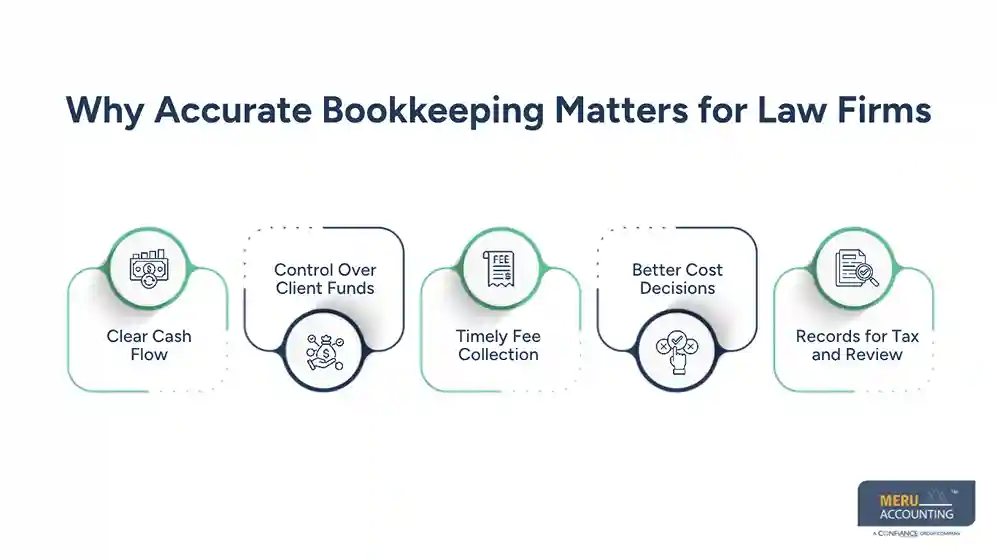
Better Cost Decisions
A rise in software fees or staff costs may seem small at first. Monthly reports show these changes over time, giving partners a sound basis for reviewing budgets and spending.
Records for Tax and Review
Law firm bookkeeping solutions maintain organized income and expense records, making it easier for tax professionals to review transactions and prepare year-end reports.
Trust Accounting Requirements for Law Firms
Separate Trust and Business Funds
Client funds must remain separate from the firm’s own money under the rules that apply to the practice. A retainer should not be treated as earned income until the firm has a valid basis to transfer it.
Track Each Client Balance
A trust ledger records deposits, payments, and the balance for each client or matter. The total of individual client balances should agree with the funds held in trust, taking valid outstanding items into account.
Record Every Transaction
Each entry should show the date, amount, client reference, and purpose. These details make it easier to explain a payment and trace a transaction during a review.
Review Transfers and Withdrawals
A transfer from trust to business should occur only when the fee or cost is due, and the applicable rules permit it. Law firm bookkeeping solutions should keep a clear record of the amount, reason, and required approval.
Follow State Bar Rules
Trust accounting duties vary by state. California Rule of Professional Conduct 1.15 sets requirements for handling client funds, while other states have their own rules. Firms should check the rules that apply to their practice and seek legal advice when needed.
Monthly Reconciliation for Reliable Financial Records
Match Bank Statements
A bank statement may show a fee or charge that has not yet appeared in the books. Monthly reconciliation, an essential part of law firm bookkeeping solutions, compares both records and explains differences such as bank fees, outstanding checks, and deposits in transit.
Reconcile Trust Accounts
Trust reviews compare the bank balance, trust ledger, and total of individual client balances. Any mismatch needs investigation; an unexplained adjustment should never be used to make the figures appear correct.
Check Matter Ledgers
A client may have paid an invoice that staff recorded under the wrong matter. Reviewing each ledger can reveal missing receipts, duplicate entries, incorrect payments, and balances that need attention.
Review Bills and Unpaid Fees
Month-end checks should cover vendor bills and unpaid client invoices. Reviewing old items gives staff a chance to correct errors, follow up on late fees, and plan payments.
Keep a Review Trail
Staff should save reconciliation records and note how each difference was resolved. A second review by an authorized person adds another check, especially when client trust funds are involved.
Profitability Reporting for Law Firms
Review Income by Practice Area
A firm may earn different returns from family law, business law, property law, or litigation. Reports within law firm bookkeeping solutions show where fees come from across practice areas and which services need a closer look.
Track Matter Costs
Filing fees, expert charges, travel, and other case expenses can reduce the return from a matter. Recording these costs against the right case shows how much remains after direct expenses.
Measure Billing and Collection
Hours worked and invoices sent do not tell the full story. Firms using law firm bookkeeping solutions should compare billed fees with collected fees and review write-offs and unpaid invoices to see how much work turns into cash.
Review Key Financial Measures
Net profit margin, collection time, and operating costs as a share of income offer useful clues. Law firm bookkeeping solutions can present these figures each month so partners can spot changes and ask the right questions.
Plan With Monthly Reports
If collections fall for two months in a row, partners may need to review billing delays or payment terms. Reports also show when rising costs call for a budget review or a change in staffing plans.
How Outsourced Bookkeeping for Law Firms Works
Review Existing Records
Outsourced bookkeeping for law firms often starts with a review of bank records, account codes, billing methods, and current reports. This check reveals gaps that need attention before routine work begins.
Set Clear Roles
The firm and provider agree on who records bills, posts payments, checks reports, and approves transactions. The firm should retain control over legal decisions and trust fund approvals.
Record and Reconcile Transactions
The provider records agreed transactions, matches bank activity, and flags unclear items for review. These processes should follow the firm’s matter codes and trust accounting procedures.
Prepare Monthly Reports
Law firm bookkeeping solutions may include income statements, balance sheets, cash summaries, and aged receivables reports. Partners should review unusual changes and ask for explanations before making decisions.
Protect Client Data
Before hiring a provider, firms should check access controls, secure file transfer, confidentiality terms, and backup practices. Outsourced bookkeeping for law firms does not remove a lawyer’s professional duties or the need to review trust records.
Essential Software and Tools for Law Firm Bookkeeping Solutions
Legal Practice Management Software
Legal practice software can link client matters, time entries, invoices, and case details. Law firm bookkeeping solutions work best when the software fits the firm’s billing process and shares accurate data with its accounting system.
Accounting Software
QuickBooks and Xero can record income, expenses, bills, bank activity, and financial reports. Firms should check whether their chosen setup meets trust accounting needs rather than assume general accounting software is enough.
Bank Reconciliation Tools
Bank feeds can reduce manual entry and make transactions easier to match. Staff must still review unmatched items, duplicate entries, and incorrect account codes.
Secure Document Storage
Bank statements, invoices, receipts, and approval records need a secure, controlled location. Access should be limited to authorized staff, with suitable backup and record retention rules.
Financial Reporting Tools
Reporting tools can group income, costs, collections, and matter expenses by month or practice area. Law firm bookkeeping solutions should rely on verified data so partners can act on the figures with confidence.
How Meru Accounting Provides Law Firm Bookkeeping Services
Meru Accounting provides accounting and bookkeeping services that can be arranged around a firm’s agreed reporting needs and month-end schedule. The aim is to keep records clear and make financial reviews easier for firm leaders.
Routine Bookkeeping
Meru Accounting can record agreed income, expenses, bills, and payments under the firm’s approved process. Clear account codes and matter references make entries easier to trace.
Monthly Reconciliation
The service scope can include bank reconciliation and review of outstanding items. Firms should confirm that any trust account work follows the rules of their state and includes the required checks.
Financial Reporting
Regular reports can show income, expenses, unpaid fees, and cash balances. Partners can use these figures to review spending and assess the firm’s financial results.
Accounting Software
Meru Accounting works with accounting platforms such as QuickBooks and Xero. Before work begins, both parties should agree on software access, data transfer, approval rights, and reporting needs.
Clear Roles and Review
The service agreement should state which tasks Meru Accounting performs and which duties remain with the firm. Lawyers must retain proper control over trust funds and review reports and exceptions.
Our Expert Perspective
A bank balance can look correct even when an individual client ledger contains an error. Law firm bookkeeping solutions need both account-level checks and matter-level reviews to show where every client dollar stands.
Profit reports also need context. A rise in billed fees may look good, but slow collections or high case costs can leave less cash available for wages and rent. When comparing outsourced bookkeeping for law firms, ask who reviews reconciliations, how errors are reported, and which duties remain with the firm. Clear roles and documented checks matter more than broad promises.
Key Takeaways
- Keep client trust funds separate from business funds.
- Record every trust transaction under the correct client or matter.
- Reconcile bank accounts and trust ledgers each month.
- Investigate differences instead of using unexplained adjustments.
- Track billed fees, collected fees, matter costs, and unpaid invoices.
- Review monthly reports to assess cash flow and net profit.
- Check data security and approval rules before outsourcing.
- Retain firm oversight of trust funds and legal duties.
FAQs
Law firm bookkeeping solutions include trust accounting, monthly bank reconciliation, expense tracking, fee collection, and profitability reporting.
Law firms compare bank statements, trust ledgers, and individual client balances to identify and resolve differences.
Monthly reconciliation reveals missing entries, duplicate transactions, and account errors before they affect financial reports or client funds.
Outsourced bookkeeping for law firms can provide regular financial reports, track unpaid fees, and show income, expenses, and profit trends.
QuickBooks, Xero, and legal practice management software can record financial data, but firms must verify that their setup meets applicable trust accounting rules.
optional anymore
on running the business