




In the legal profession, managing finances efficiently is as important as winning cases. Accounting for Lawyers ensures that law firms handle client funds, payroll, and internal finances accurately while staying compliant with legal and regulatory requirements.
For many law firms, having the right accounting systems is not just a convenience; it is essential to avoid errors, maintain trust, and ensure smooth operations.
This blog explores the importance of accounting for lawyers, the challenges law firms face, and how modern accounting systems help streamline financial management. We will also cover how to choose the best accounting software for lawyers to support trust compliance, payroll, and reporting.
What You Will Learn From This Blog
This blog will help you understand:
- Why Accounting for Lawyers requires specialized tools
- Common financial challenges in law firm accounting
- How trust compliance can be managed effectively
- Ways to automate payroll and staff compensation
- How financial reporting can provide actionable insights
- Features to look for in the best accounting software for lawyers
Why Accounting for Lawyers Requires Industry-Specific Systems
Accounting in a law firm is different from accounting in other industries. Law firms handle client funds, track billable hours, manage complex payrolls, and often work under strict regulatory requirements. Accounting for lawyers requires systems that can handle these unique demands.
Generic accounting software may not meet the specific needs of law firms, such as:
- Matter-wise client fund tracking
- Trust accounting compliance
- Staff payroll with bonus and commission structures
- Accurate financial reporting tailored for legal practice
Using specialized tools ensures that law firms can manage these requirements effectively while reducing the risk of errors and non-compliance.
The Critical Role of Accounting for Lawyers in Modern Law Firm Management
Proper accounting for lawyers plays a vital role in the smooth management of a law firm. It ensures financial accuracy, compliance, and transparency, which are essential for building trust and running the firm efficiently.
1. Monitor Cash Flow and Maintain Liquidity
Accounting systems help law firms keep track of incoming and outgoing funds, ensuring there is always enough cash to cover expenses and obligations.
2. Track Client Funds Accurately
Law firms often manage multiple client accounts. Proper accounting ensures client funds are recorded correctly, preventing errors and potential compliance issues.
3. Ensure Timely Payroll and Staff Payments
Accurate accounting ensures that lawyers, paralegals, and support staff are paid on time, including bonuses and other compensation, while adhering to tax regulations.
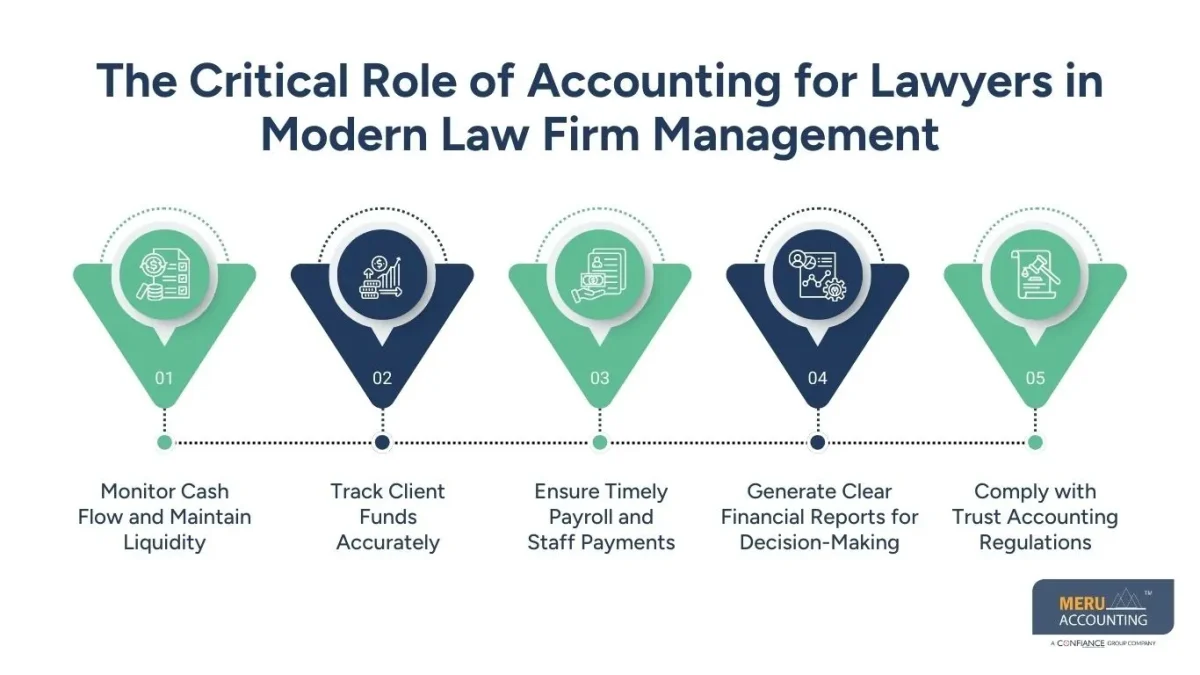
4. Generate Clear Financial Reports for Decision-Making
Accounting provides detailed financial statements and management reports, allowing law firms to make informed business decisions and plan for growth.
5. Comply with Trust Accounting Regulations
Law firms must follow strict trust accounting rules. Professional accounting ensures that client funds are handled according to regulations, avoiding penalties and maintaining client trust.
By implementing accurate and compliant accounting practices, law firms can operate confidently, maintain financial stability, and build lasting trust with clients.
Common Financial Challenges Faced in Accounting for Lawyers
Law firms face several financial challenges that make accounting for lawyers complex:
1. Trust Fund Errors
Mismanaging client funds can lead to legal penalties. Proper tracking and reconciliation are essential to protect both clients and the law firm.
2. Complex Payrolls
Lawyers, paralegals, and support staff have different pay structures. Ensuring accuracy in salaries, bonuses, and deductions can be challenging without specialized systems.
3. Billing Accuracy
Tracking billable hours and client expenses can be prone to mistakes. Even small errors can impact client trust and reduce overall firm revenue.
4. Regulatory Compliance
Law firms must follow strict guidelines for financial reporting. Failure to comply can result in fines, audits, and damage to the firm’s reputation.
5. Manual Processes
Relying on spreadsheets increases the risk of errors and inefficiency. Automated accounting systems can save time and reduce mistakes significantly.
Implementing industry-specific accounting systems can address these challenges by automating processes and ensuring accuracy.
Understanding Trust Compliance in Accounting for Lawyers
Trust compliance is one of the most critical aspects of accounting for lawyers. Trust accounts hold client funds separately from the law firm’s operating funds, and any errors can lead to serious legal consequences.
Key aspects of trust compliance include:
- Maintaining separate accounts for client funds
- Regular reconciliation of trust accounts
- Accurate recording of deposits and withdrawals
- Generating client statements promptly
- Keeping detailed records for audits and regulatory inspections
- Implementing internal controls to prevent unauthorized access or misuse of funds
Proper trust accounting protects clients, avoids regulatory fines, and maintains the law firm’s reputation.
Smart Systems That Support Trust Accounting and Client Fund Management
Modern accounting systems make managing trust accounts and client funds much simpler. Specialized systems designed for law firms offer multiple features to improve accuracy, compliance, and efficiency.
1. Track Client Funds by Matter or Case
These systems allow law firms to monitor funds for each client or case individually. This ensures every transaction is recorded correctly and easily traceable.
2. Automatically Update Ledgers and Balances
Transactions are recorded in real time, keeping ledgers and account balances accurate. This reduces manual work and the chances of mistakes.
3. Alert for Discrepancies or Overdue Reconciliations
Automated alerts notify staff of any mismatches or pending reconciliations. Early detection prevents potential compliance issues and financial errors.
4. Generate Reports for Compliance and Audits
Accounting systems can produce detailed reports that meet regulatory and audit requirements. These reports save time during audits and ensure transparency.
Using these systems reduces errors, saves time, and ensures full compliance with trust accounting rules, allowing law firms to focus more on client service rather than manual financial management.
How Accounting for Lawyers Ensures Accurate Payroll and Staff Compensation
Payroll management is another critical function of accounting for lawyers. Law firms often have complex pay structures that include salaries, bonuses, commissions, and reimbursements. Proper accounting ensures:
- Accurate calculation of salaries and deductions
- Timely payment to lawyers and staff
- Compliance with tax laws and labor regulations
- Automated reports for payroll auditing
Integrating payroll with trust accounting and general accounting systems ensures all financial records are accurate and transparent.
Role of Automation in Accounting for Lawyers and Financial Control
Automation plays a significant role in modern accounting for lawyers. Automated systems help:
- Reduce manual errors in data entry
- Streamline billing and invoice management
- Track client funds automatically
- Generate real-time financial reports
- Ensure consistent compliance with trust regulations
Automation allows law firms to focus on client service while maintaining financial control efficiently.
Financial Reporting and MIS Insights Through Accounting for Lawyers
Financial reporting is a critical part of accounting for lawyers. Accurate and timely reports help law firms make informed decisions, maintain financial stability, and ensure transparency for clients and regulators. Key benefits include:
1. Monthly and Quarterly MIS Reports
Management Information System (MIS) reports provide a clear snapshot of the firm’s financial health. Regular reporting helps track performance trends and identify areas that need attention.
2. Revenue and Expense Analysis
Detailed analysis of income and expenses allows law firms to understand profitability. This helps in budgeting, identifying cost-saving opportunities, and improving overall financial management.
3. Cash Flow Forecasting
Predicting cash flow ensures the firm has enough funds to meet obligations. Forecasting helps prevent shortages and supports better planning for investments or expansion.
4. Audit-Ready Records for Regulators
Accurate records make audits smoother and reduce the risk of non-compliance. Audit-ready documentation ensures that all financial transactions can be verified easily.
5. Clear Financial Insights for Resource Allocation
Financial reports give law firms a comprehensive view of their resources. This allows for informed decisions on staffing, case management, and investment in new tools or services.
Effective financial reporting through accounting for lawyers ensures law firms operate efficiently, remain compliant, and can plan strategically for growth.
Key Features to Look for in the Best Accounting Software for Lawyers
Choosing the best accounting software for lawyers is essential for efficiency and compliance. Key features to consider include:
1. Trust Accounting Management
Software should allow matter-wise tracking of all client funds accurately.
2. Payroll Integration
Automates calculation of salaries, bonuses, deductions, and tax compliance.
3. Billing and Invoicing
Tracks time, generates invoices, and ensures accurate client billing.
4. Financial Reporting
Provides MIS reports, dashboards, and audit-ready financial statements.
5. Automation Tools
Includes alerts, reminders, and automated reconciliations for efficiency.
6. Secure Data Handling
Protects all sensitive client and firm financial data securely.
7. Regulatory Compliance
Built-in tools ensure compliance with local laws and trust rules.
Selecting software with these features ensures a law firm can manage its finances confidently and efficiently.
How Professional Accounting for Lawyers Reduces Compliance Risks
Professional accounting for lawyers reduces risks by:
- Maintaining accurate client fund records
- Preventing trust account violations
- Ensuring proper payroll and tax compliance
- Providing clear audit trails
- Reducing human errors in financial management
By relying on skilled professionals and the right software, law firms can focus on serving clients without worrying about financial mistakes or penalties.
How Meru Accounting Supports Law Firms
At Meru Accounting, we provide specialized accounting services for lawyers that enable law firms to manage finances, trust accounts, payroll, and reporting efficiently. Our services are designed to ensure accuracy, compliance, and complete financial control. Key services we provide include:
1. Setting Up Law-Firm-Specific Accounting Systems
We provide customized accounting systems tailored to the unique processes of law firms. This ensures smooth management of transactions, reporting, and compliance.
2. Matter-Wise Trust Fund Management
Our services include precise tracking and management of client funds by matter or case. This guarantees accurate trust accounting and protects client interests.
3. Payroll Management and Tax Compliance
Meru Accounting provides full payroll services, ensuring lawyers, paralegals, and support staff are paid accurately and on time. We also handle all tax compliance requirements to prevent errors and penalties.
4. Monthly MIS Reporting for Financial Clarity
We deliver detailed monthly MIS reports that provide insight into revenue, expenses, and overall financial health. These reports help law firms make informed decisions and plan strategically.
5. Guidance and Support in Choosing the Best Accounting Software for Lawyers
We provide expert guidance on selecting and implementing the best accounting software for lawyers, ensuring efficient management of trust accounts, payroll, billing, and reporting.
With Meru Accounting’s professional services, law firms gain reliable financial management, regulatory compliance, and the confidence to focus on their legal practice.
Key Takeaways
- Accounting for Lawyers is essential for managing client funds, payroll, and finances accurately.
- Law firms face unique challenges, including trust compliance and complex payroll structures.
- Smart accounting systems reduce errors, improve reporting, and ensure regulatory compliance.
- Automation plays a crucial role in streamlining financial operations.
- Selecting the best accounting software for lawyers with features like trust accounting, payroll, and reporting is key to efficiency.
Professional accounting support, like that from Meru Accounting, ensures law firms maintain financial control and compliance.
FAQs
Law firms handle client funds, trust accounts, and complex payroll. Specialized systems help manage these tasks accurately and stay compliant with regulations.
Trust accounting involves keeping client funds separate from the firm’s money. It requires accurate recording and regular reconciliation to stay compliant.
It simplifies trust management, payroll, billing, and reporting, reducing errors and saving time.
Yes, automation reduces manual errors, generates alerts, automates reconciliations, and provides real-time reports for financial control.
Experts ensure accurate financial records, proper payroll, trust compliance, and audit-ready reporting, preventing fines and legal issues.


