



Manufacturing accounting is essential for businesses aiming to control costs, optimize resources, and maintain accurate financial records. By tracking every expense, from raw materials to labor and overhead, manufacturing accounting allows companies to understand their financial position in real time.
Integrating software for manufacturing can further enhance this process, providing timely insights into production costs and helping managers make informed decisions.
Cost Accounting for Manufacturing helps businesses spot inefficiencies and reduce costs without affecting production quality. By analyzing cost data, managers can make better decisions on pricing, budgeting, and resource allocation.
Using software for manufacturing alongside accounting further streamlines operations and improves real-time cost control.
What You Will Learn From This Blog
This blog will help you understand the essential role of manufacturing accounting in modern manufacturing businesses. After reading, you will know:
- How manufacturing accounting works and why it is different from general accounting.
- The importance of real-time cost management and how tracking costs as they happen helps control expenses and improve profitability.
- How software for manufacturing supports accounting by simplifying data collection, automating reporting, and ensuring accurate cost tracking.
- Which costs to monitor, such as materials, labor, and overhead, and the key metrics essential for measuring efficiency and performance.
- Common challenges in manufacturing accounting and ways to overcome them using best practices and proper tools.
- How Meru Accounting supports manufacturing businesses with tailored accounting solutions, integration with software, accurate reporting, and ongoing guidance.
Understanding Manufacturing Accounting
Manufacturing accounting is a specialized form of accounting that tracks all financial activities related to production, including raw materials, labor, and overhead costs. It provides manufacturers with a clear picture of how resources are used and how production expenses impact overall profitability, helping businesses make informed decisions on pricing, operations, and inventory.
A major focus of industrial accounting is cost control. By breaking down expenses across materials, labor, and overhead, businesses can identify inefficiencies, reduce waste, and improve operational performance.
Accurate cost tracking also ensures that production remains profitable even when raw material prices fluctuate or production cycles are complex.
Inventory management is another critical aspect. Proper accounting ensures that raw materials, work-in-progress, and finished goods are correctly valued, reducing stock discrepancies and optimizing production schedules.
Modern manufacturing accounting software further streamlines these processes, providing real-time insights into costs, cash flow, and profitability, enabling manufacturers to make strategic decisions and drive sustainable growth.
Understanding Cost Components in Manufacturing Accounting
Direct Materials
Costs of raw materials used in production are tracked individually to determine accurate product costs.
Direct Labor
Labor costs include wages, overtime, and benefits of employees directly involved in production.
Manufacturing Overhead
Overhead includes utilities, maintenance, depreciation, and other indirect costs necessary for production.
Variable and Fixed Costs
Separate variable costs, which fluctuate with production, from fixed costs, which remain constant, for better cost control.
Cost Allocation
Cost accounting for manufacturing ensures that each cost is allocated correctly to the relevant product or department, giving a true picture of profitability.
How Manufacturing Accounting Supports Cost Control
Tracking Direct Material Costs
Manufacturing accounting tracks the cost of raw materials accurately, helping businesses identify areas where material usage can be optimized.
Monitoring Labor Expenses
Labor costs are a major part of production expenses. With industrial accounting, companies can track labor hours, overtime, and productivity, ensuring costs remain within budget.
Controlling Overhead Costs
Manufacturing accounting accounts for utilities, maintenance, and other overhead expenses. This helps businesses identify unnecessary spending and reduce waste.
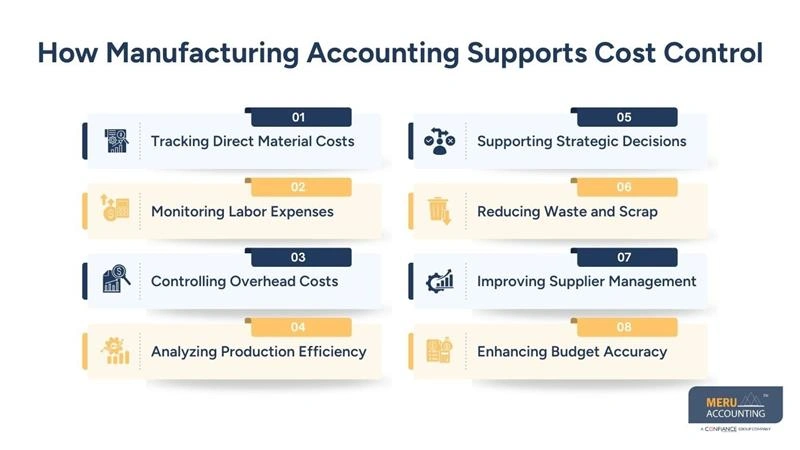
Analyzing Production Efficiency
By comparing actual costs with standard costs, production accounting helps evaluate production efficiency, highlighting areas for improvement.
Supporting Strategic Decisions
Accurate cost tracking allows managers to set realistic pricing, plan budgets, and negotiate better with suppliers, contributing to long-term business sustainability.
Reducing Waste and Scrap
Manufacturing accounting identifies areas where material or time is wasted, helping businesses reduce scrap and lower overall production costs.
Improving Supplier Management
Tracking costs allows companies to evaluate supplier pricing and performance, ensuring they get the best value for materials and services.
Enhancing Budget Accuracy
With detailed cost tracking, manufacturing accounting makes it easier to prepare accurate budgets and forecasts, preventing overspending and financial surprises.
Benefits of Using Software for Manufacturing
Automated Data Collection
Software for manufacturing collects data from machines, inventory, and labor automatically. This eliminates manual entry errors and saves time.
Real-Time Reporting
Manufacturers can generate instant reports on production costs, material usage, and labor expenses, making it easier to identify cost issues quickly.
Inventory Management
The software tracks inventory levels accurately, ensuring raw materials are used efficiently and reducing excess stock costs.
Cost Forecasting
With manufacturing management software, businesses can forecast production costs and budget effectively, preventing overspending.
Integration With Accounting Systems
These tools integrate with manufacturing accounting processes, providing a complete view of financial performance without complex manual tracking.
Enhanced Decision-Making
By providing timely insights into costs and production data, software for manufacturing helps managers make informed decisions quickly.
Improved Compliance
Software helps maintain accurate records and reports, making it easier to comply with financial regulations and internal policies.
Best Practices for Effective Manufacturing Accounting
Maintain Accurate Records
Keep detailed records of all production costs, including materials, labor, and overhead. Accuracy ensures reliable reporting and decision-making.
Use Consistent Costing Methods
Adopt a standard costing method to compare actual costs with expected costs. Consistency helps identify inefficiencies and plan better.
Implement Software for Manufacturing
Software for manufacturing streamlines data entry and tracking, providing real-time updates and reducing human error.
Conduct Regular Audits
Regularly audit accounts to verify accuracy and compliance. This prevents errors from escalating and ensures the trustworthiness of financial data.
Train Your Team
Educate employees on accounting procedures and cost tracking. Skilled staff ensures proper implementation of industrial accounting principles.
Key Metrics Tracked by Manufacturing Accounting
Cost Per Unit
Tracks the total production cost divided by the number of units produced, helping in pricing decisions.
Inventory Turnover
Measures how often inventory is used or sold during a period. Helps prevent overstocking or stockouts.
Production Efficiency
Compares actual output to standard output, highlighting areas for process improvement.
Labor Productivity
Tracks output per labor hour to identify inefficiencies and optimize workforce allocation.
Overhead Ratio
Measures overhead costs as a percentage of total production costs, allowing managers to control indirect expenses effectively.
Common Challenges in Manufacturing Accounting and How to Overcome Them
Inaccurate Data Entry
Manual errors can distort cost calculations. Use manufacturing management software to automate data collection and reduce mistakes.
Complex Cost Allocation
Assigning overhead costs to products can be complicated. Implement clear allocation methods and monitor them regularly.
Inventory Mismanagement
Stock discrepancies impact cost accuracy. Real-time tracking through manufacturing accounting ensures proper inventory management.
High Labor Costs
Untracked labor expenses can escalate. Monitor hours and overtime closely using manufacturing accounting systems.
Reporting Delays
Delayed reports affect decision-making. Software for manufacturing can generate instant reports for faster analysis.
Why Choose Meru Accounting for Manufacturing Accounting
Managing manufacturing costs and maintaining accurate financial records can be challenging without professional guidance. Meru Accounting provides specialized solutions that streamline accounting processes and ensure real-time visibility into production expenses.
Tailored Accounting Solutions
Meru Accounting provides customized manufacturing accounting solutions to suit each business’s needs. We track all production costs, including materials, labor, and overhead.
Software Integration
We help integrate software for manufacturing with your accounting system, providing real-time insights and reducing manual work.
Expert Cost Analysis
Our team of professionals analyzes production costs and identifies opportunities for cost savings, helping your business stay competitive.
Accurate Reporting
Meru Accounting ensures accurate financial reporting and cost tracking, helping managers make informed decisions quickly.
Ongoing Support
We offer continuous support for accounting and cost management, ensuring your business maintains accurate records and achieves financial goals.
Key Takeaways
- Manufacturing accounting is critical for controlling costs and tracking production expenses.
- Real-time cost management helps businesses respond quickly to inefficiencies and overspending.
- Software for manufacturing enhances accuracy, efficiency, and reporting capabilities.
- Proper accounting supports better pricing, budgeting, and strategic decision-making.
- Meru Accounting provides tailored solutions to integrate accounting systems and software for effective cost control.
FAQs
Manufacturing accounting tracks all costs in producing goods, including materials, labor, and overhead. It helps businesses manage expenses and calculate product profitability.
Software for manufacturing tracks production costs in real time and generates accurate reports. It reduces manual errors and makes cost management easier.
The main cost components are direct materials, direct labor, and manufacturing overhead. Tracking each ensures accurate product pricing and cost control.
Real-time cost management lets businesses monitor expenses as they happen. This helps identify inefficiencies quickly and reduce waste.
Manufacturing costs should be reviewed daily or weekly. Regular checks help maintain accurate financial records and control spending.


