



Manufacturing accounting is an essential part of running a successful small or mid-sized manufacturing company. Accurate financial records, cost tracking, and efficient accounting processes help manufacturers control expenses, improve profitability, and make informed decisions.
For companies in the manufacturing sector, maintaining precise accounting practices is not just a regulatory requirement but also a critical tool to ensure sustainability and growth.
In addition, effective production accounting provides insights into production efficiency, helping managers identify areas where resources can be optimized. It also enables companies to make better pricing decisions, ensuring that products remain competitive while maintaining healthy profit margins.
Small and mid-sized manufacturers can greatly benefit from structured accounting processes, which reduce errors, prevent financial mismanagement, and support long-term strategic planning.
What You Will Learn From This Blog
- Learn what manufacturing accounting is and how it differs from standard accounting practices.
- Discover why accurate accounting is critical for small and mid-sized companies to control costs, improve profits, and stay compliant.
- Find out how manufacturers can implement effective accounting processes to manage finances efficiently.
- Understand how the right accounting software for manufacturing industry can simplify operations, track costs, and improve financial clarity.
- Gain actionable insights to optimize financial management, reduce production costs, manage inventory, and make better business decisions.
What Is Manufacturing Accounting?
Manufacturing accounting is a specialized branch of accounting that tracks and manages all financial transactions within a manufacturing company. It covers recording production costs, managing inventory, and analyzing profit margins to ensure accurate financial reporting. By keeping detailed records, manufacturers can gain a clear picture of their expenses and overall profitability.
This type of accounting focuses on three main areas: direct costs, indirect costs, and overhead expenses. Unlike general accounting, manufacturing accounting emphasizes cost analysis, production efficiency, and inventory valuation, which helps companies understand the true cost of producing goods. Accurate cost data also plays a key role in making pricing decisions and maintaining healthy profit margins.
Small and mid-sized manufacturers, including accountants, managers, and business owners, rely on manufacturing accounting to make informed decisions. By monitoring costs and analyzing production data, companies can optimize operations, plan budgets effectively, and improve overall financial performance.
Importance Of Manufacturing Accounting For Small And Mid-Sized Companies
Supports Financial Planning
Manufacturing accounting provides accurate financial records that help companies plan for the future. Small and mid-sized manufacturers can forecast expenses, revenue, and profit more reliably.
Improves Profitability
By analyzing production costs and expenses, manufacturing accounting allows companies to identify cost-saving opportunities and optimize their profit margins.
Ensures Regulatory Compliance
Small and mid-sized manufacturers must comply with tax regulations and reporting standards. Manufacturing accounting ensures timely and accurate compliance with legal requirements.
Enhances Decision-Making
Production accounting delivers detailed financial insights that help business owners make informed operational and strategic decisions.
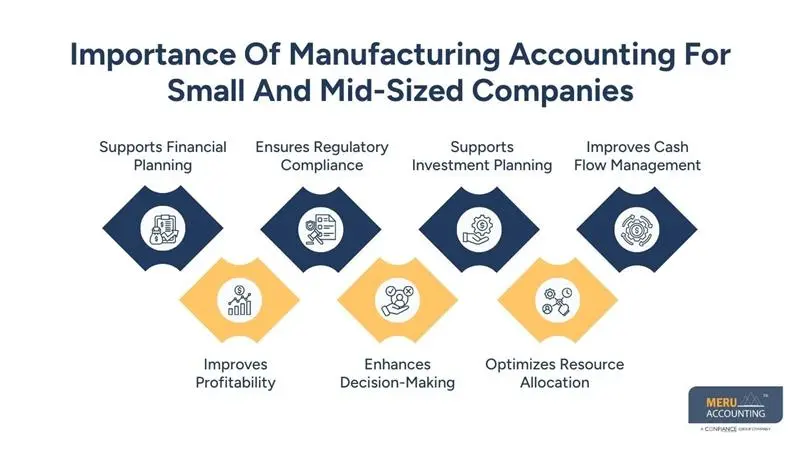
Supports Investment Planning
Companies can use manufacturing accounting data to plan for expansions, equipment purchases, and other capital investments with confidence.
Optimizes Resource Allocation
Cost Accounting for Manufacturers helps companies allocate labor, materials, and machinery efficiently, reducing waste and improving production efficiency.
Improves Cash Flow Management
By tracking expenses and monitoring revenue, production accounting allows companies to manage cash flow better and avoid unexpected financial shortfalls.
Key Responsibilities Of A Manufacturing Accountant In Your Company
Monitoring Production Costs
A manufacturing accountant tracks the costs associated with producing goods, including raw materials, labor, and overhead. This helps in accurate cost allocation. Regular monitoring also highlights any unexpected cost increases early.
Budget Preparation and Control
The accountant prepares budgets and monitors spending, ensuring the company stays within planned limits. This process helps prevent overspending and keeps projects financially on track.
Inventory Valuation
Manufacturing accountants maintain accurate inventory records, calculating the value of raw materials, work-in-progress, and finished goods. Proper valuation ensures correct reporting of assets and cost of goods sold.
Financial Reporting
They prepare financial statements and cost reports to provide insights into company performance. These reports guide management in making informed operational and strategic decisions.
Cost Analysis
Analyzing costs helps identify areas of inefficiency, reduce waste, and improve profitability. It also allows manufacturers to adjust pricing and production strategies effectively.
Supporting Management Decisions
Manufacturing accountants provide actionable data that helps management optimize production and reduce expenses. This support ensures that decisions are backed by accurate and reliable financial information.
Essential Accounting Processes Every Manufacturer Should Follow
Recording Production Costs
All direct and indirect costs should be recorded promptly to maintain accurate financial records.
Tracking Labor Expenses
Labor costs are a significant portion of production expenses. Tracking payroll ensures proper cost allocation.
Managing Overhead Costs
Overhead costs like utilities, rent, and equipment depreciation must be monitored to control spending.
Inventory Accounting
Accurate inventory records prevent stockouts or overstock situations and help calculate cost of goods sold (COGS).
Regular Financial Reporting
Monthly and quarterly reports keep stakeholders informed and help in financial planning.
Budget Monitoring
Comparing actual expenses against budgets ensures financial control and highlights areas needing improvement.
How Manufacturing Accounting Helps Reduce Production Costs
Identifying Cost Drivers
Manufacturing accounting helps identify the primary factors that drive production costs, allowing companies to focus on reduction strategies. Understanding these drivers makes it easier to implement cost-saving measures effectively.
Monitoring Waste and Losses
By tracking raw materials usage and production efficiency, manufacturers can minimize waste and losses. This also ensures that resources are used more sustainably and profitably.
Optimizing Resource Allocation
Proper accounting helps in allocating labor, machinery, and materials efficiently. Efficient allocation reduces idle time and maximizes production output.
Pricing Decisions
Accurate cost data ensures that products are priced correctly, covering costs while remaining competitive. It also helps businesses maintain healthy profit margins over time.
Budget-Based Cost Control
Manufacturing accounting supports budget tracking, which prevents overspending and improves profit margins. Regular budget reviews help detect variances and correct them quickly.
Improving Supplier Management
Data from accounting helps negotiate better terms with suppliers and monitor procurement costs. This enables companies to maintain quality while reducing supply chain expenses.
Choosing The Right Accounting Software For Manufacturing Industry Needs
Understanding Software Requirements
Choosing the right accounting software for manufacturing industry is crucial. It should support cost tracking, inventory management, and financial reporting.
Features to Look For
Look for software that automates cost calculation, integrates with production schedules, and generates detailed reports.
Scalability
The software should grow with your company, handling increasing complexity in production and accounting.
Ease of Use
A user-friendly accounting software for manufacturing industry reduces errors and allows staff to focus on analysis instead of data entry.
Integration With Other Systems
Software that connects with procurement, sales, and payroll systems ensures complete financial visibility.
Data Security
Secure accounting software protects sensitive financial data and prevents unauthorized access.
Inventory Management And Cost Control Through Manufacturing Accounting
Tracking Raw Materials
Manufacturing accounting ensures accurate records of raw materials, helping prevent shortages and excess stock.
Work-in-Progress Monitoring
Monitoring WIP inventory helps determine the cost of partially completed products and ensures efficient workflow.
Finished Goods Valuation
Proper valuation of finished goods ensures correct reporting of assets and cost of goods sold.
Minimizing Stock Losses
By maintaining accurate records, companies can reduce stock obsolescence, theft, and damage.
Cost Allocation
Manufacturing accounting ensures that costs are properly assigned to products, improving pricing and profitability.
Supporting Operational Decisions
Accurate inventory data supports decisions on production schedules, purchasing, and resource allocation.
Common Challenges In Manufacturing Accounting And How To Overcome Them
Complex Cost Allocation
Assigning overhead and indirect costs can be difficult. Using standard costing methods helps simplify allocation.
Inventory Discrepancies
Inaccurate inventory counts lead to financial errors. Regular physical audits and software tracking reduce discrepancies.
Managing Multiple Cost Centers
Large operations often have multiple departments. Proper accounting procedures ensure costs are tracked accurately for each unit.
Adapting To Regulatory Changes
Tax rules and financial reporting standards may change. Staying updated and consulting experts helps maintain compliance.
Data Management Issues
Handling large amounts of financial data can be overwhelming. Using reliable accounting software for manufacturing industry simplifies data management.
Staff Training
Employees need proper training to handle manufacturing accounting processes effectively and avoid mistakes.
How Meru Accounting Can Support Your Manufacturing Accounting Needs
Expertise in Manufacturing Accounting
Meru Accounting provides specialized support for small and mid-sized manufacturers, helping them manage costs and financial reporting accurately.
Customized Solutions
Our team offers solutions tailored to your company’s unique production processes and accounting requirements.
Software Implementation Support
We help businesses select and implement accounting software for manufacturing industry to ensure smooth operations.
Ongoing Financial Management
Meru Accounting handles bookkeeping, cost tracking, and financial reporting, allowing owners to focus on running the business.
Compliance and Tax Assistance
We ensure that all financial records meet regulatory requirements, including tax filing and audit preparation.
Actionable Insights
Our reports and analysis help manufacturers identify cost-saving opportunities and improve profitability.
Key Takeaways
- Manufacturing accounting is essential for tracking costs, managing inventory, and ensuring profitability.
- Small and mid-sized companies benefit from accurate financial data for budgeting and planning.
- Choosing the right accounting software for manufacturing industry simplifies cost management and reporting.
- Regular monitoring of inventory, labor, and overhead reduces waste and improves efficiency.
- Meru Accounting provides comprehensive support to handle all aspects of Cost Accounting for Manufacturers.
FAQs
Manufacturing accounting is a type of accounting that tracks all costs, expenses, and inventory in a manufacturing business to help small and mid-sized companies stay profitable.
It helps identify areas of waste, track labor and materials, and manage overhead, so companies can control expenses and improve profit margins.
The best accounting software for manufacturing industry helps with cost tracking, inventory management, and reporting. Examples include QuickBooks, Xero, and Odoo.
Manufacturers should review their accounting records monthly or quarterly to track costs, manage inventory, and make timely business decisions.
Challenges include tracking inventory, managing costs, and allocating overhead accurately. Proper processes and software can solve these common issues effectively.


