




Manufacturing company accounting is a crucial aspect of running any production business efficiently. It provides a clear picture of all financial activities, helping managers make informed decisions that impact production and profitability.
Proper accounting practices ensure that manufacturers can track expenses, manage inventory, and maintain financial health while meeting customer demand. These practices also help in identifying cost-saving opportunities and improving overall operational efficiency.
Without organized accounting, businesses can struggle with cash flow issues, inventory shortages, or overstock problems. Such challenges can affect production schedules, customer satisfaction, and long-term growth prospects.
This blog will explore key best practices in manufacturing company accounting and how they help in managing inventory and supply chains effectively. You will also learn strategies to control costs, optimize stock levels, and maintain smooth supply chain operations.
What You Will Learn From This Blog
- Understanding what manufacturing company accounting involves
- How accounting for manufacturers supports inventory management
- Best practices for effective supply chain and inventory control
- Strategies to manage costs and track performance indicators
- Tips for handling raw material price fluctuations
- How Meru Accounting can support your manufacturing accounting needs
By the end of this blog, you will have actionable insights into improving your accounting processes to boost efficiency and profitability.
What Is Manufacturing Company Accounting?
Manufacturing company accounting refers to the process of recording, tracking, and analyzing all financial transactions related to a manufacturing business. This includes the costs of raw materials, labor, production overheads, and finished goods inventory.
By maintaining detailed records of these transactions, manufacturers can gain a clear understanding of their expenses and revenues, which is essential for effective decision-making and business planning.
The primary purpose of accounting for manufacturers is to provide accurate financial data that supports informed decisions. It helps businesses optimize inventory levels, improve profitability, and identify areas where costs can be reduced.
Without proper accounting practices, manufacturers may face challenges such as overspending, inefficient resource allocation, or inaccurate financial reporting. Manufacturing company accounting encompasses several components, including cost accounting, inventory accounting, overhead tracking, payroll, and financial reporting.
Each of these elements plays a critical role in keeping production operations aligned with financial management. For example, cost accounting tracks production expenses, while inventory accounting ensures that stock levels are accurate and up-to-date.
Accuracy is crucial in manufacturing accounting because errors can lead to costly mistakes, such as overstocking, stockouts, or miscalculated production costs.
The Role of Accounting for Manufacturers in Inventory Management
Inventory Tracking
Manufacturing company accounting involves tracking raw materials, work-in-progress, and finished goods. Accurate tracking helps avoid stockouts and excess inventory.
Costing Inventory Accurately
Proper accounting ensures that inventory costs are recorded using methods like FIFO, LIFO, or weighted average cost. This affects profitability calculations.
Identifying Slow-Moving Stock
Accounting data highlights products that are slow to sell, allowing manufacturers to adjust production or marketing strategies accordingly.
Maintaining Reorder Levels
Manufacturing accounting helps in setting minimum and maximum stock levels, ensuring inventory is sufficient without overburdening storage costs.
Reducing Waste and Spoilage
Through proper inventory accounting, manufacturers can monitor expiration dates, storage conditions, and material usage to reduce waste and losses.
Manufacturing Company Accounting Best Practices for Effective Inventory and Supply Chain Management
Regular Inventory Audits
Conduct periodic physical audits to verify recorded inventory against actual stock. This helps identify discrepancies and prevent losses.
Accurate Data Entry
Ensure all inventory transactions are recorded promptly and correctly. Mistakes in data entry can lead to misinformed business decisions.
Categorize Inventory Items
Separate inventory into categories like raw materials, work-in-progress, and finished goods for better tracking and reporting.
Monitor Supplier Performance
Accounting for manufacturers should track supplier deliveries, costs, and lead times. This ensures smooth supply chain operations.
Use Inventory Management Software
Integrating manufacturing company accounting software with inventory systems improves accuracy, reduces manual errors, and provides real-time insights.
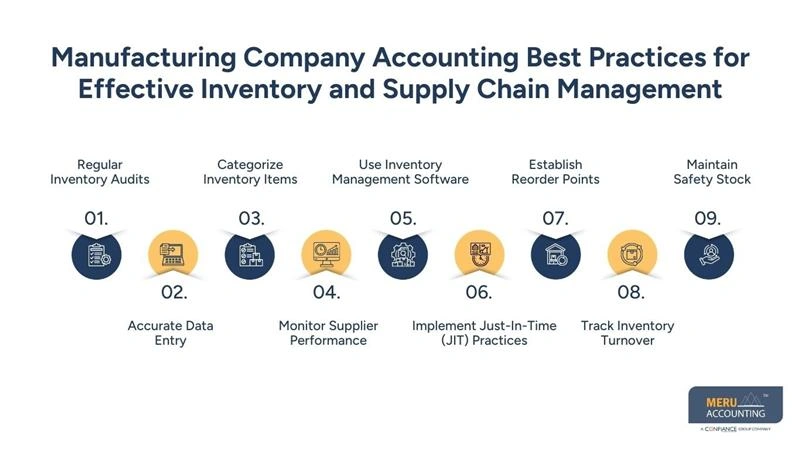
Implement Just-In-Time (JIT) Practices
Coordinate accounting with procurement to maintain optimal inventory levels, reducing storage costs while ensuring materials are available when needed.
Establish Reorder Points
Set minimum and maximum stock levels for each item. This ensures you reorder materials before running out while avoiding overstocking.
Track Inventory Turnover
Regularly monitor how quickly inventory is sold and replaced. High turnover indicates efficient inventory management, while slow turnover highlights excess stock.
Maintain Safety Stock
Keep a buffer of critical raw materials to prevent production delays. Safety stock protects against supplier delays or sudden demand spikes.
Cost Control Strategies in Manufacturing Company Accounting
Analyze Production Costs
Break down costs for materials, labor, and overhead. Accounting for manufacturers helps identify areas where expenses can be reduced.
Standardize Costing Methods
Using consistent methods for costing ensures comparable results across production cycles and helps maintain accurate pricing.
Monitor Overhead Expenses
Track indirect costs such as utilities, maintenance, and equipment depreciation. Effective manufacturing company accounting ensures overheads are managed efficiently.
Budget and Forecast Accurately
Regular budgeting and forecasting using historical data help in predicting production costs and planning resources accordingly.
Identify Cost Variances
Manufacturing company accounting compares actual costs to standard costs to detect variances. Addressing these discrepancies promptly prevents profit erosion.
Control Labor Costs
Accounting for manufacturers includes monitoring overtime, shift patterns, and payroll accuracy to optimize labor spending.
Tracking Key Performance Indicators (KPIs) for Manufacturing Accounting
Inventory Turnover Ratio
Measures how quickly inventory is sold and replaced. A higher ratio indicates efficient inventory management. It also helps identify slow-moving stock that may tie up capital unnecessarily.
Gross Profit Margin
Calculating gross profit helps evaluate production efficiency and cost control effectiveness in manufacturing company accounting. Monitoring this KPI regularly ensures pricing and cost strategies remain aligned with business goals.
Production Efficiency
Track units produced against planned output. This KPI helps identify bottlenecks and areas for improvement. It also highlights whether resources like labor and machinery are being utilized optimally.
Order Fulfillment Rate
Measures the percentage of orders delivered on time. Accurate accounting data ensures inventory is sufficient to meet demand. High fulfillment rates indicate reliable supply chain performance and customer satisfaction.
Cost per Unit
Calculating the cost per unit produced provides insights into pricing strategies and production efficiency. Tracking this metric helps manufacturers detect cost overruns and adjust production plans accordingly.
Accounts Receivable Turnover
Helps manufacturers monitor cash flow and customer payment behavior, ensuring the business maintains liquidity. It also aids in identifying slow-paying customers who may impact working capital.
Managing Raw Material Price Fluctuations in Manufacturing Company Accounting
Track Market Prices
Regularly monitor raw material prices and record changes in accounting systems to anticipate cost increases. Staying updated helps prevent unexpected cost overruns.
Negotiate Supplier Contracts
Use accounting data to negotiate favorable rates or bulk purchase discounts to protect margins. Strong supplier agreements can stabilize costs over time.
Use Hedging Strategies
Advanced manufacturing company accounting may include financial instruments to hedge against raw material price volatility. This approach minimizes financial risk from sudden market changes.
Adjust Production Schedules
If material prices rise, adjust production plans and inventory levels to minimize cost impact. Flexible scheduling ensures profitability without halting operations.
Analyze Historical Trends
Accounting for manufacturers involves reviewing past data to forecast future material costs and prepare budgets accordingly. Trend analysis supports smarter purchasing and inventory planning.
Maintain Safety Stock
In manufacturing company accounting, maintaining a buffer stock of critical raw materials can protect against sudden price spikes or supply chain disruptions. It provides a cushion to maintain consistent production during uncertain times.
How Meru Accounting Supports Manufacturing Company Accounting
Tailored Accounting Solutions
Meru Accounting provides customized services for manufacturing companies, ensuring accurate financial records and streamlined inventory management.
We understand that every manufacturer has unique processes, so our solutions are designed to match your production structure and reporting needs.
Expertise in Cost Accounting
Our team specializes in tracking production costs, overheads, and material expenses to improve profit margins.
This helps manufacturers gain better control over spending and identify areas where costs can be reduced without affecting quality.
Inventory and Supply Chain Management
We help manufacturers maintain optimal stock levels, track inventory movement, and improve supply chain efficiency.
With clear inventory insights, businesses can avoid stock shortages, reduce excess inventory, and plan procurement more effectively.
Financial Reporting and Analysis
Meru Accounting generates detailed financial reports, helping manufacturers make informed decisions based on real-time data.
These reports provide clarity on profitability, expenses, and cash flow, supporting smarter planning and growth.
Compliance and Tax Assistance
We ensure manufacturing company accounting complies with local regulations while optimizing tax planning for maximum benefits.
Our team stays updated on compliance requirements, reducing the risk of penalties and ensuring timely filings.
Integration With Software Systems
Our team assists in integrating accounting with ERP and inventory management software, providing accurate data for decision-making.
This integration improves data accuracy, reduces manual work, and supports faster access to financial and inventory information.
Key Takeaways
- Manufacturing company accounting is essential for tracking costs, managing inventory, and supporting supply chains.
- Accounting for manufacturers helps maintain accurate financial data, control costs, and improve efficiency.
- Best practices include regular audits, accurate data entry, inventory categorization, supplier monitoring, and software integration.
- Cost control strategies and KPI tracking provide insights into production efficiency and profitability.
- Meru Accounting provides comprehensive accounting services to help manufacturers streamline operations and make data-driven decisions.
FAQs
Manufacturing company accounting tracks production costs, inventory, and financial records. It is important because it helps manufacturers control costs, manage stock, and understand profits clearly.
Accounting for a Manufacturing company helps record raw materials, work-in-progress, and finished goods. This ensures accurate stock levels and prevents overstocking or shortages.
Accounting for manufacturers often uses cost accounting methods such as job costing or process costing. These methods help calculate accurate product costs and improve pricing decisions.
Accounting for manufacturers tracks supplier costs, delivery timing, and material usage. This helps maintain smooth supply chain operations and reduces unexpected production delays.
Yes, accounting for a manufacturing company identifies cost gaps, tracks overheads, and monitors labor expenses. This helps manufacturers find ways to reduce waste and improve profit margins.


