A factory can report strong sales and still face a cash shortage when tax bills arrive. Money may sit in unpaid invoices, raw materials, or new machines, while tax payments remain due. Manufacturing Tax Services give business owners a clearer view of these costs before they turn into a cash flow problem. The right tax plan links production costs, asset purchases, stock records, and tax duties to the firm’s financial goals.
For manufacturers, tax planning starts long before a return reaches the tax office. A missed expense, an incorrect stock value, or a late record can change the final tax figures. Regular checks and Outsourced Tax Preparation for Manufacturers can bring these details into one review process, giving owners a sound basis for tax decisions and future spending.
What You Will Learn From This Blog
- How Manufacturing Tax Services connect tax planning with daily factory costs.
- Which tax tasks deserve regular review throughout the year.
- What deductions and credits manufacturers may qualify for.
- How Outsourced Tax Preparation for Manufacturers can improve tax checks and filing records.
- What to look for when choosing a tax service provider.
Why Tax Planning Matters for Manufacturing Businesses
Keep Production Costs Clear
A rise in material prices can cut profit even when sales remain steady. Manufacturing Tax Services bring material, labor, power, and repair costs into a clear review, so owners can spot changes and check which products earn a fair return.
Plan for Tax Payments
A large order may raise sales but also require more stock and labor before the buyer pays. Tax forecasts let firms set funds aside for likely tax bills instead of relying on cash that is already needed for production.
Review Profit and Stock
Unsold goods can tie up cash and affect reported profit. Regular checks of raw materials, work in progress, and finished goods help match stock records with account balances and flag items that need a closer look.
Plan New Equipment Buys
A machine may cut labor time or raise output, but its price can put pressure on cash. Before buying, firms should review the cost, expected use, purchase date, and tax treatment to understand the full financial effect.
Lower the Risk of Tax Errors
A missing invoice or wrong asset entry can lead to figures that do not match the source records. Manufacturing Tax Services include checks that can catch gaps early, when staff can still find the right bills and explain the entries.
Key Manufacturing Tax Services for Better Financial Control
Tax Return Preparation
A tax return should reflect the firm’s actual income, costs, assets, and records, not rough year-end estimates. Manufacturing Tax Services include a review of key figures and missing documents before the business approves its return.
Inventory Cost Review
A stock count may show 500 units, but the accounts must also reflect the right cost for those goods. Reviewing purchase costs, production expenses, and stock reports can reveal gaps that affect the cost of goods sold and taxable profit.
Fixed Asset and Depreciation Review
Machines, tools, and plant equipment may receive different tax treatment from day-to-day expenses. Tax reviews can include checks of purchase dates, asset use, and depreciation records to ensure the figures reflect the correct facts and applicable rules.
Payroll Tax Review
Overtime, shift pay, bonuses, and staff benefits can make factory payroll more complex than a basic wage list. Manufacturing tax services include reviewing payroll reports, tax deposits, and employee records to identify errors before filing deadlines.
Tax Forecasts and Payment Dates
Tax costs can change when sales rise, expenses shift, or a firm buys new equipment. A forecast based on current accounts and planned spending gives owners time to prepare for likely payments, while leaving room for changes in actual results.
Tax Deductions and Credits Manufacturers Should Review
Understanding Local Tax Laws
Local tax laws vary from state to state. Solo attorneys must stay updated on all filing requirements, tax rates, and deadlines.
Complexity of Multi-Jurisdictional Taxes
Handling clients in multiple areas increases tax calculation difficulty. Each region has different rules, which can be very confusing.
Risk of Penalties
Late filings often result in fines and interest charges. Incorrect tax payments may also trigger audits and legal issues.
Difficulty in Time Management
Solo attorneys often manage every aspect of their practice. Keeping up with tax compliance adds significant pressure.
Lack of Accounting Expertise
Without specialized knowledge, managing local taxes becomes risky. Mistakes are more likely when handling complex regulations alone.
Consequences of Non-Compliance
Tax errors can damage reputation and increase business costs. Non-compliance may also lead to serious legal complications later.
Machinery and Equipment Costs
Some tax rules allow depreciation or special deductions for eligible equipment. The right treatment depends on the asset, its business use, and the tax law for the year, so firms should review the rules before making a claim.
Research and Development Costs
A manufacturer testing a new material or changing a production method may have research costs worth checking. Outsourced Tax Preparation for Manufacturers can include a review of project records and costs, but the work must meet the relevant tax rules to qualify.
Energy-Saving Plant Upgrades
A firm that replaces old equipment with a more energy-efficient system may qualify for certain tax benefits. Check the current rules before placing an order, since eligibility can depend on the type of asset, its use, and the date of purchase.
Staff and Training Costs
Training staff to use a new machine may be a normal business expense, but the tax treatment can vary. Keep course bills, wage records, and details of the training so the tax team can assess the cost under the rules that apply.
Freight and Production Expenses
Freight, storage, plant repairs, and other production costs can affect stock values and taxable profit. Manufacturing Tax Services should review how each cost is recorded instead of treating every payment as an immediate deduction.
A tax benefit should never be claimed on guesswork alone. Firms need to check current rules, keep the right proof, and avoid claiming the same cost more than once.
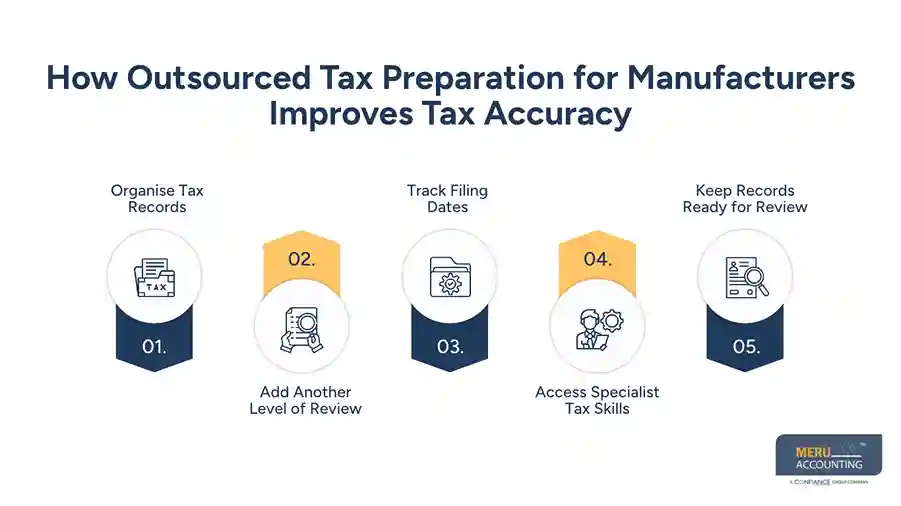
How Outsourced Tax Preparation for Manufacturers Improves Tax Accuracy
Organise Tax Records
Tax work can slow down when invoices sit in email folders and asset details are kept in separate files. Outsourced Tax Preparation for Manufacturers brings these records into a set review process and lists missing items before filing.
Add Another Level of Review
An outside team can compare tax figures with account entries, bills, payroll reports, and past returns. Manufacturing Tax Services can use these checks to flag unusual changes and figures that need further review before approval.
Track Filing Dates
A missed tax deadline can lead to penalties or compliance issues. An external tax team can track return deadlines, payment dates, and document needs, while management remains responsible for timely approval and payment.
Access Specialist Tax Skills
A small factory may not need a full-time tax expert throughout the year. Outsourced Tax Preparation for Manufacturers gives the firm access to relevant skills for agreed tasks, without the need to hire a permanent tax team.
Keep Records Ready for Review
When bills, asset lists, tax forms, and working papers follow one system, staff can find details faster. Manufacturing Tax Services should also set clear rules for file access, data sharing, and record retention.
Outsourcing does not remove the firm’s legal duties. Management should review key figures, protect private data, approve returns, and check that the provider has the right skills for the work.
optional anymore
on running the business
Common Manufacturing Tax Challenges and Ways to Address Them
Wrong Stock Values
Stock records can fall out of line when goods move between the plant, storage areas, and finished goods sections. Set regular count dates, check major differences, and match stock reports to the accounting ledger.
Poor Asset Records
A machine may be in use for months before its details reach the accounts team. Keep an asset list with the cost, purchase date, business use, and sale or disposal details for each major item.
Late Documents
A tax preparer cannot check an invoice that no one has sent. Set monthly deadlines, assign each record to a staff member, and track missing documents until the team receives them.
Changes in Tax Rules
A tax break available in one year may have different terms in the next. Manufacturing Tax Services should include checks of official tax updates for the firm’s location and tax year before claims are made.
Weak Review Processes
When one person enters figures and files a return without a second check, errors can go unnoticed. Outsourced Tax Preparation for Manufacturers can add another review step, while management checks major figures and approves the final return.
How to Choose the Right Manufacturing Tax Services Provider
Check Industry Experience
A provider should understand stock costs, machinery, factory payroll, and production expenses. Ask about its work with similar firms and the type of tax tasks it handles, without requesting private details about other clients.
Confirm the Work Scope
Confirm which Manufacturing Tax Services are included in the fee, such as tax return preparation, estimated tax calculations, and asset reviews. Confirm which tasks cost extra and which remain with your own team.
Review Quality Checks
Ask who prepares the return, who reviews it, and how errors are resolved. Outsourced Tax Preparation for Manufacturers should include clear review steps and a way to settle questions before filing.
Check Data Safety
Tax records may include payroll details, bank data, and business plans. Ask how the provider limits access, shares files, stores records, and responds to a data breach.
Compare Fees and Response Times
Compare Manufacturing Tax Services based on the agreed scope, total fees, response times, and additional charges. Compare the full fee, response times, contact arrangements, and any extra charges for tax notices or work outside the agreed scope.
Meru Accounting’s Manufacturing Tax Services
Meru Accounting provides accounting and bookkeeping services for businesses that need clear financial records and regular reports. Our Manufacturing Tax Services approach focuses on accurate account entries, organised cost records, and reports that give manufacturers a sound base for tax review and planning.
Accounting Records and Reconciliation
Our team records business transactions and reconciles bank and ledger balances. These records give tax preparers a clearer base for checking income, expenses, and account differences before filing.
Stock and Production Cost Records
Our accounting services organise stock and production cost records based on the information clients provide. Manufacturers can use these records to review raw materials, work in progress, finished goods, and changes in unit costs.
Fixed Asset Records
We record equipment purchases, disposals, and related entries based on the documents provided. These records give tax professionals a clearer base for reviewing depreciation and the tax treatment of plant assets.
Reports for Tax Planning
Our financial reports for Manufacturing Tax Services show income, costs, account balances, and changes over time. Manufacturers can use these figures to review spending, plan cash needs, and prepare for discussions with their tax adviser.
A Clear Service Scope
Meru Accounting agrees on the work, records needed, reporting schedule, and review steps with each client. Clients should confirm whether tax advice, return preparation, and filing are included before work begins.
Our Expert Perspective
A useful tax review often starts with a small question: does the cost shown in the accounts match what took place on the factory floor? Manufacturing Tax Services can review these changes alongside expense records and tax documents to identify discrepancies before year-end.
Manufacturers should review these records each month and raise tax questions before year-end. Outsourced Tax Preparation for Manufacturers can add specialist review when needed, but good results still depend on clear records, sound checks, and claims backed by proof.
Key Takeaways
- Manufacturing Tax Services connect tax planning with stock, production costs, assets, and cash needs.
- Review stock values, machinery costs, payroll, and production expenses throughout the year.
- Check current tax rules before claiming deductions or credits.
- Outsourced Tax Preparation for Manufacturers can add specialist skills and another level of review.
- Keep records organised and check key figures before approving a return.
- Compare providers on industry experience, service scope, fees, data safety, and response times.
- Treat tax estimates as planning tools, not promises of tax savings.
FAQs
Manufacturing Tax Services include tax return preparation, inventory cost reviews, asset tax records, tax forecasts, and checks of eligible deductions and credits.
Tax planning gives manufacturers a clearer view of tax costs, cash needs, production expenses, and future tax payments.
Manufacturers may qualify for tax benefits on eligible machinery, research costs, energy upgrades, and other business expenses, based on current tax laws.
Outsourced Tax Preparation for Manufacturers adds checks of tax records, stock values, asset costs, and financial data before tax returns are filed.
Manufacturers should compare industry experience, tax expertise, service scope, review steps, fees, and data security before selecting a provider.
optional anymore
on running the business