
Month-end close and tax season place heavy pressure on accounting teams, where even small delays in records can affect reporting accuracy. Many firms now rely on offshore data entry outsourcing to manage large volumes of financial records during these peak periods. This structured approach reduces internal workload while improving closing speed and keeping financial data organized for timely reporting.
In practice, offshore data entry outsourcing is used to handle invoices, receipts, payroll entries, and reconciliations when in-house teams face time limits. At the same time, online data entry services are used to maintain continuous updates across accounting systems, reducing reconciliation delays during critical reporting cycles.
The rising demand for accurate and timely financial reporting has made these services essential for firms managing multiple clients or business units.
What You Will Learn From This Blog
- How accounting teams manage high pressure during month-end and tax season
- Why offshore support is used for large-scale financial data handling
- Role of structured data entry in reducing accounting errors
- Cost and time benefits for firms using external data support
- Practical use cases of offshore financial data processing
- How firms like Meru Accounting apply structured systems for better accuracy
What Is Offshore Data Entry Outsourcing and Why It Matters for Accounting Firms
Offshore data entry outsourcing involves delegating financial data entry tasks to teams located in other regions, often at lower operational costs. These tasks typically include invoice entry, ledger updates, bank record classification, and expense coding. By outsourcing these routine functions, accounting firms can streamline operations without overburdening their in-house staff.
Accounting firms rely on offshore data entry outsourcing to manage high workloads, especially during month-end closures and tax season. By transferring repetitive data entry work externally, internal teams can focus on critical tasks such as financial review, compliance checks, and decision-making, ensuring more accurate and timely reporting.
Many firms also integrate online data entry services with their accounting software to maintain real-time updates in cloud-based systems. This combination reduces duplication, minimizes delays in reporting, and ensures that data remains accurate and ready for audits.
How Offshore Data Entry Outsourcing Supports High-Volume Financial Workloads
Handling Large Invoice Volumes
During month-end periods, accounting teams often manage thousands of invoices within limited timelines. Structured external support keeps invoice processing organized while reducing reporting delays and improving closing efficiency.
Managing Multi-Client Operations
Accounting firms handling multiple clients frequently use offshore data entry outsourcing to maintain separate and organized financial records. Better workflow management and consistent transaction tracking improve data consistency across multiple accounts.
Faster Turnaround Time
Integration with online data entry services allows financial records to update faster within accounting systems. Reduced processing lag ensures quicker review cycles and supports timely financial reporting.
Reducing Internal Bottlenecks
Internal accounting teams often face delays because of repetitive manual work and limited staffing. External processing support reduces operational pressure during reporting deadlines and improves workflow continuity.
Continuous Data Flow
Regular transaction updates keep accounting records current throughout the reporting cycle. Accurate and timely reconciliations become easier with continuous financial data processing, strengthening audit readiness.
Real-Time Data Synchronization
Financial records stay updated in accounting systems through continuous offshore processing and system integration. This reduces gaps between entry and reporting stages and ensures smoother financial visibility.
Seasonal Workload Management
Month-end and tax season spikes create sudden workload pressure for accounting teams. Scalable external support balances workload distribution during peak financial cycles and improves operational stability.
Improved Audit Readiness
Organized and continuously updated financial data reduces last-minute corrections during audits. Structured records make verification and documentation faster for compliance checks and strengthen audit readiness.
Role of Online Data Entry Services in Modern Accounting Operations
Cloud-Based Data Entry Systems
Modern firms rely on online data entry services to update financial systems in real time through cloud platforms like Xero or QuickBooks. Real-time access to financial records allows accounting teams to monitor transactions without delays.
Integration With Accounting Software
These services integrate directly with accounting software, ensuring data accuracy and reducing manual entry errors. Better system connectivity also reduces duplicate entries and improves reporting consistency.
Remote Accessibility
Teams can access updated financial records from any location, which is critical during tax season when time sensitivity is high. Remote access also allows faster coordination between accountants, clients, and offshore teams.
Improved Data Organization
Structured entry ensures invoices and receipts are properly categorized for audits, and organized financial records make reconciliations and compliance reviews more efficient.
Quick retrieval and verification of records reduce delays during reporting periods and keep accounting workflows steady.
Reduced Dependency On Manual Files
Paper-based or spreadsheet-heavy systems are replaced with structured digital workflows supported by offshore teams. Digital records also reduce the risk of missing documents and filing errors.
Key Challenges Accounting Teams Face During Month-End Closures
Time Pressure On Teams
Month-end deadlines create tight reporting windows for accounting departments managing large financial records. Shared workload through offshore data entry outsourcing reduces pressure on internal teams during peak periods.
High Risk Of Errors
Manual data entry during long working hours increases the chances of duplicate entries and incorrect classifications. Even small financial errors can affect reporting accuracy and reconciliation processes.
Resource Limitations
Small and mid-sized firms often lack enough staff to manage increased accounting workloads efficiently. Limited resources can slow down reporting cycles and create operational delays.
Delayed Reconciliation
Bank statement matching and ledger reconciliation often take longer without structured online data entry services. Delayed reconciliations can affect financial reporting timelines and audit preparation.
Compliance Stress During Tax Season
Tax reporting requires accurate and properly organized financial records for timely filing. Missing transactions or incorrect entries can increase compliance risks and create audit concerns.
Data Backlog Accumulation
Large volumes of unprocessed invoices and receipts often build up during peak periods, creating reporting delays. Backlogs increase pressure on accounting teams and extend month-end closing timelines.
How Offshore Data Entry Outsourcing Improves Accuracy and Reduces Manual Errors
Structured Data Entry Process
Offshore data entry outsourcing follows defined rules for recording transactions, which reduces inconsistencies in financial records. Clear protocols ensure uniformity across invoices, receipts, and ledgers.
Double Validation Systems
Many offshore teams implement verification layers to cross-check entries before final submission. These checks significantly lower the chance of errors slipping into financial reports.
Reduced Human Fatigue
Shifting repetitive and time-consuming tasks to external teams prevents fatigue-related mistakes among in-house staff. Accountants can focus on analysis and compliance instead of routine data entry.
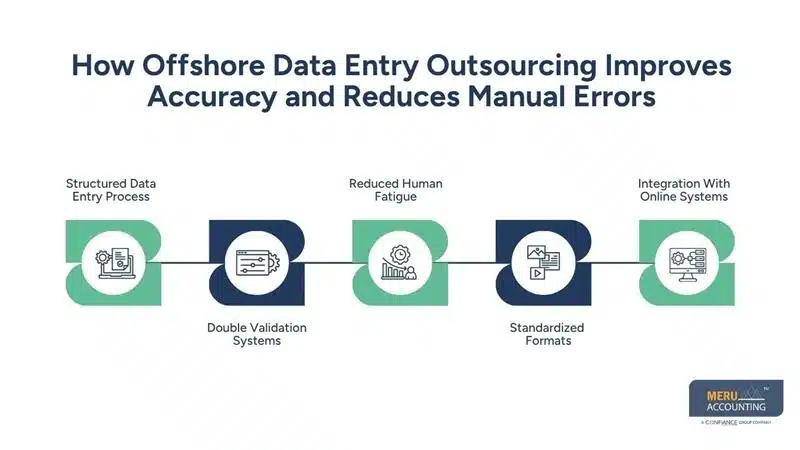
Standardized Formats
Data is entered using consistent formats, making reconciliations faster and easier. Standardization also simplifies audit preparation and financial review processes.
Integration With Online Systems
With real-time system integration, financial updates are reflected instantly in accounting software, minimizing duplicate entries. Continuous data syncing also improves accuracy in reporting and ensures records stay consistent across all ledgers.
Cost Efficiency Benefits of Using Online Data Entry Services for Accounting Teams
Lower Operational Costs
Firms reduce hiring, onboarding, and training expenses by using offshore data entry outsourcing instead of expanding in-house teams. Fixed payroll pressure decreases during seasonal workload spikes.
Flexible Scaling
Workloads can be increased or reduced based on month-end or tax season demand. Flexibility prevents unnecessary staffing costs during low-volume periods.
Reduced Infrastructure Cost
Lower requirements for extra office space, systems, and software licenses reduce overall operational spending. External teams manage large data volumes without internal infrastructure expansion.
Better Resource Allocation
Internal accountants focus on analysis, reporting, and compliance work while repetitive data tasks are handled externally. Clear role separation reduces workload pressure during peak reporting cycles.
Improved task distribution increases overall efficiency across finance operations. Finance teams gain more time for review and decision-making instead of manual entry.
Long-Term Savings
Over time, structured offshore data entry outsourcing reduces the cost per transaction entry through consistent workflows. Predictable pricing models also help firms plan budgets with better control.
Why Choose Meru Accounting?
Organized Financial Workflows
Meru Accounting uses offshore data entry outsourcing to manage structured financial workflows for global clients with high accuracy standards. Consistent processes reduce errors and keep financial records well organized across reporting cycles.
Integration With Accounting Platforms
We connect online data entry services with systems like Xero, QuickBooks, and other accounting tools for smooth data flow. Seamless integration ensures faster updates and better visibility of financial data for accounting teams.
Focus On Accuracy and Timelines
Our teams follow strict review layers to ensure clean financial records during month-end and tax cycles. Timely completion of data entry tasks helps accounting teams meet critical deadlines without disruption.
Scalable Support For Firms
We provide flexible support models for firms handling seasonal spikes in accounting workload. Scaling options allow businesses to manage high-volume periods without increasing internal staffing pressure.
Industry Experience Across Sectors
From retail to services industries, our systems are designed to manage complex financial data structures efficiently. Cross-industry experience helps us adapt workflows based on client-specific accounting requirements.
Key Takeaways
- Offshore data entry outsourcing reduces workload pressure during month-end and tax season
- Accounting teams focus more on review analysis and compliance instead of manual entry tasks
- Online data entry services ensure real-time financial updates across accounting systems
- Structured workflows and validation steps improve overall accuracy in financial records
- Reduced staffing and infrastructure needs lead to noticeable cost savings for firms
- External support becomes highly valuable for firms managing multiple clients and high transaction volumes
FAQs
Financial data entry tasks are assigned to external teams to manage high workloads during busy accounting periods.
Online data entry services keep financial records updated in real time, reducing manual effort and errors.
Strict access controls, encrypted systems, and compliance processes ensure financial data remains secure.
External support handles increased workload, allowing teams to meet deadlines and maintain accuracy.
Small firms save costs and maintain accurate records without hiring large in-house accounting teams.