Outsourced tax preparation is rising in use for CPA firms. Many firms face busy seasons, small teams, and frequent rule changes. Outsourcing lowers stress and helps work run more smoothly.
CPA firms spend more when hiring full-time tax staff. Outsourced tax preparation lets firms get expert help at a low cost. The focus shifts from forms to client care and growth. Firms often struggle to meet tight deadlines each tax season.
Outsourcing adds flexibility to handle work without delays or errors. Returns get done faster while keeping work accurate and clean. Modern tools make outsourced tax work easier and faster.
Cloud systems, secure servers, and software reduce repetitive work and mistakes. Automation helps teams focus on key tasks instead of forms. Outsourcing also allows internal staff to focus on clients.
Teams can answer questions, give advice, and plan future growth. This improves service and builds stronger client trust.
What You Will Learn From This Blog
- How outsourced tax preparation helps CPA firms save money.
- Ways to cut mistakes and follow tax rules.
- How to improve work and handle busy tax seasons.
- Methods to protect profits by avoiding fines and risks.
- How firms can lower costs for staff, training, and office needs.
- Tips for picking a trusted team for tax work.
- How to use modern tools for safe and correct tax work.
What Is Outsourced Tax Preparation?
Outsourced tax preparation means hiring outside experts for tax work. CPA firms use it to save time, cut errors, and manage heavy workloads. Professionals follow state and federal rules carefully.
Many firms also use outsourcing to stay updated with new tax rules. Experts track changes and apply them to client returns. This lowers risk and keeps filings correct.
This service is not only for large CPA firms. Small and medium firms also benefit from outsourcing hard tax work. It covers personal, business, partnership, and nonprofit returns.
Outsourcing gives firms room to scale during busy periods. They can increase or reduce work without adding staff. This keeps costs low and operations smooth.
How Outsourced Tax Preparation Differs from In-House Tax Preparation
Aspect | In-House Tax Preparation | Outsourced Tax Preparation |
Staff | Uses only internal staff for all filings | Work is handled by outside experts |
Cost | High costs for salaries, training, and software | Saves money on staff, training, and software |
Flexibility | Limited ability to scale during peak season | Can scale resources quickly during tax spikes |
Workload Management | Teams struggle with sudden spikes in work | Outsourced teams manage heavy workloads smoothly |
Processes and Tools | May rely on manual or basic processes | Uses proven steps and modern, simple tools |
Efficiency | Slower handling of complex returns | Finishes complex returns faster with fewer errors |
Focus | Staff spend more time on paperwork | Firms focus more on client service and strategy |
Expertise | May lack knowledge of niche tax rules | Gives access to specialists for tough cases |
Error Reduction | Higher risk of mistakes | Experts reduce errors and improve accuracy |
Planning | Harder to plan for busy seasons | Supports better planning for peak times |
Key Benefits of Outsourced Tax Preparation for CPA Firms
Cost Savings and Efficiency
- Outsourced tax preparation cuts overhead and operational costs. Firms save on salaries, office space, software, and benefits. External teams work as needed, so firms pay only for used services.
- Efficiency improves because outsourced teams know tax rules well. They meet deadlines and handle forms accurately. This ensures fast work without reducing quality.
Minimizing Errors and Compliance Risks
- Mistakes in tax filings can be costly for firms. Outsourced tax preparation lowers errors with expert review and checks. Firms reduce audit risks and avoid penalties.
- External teams use lists, double checks, and software tools. This prevents missed deductions and wrong filings. CPA staff can focus on advisory work instead.
Access to Experienced Tax Professionals
- Many CPA firms cannot hire all tax experts internally. Outsourced tax preparation gives access to certified accountants in various areas. Firms get expertise that may not exist internally.
- Experts handle corporate, international, and niche tax returns. Clients get full service without hiring extra staff.
Scalability During Peak Seasons
- Tax season brings heavy workloads for CPA firms. Outsourced tax preparation lets firms scale temporarily. No permanent hires are needed, saving money and effort.
- Internal staff can handle client calls while external teams handle filings. This balance prevents staff burnout and ensures timely results.
Choosing the Right Outsourced Tax Preparation Partner
Check Skills and Certificates
- Make sure the partner has trained tax staff available.
- Confirm knowledge of state, local, and federal rules.
- Ask about work with different business types and filings.
Review Security and Data Safety
- Confirm safe storage and encrypted client files are used.
- Check access limits and logs for proper accountability.
- Ensure rules for privacy and legal compliance are met.
Test Software and Workflow Fit
- Verify systems work well with your accounting programs.
- Look for cloud tools or simple automated platforms.
- Make sure processes are smooth to avoid mistakes.
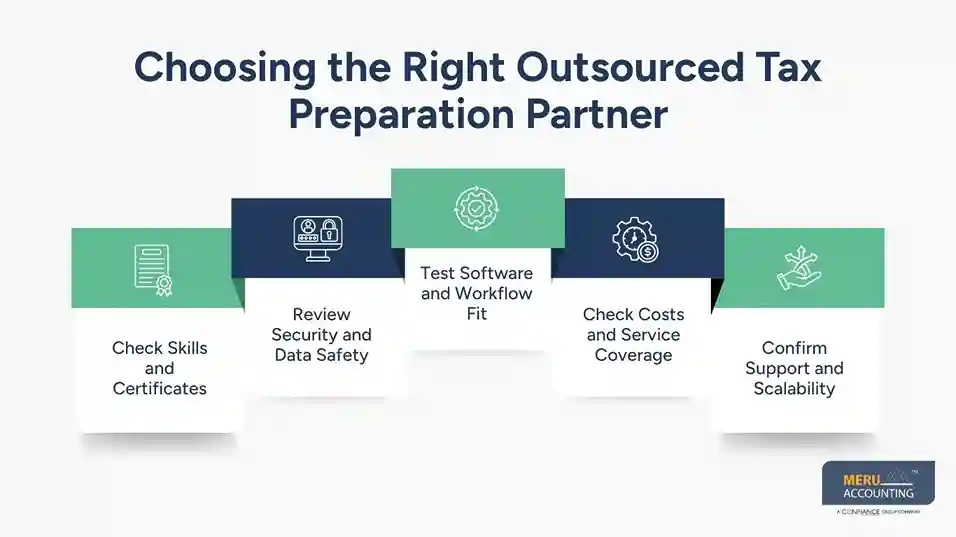
Check Costs and Service Coverage
- Compare fees with the service quality they provide.
- Ask about extra charges during the heavy tax season work.
- Confirm the service handles all required forms and reports.
Confirm Support and Scalability
- Ask if they can handle high workloads in season.
- Check that they give updates and answer questions quickly.
- Ensure help is available for routine and hard filings.
Technology and Tools in Outsourced Tax Preparation
Cloud-Based Tax Solutions
- Cloud tools let teams access work from any location.
- Files can be shared without slowing internal processes.
- Cloud storage keeps data safe and reduces filing mistakes.
AI and Automation Tools
- Machines handle repeated tasks to save time and effort.
- Smart tools find errors and suggest correct deductions.
- Outsourced teams use AI to speed up tax filing.
Data Safety Measures
- Secure servers and codes keep client files safe.
- Access limits stop the wrong use of sensitive data.
- Regular checks make sure safety rules are followed.
Collaboration Tools for Teams
- Teams use chat and video for fast updates.
- Staff can track work progress at any time.
- Collaboration tools reduce delays and improve communication.
Simple Reporting Tools
- Reports show errors, deductions, and work still pending.
- Tools track team workflow and task progress clearly.
- Firms get insights to make better, faster decisions.
Common Misconceptions About Outsourced Tax Preparation
Privacy and Control Concerns
- Some firms fear losing control of client files.
- Trusted partners use strict rules to keep data safe.
- Firms can check work without showing private information.
Cost and Quality Misunderstandings
- Outsourcing may seem costly or lower in quality.
- Outsourced tax work often costs less than in-house staff.
- Experts ensure filings are correct and follow all rules.
Fear of Losing Personal Touch
- Some firms worry clients may feel less cared for.
- Tools keep clients informed and updated at all times.
- Personal contact continues even with outsourced tax work.
Concerns About Limited Expertise
- Firms may think outsourced teams lack needed skills.
- Partners hire trained staff with broad tax knowledge.
- Skilled experts handle complex and special client returns.
Worries About Communication Delays
- Firms fear slow replies from outside teams.
- Outsourced partners use email and chat for fast updates.
- Teams respond quickly to avoid missed client deadlines.
Case Studies
A mid-sized CPA firm cut costs by 30 percent with outsourcing. Staff focused on clients while external teams handled filings.
Another firm managed peak tax season without temporary hires. Accuracy remained high, and deadlines were met consistently.
Outsourcing boosts efficiency, reduces mistakes, and protects profits. Choosing the right partner is key. Firms gain flexibility and focus on core work.
Meru Accounting’s Outsourced Tax Preparation Services
Tax Support Built for CPA Firms
Meru Accounting helps CPA firms with outsourced tax preparation. Our team works closely with your firm every season. We manage tax returns while you serve clients.
Skilled Tax Staff You Can Trust
Trained tax staff handle personal and business returns. They follow federal and state tax rules carefully. Each return is checked to limit filing errors.
Lower Costs and Better Workflow
Outsourced tax preparation cuts internal staffing costs. Firms avoid hiring and training short-term tax staff. This helps improve profit and daily workflow.
Easy Scaling During Busy Tax Season
Our support grows fast during busy tax periods. Firms process more returns without full-time hires. Work stays balanced, and deadlines stay on track.
Safe Systems and Data Control
We use safe systems to guard all client data. Access rules stop the wrong use of private files. Client trust stays protected at every work step.
More Time for Clients and Growth
CPA firms gain time for advice and client care. Teams build trust through clear and timely support. Meru Accounting helps firms grow year after year.
Key Takeaways
- Outsourced tax preparation boosts efficiency and reduces costs.
- CPA firms gain access to expert tax professionals.
- Seasonal workload spikes are handled smoothly with outsourcing.
- Errors and compliance risks are minimized effectively.
- Cloud tools improve accuracy and data security.
- Choosing the right partner ensures growth and quality.
FAQs
Outsourced tax preparation means using outside teams for filings. CPA firms use this to help manage busy tax seasons.
It lowers pay, office space, and software spend. Firms pay only for the tax work they need.
Yes, trained staff follow rules and reduce mistakes. Each return is checked before final filing.
Safe systems and codes protect all client data. Access rules help stop the wrong use of files.
It adds help fast without hiring full-time staff. Firms meet due dates without staff overload.