Growing small and medium-sized businesses (SMBs) often face a major challenge: keeping their financial data safe while managing a growing volume of invoices and payments. This is where outsourcing accounts receivable comes into the picture. But the big question remains — is outsourcing accounts receivable safe for protecting your business’s financial data?
In this blog, we will explore the truth behind this concern, explain how an accounts receivable outsourcing firm can protect your financial information, and show why many SMBs are choosing outsourcing as a secure solution.
What You Will Learn From This Blog
By the end of this blog, you will understand:
- What outsourcing accounts receivable means and how it works.
- Why SMBs are choosing to outsource this function as they grow.
- The main data risks are involved in accounts receivable management.
- Whether outsourcing accounts receivable is safe from a security perspective.
- How an accounts receivable outsourcing firm protects your financial data.
- Key security measures to look for before choosing an outsourcing partner.
- How Meru Accounting can help you manage accounts receivable safely and securely.
What is Outsourcing Accounts Receivable?
Outsourcing accounts receivable means hiring an external team or company to handle your invoicing, payment tracking, collection calls, customer billing, and financial reporting. Instead of keeping all these tasks in-house, businesses partner with an accounts receivable outsourcing firm to handle the work.
This helps businesses focus on core operations like sales, product development, and customer service. It also allows them to access skilled teams and advanced tools without hiring more staff.
Outsourcing accounts receivable also means gaining better visibility and control over cash flow. With professional teams handling receivables, businesses receive timely updates, accurate reports, and clear insights into overdue invoices.
This helps SMBs make smarter financial decisions, reduce delays in collections, and improve overall financial stability.
Why SMBs Are Considering Outsourcing Accounts Receivable
Growing SMBs consider outsourcing accounts receivable for many reasons, including:
Handling More Customers and Invoices
As a business grows, the volume of invoices increases. Without proper support, this can lead to mistakes and delays.
Improving Cash Flow
A professional accounts receivable outsourcing firm helps track overdue invoices, follow up with customers, and ensure faster payments.
Reducing Errors
Manual invoicing can cause errors. Outsourcing reduces mistakes because the team follows a standard process.
Saving Time and Money
Hiring full-time staff for accounts receivable can be expensive. Outsourcing provides skilled support at a lower cost.
Access to Strong Security
A reliable accounts receivable service provider uses secure systems and strong controls to protect financial data.
Top Data Risks SMBs Face in Accounts Receivable Management
Even when accounts receivable is managed in-house, SMBs face major data risks:
Unsecured Data Storage
Invoices and customer data stored on local computers or spreadsheets are vulnerable to theft or loss.
Internal Fraud
Without strict controls, employees can manipulate invoices, create fake customers, or hide payments.
Data Breaches
Weak passwords, poor access control, and outdated systems can expose financial data to hackers.
Human Error
Manual entry errors can lead to incorrect invoices, missing payments, or customer disputes.
Lack of Compliance
Failing to follow data protection rules can lead to fines and damage to your business reputation.
Is Outsourcing Accounts Receivable Safe?
The safety of outsourcing accounts receivable depends on the outsourcing partner. When you choose a reliable accounts receivable outsourcing firm, outsourcing can be very safe.
Strong Security Controls
Top outsourcing firms use secure systems, controlled access, and strict security rules.
Data Protection Standards
A professional firm follows data protection standards and compliance rules to protect your customers’ and financial data.
Dedicated Teams
Outsourcing firms have trained teams focused only on accounts receivable, reducing the risk of internal errors.
Regular Monitoring
These firms monitor data access, track activities, and detect suspicious actions early.
Secure Software
Most outsourcing firms use trusted accounting software with built-in security features.
So, is outsourcing accounts receivable safe?
Yes, as long as you choose the right accounts receivable service provider with strong security and compliance standards.
How Accounts Receivable Outsourcing Firms Protect Your Financial Data
A good accounts receivable outsourcing firm uses several methods to protect your financial data, including:
Data Encryption
Data is encrypted during transfer and while stored, so even if someone accesses it, they cannot read it.
Access Control
Only authorized employees can access financial data. Access is granted based on role and responsibility.
Secure Cloud Systems
Data is stored in secure cloud systems with advanced security features and backup options.
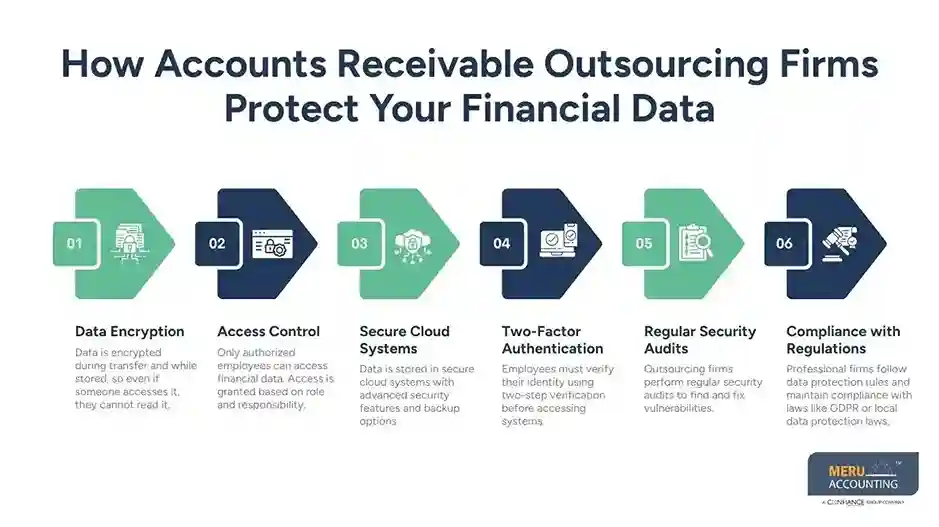
Two-Factor Authentication
Employees must verify their identity using two-step verification before accessing systems.
Regular Security Audits
Outsourcing firms perform regular security audits to find and fix vulnerabilities.
Compliance with Regulations
Professional firms follow data protection rules and maintain compliance with laws like GDPR or local data protection laws.
Key Security Measures to Look for in an Accounts Receivable Outsourcing Firm
Before you partner with an accounts receivable outsourcing firm, ask about these security measures:
Data Encryption
Does the firm encrypt data during transfer and storage? Make sure they use strong encryption standards like AES 256-bit and SSL/TLS.
Access Management
How do they control who can access your financial data? Look for role-based access control and strict authentication procedures.
Employee Screening
Do they perform background checks and training for staff handling your accounts? Ensure they provide ongoing security training and confidentiality agreements.
Secure Backup
Do they have regular backup systems to prevent data loss? Confirm they have multiple backup locations and disaster recovery plans.
Security Certifications
Does the firm have certifications like ISO 27001 or SOC 2? These certifications prove they follow industry-standard security practices.
Monitoring and Alerts
Do they monitor system access and send alerts for unusual activity? Check if they have real-time monitoring and incident response procedures.
Data Deletion Policy
What happens to your data when you stop the service? Make sure they have a clear data deletion policy and provide proof of deletion.
If an accounts receivable service provider can answer these clearly, it shows they take security seriously.
Benefits of Outsourcing Accounts Receivable for Growing SMBs
Here are the key benefits of outsourcing accounts receivable for SMBs:
Faster Payment Collections
A dedicated team can follow up with customers and ensure timely payments.
Better Cash Flow
Improved collection process leads to healthier cash flow and stable business operations.
Accurate Reporting
Outsourcing firms provide clear reports and help you understand payment patterns.
Lower Risk of Fraud
Professional teams follow strict controls, reducing the risk of internal fraud.
Cost Savings
Outsourcing is often cheaper than hiring full-time staff.
Focus on Core Business
SMBs can focus on growth while the outsourcing firm handles financial tasks.
Common Misconceptions About Outsourcing Accounts Receivable
Many SMBs hesitate to outsource due to common misconceptions:
Outsourcing Means Loss of Control
Outsourcing does not remove control over your financial processes. Firms provide regular reports, updates, and clear visibility.
Outsourcing is Only for Big Companies
SMBs can benefit the most from outsourcing because they lack internal resources.
Outsourcing is Not Secure
A reliable accounts receivable outsourcing firm uses strong security measures to protect your data.
Outsourcing is Expensive
Outsourcing often saves money compared to hiring full-time staff and buying software.
Security & Compliance Questions to Ask Before Outsourcing
Before partnering with an accounts receivable outsourcing firm, ask:
- How do you protect data from unauthorized access?
- What security certifications do you have?
- Do you use encryption for data storage and transfer?
- Do you perform background checks for employees?
- How do you handle data backups and disaster recovery?
- What happens to our data after the contract ends?
- How often do you perform security audits?
- Do you comply with data protection laws?
- Do you offer role-based access control?
- Can we review your security policies?
If a firm can answer these confidently, it is a safe partner.
Real-World Examples: SMBs That Improved Security Through Outsourcing
Here are examples of how SMBs improved security through outsourcing accounts receivable:
Example 1: A Growing Retail Business
A retail business faced missing payments and weak tracking. After partnering with an accounts receivable outsourcing firm, they improved payment tracking, reduced errors, and secured customer data with encryption and access controls.
Example 2: A Service-Based Company
A service company struggled with invoice delays and data errors. Outsourcing helped them automate invoices, improve collections, and keep data secure through role-based access.
Why Choose Meru Accounting for Outsourcing Accounts Receivable
At Meru Accounting, we provide secure and efficient outsourcing accounts receivable services for growing SMBs. Our solutions are designed to improve cash flow while maintaining full data security.
Strong Security Standards
We use secure systems and strict access controls to protect financial data. Advanced monitoring tools help prevent unauthorized access and data breaches.
Experienced Team
Our experts have deep experience in accounts receivable management and financial reporting. They understand industry-specific billing cycles and collection challenges.
Reliable Processes
We follow structured workflows to ensure accuracy and timely collections. Standardized checks reduce errors and speed up payment cycles.
Compliance Focus
We follow industry best practices and data protection regulations. Our processes align with global compliance and audit requirements.
Clear Reporting
You receive accurate monthly reports and regular updates. These reports provide clear visibility into outstanding invoices and cash flow.
Key Takeaways
- Outsourcing accounts receivable is safe when done with a reliable partner.
- An accounts receivable outsourcing firm uses strong security measures like encryption, access control, and audits.
- Outsourcing helps SMBs improve cash flow, reduce errors, and save costs.
- Security should be the top priority when choosing a partner.
- Meru Accounting offers secure and reliable accounts receivable outsourcing services for growing SMBs.
FAQs
Yes, it is safe if you choose a trusted accounts receivable service provider with strong security measures and clear policies.
Outsourcing reduces risks like data theft, fraud, errors, and weak access control.
They use encryption, secure systems, access control, audits, and regular backups.
SMBs should review the firm’s data security rules, access controls, and compliance standards.
They should also confirm employee screening, data backup systems, and reporting practices.
Yes, outsourcing accounts receivable helps reduce fraud and payment errors through clear controls. A professional accounts receivable outsourcing firm reviews transactions and tracks payments regularly.