
Choosing the right support for outsourcing small business bookkeeping is one of the most important steps for a growing company. Many owners now rely on outsourcing small business bookkeeping because it helps reduce stress, save time, and improve accuracy in daily records. When financial records are clear, better decisions can be made for growth and control.
In today’s setup, outsourcing small business bookkeeping is not just about cost savings. It is also about getting expert help that supports tax work, reports, and compliance. Many firms also combine outsourcing accounting for small businesses with bookkeeping services to handle full financial needs.
This blog will guide you through simple steps, key checks, and common errors so you can select the right partner with confidence.
What You Will Learn From This Blog
- How outsourcing small business bookkeeping works in real business settings
- Why do many firms use outsourcing accounting for small businesses for better control
- Key factors to check before choosing a service provider
- Common mistakes business owners make during selection
- Simple steps to move from in-house to outsourced support
- How the right partner improves accuracy and saves time
Introduction To Outsourcing Small Business Bookkeeping
Outsourcing small business bookkeeping means assigning your day-to-day financial record work to a trained external team. This usually includes handling invoices, maintaining bank records, recording payroll entries, and preparing monthly financial reports.
Instead of managing these tasks in-house, businesses depend on experts who specialize in accurate recordkeeping.
In practice, the process is simple. A business shares financial documents with the service provider, and the provider updates the books, checks for errors, and delivers regular reports.
Many providers also combine outsourcing accounting for a small business with bookkeeping services, which helps manage taxes, compliance work, and reporting in one structured system. This reduces confusion and improves financial clarity.
Most small firms choose outsourcing small business bookkeeping because they do not have enough time, staff, or expertise to manage financial records consistently. It helps reduce daily workload while improving accuracy in accounting records.
With proper systems in place, owners get clear financial insights that support planning, cost control, and better decision-making.
Another key benefit is flexibility. As a business grows, outsourcing small business bookkeeping can easily scale without the need to hire additional staff or invest in new infrastructure. This makes it a practical option for startups and growing companies that want stable financial management without increasing internal pressure.
Benefits Of Outsourcing Accounting For Small Businesses
- Reduces costs in outsourcing accounting for small business by cutting hiring, training, and software expenses, allowing businesses to pay only for needed services.
- Improves accuracy in outsourcing small business bookkeeping as experts manage financial records, reducing errors in reporting.
- Saves time in outsourcing accounting for a small business by letting owners focus on core operations while professionals handle daily bookkeeping tasks.
- Ensures tax readiness in outsourcing small business bookkeeping with organized records and better compliance support for filings.
- Provides scalable support in outsourcing accounting for small business that grows with business needs without extra hiring pressure.
Why Choosing The Right Partner Matters In Outsourcing Small Business Bookkeeping
Impact On Financial Health
Wrong choices in outsourcing small business bookkeeping can lead to errors in reports, which affect business decisions.
Inaccurate data can also impact cash flow planning and profitability analysis.
Data Safety And Trust
A good partner keeps data safe. Weak providers may risk sensitive financial data.
Secure systems and confidentiality practices are essential in outsourcing small business bookkeeping.
Compliance Risks
Poor handling of outsourced accounting for small businesses may lead to tax errors or penalties.
Non-compliance can also damage businesses reputation and create legal complications.
Communication Quality
Clear updates are important. A strong partner shares reports on time without delays.
Consistent communication helps in better financial control and quick decision-making.
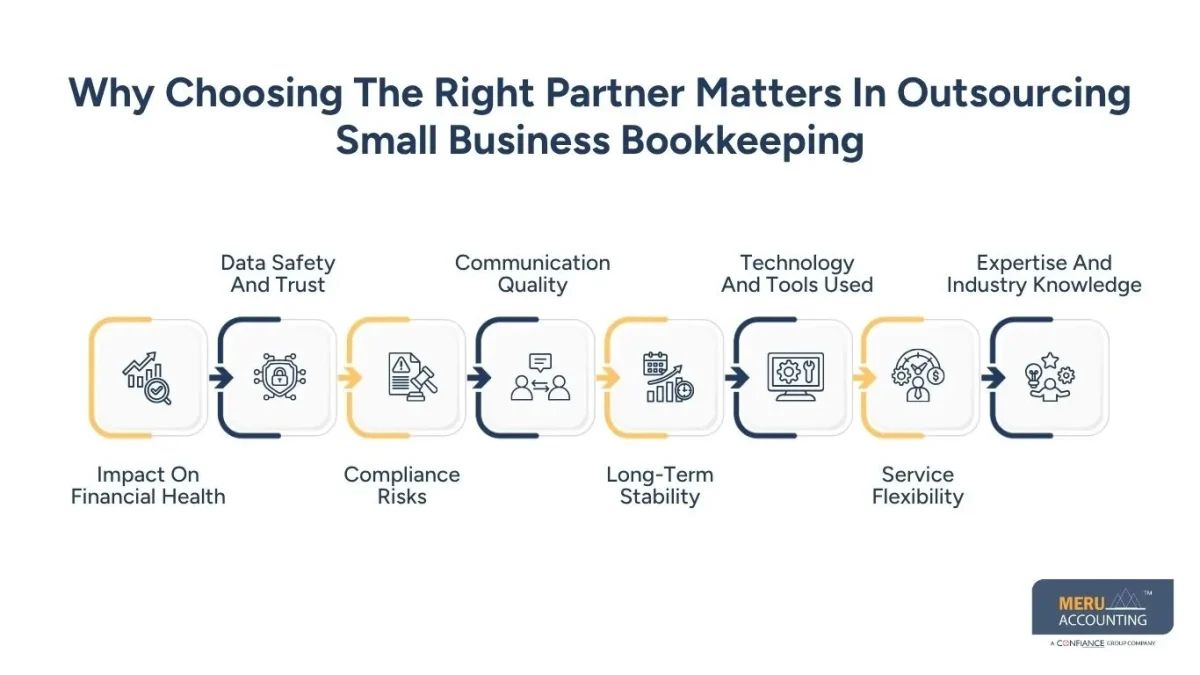
Long-Term Stability
The right choice in outsourcing small business bookkeeping supports long-term growth and planning.
It also ensures consistency in financial processes as the business expands.
Technology And Tools Used
Advanced tools in outsourcing accounting for small businesses improve efficiency and accuracy.
Modern software enables real-time tracking and better financial visibility.
Service Flexibility
Flexible services in outsourcing small business bookkeeping allow businesses to adjust support as needed.
This helps manage changing workloads without operational stress.
Expertise And Industry Knowledge
Experienced providers in Outsourced accounting services for small businesses understand industry-specific needs. This ensures better financial management and compliance with relevant standards.
Key Factors To Consider When Selecting A Bookkeeping Partner
Industry Experience
A team that understands your business type delivers better results. Experience improves quality in outsourcing small business bookkeeping.
Better knowledge also helps in handling industry-specific challenges efficiently.
Technology Use
Use of cloud tools ensures smooth updates and access. This makes outsourcing accounting for small business faster and more accurate.
Real-time data access improves financial visibility and control.
Security Standards
Proper data protection systems are essential for safety. Financial data security is very important.
Strong security reduces the risk of breaches and unauthorized access.
Reporting Quality
Simple and clear reports make it easier to track performance. Good reports help owners understand business health. Better reporting supports faster and smarter decision-making.
Pricing Structure
Clear pricing helps avoid confusion and hidden costs. Transparent plans are important in outsourcing small business bookkeeping services. It also supports better budgeting and financial planning.
Evaluating Providers For Outsourcing Accounting For Small Businesses
Check Past Work
Review case studies or sample reports. This shows real experience in outsourcing accounting for small businesses. It also helps assess the quality, accuracy, and consistency of their past work.
Ask For References
Speak with current or past clients if possible. It gives real feedback about service quality. Client reviews and testimonials help build trust and confidence before finalizing a provider.
Test Communication
Response time and clarity are important in outsourcing small business bookkeeping partnerships. Consistent and clear communication ensures smooth workflow and avoids delays or misunderstandings.
Review Tools Used
Modern tools like cloud accounting systems improve speed and reduce errors.
Advanced software also supports automation, better reporting, and easy access to financial data.
Understand Service Scope
Some providers offer only bookkeeping, while others include full Outsourced accounting services for small businesses.
A clear understanding of scope ensures the services align properly with your business needs and goals.
Common Mistakes To Avoid When Outsourcing Accounting For Small Businesses
- Choosing only based on price can lead to poor quality in outsourcing small business bookkeeping, as low-cost services may lack accuracy and reliability.
- Ignoring experience can create issues, so proper industry knowledge should always be checked before selecting a provider for outsourcing accounting for small businesses.
- A weak communication setup can cause delays in responses, which directly affects reports, timelines, and business decisions.
- Not checking data security can put sensitive financial information at risk, making strong protection systems essential.
- No clear agreement on outsourced accounting services for small businesses can lead to confusion, so services and responsibilities should always be well-defined in contracts.
How To Successfully Transition To An Outsourced Bookkeeping Partner
Prepare Financial Records
Organize past data before starting outsourcing small business bookkeeping. Clean and updated records help ensure a smooth and error-free transition.
Select the right software
Use cloud tools for easy data sharing and tracking. The right software also improves collaboration and real-time access to financial data.
Set Clear Roles
Define what your team and provider will handle. Clear responsibilities avoid confusion and improve workflow efficiency.
Start With Small Tasks
Begin with basic records before moving to full outsourcing accounting for small business tasks. This helps in building trust and understanding the working process step by step.
Review Monthly Reports
Check reports regularly to ensure accuracy and control. Regular reviews help identify issues early and improve financial decision-making.
Why Choose Meru Accounting For Outsourcing Small Business Bookkeeping
Meru Accounting is a trusted partner for outsourcing small business bookkeeping with years of global experience. Our team supports small and growing businesses with clear, accurate, and timely financial services.
At Meru Accounting, we also provide full outsourcing accounting for small business solutions that include bookkeeping, payroll, tax support, and financial reporting. With cloud-based tools and trained experts, Meru Accounting ensures smooth handling of financial data.
Businesses choose Meru Accounting because:
- Strong experience in multiple industries
- Secure handling of financial data
- Clear monthly reporting systems
- Scalable services for growing needs
- Dedicated support teams for clients
For many small firms, outsourcing small business bookkeeping with Meru Accounting helps reduce workload and improve financial control at the same time.
Key Takeaways
- Outsourcing small business bookkeeping helps reduce workload and improve accuracy
- Outsourcing accounting for a small business supports tax and reporting needs
- Choosing the right partner affects long-term financial health
- Experience, tools, and security are key selection factors
- A smooth transition needs planning and clear roles
- Regular reviews help maintain quality and trust
FAQs
Look for experience, clear communication, and strong data security. A good partner should also provide simple reports and understand your business needs.
You should review services offered, pricing, data safety measures, and response time. It is also helpful to ask for sample reports before starting.
Choose a provider that uses secure systems, data encryption, and restricted access. Always confirm their data protection policies before sharing financial data.
Yes, starting with basic tasks helps you understand the process. It also builds trust before moving to full Outsourced accounting services for small businesses.
Monthly reviews are ideal. Regular checks help you catch errors early and keep your financial data accurate.