
Managing finances across many properties is not easy. As portfolios grow, tracking rent, dues, and payments becomes more complex and time-consuming. This is where property management accomunts receivable plays a key role. Without a clear system in place, delays, errors, and cash flow gaps can quickly affect how the business runs.
For property managers who handle many units, improving accounts receivable process is not just about rent collection. It is about building a steady, clear, and scalable finance process that works across all properties. Many firms also rely on an accountant for property management to make sure that receivables are tracked well, reports are correct, and the full process runs in a smooth way.
In this blog, we will look at how to improve property management accounts receivable processes and how the right steps, along with support from an accountant, can help make work more efficient and improve overall financial results.
What You Will Learn From This Blog
In this blog, you will gain a clear understanding of:
- What property management accounts receivable includes and why it matters
- Why multi-property portfolios need better receivable systems
- Common issues in property management accounts receivable
- How an accountant for property management improves receivable processes
- Practical steps to improve collections and reporting
- How Meru Accounting supports property businesses with efficient receivable services
Understanding Property Management Accounts Receivable Systems
Property management accounts receivable refers to the process of tracking, managing, and collecting payments from tenants across one or multiple properties. This includes rent, maintenance charges, late fees, and other property-related income.
A strong property management receivable system includes:
- Accurate tenant billing
- Timely invoice generation
- Payment tracking across properties
- Regular reconciliation of accounts
- Clear reporting of outstanding balances
Without a proper system, receivables become difficult to manage, especially when dealing with large portfolios. This is why many firms depend on an experienced accountant for property management to set up and maintain structured receivable processes.
Why Multi-Property Portfolios Need Streamlined
Receivable Processes
Managing one property is easy, but handling ten or more takes more work and care. Multi-property portfolios add more steps in billing, tracking, and reports, which can make daily work hard to manage. As the number of tenants, lease terms, and pay cycles grows, the risk of errors and delays also goes up. This is why a clear and well-set property management accounts receivable process is very important.
Efficient property management accounts receivable helps:
Maintain Consistent Cash Flow Across All Properties
When receivable steps are clear, rent and other pay come in on time across all properties. This helps avoid gaps in income and keeps cash flow steady over time. A strong receivable system helps managers plan costs, pay vendors on time, and invest in growth without stress from uneven cash flow.
Reduce Payment Delays and Outstanding Dues
Late pay often happens when systems are not clear or not well run. With a proper receivable system, tools like auto reminders, set billing cycles, and follow-ups help cut delays. This lowers unpaid dues and improves the rate of collections across all properties.
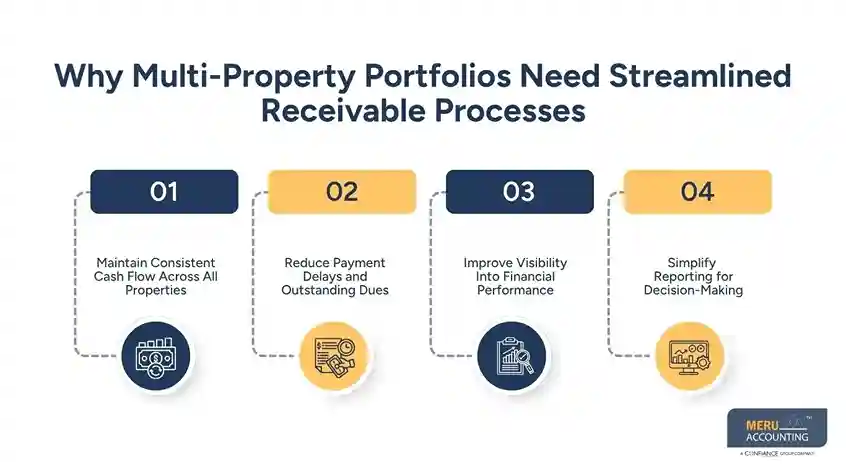
Improve Visibility Into Financial Performance
Managing many properties without a clear system can lead to mix-ups and doubt. A strong receivable system gives a clear view of which properties do well and which face pay issues. This helps managers act on time and avoid big financial problems later.
Simplify Reporting for Decision-Making
Clear and on-time reports are key for good business choices. A streamlined receivable process keeps all data neat and easy to check. Managers can review reports fast, spot trends, and make smart plans without too much time on manual work.
An accountant plays a key role in keeping receivable steps steady across all properties. They help set clear systems, track collections, and keep records right. Without proper control, gaps in accounts receivable can lead to doubt, missed payments, and loss of income.
Common Issues in Property Management Accounts Receivable
Many property managers face repeat issues with property management accounts receivable. These issues often grow as the portfolio grows, which makes it hard to keep control of pay and records.
Delayed Payments
Late rent pay is one of the most common issues. Without clear follow-up steps, the receivable process becomes hard to manage. Delays can break cash flow and affect the ability to meet day-to-day costs. Over time, repeat late pay can form a habit that is hard to fix.
Inconsistent Tracking
Tracking pay by hand across many properties can lead to errors. An accountant for property management helps set the same way to track all data. Without a set method, records may not match across sites. This can lead to mix-ups when you check dues or fix tenant issues.
Lack of Automation
Manual work slows down billing and collections. Automated receivable systems help save time and improve flow. Without such tools, tasks like bills and reminders take more time and effort. This also raises the risk of missed entries or late notices.
Poor Communication
Tenants may miss pay due to unclear bills or no reminders. Clear and planned contact helps improve property management accounts. Simple messages help tenants know due dates and pay terms. Regular alerts also cut the risk of late or missed pay.
Reporting Gaps
Without clear reports, managers cannot track receivable results. An accountant helps keep reports right and up to date. Poor or missing reports make it hard to track dues. This can lead to weak choices and less control over cash flow.
Role of an Accountant for Property Management in Improving Receivables
An accountant for property management is essential for maintaining accurate and efficient receivable systems. Their expertise ensures that property management accounts receivable processes remain organized and scalable.
Key responsibilities include:
- Setting up structured billing systems
- Monitoring tenant payments
- Managing overdue accounts
- Preparing receivable reports
- Ensuring compliance with financial standards
An experienced accountant for property managemen also helps identify inefficiencies in property management accounts receivable and suggests improvements. Their role becomes even more important when handling large portfolios.
Best Practices to Improve Property Management Accounts Receivable
Improving property management accounts receivable requires a mix of clear processes, the right tools, and regular monitoring. When managed well, it helps reduce delays and keeps cash flow stable across all properties.
Set Clear Billing Cycles
Define fixed billing dates and payment terms for all tenants. This creates consistency and helps avoid confusion about due dates. A structured approach improves overall receivable performance.
Use Automated Reminders
Automated reminders help tenants stay aware of upcoming or overdue payments. This reduces the need for manual follow-ups and improves collection rates. It also keeps the process more efficient.
Track Payments in Real Time
Using digital tools to track payments helps maintain accurate and up-to-date records. This reduces errors and gives better visibility into outstanding balances. Many firms rely on an accountant for property management to manage and review this data.
Maintain Regular Follow-Ups
Consistent follow-ups ensure that overdue payments are addressed quickly. A clear follow-up system helps reduce long pending dues. This keeps the property management accounts receivable cycle active and controlled.
Review Reports Frequently
Regular review of receivable reports helps identify trends and problem areas. It allows property managers to take timely action before issues grow. An accountant for property management can help prepare and analyze these reports for better decisions.
Meru Accounting’s Property Management Accounts Receivable Services
Managing property management accounts receivable across multiple properties requires expertise, consistency, and the right tools. This is where Meru Accounting can help.
At Meru Accounting, we provide specialized property management accounts receivable services designed for multi-property portfolios. Our team includes experienced professionals who act as your dedicated accountant for property management, ensuring that your receivable processes remain accurate and efficient.
Our services include:
- End-to-end property management accounts receivable management
- Automated billing and payment tracking
- Regular reconciliation and reporting
- Monitoring of outstanding balances
- Customized financial insights for better decision-making
By choosing Meru Accounting, you gain access to a reliable accountant for property management who understands the challenges of managing multiple properties. We help streamline your property management accounts receivable, improve cash flow, and support business growth.
Our Expert Perspective
From our experience, growth in property portfolios often brings more financial load than firms expect. What starts as a simple setup can become hard to manage withoutclear receivable steps. Many teams face issues like uneven records, slow updates, and low visibility when they handle receivables on their own.
Over time, these gaps can reduce accuracy and make it harder to trust reports for key decisions. A well-set property management accounts receivable process, backed by an experienced accountant for property management, helps bring better control and clear insight. Firms that invest early in strong systems are better prepared for steady growth and stable cash flow.
Key Takeaways
- Property management accounts receivable is critical for maintaining steady cash flow
- Multi-property portfolios require structured and scalable receivable systems
- Common issues include delayed payments, poor tracking, and lack of automation
- An accountant for property management plays a key role in improving receivable processes
- Automation, standardization, and regular reporting improve efficiency
FAQs
Property management accounts receivable refers to tracking and collecting payments such as rent and fees from tenants across properties.
It ensures steady cash flow, accurate financial tracking, and better decision-making for property managers.
An accountant for property management improves billing accuracy, tracks payments, and ensures proper financial reporting.
Common challenges include late payments, inconsistent tracking, lack of automation, and reporting issues.
You can improve property management accounts receivable by automating systems, standardizing processes, and working with firms like Meru Accounting.