
A real estate outsourcing company helps property businesses manage accounting records, lease reports, vendor payments, and audit support with better accuracy and control.
Property firms handling multiple buildings and tenants often face issues such as missing invoices, duplicate entries, delayed reconciliations, and incorrect lease data. These mistakes can create major problems during a real estate audit because auditors require clear and verified financial records.
Outsourced accounting teams help maintain organized workflows and updated reports throughout the year. Property businesses also manage large amounts of financial data, including rent collections, maintenance costs, tax records, utility bills, and security deposits.
Manual handling of these records increases the risk of accounting mistakes and compliance issues. A real estate outsourcing company helps reduce these risks through cloud accounting systems, automated financial tracking, and structured expense management processes.
What You Will Learn From This Blog
- The role of a real estate outsourcing company in audit management
- Common reasons financial errors increase during a real estate audit
- How outsourced accounting support improves reporting accuracy
- The role of automation and cloud systems in audit control
- Why lease tracking and expense reviews matter in audit cycles
- How compliance reporting becomes easier with outsourced support
- Why property firms are adopting outsourced accounting services
- How Meru Accounting supports real estate audit processes
What Is a Real Estate Outsourcing Company and Why Is It Important for Modern Property Businesses?
Property Accounting Support
A real estate outsourcing company manages accounting records for property firms. This includes bookkeeping, lease accounting, rent tracking, and financial statement preparation. Organized records help reduce reporting errors and improve financial accuracy.
Multi-Location Financial Management
Many property firms manage buildings in different cities or regions. Handling financial records from many locations increases complexity. Standardized reporting systems help strengthen financial consistency and reporting accuracy across properties.
Lease Data Organization
Lease records contain important financial information related to rental income, deposits, and payment schedules. Incorrect lease entries can affect a real estate audit and create reporting problems.
Vendor Payment Monitoring
Property businesses work with maintenance teams, contractors, utility providers, and service vendors. Proper vendor tracking helps reduce duplicate payments and missing invoices during audit reviews.
Financial Report Preparation
Accurate reports help auditors review business performance more efficiently. A real estate outsourcing company prepares organized reports that support faster and smoother audit cycles.
Better Internal Controls
Outsourced accounting teams follow review systems and approval checks before reports are finalized. This reduces manual mistakes and enhance overall financial accuracy and reporting quality.
Why Financial Errors Increase During Real Estate Audit Processes
Manual Data Entry Problems
Manual accounting systems increase the risk of typing mistakes, missing entries, and duplicate records. These issues can create reporting inaccuracies and delays in financial review processes.
Incomplete Lease Information
Missing lease amendments or incorrect tenant details create reporting gaps. Lease-related errors often affect income reporting and expense calculations.
Delayed Reconciliations
When bank reconciliations and ledger reviews are delayed, financial mismatches remain unresolved. This creates confusion during audit verification processes.
Weak Document Storage
Property firms handle large numbers of invoices, tax records, and agreements. Poor document storage makes it difficult to provide supporting financial records and verification documents during reporting reviews.
Lack of Financial Oversight
Without regular financial reviews, small accounting mistakes continue for long periods. Over time, these errors affect the quality of audit reports.
Complex Property Transactions
Property businesses manage deposits, rental income, maintenance costs, and shared property expenses. Managing these transactions without proper systems increases audit risks.
How a Real Estate Outsourcing Company Improves Real Estate Audit Accuracy
Regular Financial Reviews
A real estate outsourcing company performs regular account checks throughout the year. These reviews help identify reporting issues before the real estate audit begins.
Organized Audit Documentation
Audit teams need clear records for verification. Outsourced accounting professionals maintain invoices, contracts, lease files, and expense reports in an organized format.
Error Detection Processes
Accounting review systems help identify duplicate entries, missing payments, and reporting mismatches. Early error detection enhances audit quality.
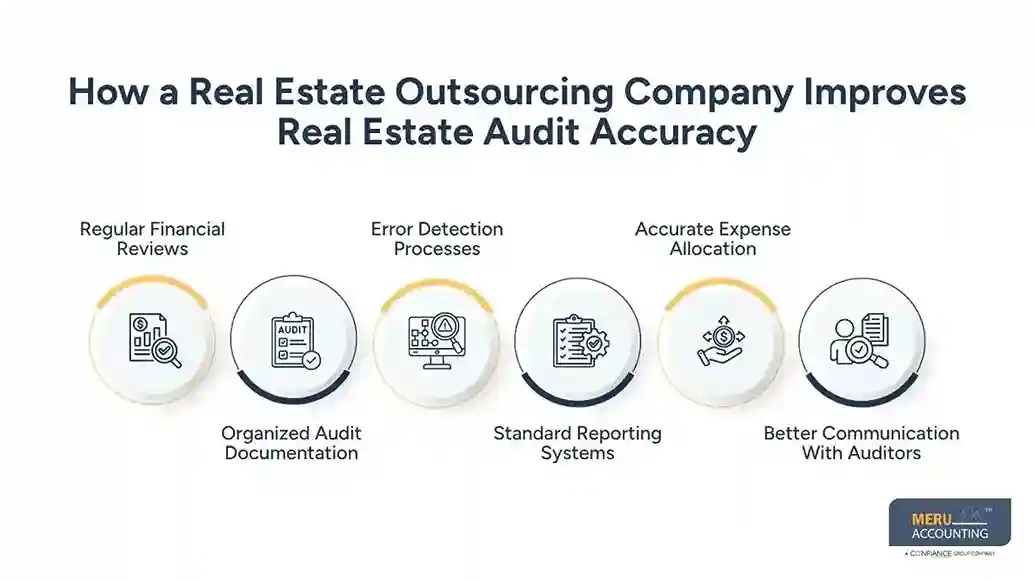
Standard Reporting Systems
Standard formats help maintain consistency across financial reports. This simplifies audit readability and reduces confusion during reviews.
Accurate Expense Allocation
Property expenses must be assigned correctly to buildings, departments, or tenants. A real estate outsourcing company improves expense tracking accuracy.
Better Communication With Auditors
Outsourced accounting teams often work directly with auditors to provide reports and answer queries. This reduces reporting delays and improves communication during financial reviews.
How Automation and Cloud Accounting Support Better Audit Control
Automated Data Entry
Automation tools reduce manual typing and improve transaction accuracy. Automated systems help lower accounting mistakes and improve the reliability of financial records.
Real-Time Financial Reporting
Cloud accounting systems provide updated financial data at all times. This helps management teams review reports quickly and identify problems early.
Secure Document Access
Cloud storage systems help businesses store invoices, lease files, and audit documents safely. Auditors can access records more efficiently during reviews.
Faster Bank Reconciliations
Automated bank matching systems enhance reconciliation speed and reduce reporting delays. Accurate reconciliations support cleaner audit reports.
Audit Trail Maintenance
Cloud accounting software records transaction history and user activity. These audit trails help auditors verify financial records more effectively.
Improved Team Coordination
Accounting teams working from different locations can access the same financial data through cloud systems. This enhances communication and reporting accuracy.
Why Lease Tracking and Expense Monitoring Matter During Real Estate Audit Reviews
Accurate Rental Income Reporting
Lease tracking systems help property firms maintain correct rent schedules and payment records. This improves income reporting during a real estate audit.
Better Expense Classification
Maintenance costs, utility expenses, and operational charges must be categorized properly. Incorrect classifications create confusion during financial reviews that a real estate outsourcing company can help minimize.
Tenant Payment Monitoring
Missed tenant payments or incorrect balances affect property income reports. Accurate tracking improves financial transparency.
Shared Property Expense Allocation
Commercial properties often divide costs among tenants. Proper allocation systems reduce reporting disputes during audits.
Contract Renewal Management
Expired or updated lease agreements must be recorded correctly. Missing lease updates can create reporting inconsistencies.
Reduced Financial Disputes
Accurate lease records and expense reports help reduce disagreements between tenants, property managers, and auditors. Organized financial documentation also improves audit confidence and reporting clarity when supported by a real estate outsourcing company.
How a Real Estate Outsourcing Company Supports Compliance and Regulatory Reporting
Tax Reporting Support
Property businesses must maintain accurate tax records and filing documents. A real estate outsourcing company helps organize tax-related reports.
Financial Policy Compliance
Accounting systems must follow local financial rules and reporting standards. Outsourced professionals help maintain compliance procedures.
Regulatory Record Maintenance
Property businesses may need to maintain records for government reviews and legal checks. Organized documentation improves reporting reliability and supports smooth verification processes.
Audit-Ready Financial Statements
Prepared financial statements help businesses respond quickly during a real estate audit. Accurate reports also reduce delays and improve financial transparency.
Risk Reduction Processes
Regular financial monitoring helps reduce compliance risks and reporting gaps. This improves operational control and supports better financial management.
Better Data Accuracy
Accurate financial records help businesses avoid penalties, reporting corrections, and audit concerns. Proper record management also improves trust in financial reporting systems.
Why Real Estate Companies Are Adopting Outsourced Accounting and Audit Support
Reduced Administrative Burden
Managing accounting systems internally requires time and resources. Outsourced support reduces workload for in-house teams and improves operational efficiency.
Better Financial Accuracy
A real estate outsourcing company helps improve bookkeeping quality and reporting consistency across properties. Accurate financial records also support smoother audit reviews.
Access To Skilled Professionals
Property firms benefit from experienced accounting professionals who understand property accounting systems and audit requirements. This helps businesses maintain better financial control and compliance.
Improved Reporting Speed
Outsourced accounting teams help businesses prepare reports faster and maintain updated financial records. Quick reporting also supports timely business decisions and audit preparation.
Lower Operational Costs
Hiring and training internal accounting teams can increase costs. Outsourced services help businesses manage accounting work more efficiently and reduce overhead expenses.
Stronger Audit Preparation
Continuous financial monitoring helps businesses stay prepared for regular financial review processes. Regular account reviews also help identify reporting issues before final reporting and compliance checks begin.
Why Choose Meru Accounting?
Real Estate Industry Experience
Meru Accounting provides accounting and bookkeeping support for property businesses across different regions. Our team understands the reporting needs of modern real estate companies.
Structured Audit Support
We help businesses maintain organized financial records, lease reports, and expense tracking systems. This improves real estate audit accuracy and helps reduce reporting gaps during financial reviews.
Cloud Accounting Expertise
Meru Accounting works with platforms like QuickBooks, Xero, and NetSuite for better financial reporting. Our cloud accounting support helps businesses maintain secure and updated financial records.
Multi-Location Property Reporting
Our accounting systems support businesses that manage properties across many cities or regions. We help standardize reporting processes and reduce financial inconsistencies.
Compliance-Focused Processes
Meru Accounting follows structured accounting practices that support tax compliance and audit reviews. Our team helps businesses maintain proper documentation and accurate financial reporting.
Reliable Financial Monitoring
Our team performs regular account reviews and reconciliations to help reduce financial errors. Continuous monitoring also helps businesses stay prepared for every audit cycle.
Our Expert Perspective
In many property businesses, reporting issues often arises from small financial gaps rather than a major error. Missing invoices, delayed reconciliations, incorrect lease entries, and weak expense tracking can gradually create larger financial and reporting complications over time.
Based on our experience supporting real estate accounting and audit processes for global property businesses, companies that perform regular financial reviews throughout the year usually experience smoother audit cycles and stronger reporting accuracy.
A real estate outsourcing company helps maintain this consistency by strengthening record management, improving reporting systems, and supporting organized financial processes.
Key Takeaways
- A real estate outsourcing company helps improve accounting accuracy and audit readiness
- Manual accounting systems increase the risk of financial errors
- Organized lease tracking supports better income reporting
- Automation and cloud accounting improve audit control
- Expense monitoring reduces reporting mismatches during reviews
- Outsourced accounting support helps businesses maintain compliance
- Accurate financial records improve trust among investors and auditors
- Meru Accounting supports property firms with audit-focused accounting services
FAQs
A real estate outsourcing company helps property businesses manage bookkeeping, lease accounting, expense tracking, financial reports, and audit support services.
A real estate audit checks financial records to confirm that reports are accurate, complete, and compliant with accounting standards.
Outsourced accounting teams perform regular reviews, maintain organized records, and improve financial monitoring systems. This reduces mistakes during audits.
Lease tracking helps businesses maintain correct rent records, payment schedules, and tenant information. Accurate lease data improves audit accuracy.
Cloud accounting systems provide real-time financial reports, secure document storage, and automated transaction tracking, which help improve audit reviews.