Real estate transaction management software gives brokerages a clear record of every deal, from the first offer to the final closing. Instead of tracking contracts through email, spreadsheets, and shared folders, agents can manage deadlines, signatures, and file reviews in one place. The right system also gives brokers a better view of open deals and pending tasks.
However, choosing real estate transaction management software requires more than comparing feature lists. A 10-agent office with 30 monthly deals has different needs from a 100-agent firm with several branches. Pricing, accounting links, user access, and staff training all affect the final choice.
This blog compares leading tools, pricing models, integrations, and setup methods. It also explains how Outsourced Real Estate Accounting can connect deal records with commission income, business costs, and monthly financial reports.
What You Will Learn From This Blog
- What real estate transaction management software does in a brokerage.
- Which platforms suit different team sizes and work needs.
- How pricing models affect monthly and yearly costs.
- Which integrations matter for contracts, client records, and accounting.
- How to plan setup, train agents, and protect deal files.
- How Outsourced Real Estate Accounting connects transaction records with financial data.
- How to compare vendors and measure the value of a new system.
What is Real Estate Transaction Management Software?
Real estate transaction management software is a shared workspace for contracts, forms, tasks, approvals, and closing records. It gives each deal a clear process and assigns work to the right person.
Contract and Document Control
Agents can store offers, disclosures, amendments, and signed forms in a single deal file. Version control and clear file names reduce the risk of staff using an old document.
Deadline Tracking
The system can record inspection dates, loan conditions, and closing targets. Agents still need to check every date against the signed contract and local rules.
Task Assignment
A broker can assign file checks to a transaction coordinator and document updates to an agent. Each person can see pending work without asking the whole team for updates.
Compliance Review
Managers can use checklists to find missing forms and incomplete approvals before closing. Software flags gaps, but it does not replace a broker’s judgment or legal review.
Deal Status Reports
Dashboards can show open files, pending signatures, overdue tasks, and expected closing dates. These reports give managers a clear view of workload across the office.
Best Real Estate Transaction Management Software for Brokerages
The best real estate transaction management software depends on the brokerage’s daily process, deal volume, and need for compliance checks. Compare these platforms through a live demo using a sample transaction.
SkySlope for Compliance Review
SkySlope suits brokerages that need structured file checks and broker-level oversight. Its review tools can make missing forms easier to spot, while firms should confirm which products and add-ons their plan includes.
Dotloop for Forms and Signatures
Dotloop brings transaction files, forms, and electronic signatures into one workspace. It may suit agents and smaller teams that want a direct way to prepare, send, and track deal documents.
Paperless Pipeline for Deal-Based Billing
Paperless Pipeline uses transaction-volume pricing, which can suit firms with many agents and changing deal counts. Before buying, check how the vendor counts new files and whether the plan covers the reports and signature tools you need.
BoldTrail BackOffice for Commission Workflows
BoldTrail BackOffice, formerly Brokermint, combines transaction processes with brokerage back-office features. It deserves a closer look when commission calculations, agent payouts, and financial reporting are key needs.
Lone Wolf for Forms and Industry Workflows
Lone Wolf offers transaction products used by real estate professionals and may fit offices already linked to its wider product range. Check access through your MLS or association before paying for a separate plan.
Real Estate Transaction Management Software Pricing Models
The price of real estate transaction management software depends on what the vendor counts, which features are included, and how many deals the office handles.
Per-Agent Pricing
Each user has a recurring fee. This model is easy to forecast, but the bill can rise as the brokerage hires more agents, even when deal volume stays flat.
Per-Transaction Pricing
The fee depends on the number of deals opened during a billing period. This may suit offices with many agents but uneven sales volume, though busy months can move the firm into a higher tier.
Fixed Brokerage Plans
A single monthly fee may cover an office or a set group of users. Check limits for storage, admin access, e-signatures, and reporting before comparing it with per-user plans.
Custom Enterprise Pricing
Large firms may need several branches, custom reports, and advanced access controls. Ask for a written quote that covers setup, annual renewal, training, data export, and any required add-ons.
Extra and Hidden Costs
The license may not include data migration, advanced signatures, or staff training. Build a first-year budget that includes these items and compare it with the likely renewal cost.
Essential Integrations for Real Estate Transaction Management
Reliable integrations reduce repeat entry and keep records consistent across systems. Real estate transaction management software should connect only to tools that match the brokerage’s actual workflow.
CRM Integration
A link with a customer relationship management system can pass client details and deal records into the transaction file. Test duplicate contacts and field mapping before enabling the link for all users.
E-Signature Integration
Electronic signatures can reduce printing and make signing status easier to track. Check request limits, document storage, and whether signed copies return to the correct deal folder.
Accounting Integration
Real estate transaction management software can transfer approved commission data, fees, and closing details to connected accounting systems. The finance team must still verify commission splits, deductions, bank deposits, and the corresponding accounting entries.
MLS Integration
A link with a Multiple Listing Service may fill in property and listing details. Confirm that the platform works with your local MLS and that imported fields remain accurate.
Cloud Storage and Email
Links with cloud storage and email can keep related records easy to find. Set access rights and retention rules so staff do not expose private client files or payment details.
optional anymore
on running the business
How to Implement Transaction Management Software in a Brokerage
Successful implementation of real estate transaction management software starts with the brokerage’s existing workflow, not the software menu. Set clear owners for each step before moving live deals into the new system.
Map the Existing Process
Write down every stage from offer to closing and name the person responsible for each task. Note where files go missing, dates are missed, or staff enter the same data twice.
Test the Software with a Small Team
Choose a few agents, one coordinator, and a broker to test the platform. Use common deal types and record issues before the firm expands access.
Set Roles and Templates
Build checklists for each deal type and assign access based on job duties. Keep final review and payment approval with authorized staff.
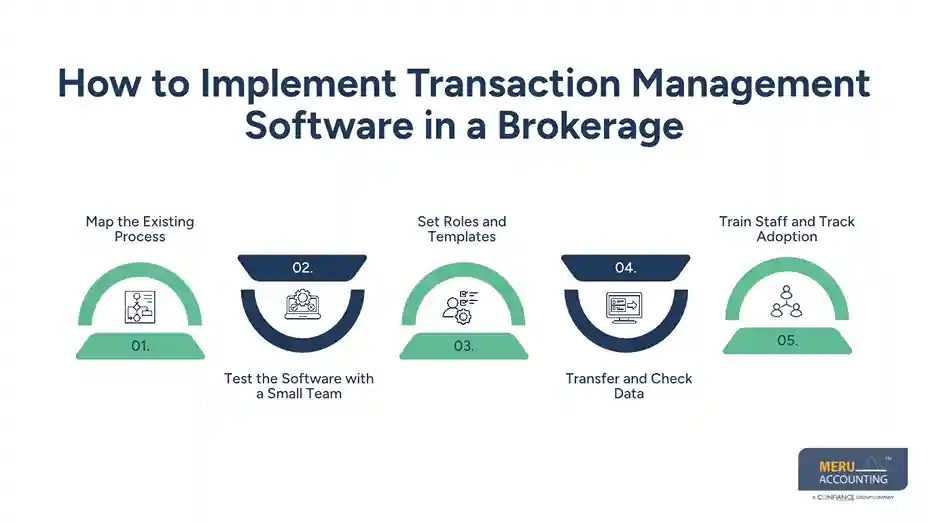
Transfer and Check Data
Remove duplicate files and correct old records before migration. After transfer, check a sample of deals for missing forms, wrong dates, and access errors.
Train Staff and Track Adoption
Train agents on real tasks, such as opening a file, sending a form, and closing a deal. Review usage, late tasks, and missing records after launch, then adjust the workflow.
The Role of Outsourced Real Estate Accounting in Transaction Management
Real estate transaction management software records the progress of a deal, while Outsourced Real Estate Accounting records the financial activity linked to it. The two processes need clear handoffs so closed deals match the accounting records.
Commission Income Checks
The accounting team can compare closing statements with commission records and bank deposits. Accountants can record the amount earned and flag discrepancies that need review.
Deal Costs and Vendor Bills
Photography, staging, listing, and legal costs may relate to a specific property deal. Accountants can assign bills to the correct account or project using the firm’s approved rules.
Bank and Ledger Reconciliation
A closed deal does not mean the cash has reached the bank. Accountants can compare transaction files, closing statements, bank activity, and ledger entries to identify unmatched amounts.
Agent Payout Records
Agent payments should match approved split terms and any valid deductions. The accounting team can prepare payout records, while a designated manager reviews and approves each payment.
Monthly Financial Reports
Reports can show commission income, unpaid bills, cash received, and costs by branch or deal type. Outsourced Real Estate Accounting can prepare these figures from complete records for management review.
Common Challenges When Adopting Real Estate Transaction Management Software
Low Staff Adoption
Agents may keep using email if the new workflow takes too many steps. Keep the process clear and set one rule for where each deal’s official records must stay.
Poor Data Quality
Duplicate contacts, old forms, and wrong dates can weaken reports. Clean the records before migration and assign a person to check the results.
Integration Errors
Integration errors in real estate transaction management software may prevent fields from transferring correctly or create duplicate entries. Test key data flows and set a clear process for correcting failed transfers.
Privacy Risks
Deal files can contain personal and financial details. Use multi-factor authentication, role-based access, and a process for removing access when staff leaves.
Unclear Task Ownership
A reminder cannot fix a task that has no owner. Assign each step to a named role and define who handles overdue work.
How to Compare Software Vendors and Calculate ROI
Test Real Tasks
Ask vendors to show how a user opens a file, checks a contract, tracks a deadline, and closes a deal. A live test reveals more than a long feature list.
Compare Full-Year Costs
Add licenses, training, migration, add-ons, and staff time. Compare the first year with the expected renewal cost, not just the advertised starting fee.
Check Data Export
Ask whether the brokerage can export files, task history, and reports if it changes vendors. Review backup, retention, and access terms before signing.
Calculate Time Savings
If 100 deals each save 15 minutes, the brokerage saves 25 staff hours a month. Multiply those hours by the real hourly cost, then subtract software and setup costs to estimate net value.
Review Results After Launch
Compare late tasks, missing documents, and staff hours before and after the rollout. Use actual office records over a set period rather than relying on a vendor’s projected savings.
Meru Accounting’s Real Estate Accounting Services
Real estate transaction management software tracks the deal process, but accurate financial records still require a clear accounting workflow. Meru Accounting provides accounting and bookkeeping services for real estate firms based on their records, systems, and reporting needs.
Bookkeeping and Reconciliation
Our team records business income and expenses and reconciles accounts against available statements. Clear records give managers a sound basis for reviewing cash flow and costs.
Accounts Payable and Receivable
Meru Accounting provides accounts payable and receivable services to record bills, payments, and amounts due. Regular checks can flag unpaid invoices and entries that need review.
Commission and Expense Records
We record commission income and related costs from approved statements and source documents. These records can be compared with deal data to find differences before month-end reporting.
Financial Reporting
Our reporting services present income, expenses, and account balances in a clear format. Managers can use these reports to review results by period, branch, or agreed cost category.
Outsourced Real Estate Accounting
Outsourced Real Estate Accounting gives brokerages access to an agreed set of accounting services without hiring every role in-house. Meru Accounting can define the work scope, review steps, and approval duties with each client.
Our Expert Perspective
The best real estate transaction management software is not necessarily the one with the most features; it is the one the brokerage uses consistently for every deal. Before purchase, test a full file from offer to close, then match its commission data with the accounting records. This reveals gaps that a basic product demo may miss.
Key Takeaways
- Choose software based on deal volume, file review, team size, and current tools.
- Compare license fees with setup, training, add-ons, and renewal costs.
- Test CRM, signature, MLS, and accounting links before launch.
- Assign task owners and review data after migration.
- Use Outsourced Real Estate Accounting to record commissions, bills, reconciliations, and reports.
- Measure results through real staff hours, file quality, and processing costs.
FAQs
SkySlope, Dotloop, Paperless Pipeline, BoldTrail BackOffice, and Lone Wolf offer different tools for deal tracking, document control, compliance, and brokerage operations.
Real estate transaction management software costs vary by user count, transaction volume, included features, setup fees, and contract terms.
The key integrations include CRM, e-signatures, MLS data, cloud storage, commission tracking, and accounting software.
Brokerages can implement the software by mapping deal workflows, setting user roles, migrating files, testing integrations, and training agents.
Outsourced Real Estate Accounting connects deal records with commission income, vendor bills, bank reconciliations, agent payments, and financial reports.
optional anymore
on running the business