
A law firm can close cases, win clients, and bring in new business without knowing which matters are actually making money. One case may take far more staff time than expected, while another may sit unpaid for months. Without a clear view of these numbers, partners may set fees, plan budgets, or make hiring decisions based on guesswork. This is where small law firm accounting software can make a real difference.
Beyond basic bookkeeping, the right system helps connect legal fees, billable hours, client payments, and firm expenses. It gives partners a better way to review what the firm earns, where money goes, and how well each matter performs. More importantly, accurate financial data can help turn everyday accounting records into useful business decisions.
What You Will Learn From This Blog
- Why small law firms face unique billing and accounting issues.
- What small law firm accounting software does and how it works.
- How software can improve client billing and payment follow-ups.
- Ways to track cash flow, costs, and unpaid bills.
- Which features matter when choosing law firm financial management software.
- When outside accounting support can help your firm.
Why Financial Management Is Challenging for Small Law Firms
Small law firms often work with tight budgets and lean teams. Lawyers may handle client work, review bills, track costs, and take part in firm decisions at the same time. This can leave little time for daily finance tasks.
Here are some common issues that can affect a firm’s books and cash flow.
1. Tracking Billable Hours and Client Costs
Law firms often bill clients based on time spent on a case or legal task. If lawyers do not log their hours on time, some work may not make it onto the final bill. The same issue can arise with filing fees, travel costs, and other client expenses.
2. Managing Trust Accounts and Retainers
Law firms may hold client funds in trust accounts until they earn fees or pay costs as agreed. These funds must stay separate from the firm’s own money. Poor records or weak checks can lead to errors in client balances and bank records.
3. Dealing With Late Client Payments
A firm may send bills on time but still wait weeks or months to get paid. If the team does not track due dates and unpaid bills, it may be hard to know how much cash will come in and when.
4. Keeping Accurate Financial Records
Manual data entry, missed bank entries, and poor expense records can make reports less useful. A firm may not spot rising costs or low profit until cash gets tight. This is why regular reviews and sound bookkeeping matter.
optional anymore
on running the business
What Is Small Law Firm Accounting Software?
Small law firm accounting software is a tool that helps legal practices track income, costs, bills, payments, and key financial records. It can bring day-to-day accounting tasks into one system and reduce the need for manual work.
Some tools are built for legal practices, while others are general accounting systems that can work with legal billing or case tools. The right choice depends on how your firm bills clients, handles trust funds, tracks costs, and reviews its books.
Common tasks these tools can support include:
- Client billing: Create bills based on legal fees, time, and costs.
- Expense tracking: Record office costs, filing fees, travel, and other expenses.
- Accounts receivable: Track unpaid bills and client balances.
- Bank reconciliation: Match bank activity with entries in your books.
- Trust accounting: Track client funds and trust account activity with the right controls.
- Financial reports: Review income, costs, cash flow, and firm profit.
It is worth noting that not all accounting tools offer legal trust accounting. A firm that holds client funds should check whether a system meets the rules that apply in its state. It should also have clear steps for review and reconciliation.
How Small Law Firm Accounting Software Improves Billing and Collections
Late bills and missed costs can hurt a firm’s cash flow. A clear billing process helps ensure that work is billed on time and clients know what they owe. The right small law firm accounting software can support this process in a few key ways.
1. Speeds Up Invoice Creation
Many legal billing tools let firms pull time entries and costs into client bills. This cuts down on manual data entry and makes it easier to review work before sending an invoice.
For example, a lawyer can log time spent on a client matter, while the billing team can review the entry and add any approved costs. The final bill is more likely to reflect the work done.
2. Helps Track Billable Hours
When time entries are spread across notes, sheets, or emails, it is easy to miss billable work. A shared system gives staff one place to log and review time.
It can also help partners see how much time goes into each case. This makes it easier to review work, check billing patterns, and spot gaps.
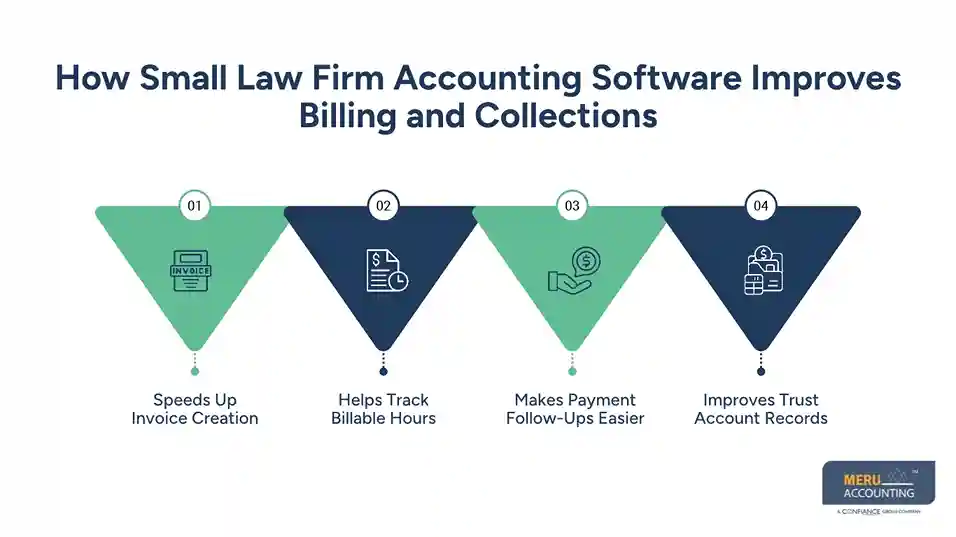
3. Makes Payment Follow-Ups Easier
A good billing system can show which bills are due, overdue, or paid. Some tools also support payment reminders and online payment options.
This helps staff follow up on late bills in a timely way. It can also reduce the need to search through emails or bank records to check a client’s payment status.
4. Improves Trust Account Records
When a law firm holds client funds, it must track each client’s share with care. Legal accounting tools can help record deposits, payments, and transfers linked to each client matter.
Still, software alone does not ensure trust account compliance. Firms must follow state bar rules, keep client funds apart from firm funds, and carry out the required bank and client ledger checks.
How Accounting Software Helps Small Law Firms Maintain Healthy Cash Flow
Cash flow shows how money moves in and out of your firm. A firm may earn a profit on paper but still face cash issues if clients pay late or costs fall due before payments come in.
The right small law firm accounting software can give you a better view of these cash flow patterns.
1. Tracks Unpaid Bills and Due Dates
Accounts receivable reports show how much clients owe and how long bills have been unpaid. This helps the team focus on older balances and plan payment follow-ups.
For example, if a firm has several bills that are more than 60 days old, it can review those accounts and take steps to collect the money.
2. Keeps Track of Firm Expenses
A clear record of rent, payroll, software fees, insurance, and other costs helps partners see where money goes each month.
When costs rise, the firm can review the cause and decide if it needs to change its budget or spending plan.
3. Helps Plan for Future Cash Needs
Cash flow reports can help firms compare expected income with upcoming costs. Some systems also offer cash flow forecasts based on past trends and planned payments.
These views can help a firm plan for payroll, rent, tax payments, and other bills. However, forecasts depend on the quality of the data and should be checked against real payment trends.
4. Shows Cash Flow Gaps Early
A firm that checks its cash position on a regular basis can spot issues before they grow. For example, if client payments slow down while payroll and rent stay the same, partners may need to follow up on bills or delay non-urgent spend.
Good records help turn these choices into planned steps rather than last-minute fixes.
Essential Features to Look for in Law Firm Financial Management Software
Not every accounting system is built for legal work. When comparing law firm financial management software, look for features that match your firm’s size, billing model, and legal duties.
Here are some key features to review before you choose a system.
1. Trust Accounting and Client Ledger Tracking
If your firm holds client funds, trust accounting must be a key part of your review. Look for tools that can track each client’s balance, record trust activity, and support three-way reconciliation.
Three-way reconciliation helps compare the trust bank balance, the total of client ledger balances, and the trust account book balance. Your team should still review these records as required by state rules.
2. Time Tracking and Legal Billing
Choose a system that makes it easy to log billable hours, apply fee rates, add client costs, and create clear invoices. It should also support the billing methods your firm uses, such as hourly fees or flat fees.
3. Accounts Payable and Receivable
Your system should track money owed to the firm and money the firm owes to others. This gives partners a better view of unpaid client bills, vendor costs, and upcoming payments.
4. Financial Reports and Dashboards
Look for reports that show income, costs, profit, cash flow, and unpaid bills. Matter-level reports can also help partners review the cost and income linked to each client or case.
5. Data Security and Access Controls
Legal and financial records need strong safeguards. Look for role-based access, audit trails, data backups, and secure data transfer. Staff should only have access to the records they need for their role.
6. Integration With Other Legal Tools
Your accounting system may need to work with legal practice tools, time tracking apps, or payment systems. Check how data moves between them and whether the link cuts down on duplicate entry.
How Meru Accounting Helps Small Law Firms Manage Their Finances
A law firm’s financial records should tell more than how much money came in last month. They should help partners understand which clients have unpaid bills, how much the firm spends to run its practice, and whether its income can cover upcoming costs. Getting this level of detail takes consistent bookkeeping and regular account reviews.
At Meru Accounting, we provide outsourced accounting support for law firms, with a focus on the records and reports that keep their finances on track. Our services include:
- Legal Bookkeeping: Recording client payments, legal fees, office expenses, and other transactions to keep the books current.
- Accounts Receivable Management: Tracking unpaid client invoices, reviewing aging balances, and keeping payment records in order.
- Accounts Payable Management: Recording vendor bills, tracking due dates, and helping firms plan their outgoing payments.
- Bank and Account Reconciliation: Matching bank activity with accounting records and reviewing differences that need attention.
- Financial Reporting: Preparing profit and loss statements, cash flow reports, and expense summaries to help partners assess firm performance.
- Payroll Accounting: Maintaining payroll entries and related expense records.
- Catch-Up and Cleanup Bookkeeping: Bringing overdue books up to date and correcting gaps in past financial records.
Whether your firm needs help staying current with monthly books or wants better reports to review billing and cash flow, Meru Accounting can provide the accounting support behind those decisions. Our goal is to give law firm partners clearer financial records without adding more accounting work to their day.
Our Expert Insight
A common mistake small law firms make is treating every profitable-looking case as a good one for the firm. In practice, some matters may take far more attorney time, staff support, and admin work than the fees they bring in justify.
We recommend reviewing matter-level costs alongside fee income. This can help partners spot cases that take too many hours, identify pricing gaps, and assess whether flat-fee arrangements still make financial sense. It also gives them a better basis for setting fees and planning workloads.
Good law firm accounting isn’t just about keeping accurate books; it’s about using financial data to understand which parts of the practice are worth growing.
Key Takeaways
- Small law firms need clear records to manage bills, client funds, and daily costs.
- Small law firm accounting software can help speed up billing and track unpaid invoices.
- Regular cash flow reviews help partners plan for payroll, rent, and other costs.
- Trust accounting needs strong controls and regular checks, not just software.
- Law firm financial management software should offer legal billing, trust tracking, reports, and data security.
- Outsourced accounting support can help firms keep their books clean and make better use of financial data.
FAQs
The best software depends on your firm’s billing needs, trust accounting requirements, and budget. Look for legal billing, matter tracking, trust accounting, and financial reporting features.
Yes. QuickBooks can handle bookkeeping, payroll, expenses, and financial reports. However, firms that manage client trust funds may need additional legal accounting tools.
Legal accounting software offers features such as matter-based billing, trust account tracking, and retainer management. Regular accounting software focuses on general business finances.
Costs vary by provider, features, and number of users. Basic accounting tools are often less expensive than legal practice platforms with billing and trust accounting features.
Law firms should monitor collection rates, billing realization, revenue per attorney, operating expenses, and profit margins to assess financial performance and spot areas for improvement.
optional anymore
on running the business