Managing a startup budget in the first year is often harder than founders expect because money moves quickly while planning stays uncertain. A well-structured financial plan decides how long a business can survive before it reaches stable income. Many founders also struggle to align early spending with growth needs, which makes financial control even more important.
When startups begin operations, the budget is usually built on estimates rather than real data. This gap often leads to overspending, missed cost signals, and weak cash flow control. At the same time, a SaaS-focused financial plan adds extra pressure because recurring costs, subscription tools, and customer acquisition expenses change every month.
Outsourced accounting brings structure, clarity, and regular financial tracking so that spending stays under control from day one. It also gives better visibility into SaaS financial planning, especially for tech-driven companies where revenue and cost timing differ from traditional firms.
What You Will Learn From This Blog
- How outsourced accounting brings control to a financial plan in the first year
- Why early-stage financial planning often fails without expert support
- How a saas startup budget needs different handling compared to other startups
- Common mistakes founders make while tracking a startup budget
- Ways outsourced accounting reduces financial stress and improves decision clarity
- How Meru Accounting supports structured budget planning and reporting
What is Outsourced Accounting and How Does it Work?
Meaning Of Outsourced Accounting
Outsourced accounting means hiring an external finance team to manage books, reports, and financial planning. It removes the need to build a full in-house accounting team in the early stage and keeps financial records accurate and updated without delay.
For SaaS businesses, it ensures subscription revenue, churn, and operating costs are tracked in a structured way.
How The Process Works In Real Time
Outsourced accountants connect with your bank feeds, billing tools, and payroll systems. They record transactions daily or weekly to keep the startup budget aligned with real spending.
In SaaS operations, this process also tracks recurring billing cycles and customer renewals, which are key to financial stability.
Tools And Systems Used
Most outsourced teams use tools like Xero, QuickBooks, or Odoo to manage financial records. These systems reduce manual errors and give real-time visibility.
For SaaS businesses, integration with CRM and subscription tools ensures revenue tracking is accurate and timely.
Early Stage Financial Tracking Importance
Startups often ignore early tracking, which creates gaps in financial planning. Outsourced accounting ensures every expense is recorded properly from day one.
SaaS companies benefit even more because small errors in recurring revenue can lead to incorrect growth planning.
Cost Structure Of Outsourced Accounting
Instead of hiring full-time staff, startups pay a fixed or flexible fee. This makes financial planning more predictable and controlled.
For SaaS businesses, this cost model helps maintain a balance between operational spending and growth investment.
How Outsourced Accounting Improves Startup Budget Efficiency
Better Cash Flow Tracking
Cash flow forms the base of financial stability in any business. Professional accounting teams monitor incoming and outgoing money on a regular basis, ensuring every transaction is recorded without delay.
A clear view of available funds helps businesses avoid shortages and manage their saas startup budget with greater control and confidence.
Real-Time Expense Monitoring
Every business expense is recorded and classified in a structured way. Proper categorization gives complete visibility into where money is being spent across operations, marketing, tools, and staffing.
Regular monitoring reduces hidden spending and builds stronger financial discipline across the organization.
Accurate Financial Reporting
Regular financial reports present a clear comparison between planned budgets and actual performance. Business owners can easily see how closely operations align with financial expectations.
Better reporting makes it easier to identify gaps early and take corrective action before issues grow.
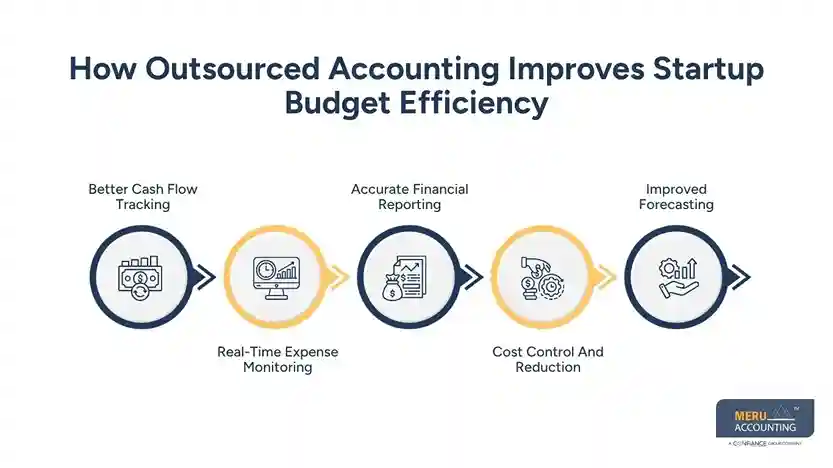
Cost Control And Reduction
Careful review of expenses helps identify areas where money is being wasted or underutilized. Early detection of such patterns allows better control over overall spending.
Stronger cost management improves financial balance and allows funds to be redirected toward priority areas.
Improved Forecasting
Clean and updated financial data makes future planning more reliable. Forecasts based on accurate records give a realistic view of upcoming income and expenses.
Better predictions support decisions related to hiring, marketing investments, and saas startup budget planning with reduced uncertainty.
Role of Outsourced Accounting in Managing SaaS Startup Budget Effectively
Subscription Revenue Tracking
Recurring income requires careful tracking for stable financial planning decisions. External teams ensure subscription income is recorded correctly every time. Accurate recording of recurring revenue improves clarity in financial planning processes.
Customer Retention Analysis
Customer loss directly affects future income, overall business stability levels, and the accuracy of a startup budget. Accounting professionals track retention patterns to understand financial impact clearly.
Better retention insights support stronger long-term planning and revenue stability improvements.
Cost Management Across Tools
Subscription businesses use multiple tools that create monthly operational expenses regularly. Proper tracking ensures these expenses stay within planned financial limits.
Structured monitoring of tool costs maintains balance between spending and operational needs while preventing unnecessary expense leakage during scaling.
Revenue Accuracy And Timing
Income must be recorded at the correct time to avoid financial errors. Proper revenue timing ensures financial reports reflect true business performance clearly.
Growth Performance Tracking
Key metrics like acquisition cost and lifetime value show business strength clearly. Tracking these metrics improves decision-making for expansion and investment planning purposes.
Key Benefits of Outsourced Accounting for Financial Management
- Accurate record-keeping reduces mistakes that affect business decisions significantly.
- Consistent financial reporting ensures data remains reliable and easy to understand.
- Founders focus more on growth while financial tasks are handled externally.
- External financial management improves overall productivity and operational efficiency levels.
- Clear financial reports build stronger trust with investors and stakeholders easily.
- Transparent financial data increases the chances of funding and partnership opportunities.
- Reliable financial insights reduce risk and improve overall business stability.
Common Startup Budget Challenges in the First Year
Cash Burn Rate Management
Many startups spend cash quickly before generating consistent revenue. Monitoring spending regularly helps maintain better control over a startup budget and prevents financial pressure.
Runway Calculation Uncertainty
Business runway shows how long available funds can support operations. Inaccurate financial data often leads to poor planning and uncertainty about future funding needs.
Hiring and Team Expansion Costs
Employee salaries, benefits, and recruitment expenses can increase costs rapidly. Careful workforce planning helps keep overall financial planning aligned with business growth goals and prevents unnecessary cost escalation during scaling.
Marketing Overspending
Advertising and promotional activities can consume significant resources if left unchecked. Regular budget reviews help ensure marketing expenses remain within planned limits.
Revenue Forecasting Challenges
Many startups rely on estimated income during the early stages of growth. Accurate financial reporting improves forecasting and supports better budgeting decisions.
How a SaaS Startup Budget Differs From Traditional Startup Budgets
MRR Tracking
Monthly Recurring Revenue (MRR) is a core metric in SaaS budgeting. It helps measure predictable income and supports accurate startup budget planning based on subscription performance.
CAC (Customer Acquisition Cost)
CAC represents how much it costs to acquire a new customer. In SaaS startups, controlling CAC is essential to ensure marketing spend does not exceed the value generated from customers.
Churn Rate
Churn rate measures how many customers cancel subscriptions over time. High churn directly reduces revenue stability and impacts overall financial planning and business budgeting decisions.
LTV (Customer Lifetime Value)
LTV estimates the total revenue generated from a customer during their lifecycle. A strong LTV helps justify acquisition costs and improves long-term budgeting decisions.
Deferred Revenue
SaaS companies often receive payments in advance for services delivered over time. Proper recognition of deferred revenue is important for maintaining accurate financial reporting and realistic financial planning.
Subscription Software Costs
SaaS startups rely heavily on third-party tools for operations, sales, and product delivery. These recurring subscription expenses must be tracked carefully to avoid budget overruns.
Cloud Infrastructure Costs
Cloud hosting, storage, and computing costs scale with usage in SaaS businesses. Monitoring these expenses ensures overall financial planning remains balanced during growth phases and prevents overspending as the business expands.
Why Choose Meru Accounting?
Meru Accounting provides specialized accounting and bookkeeping services that help startups maintain better control over their startup budget during the critical first year. Our team supports businesses with accurate bookkeeping, budget tracking, cash flow monitoring, and financial reporting, helping founders make informed decisions with greater confidence.
We work with startups across various industries, including SaaS businesses that require careful management of recurring revenue, subscription expenses, and financial performance metrics. Our professionals deliver structured financial reports and monthly management reporting that provide clear visibility into business performance and spending patterns.
With expertise in Xero, QuickBooks, Odoo, and other leading accounting platforms, we help startups establish efficient financial systems that support growth and operational efficiency. Our services also include accounting software implementation, financial process optimization, and ongoing bookkeeping support tailored to business needs.
Having served clients globally, Meru Accounting understands the financial challenges startups face during their early growth stages. Our experience, technology expertise, and commitment to financial accuracy help businesses build stronger financial foundations, manage their startup budget more effectively, and support long-term business growth.
Our Expert Perspective
In early-stage businesses, financial clarity is often underestimated until cash flow problems appear. In our experience at Meru Accounting, most challenges arise not from low revenue but from weak tracking systems and delayed reporting.
Startups that maintain structured financial records from the beginning make faster and more confident decisions while managing their startup budget during scaling phases. Consistent reporting also reduces dependency on assumptions and improves investor trust during funding discussions.
A disciplined financial system in the first year often becomes the foundation for long-term stability and controlled growth.
Key Takeaways
- Early financial control is critical for business survival
- Professional accounting support reduces errors and confusion
- Subscription-based companies need careful revenue tracking
- Regular reporting improves decision-making quality
- Proper financial systems and a well-managed saas startup budget support long-term growth
- Expert support increases financial clarity and stability
FAQs
Early financial tracking provides a clear view of income and expenses, while accurate records support better business decisions and reduce financial mistakes.
Professional accounting support keeps financial records accurate and organized, making planning, reporting, and decision-making more effective.
Recurring revenue models create unique accounting requirements, making careful tracking and accurate financial reporting essential for long-term success.
Small businesses can benefit from professional accounting expertise, gaining improved financial accuracy while maintaining better control over their startup budget.
Poor expense tracking and delayed bookkeeping are among the most common financial mistakes, often resulting in inaccurate reports and weaker business decisions.