
Securing funding is a major milestone for any startup, whether the investment comes from angel investors, venture capital firms, or private equity groups. Access to capital enables startups to hire talent, expand operations, develop products, and enter new markets. These growth activities significantly increase the importance of a startup tax accountant in ensuring compliance and financial stability during rapid expansion.
However, rapid growth also creates financial and tax obligations that become more complex as the business scales. Many founders focus heavily on product development, customer acquisition, and fundraising.
While these areas are critical, tax compliance and financial management often require equal attention. A small tax oversight during the early stages can lead to penalties, compliance issues, or concerns during investor due diligence.
A startup tax accountant plays an important role during this phase of growth. Beyond filing tax returns, they assist with planning, compliance, reporting, and financial readiness. Their work enables startups to maintain accurate records, meet tax obligations, and build trust with investors.
What You Will Learn From This Blog
- Why funded startups need professional tax guidance during periods of rapid growth.
- Common tax challenges that arise after securing investment.
- How tax planning contributes to investor confidence and fundraising success.
- The importance of managing tax obligations across multiple states and countries.
- Advantages of outsourcing tax accounting functions.
- Ways startups can scale efficiently without facing tax-related delays.
- How Meru Accounting can assist startups during expansion.
The Role of a Startup Tax Accountant in Scaling High-Growth Startups
Financial Planning for Expansion
Growth often brings new expenses, larger payrolls, and increased operational costs. A startup tax accountant evaluates tax implications and assists in planning future financial requirements.
Maintaining Tax Compliance
Funded startups must meet various federal, state, and local tax obligations. Consistent compliance reduces the risk of penalties and regulatory issues.
Supporting Strategic Decisions
Business decisions such as opening a new office, hiring remote employees, or entering new markets often carry tax consequences. Professional guidance allows founders to make informed decisions.
Managing Tax Documentation
Investors and lenders frequently request financial records and tax documents, which a startup tax accountant ensures are well-organized and investor-ready. Organized documentation supports transparency and simplifies due diligence reviews.
Monitoring Tax Liabilities
As revenue grows, tax liabilities increase. Regular monitoring helps startups prepare for future obligations and avoid unexpected tax burdens.
Creating Scalable Processes
Rapid growth can overwhelm manual accounting systems. Establishing structured tax accounting procedures creates a foundation that can support long-term expansion.
Tax Challenges Startups Face During Rapid Expansion
Multi-State Tax Requirements
Remote work and geographic expansion often create tax obligations in multiple states. Each state may have different filing requirements and tax rules.
Payroll Tax Complexity
As startups hire employees and contractors, payroll tax management becomes more detailed. Errors in payroll reporting can lead to penalties and compliance concerns.
Sales Tax Compliance
Many startups sell products or services across different jurisdictions. Tracking and remitting sales taxes correctly can become increasingly challenging.
Equity Compensation Reporting
Stock options and equity-based compensation packages often require specialized tax reporting. Proper management prevents future compliance issues.
Changing Tax Regulations
Tax laws change frequently across regions, and startups must track updates to avoid issues with deductions, reporting, and payroll taxes. Staying updated helps maintain compliance and prevents penalties during fast business growth.
Increased Audit Risk
As companies expand and generate higher revenue, the possibility of tax scrutiny can increase. Accurate records and proper tax accounting practices reduce potential audit concerns.
How A Startup Tax Accountant Supports Fundraising and Investor Readiness
Preparing Accurate Financial Records
Investors expect reliable financial statements before making funding decisions, and a startup tax accountant ensures these reports are accurate and compliant.
Well-maintained records demonstrate financial discipline and transparency.
Assisting With Due Diligence
During fundraising rounds, investors review tax filings, financial reports, and compliance history. Organized documentation helps accelerate the review process.
Identifying Potential Risks
Unresolved tax issues can raise concerns among investors. Early identification and resolution of these matters strengthen investor confidence.
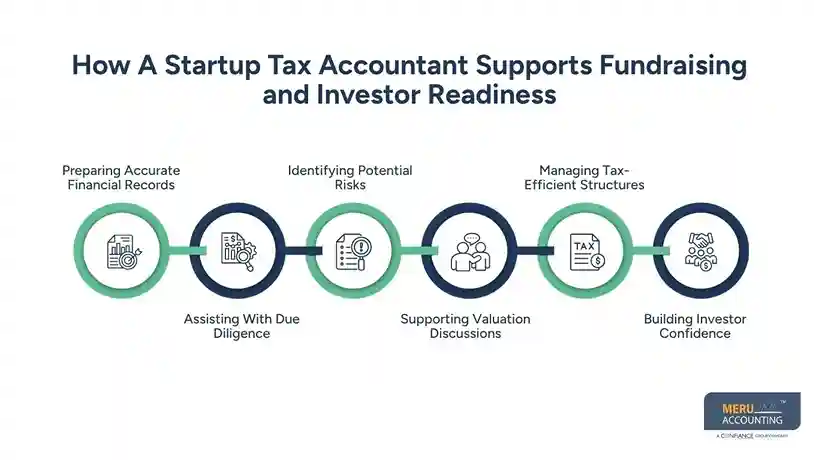
Supporting Valuation Discussions
Financial performance influences company valuation. Accurate tax accounting contributes to reliable financial reporting and valuation assessments.
Managing Tax-Efficient Structures
The way a startup is structured can affect future investment opportunities. Professional guidance helps align tax planning with long-term business goals.
Building Investor Confidence
Strong compliance practices demonstrate responsible financial management. Investors are often more comfortable supporting businesses with clear financial controls.
How a Startup Tax Accountant Supports Multi-State and Global Expansion
Managing State Tax Registrations
Expansion into new states often requires a startup tax accountant to manage business registrations and tax accounts correctly. Proper registration prevents compliance issues later.
Addressing Nexus Requirements
Business activity in different locations can create tax obligations. Understanding nexus rules is essential for maintaining compliance.
Coordinating International Tax Reporting
Global expansion introduces new reporting responsibilities. A startup tax accountant can assist in managing cross-border tax requirements.
Handling Transfer Pricing Considerations
Startups operating across countries may need to document transactions between related entities. Proper reporting supports compliance with international regulations.
Monitoring Foreign Tax Obligations
Different countries have unique tax laws and filing deadlines. Careful monitoring helps startups avoid unexpected liabilities.
Supporting Global Growth Plans
International expansion requires coordination between business strategy and tax planning. Early preparation reduces operational disruptions.
Benefits Of Outsourcing Tax Accounting for Startups
Access To Specialized Expertise
Outsourced startup tax accountants often work with startups across multiple industries, bringing broad experience to complex tax situations. Their experience provides valuable insights into tax planning and compliance.
Reduced Operational Costs
Building an in-house tax department can be expensive. Outsourcing provides access to expertise without significant hiring and training costs.
Greater Focus On Core Operations
Founders can spend more time on product development, sales, and growth initiatives while a startup tax accountant manages compliance responsibilities.
Time savings allow leadership teams to concentrate on revenue generation and strategic decisions.
Scalable Support
As the company grows, outsourced tax accounting services can adapt to changing business needs without major operational adjustments.
Flexible service structure aligns with hiring growth, new markets, and increased transaction volumes.
Improved Reporting Processes
A startup tax accountant often implements efficient workflows and reporting systems that enhance financial visibility.
Clear financial reports strengthen decision-making and investor communication during funding stages.
Access To Modern Technology
Many outsourced providers use advanced accounting platforms and automation tools that support accuracy and efficiency.
Automation reduces manual errors and speeds up financial data processing across large transaction volumes.
How a Startup Tax Accountant Helps Startups Scale Without Tax Bottlenecks
Forecasting Future Tax Obligations
Growth often creates higher tax liabilities. Forecasting allows startups to prepare cash reserves and avoid financial surprises.
Strengthening Internal Controls
A startup tax accountant strengthens internal controls, reducing reporting errors and improving financial reliability as operations expand.
Clear control systems also reduce the risk of misreporting during high transaction periods.
Supporting Business Expansion Plans
Tax considerations should be part of every major growth decision. Professional guidance helps align expansion plans with compliance requirements.
Maintaining Consistent Reporting
Reliable reporting creates confidence among investors, lenders, and management teams. Consistency becomes increasingly important during periods of rapid growth.
Reducing Compliance Delays
Missed filings and inaccurate records can slow business operations. Structured tax processes help keep growth plans on track.
Preparing For Future Funding Rounds
As startups move from seed funding to later-stage investments, financial scrutiny often increases. Proper tax accounting with a startup tax accountant creates a strong foundation for future fundraising efforts.
Why Choose Meru Accounting for Startup Tax Accounting Services
Startup-Focused Experience
At Meru Accounting, we understand the unique challenges faced by funded startups. Our startup tax accountants work with growing businesses across various industries and growth stages.
Hands-on experience with scaling startups provides practical insight into real tax and compliance challenges.
Comprehensive Tax Support
We provide tax planning, compliance management, tax return preparation, financial reporting, and advisory services designed to meet startup requirements.
End-to-end coverage reduces gaps in financial tracking and improves overall accuracy in reporting.
Scalable Service Model
As your startup grows, our services can expand alongside your business. This flexibility allows you to receive the right level of support at every stage.
Service structure adapts smoothly to funding rounds, hiring spikes, and market expansion needs.
Technology-Driven Approach
We utilize modern accounting and tax technologies that enhance accuracy, efficiency, and reporting capabilities.
Advanced tools reduce manual work and improve speed in financial processing and compliance tasks.
Investor-Ready Financial Processes
Our team assists startups in maintaining organized records and financial documentation that support fundraising activities and investor reviews.
Structured reporting improves clarity during due diligence and builds investor confidence.
Dedicated Professional Guidance
We work closely with startup founders to address tax challenges, identify opportunities, and create practical solutions that align with business objectives.
Direct communication with experts ensures faster resolution of financial and tax-related concerns.
Our Expert Perspective
From our experience working with growing businesses and startups, a common pattern becomes clear. Most founders place strong emphasis on growth metrics, customer acquisition, and product development immediately after securing funding.
While these priorities are essential, tax planning is often addressed only when a filing deadline approaches or when investor documentation is required.
Startups that manage growth more effectively are those that work with a startup tax accountant to build strong financial and tax processes early. They maintain accurate records, regularly review tax obligations, and integrate compliance into their overall growth strategy rather than treating it as a routine administrative task.
This approach typically results in smoother fundraising rounds, improved financial visibility, and fewer operational disruptions as the business scales.
Key Takeaways
- Funding creates new tax and compliance responsibilities for startups.
- Professional tax guidance becomes increasingly important during rapid growth.
- Multi-state and international expansion often introduce additional tax obligations.
- Investor due diligence frequently includes a detailed review of tax compliance.
- Outsourcing tax accounting can provide specialized expertise while controlling costs.
- Strong tax planning reduces operational risks and supports sustainable growth.
- Accurate financial records contribute to investor confidence and future fundraising success.
- Early preparation can prevent costly tax issues as the business scales.
FAQs
A funded startup often experiences rapid growth, increased transactions, and new compliance requirements. A tax accountant helps manage these responsibilities and reduces the risk of tax-related issues.
Many startups benefit from professional tax guidance before or immediately after receiving funding. Early involvement allows proper planning and compliance management.
Yes. A tax accountant can organize financial records, review tax filings, and prepare documentation commonly requested during investor reviews.
Multi-state expansion can create new registration requirements, payroll tax obligations, and sales tax responsibilities that require careful management.
For many startups, outsourcing provides access to experienced professionals at a lower cost than building a full in-house tax department. The best choice depends on the company’s size, growth plans, and operational needs.