


Choosing the right partner can shape your business growth. With the right help, you save costs, move fast, and stay on track. Picking an outsourcing vendor is not just about price; it means checking their skills, trust level, and how well they fit with your team. The vendor must know your needs and work in sync with you. When you know how to select a vendor for outsourcing, you gain more control and cut risk as you grow.
Understanding Your Business Needs Before You Outsource
Know What You Need Help With
List your tasks and decide which ones take the most time or need expert help. A good outsourcing vendor is skilled, communicative, and easy to work with.
Set Clear Goals
Clearly define your expectations and requirements before selecting a vendor. It could be lower costs, better work speed, or higher skill levels. Clear goals help guide your choice.
Define Your Budget
Know how much you can spend. A set budget helps narrow your search for a vendor who meets your needs and cost limits.
Key Qualities to Look for in an Outsourcing Vendor
Experience in Your Industry
A vendor who knows your field will better understand your tasks and needs. This speeds up results and cuts training time.
Reliable Work Record
Check their past work. Look for reviews or ask for case studies. An effective vendor should show proof of strong results.
Skill and Tech Level
The right tools and tech skills make a huge difference. A skilled vendor can work faster and fix problems better.
Flexibility and Growth
Your business may grow fast. A smart vendor should grow with you. Pick one who can adjust to your changing needs without delay.
Strong Data Safety
Your data is the core of your work. The vendor should use secure tools, passwords, and safe storage. Ask them how they keep client files safe.
Clear Pricing Model
Hidden costs can hurt your budget. A good outsourcing vendor should explain their pricing in detail. This makes planning simple and stress-free.
How to Select a Vendor for Outsourcing: Step-by-Step Guide
This section breaks down how to select a vendor for outsourcing into clear, easy steps. Follow these to reduce risks and get the best fit for your business.
Deciding the Requirements
This is the first step a company must take before considering a vendor. It should clearly define what it aims to achieve through outsourcing and how the relationship with the vendor should develop, based on specific business terms.
Have a Look at the Prior Experience
Before opting for a vendor, a company must check its prior experience. This includes the number of years that the outsourcing company has been providing these services, the clients it serves, the diversity in the clients, testimonials of the company, etc. All these must be checked and taken into consideration before finally deciding.
Ask for References and Work Samples
To be sure, on the working method and the work quality, a company must ask the service provider for its work samples or any references to testify to it, and see the suitability.
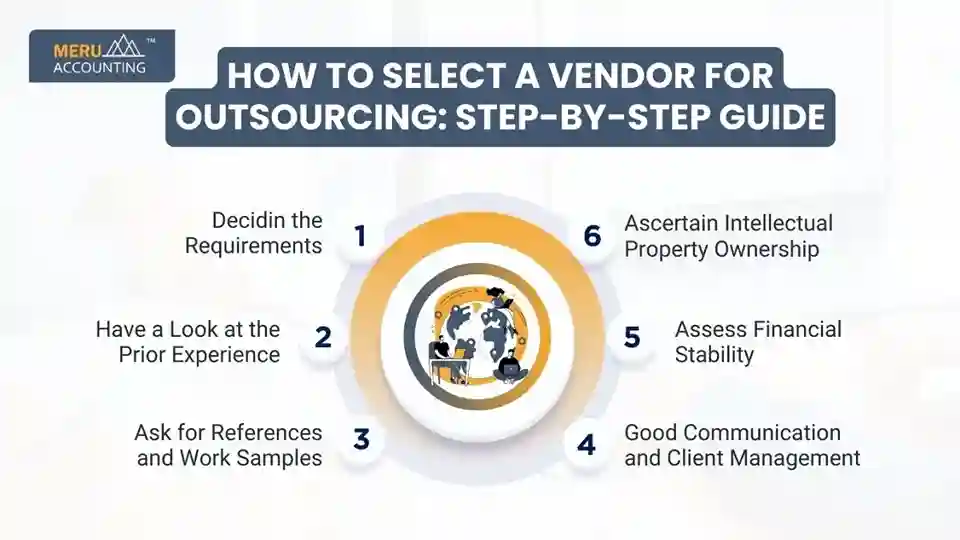
Good Communication and Client Management
Before opting for a vendor, a company should make sure that client management services are up to the mark, and the service provider believes in good communication.
Assess Financial Stability
In general, this step doesn’t seem that important, but in the business world, it’s a very essential point! So, before you choose your vendor, don’t forget to have a look at how sound the vendor’s financials are.
Ascertain Intellectual Property Ownership
This step is also one of the crucial steps to be taken into consideration for the service provider. A company must ascertain the intellectual property ownership to prevent unwelcome outcomes in the future!
Common Mistakes to Avoid When Hiring an Outsourcing Vendor
Rushing the Process
Many rush to hire without checking the vendor well. This can lead to poor results and wasted money. Take your time to vet and compare before you commit.
Ignoring Time Zones
Work hours must align. If your vendor works while you sleep, delays and miscommunication can happen. Pick a vendor in a time zone that allows easy contact.
Overlooking Security
Data security is key. Make sure your vendor follows strict safety steps, like encryption, access limits, and backups. Ask for their security policy.
Going Too Cheap
Low cost often brings low value. A very cheap vendor may lack skills or cut corners. Focus on value, not just savings.
Poor Fit with Your Team
Your outsourcing partner should match your company’s culture and workflow speed. Smooth talks and teamwork make a big difference in success.
Cost vs. Quality: Striking the Right Balance with Your Outsourcing Vendor
Understand the Real Value
Low price can tempt you, but think about value. A skilled outsourcing vendor may cost more, but they often deliver better results.
Set a Price Range
Pick a budget range, not a fixed price. This gives room to find the best mix of cost and quality.
Compare Services
Look beyond price. What do you get in return? Good support and fast work add great value.
Focus on ROI
Think about return on spend. The right vendor helps you grow, not just save money.
The Role of Communication in Vendor Selection
Clear Talk Builds Trust
Open, honest talks help both sides. You should feel heard and understood. Talk often and clearly. Trust grows when ideas flow well.
Regular Updates
Choose a vendor who gives updates often. This keeps tasks on track and builds trust. Frequent reports show progress. They help you stay informed.
Easy Contact Channels
They should use common communication tools like email, Slack, or Zoom. Your outsourcing vendor should be easy to reach and responsive.
No Language Gaps
Language gaps can slow work. Pick a vendor with strong English or your preferred language skills. Good language skills boost clarity. This avoids costly mix-ups.
Look Beyond Short-Term Gains
It’s easy to be drawn to the lowest bid. But a vendor who charges less may lack skill or speed. Think about long-term results, not just upfront savings.
Test the Value They Add
Ask how their work will improve your business. A skilled outsourcing vendor should not only save time but also raise the quality of output.
Why Choosing the Right Outsourcing Vendor Matters for Your Business
Save Time for What Counts
Running a business means taking on many roles. Tasks like books, payroll, and admin can eat up hours. A trusted outsource partner saves time and lets you focus on growth, sales, and client care.
Reduce Stress and Risk
Mistakes in tax or finance can cost more than money. They add stress and risk. When you know how to select a vendor for outsourcing, you gain peace of mind. A skilled vendor lowers errors, keeps data safe, and ensures tasks get done on time.
Boost Your Team’s Strength
Outsourcing does not replace your staff. It makes them stronger. With routine tasks handled outside, your team can focus on high-value projects. This helps morale and makes your business more agile.
Gain Access to Global Talent
A good outsourcing vendor gives you access to talent from across the globe. You can tap into skilled pros without the high cost of hiring in-house. This brings new ideas, methods, and insights into your business.
Support for Long-Term Growth
Your business needs may change with time. A reliable vendor grows with you, adding more skills and support as you scale. This kind of long-term bond helps you move ahead with less risk and more trust.
Improve Cost Control
A smart outsourcing vendor helps you plan and control costs. With clear rates and better use of resources, you avoid waste and stay within budget.
Build Long-Term Trust
When you know how to select a vendor for outsourcing, you are not just hiring a service, but you are building a bond. Long-term trust leads to smoother work, fewer risks, and more value over time.
Meru Accounting brings strong skills in finance, tax, and bookkeeping. We know how to manage tasks with care. Our clients trust us. We have helped firms across the globe manage books and meet tax deadlines with ease. We follow strict data safety rules for each client. We balance cost and quality. Our work adds value without stress. We stay in touch. You get fast answers, weekly updates, and real support when needed.
FAQs
- What is the best way to select an outsourcing vendor?
Start by listing your needs, then check the vendor’s skill, reviews, and fit with your work style. Run a small test before a full deal. - How do I know if an outsourced vendor is right for me?
Look at their past work, how they talk, and their speed. A good outsourcing vendor is skilled, quick to reply, and a strong fit for your team. - How much should I pay an outsourcing vendor?
Rates vary. Focus on value, not just cost. A good vendor may charge more, but they save you time and lift work quality. - What tasks can I outsource to a vendor?
You can outsource jobs like payroll, tax filing, bookkeeping, admin work, and more. Start with the tasks that use the most time. - How to Select a Vendor for Outsourcing?
To pick the best vendor, list your needs, check skills, review past work, run a trial task, and sign a clear deal.


