Tax bookkeeping plays a major role in keeping business finances clear, updated, and ready for tax filing. Businesses that maintain proper financial records during the year often face fewer issues at the time of year-end filing.
Organized records help track income, expenses, tax payments, invoices, and other financial details that support accurate reporting.
Many businesses struggle during tax season because financial records are incomplete or scattered across different systems. Delayed entries, missing receipts, and incorrect reports can create filing errors and increase the risk of penalties.
Proper bookkeeping and tax management help reduce these issues and support better financial control throughout the year.
Year-end filing is not only about submitting tax forms. It also helps businesses review financial performance, identify tax obligations, and prepare for future planning. When records are properly maintained, businesses can complete the filing process with greater confidence and fewer delays.
What You Will Learn From This Blog
- The meaning and purpose of tax bookkeeping
- Why businesses need organized financial records
- How tax bookkeeping supports year-end filing
- The role of bookkeeping in accurate financial reporting
- Common issues businesses face without proper records
- Important financial documents needed during tax filing
- Practical methods for maintaining financial records
- How professional support can improve tax management
Introduction To Tax Bookkeeping
Maintaining Daily Financial Records
Tax bookkeeping involves recording daily business transactions in a proper format. These records include sales, expenses, payroll, purchases, and tax-related entries. Regular updates help businesses keep financial information current throughout the year.
Accurate records also make it easier to review financial performance during audits or tax reviews. Businesses with updated records often spend less time correcting errors during filing periods.
Tracking Income And Expenses
Every business must track incoming revenue and outgoing costs. This helps calculate taxable income correctly at year-end. Proper tracking also helps businesses understand spending patterns and financial stability.
Expense tracking becomes important when businesses claim deductions. Without supporting records, many expenses may not qualify during filing.
Organizing Tax-Related Information
Businesses collect many financial documents during the year, including invoices, receipts, payroll records, and bank statements. Tax bookkeeping helps organize these documents for easy access when preparing year-end reports.
Proper organization also reduces the risk of losing important tax information. Businesses can quickly retrieve records whenever needed.
Supporting Compliance Requirements
Government tax departments require businesses to maintain financial records for a certain period. Proper bookkeeping supports compliance with these legal requirements and reduces the chance of reporting issues.
Well-maintained records also help businesses respond quickly if tax authorities request financial details or supporting documents.
Improving Financial Visibility
Businesses need clear financial information to make informed decisions. Tax bookkeeping helps owners understand profit levels, operating costs, and cash flow positions throughout the year.
This visibility supports budgeting, planning, and future financial management activities.
Why Tax Bookkeeping Matters For Businesses
Reducing Filing Errors
Incorrect entries often lead to filing mistakes. Tax bookkeeping helps reduce these errors by keeping records updated and reviewed regularly. Accurate records improve the quality of tax calculations and reports.
Small mistakes in financial records can create large issues during tax filing. Organized bookkeeping lowers this risk.
Helping Businesses Meet Deadlines
Late filing can result in penalties and interest charges. Businesses that maintain proper bookkeeping usually complete year-end filing faster because financial information is already prepared.
Timely record management supports smoother reporting and helps avoid last-minute pressure.
Supporting Business Growth
Growing businesses manage more transactions, employees, and expenses. Tax bookkeeping helps organize this information and maintain financial clarity as operations expand.
Clear bookkeeping and tax records also support funding applications, investor reviews, and business planning.
Improving Cash Flow Management
Businesses with proper financial records often understand cash flow better. This helps owners monitor unpaid invoices, upcoming expenses, and tax obligations.
Better cash flow awareness supports stable operations and reduces financial stress during tax season.
Building Financial Confidence
Business owners often feel more confident when financial records are accurate and complete. Reliable bookkeeping helps them review reports, understand tax liabilities, and make informed financial decisions.
Strong financial records also support better communication with accountants and tax professionals.
The Role Of Tax Bookkeeping In Year-End Filing
Preparing Accurate Tax Returns
Year-end filing depends heavily on accurate financial records. Tax bookkeeping helps ensure that reported income and expenses match business activities during the year.
Accurate records reduce the possibility of incorrect tax calculations and reporting mistakes.
Identifying Eligible Deductions
Businesses may qualify for deductions related to operating expenses, equipment, salaries, and travel costs. Proper bookkeeping and tax documentation help track these expenses and maintain supporting records.
Without proper records, businesses may miss valid deductions that could lower tax obligations.
Supporting Audit Readiness
Tax authorities may review financial records during audits or compliance checks. Organized bookkeeping helps businesses provide supporting documents quickly and accurately.
Audit preparation becomes easier when records are maintained consistently throughout the year.
Reconciling Financial Accounts
Before filing taxes, businesses often compare bank statements, accounting records, and payment reports. Tax bookkeeping supports this reconciliation process and helps identify missing or incorrect entries.
Reconciled accounts improve reporting accuracy and strengthen financial reliability.
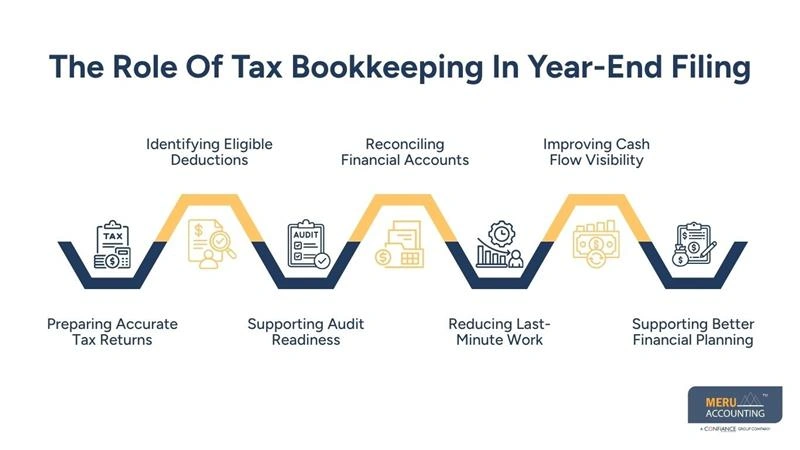
Reducing Last-Minute Work
Businesses without organized records often rush to gather documents near filing deadlines. Tax bookkeeping reduces this pressure by maintaining records throughout the year.
This allows business owners and accountants to focus on reviewing reports instead of correcting missing data.
Improving Cash Flow Visibility
Tax bookkeeping helps businesses monitor incoming payments, operating costs, and pending tax liabilities throughout the year.
Clear financial tracking gives owners a better understanding of available funds before year-end filing.
Supporting Better Financial Planning
Well-maintained tax records help businesses review yearly performance and plan future budgets more effectively. Financial reports created through proper bookkeeping provide useful insights into revenue trends and expense patterns.
This information supports informed business decisions and helps set realistic financial goals for the upcoming year.
How Bookkeeping And Tax Records Support Accurate Financial Reporting
Creating Reliable Financial Statements
Financial statements depend on accurate bookkeeping records. Businesses use these reports to review profits, expenses, and operational performance.
Reliable financial reports also support tax filing and future planning activities.
Supporting Decision-Making
Business owners rely on financial data to make important decisions. Organized records help them review sales trends, spending habits, and growth opportunities.
Accurate information improves financial planning and operational control.
Improving Transparency
Clear financial records improve transparency within the business. Owners, investors, and lenders can better understand the financial condition of the company.
Transparency also builds trust during financial reviews and business evaluations.
Managing Tax Obligations Properly
Bookkeeping and tax records help businesses estimate upcoming tax payments and maintain compliance with reporting rules.
Businesses with updated records are less likely to face unexpected tax liabilities at year-end.
Helping External Reviews
Banks, investors, and auditors often request financial statements and supporting records. Proper bookkeeping helps businesses provide these documents quickly and accurately.
Strong financial reporting supports better business credibility and financial management.
Common Challenges Businesses Face Without Proper Tax Bookkeeping
Missing Financial Records
Businesses that fail to maintain proper bookkeeping and tax records may lose invoices, receipts, or transaction details. Missing information creates problems during tax filing and financial reviews.
Incomplete records can also affect deduction claims and reporting accuracy.
Incorrect Tax Calculations
Poor bookkeeping often leads to inaccurate tax calculations. Businesses may underpay or overpay taxes because financial information is incomplete or incorrect.
These mistakes can result in penalties, notices, or delayed filings.
Delayed Filing Processes
Businesses without organized records usually spend more time preparing year-end reports. This delays filing and increases stress near tax deadlines.
Late filing may also affect compliance and financial planning activities.
Difficulty Tracking Expenses
Without proper records, businesses struggle to track operating costs and deductible expenses. This affects profit calculations and tax reporting accuracy.
Expense tracking becomes harder when receipts and invoices are not organized properly.
Increased Risk Of Compliance Issues
Government authorities expect businesses to maintain financial records for tax reporting purposes. Poor bookkeeping increases the risk of non-compliance and reporting errors.
Businesses may also face challenges during audits if supporting documents are unavailable.
Key Financial Documents Needed For Year-End Tax Filing
Income Statements
Income statements show business revenue, expenses, and profits during the financial year. These reports help calculate taxable income and support year-end filing.
Accurate income statements depend on updated bookkeeping records.
Bank Statements
Bank statements help verify transactions recorded in financial systems. Businesses often compare these statements with bookkeeping records during reconciliation.
This process helps identify missing entries or incorrect amounts.
Expense Receipts And Invoices
Businesses need receipts and invoices as part of bookkeeping and tax documentation to support expense claims and deductions. These documents provide proof of business spending during the year.
Proper storage of receipts improves record accuracy and supports audit readiness.
Payroll Records
Payroll records include employee salaries, tax deductions, and benefit payments. These records support tax reporting and compliance requirements.
Accurate payroll information is important for both employee reporting and business tax filing.
Tax Payment Records
Businesses should maintain records of advance tax payments, sales tax filings, and other tax-related transactions. These records help avoid duplicate payments and reporting issues.
Organized payment records also support accurate year-end calculations.
Best Practices For Effective Bookkeeping And Tax Management
Updating Records Regularly
Businesses should record transactions consistently instead of waiting until year-end. Regular updates improve accuracy and reduce filing pressure. Frequent record reviews also help identify issues early.
Using Accounting Software
Accounting software helps businesses organize financial records and automate certain bookkeeping tasks. Many systems also support invoicing, payroll, and reporting functions.
Digital systems improve record access and reduce manual errors.
Separating Business And Personal Expenses
Business owners should maintain separate accounts for business and personal spending. This improves financial clarity and simplifies tax reporting.
Mixed expenses often create confusion during reconciliation and filing.
Reviewing Financial Reports Monthly
Monthly financial reviews help businesses monitor performance and identify unusual transactions. Regular reviews also support better budgeting and planning.
Early correction of errors improves year-end reporting accuracy.
Working With Financial Professionals
Professional accountants and bookkeepers help businesses maintain proper records and comply with tax requirements. Their support can improve reporting quality and reduce filing risks.
Professional guidance also helps businesses understand changing tax regulations.
How Meru Accounting Supports Businesses With Tax Bookkeeping
Managing Daily Financial Records
Meru Accounting provides bookkeeping support that helps businesses maintain organized financial records throughout the year. Proper record management improves reporting accuracy and supports smooth year-end filing.
The team helps businesses track income, expenses, invoices, payroll, and tax-related transactions using structured processes.
Supporting Accurate Financial Reporting
Meru Accounting assists businesses in preparing financial reports that support tax filing and business planning. Accurate reporting helps businesses review financial performance with greater clarity.
Organized reports also support lenders, investors, and compliance requirements.
Helping Businesses Meet Tax Deadlines
Timely financial updates help businesses prepare reports before filing deadlines. Meru Accounting supports businesses by maintaining updated records and improving filing readiness.
This reduces last-minute pressure and lowers the chance of reporting delays.
Providing Software-Based Bookkeeping Support
The firm works with multiple accounting platforms to help businesses manage financial records efficiently. Software support improves accessibility, reporting, and transaction tracking.
Digital bookkeeping systems also help reduce manual entry issues.
Assisting Businesses Across Industries
Meru Accounting supports businesses from various industries with bookkeeping and tax management services. Industry-specific experience helps businesses maintain records according to operational requirements.
This support improves financial organization and year-end reporting quality.
Our Expert Perspective
At Meru Accounting, we have observed that businesses with well-maintained bookkeeping and tax records usually experience a smoother year-end filing process. Organized financial data helps reduce reporting errors, supports timely tax filing, and improves overall financial clarity.
Our experience also shows that consistent financial tracking helps businesses manage cash flow better, prepare for future planning, and maintain stronger compliance with tax requirements.
Key Takeaways
- Tax bookkeeping helps businesses maintain organized financial records
- Proper records support accurate year-end tax filing
- Organized bookkeeping reduces reporting errors and delays
- Financial records help businesses track income and expenses clearly
- Updated records improve audit readiness and compliance support
- Businesses need documents like invoices, payroll records, and bank statements for filing
- Regular financial reviews improve reporting quality
- Professional bookkeeping support can reduce filing pressure and improve financial management
FAQs
Tax bookkeeping is the process of recording and organizing business financial transactions that support tax reporting and year-end filing.
It helps small businesses maintain accurate records, avoid filing mistakes, and prepare financial reports more easily during tax season.
Businesses should update records regularly, preferably weekly or monthly, to maintain accuracy and reduce year-end workload.
Important documents include income statements, bank statements, payroll records, invoices, receipts, and tax payment records.
Yes, professional bookkeeping services help businesses maintain organized records, improve reporting accuracy, and prepare for year-end tax filing more efficiently.