A missed tax deduction, an incorrect expense entry, or a poorly timed equipment purchase can cost a law firm more than it expects. For solo attorneys and small practices, these decisions can have a direct impact on annual profits. That’s why tax planning for small law firms needs to go beyond filing returns and focus on the financial choices made throughout the year.
The goal is simple: pay what you owe, claim the deductions you’re entitled to, and keep enough cash on hand to run the firm. In this blog, we’ll cover 10 practical tax strategies that can help law firm owners lower avoidable tax costs, stay on top of their tax duties, and build a more profitable practice.
What You Will Learn From This Blog
- How tax planning works for small law firms.
- 10 ways to manage tax costs and improve profit.
- Which legal practice expenses may qualify for tax deductions.
- Common tax errors law firm owners should avoid.
- How outsourced tax preparation for law firms can support tax planning.
What Is Tax Planning for Small Law Firms?
Tax planning for small law firms is the process of reviewing income, costs, business structure, and tax duties to manage the firm’s tax bill. It helps law firm owners make sound money choices before filing deadlines arrive.
This work may include tracking billable income, reviewing partner pay, claiming valid business deductions, making estimated tax payments, and planning for major purchases. It also means keeping clear records of client payments and firm costs.
The right plan depends on how the firm is set up. A sole proprietorship, partnership, and S corporation may face different tax rules. So, law firm owners should review their setup with a tax expert rather than choose a structure based on tax savings alone.
optional anymore
on running the business
10 Tax Planning Strategies for Small Law Firms
A sound tax plan can help a law firm lower avoidable costs and keep its books in order. Here are 10 ways to build a better plan.
1. Choose the Right Business Structure
Your firm’s legal and tax setup can affect how you report income, pay taxes, and handle owner pay. Many small firms operate as sole proprietorships, partnerships, LLCs, or S corporations. Each setup has its own tax rules. For example, an LLC may be taxed as a sole proprietorship, partnership, or corporation, based on its owners and tax elections.
An S corporation may help some firms manage employment taxes, but owners who work in the business must receive reasonable pay for their services before taking non-wage distributions. Review your firm’s income, costs, owner roles, and future plans before making a change. A tax expert can help you compare the costs and benefits of each option.
2. Track All Deductible Business Expenses
Small law firms often have many costs tied to daily work. These may include:
- Office rent and utilities.
- Legal research tools and case management software.
- Bar dues and law licenses.
- Professional liability insurance.
- Staff pay and benefits.
- Marketing and website costs.
- Office supplies and postage.
- Accounting and tax services.
Many ordinary and necessary costs of running a firm may qualify as business deductions. However, each cost must meet IRS rules.
Keep bills, receipts, and payment records for all firm expenses. A clear record helps your tax preparer check which costs qualify and reduces the risk of missed deductions.
3. Keep Business and Personal Finances Separate
Mixing personal and business costs can make tax work harder. It can also lead to errors when you review income and claim deductions.
Open a separate bank account and credit card for your law firm. Use them only for firm income and costs. If you pay a business bill from a personal account, keep the receipt and record the payment in your books.
This step also makes it easier to review cash flow, track owner draws, and prepare tax reports. Clean records are a key part of tax planning for small law firms.
4. Plan for Quarterly Estimated Tax Payments
Many solo attorneys and partners need to pay estimated taxes during the year. These payments may cover federal income tax and self-employment tax, based on how the firm and its owners are taxed.
If you wait until filing time to pay the full amount, you may face an underpayment penalty.
Review your income and tax payments each quarter. If the firm earns more than expected, adjust future payments based on your tax expert’s advice.
Do not use one fixed amount for every quarter without checking your results. A change in case volume, client payments, or owner income can affect the amount due.
5. Use Retirement Plans to Plan for Taxes
Retirement plans can help law firm owners save for the future and may offer tax benefits.
Small firms may look at options such as:
- SEP IRA: A plan that allows eligible employers to make retirement contributions for owners and staff.
- SIMPLE IRA: A plan for eligible small employers with set employer and employee contribution rules.
- 401(k): A plan that may let owners and staff save through payroll, with employer contributions if the plan allows them.
Each plan has its own rules, limits, and filing needs. Employer contributions may also affect firm costs.
Review your options with a tax and retirement plan expert. Choose a plan that fits your income, staff size, and long-term goals.
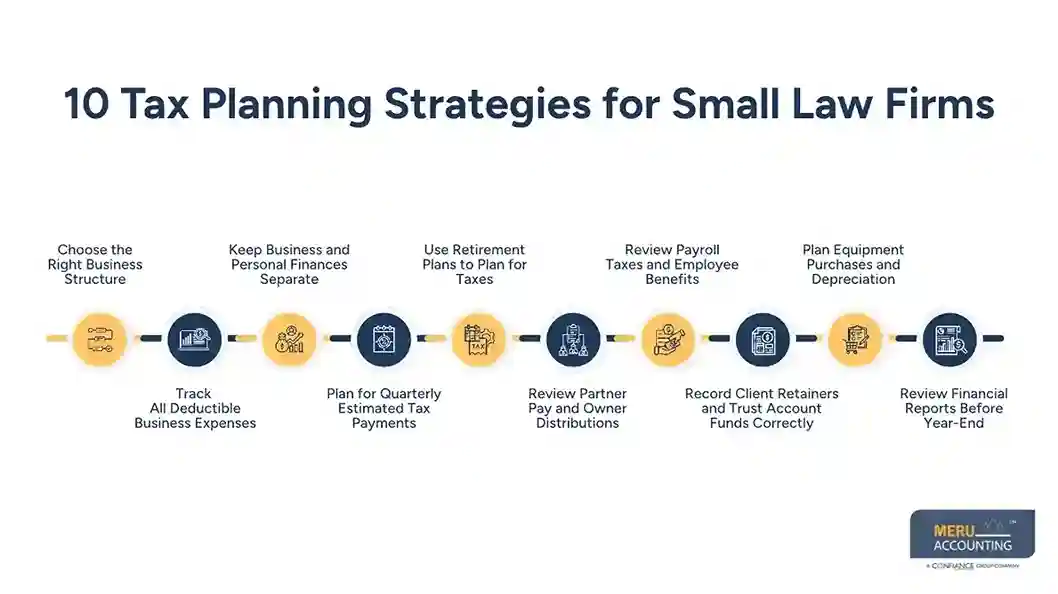
6. Review Partner Pay and Owner Distributions
Law firm owners should know how their pay affects taxes. The rules depend on the firm’s tax setup.
For example, partners in a partnership are generally not treated as W-2 employees of that partnership. Their income may include shares of profit and guaranteed payments. S corporation owners who work in the firm must receive reasonable wages for their services.
Keep clear records of salaries, draws, distributions, and partner payments. Do not treat all money taken from the firm as the same type of payment.
A tax expert can review the pay setup and help make sure it follows IRS rules.
7. Review Payroll Taxes and Employee Benefits
If your law firm has staff, payroll tax planning should be part of its yearly plan.
Employers must handle income tax withholding, Social Security, Medicare, and other payroll duties that apply to their staff. They must also file the right forms and pay taxes on time.
Review payroll records each pay period. Check staff details, pay rates, benefits, and tax deposits. Also, make sure workers are classified as employees or contractors based on the facts of the work.
A sound payroll process helps avoid late payments, wrong filings, and extra costs.
8. Record Client Retainers and Trust Account Funds Correctly
Law firms often receive retainers and client funds before work is complete. These payments need careful records.
Funds held for clients in trust are not the same as firm income. The firm must track client funds and earned fees in line with the fee agreement, state bar rules, and tax rules.
For example, an advance fee may need to be held in a trust account until it is earned, based on the rules that apply. The tax treatment of advance fees can depend on the facts and the firm’s accounting method.
Keep trust records apart from the firm’s operating books. Review client ledgers, bank records, and fee transfers on a set basis. This helps protect client funds and keeps income reports clear.
9. Plan Equipment Purchases and Depreciation
Law firms may need new computers, office furniture, printers, or other tools to support their work.
Some assets may qualify for a tax write-off in the year they are placed in service. Others may need to be depreciated over time. The right method depends on the type of asset and current tax rules.
Before making a large purchase, review its cost, business use, and tax impact. Do not buy equipment just to claim a deduction. The cash spent may be far more than the tax saved.
A tax expert can help you review the best option for your firm.
10. Review Financial Reports Before Year-End
Do not wait until tax season to check your firm’s books. A year-end review gives you time to fix errors and plan for tax payments.
Review these key reports:
- Profit and loss statement: Shows income, costs, and net profit.
- Balance sheet: Shows assets, debts, and owner equity.
- Cash flow report: Tracks money coming in and going out.
- Accounts receivable report: Shows unpaid client bills.
- Payroll report: Helps check wages and payroll tax records.
Look for missing costs, old unpaid bills, unusual changes, and wrong account entries. A regular review gives your tax preparer better records and helps you make sound choices before year-end.
Common Tax Planning Mistakes Small Law Firms Should Avoid
Even a well-run law firm can make tax errors when its books are not reviewed on time. Some common mistakes include:
- Missing valid deductions: Poor records may cause firms to miss costs they could claim.
- Mixing client funds with firm income: Trust funds need clear records and must be handled under the right rules.
- Ignoring estimated taxes: Late or low payments may lead to penalties.
- Using the wrong worker status: Treating an employee as a contractor can lead to tax issues.
- Poor owner pay records: Wrong salary or draw entries can lead to errors in tax reports.
- Waiting until tax season: Late reviews leave little time to fix book errors or plan payments.
Good tax planning for small law firms means finding these issues early and keeping the right records all year.
Tax Deductions Small Law Firms Should Know About
Many costs tied to daily legal work may qualify as tax deductions if they meet IRS rules. Common examples include:
Expense | Possible Tax Treatment |
Office rent | May qualify as a business expense |
Legal research software | May qualify as a business expense |
Staff wages | Generally deductible as a business expense |
Professional liability insurance | May qualify as a business expense |
Bar dues and law licenses | May qualify if tied to the practice |
Business travel | May qualify if it meets IRS rules |
Office supplies | Generally deductible if used for the firm |
Accounting and tax fees | Business-related fees may qualify |
Retirement plan costs | May qualify under plan rules |
Computers and office equipment | May qualify for depreciation or other tax treatment |
Not every cost is fully deductible. For example, business meals may face limits, personal costs are not business deductions, and some assets must be written off over time.
Keep proof of each cost and ask your tax preparer to check the rules before filing.
How Outsourced Tax Preparation for Law Firms Supports Better Tax Planning
Tax work can take time, especially when a law firm has staff, partners, client retainers, and many daily costs. Outsourced tax preparation for law firms can help owners manage this work with support from trained accounting and tax staff.
An outsourced team can help with:
- Reviewing books and tax records before filing.
- Sorting income and business costs.
- Checking records for missing entries.
- Preparing tax reports and forms based on the firm’s records.
- Tracking tax dates and filing needs.
- Working with the firm’s CPA or tax advisor when needed.
This support can help keep records in order and reduce last-minute work. It can also give attorneys more time to focus on clients and firm growth.
However, outsourcing does not remove the firm’s duty to file correct returns or pay taxes on time. The tax setup, final review, and filing duties should be clear between the firm, its tax preparer, and its CPA.
Outsourced Tax Preparation for Law Firms by Meru Accounting
Tax returns are only as reliable as the financial records behind them. Meru Accounting helps small law firms prepare for tax filing with organized financial data, accurate reports, and dedicated accounting support.
Our services include:
- Business Tax Preparation Support: Organizing financial data and supporting the preparation of business tax returns.
- Tax-Ready Financial Statements: Preparing income statements, balance sheets, and expense summaries for tax review.
- Tax Record Review: Checking income, expenses, payroll entries, and account balances for missing or inconsistent records.
- Year-End Accounting Support: Reviewing closing entries and organizing financial records for the upcoming tax filing cycle.
- Payroll Tax Record Support: Maintaining wage, withholding, and employer tax records for review and reporting.
With Meru handling the accounting work behind tax preparation, attorneys can spend less time sorting financial records and more time managing their practice
Our Expert Insight
A tax deduction isn’t always the best financial decision for a law firm. For example, buying new computers or office equipment before year-end may offer a tax benefit, but it also means spending cash the firm may need for payroll, rent, or other costs.
We recommend looking at the after-tax cost of a purchase, not just the deduction it may offer. A tax write-off can lower taxable income, but it does not make the purchase free. Small law firms should weigh the tax benefit against the actual business need and available cash before making large purchases.
This simple distinction can help firm owners make better tax decisions without spending money just to lower their tax bill.
Key Takeaways
- Tax planning for small law firms should take place throughout the year.
- The right business structure can affect how a firm reports income and pays taxes.
- Clear records help firms track costs and claim valid deductions.
- Quarterly tax reviews can help owners plan payments and avoid penalties.
- Client trust funds must be tracked apart from firm income.
- Year-end book reviews help spot errors before tax filing.
- Outsourced tax preparation for law firms can help reduce admin work and keep records ready for tax review.
FAQs
Legal fees earned from settlements are generally taxable income. However, settlement funds received on behalf of clients are not automatically the firm’s income. The fee agreement and nature of each payment matter.
Yes. CLE courses and other training that maintain or improve skills needed in an attorney’s current practice may qualify as business deductions. Training for a new profession generally does not.
Eligible self-employed attorneys may deduct health insurance premiums for themselves, their spouse, and dependents, subject to IRS rules and income limits. The deduction is generally claimed on the owner’s individual return.
It depends on the firm’s tax structure. Common forms include Schedule C for sole proprietors, Form 1065 for partnerships, Form 1120-S for S corporations, and employment tax forms for firms with employees.
Yes. A law firm can use outsourced tax preparation for law firms to organize financial records, prepare tax information, and support return preparation. A qualified tax professional should review the firm’s tax position and filing needs.
optional anymore
on running the business