A trucking company can have ten drivers on the road and ten different ways of calculating their pay. One gets paid by the mile, another by the load, while others earn hourly wages or weekly pay. Keeping track of every rate, trip, and extra payment can get messy fast. That’s why choosing the right trucking payroll software matters as a fleet grows.
But not every payroll system understands how trucking companies pay their drivers. A fleet owner needs more than a tool that cuts checks and calculates taxes. The system must fit the way the business runs, handle different pay plans, and give the payroll team a clear view of what each driver is owed.
What You Will Learn From This Blog
- What trucking payroll software does and how it works.
- Why small and mid-sized fleets need tools built for truck driver pay.
- Common payroll issues faced by trucking businesses.
- Key features to look for in payroll software for trucking companies.
- Best practices for accurate driver pay and payroll records.
- How outsourced trucking payroll services can support fleet owners.
What Is Trucking Payroll Software and How Does It Work?
Trucking payroll software is a tool that helps fleet owners and payroll teams track driver pay, work hours, miles, bonuses, and payroll taxes. It can also help manage pay records for company drivers, owner-operators, and other staff.
Unlike basic payroll tools, trucking payroll software can support pay plans used in the transport sector. These may include cents per mile, hourly pay, flat rates per load, and a share of load revenue.
Here’s how the process works:
- Collect driver data: The team records miles, hours, loads, and other pay details for each driver.
- Review pay terms: The payroll team checks each driver’s pay rate, bonus terms, and any set deductions.
- Calculate gross pay: The system uses the pay data and rates to work out each driver’s earnings.
- Apply taxes and deductions: Payroll taxes and valid deductions are applied based on the driver’s work status and tax details.
- Process payments: The team reviews the final payroll and sends payments through the chosen method.
- Store payroll records: Pay stubs, tax data, and payment reports are kept for future use.
For example, if a driver earns $0.60 per mile and completes 2,500 paid miles in a pay period, the base pay is $1,500 before taxes, bonuses, or other pay items. A payroll system can use the approved mileage data to work out this amount and add it to the driver’s pay record.
The system does not remove the need for review. The team must still check trip data, pay terms, worker status, and tax details before payroll is run.
optional anymore
on running the business
Why Small and Mid-Sized Fleets Need Specialized Trucking Payroll Software
Small fleets may have only a few drivers, while mid-sized fleets may have teams across many routes and states. In both cases, payroll can become hard to manage as the number of drivers and pay plans grows.
Specialized trucking payroll software helps deal with these needs in a few ways.
- Less manual work
Manual payroll often means checking trip sheets, driver logs, rate sheets, and spreadsheets. A good system can bring much of this data into one place and cut down on repeat data entry.
- More accurate driver pay
Drivers may earn money through miles, hours, loads, or bonuses. A system that supports these pay plans can help reduce errors caused by manual math and missed pay items.
- Better control over payroll costs
Fleet owners need to know how much they spend on driver pay. Payroll reports can help them review wages, overtime, bonuses, and other costs by driver or pay period.
- Easier tax record management
Trucking firms may have staff who work across state lines. Payroll teams must use the right tax rules based on each worker’s status and work details. A suitable system can help track tax data and support timely filings.
- Room to grow
A payroll process that works for five drivers may not work as well for 40. A system that can handle more staff, pay plans, and records can help a fleet grow without adding the same level of admin work.
Common Payroll Challenges Faced by Small and Mid-Sized Trucking Companies
Trucking payroll has needs that may not come up in a standard office job. Here are some common issues fleet owners face.
- Calculating mileage-based pay
Many drivers earn a set amount for each paid mile. But not all miles may count toward pay. The team must know which miles are paid, check trip data, and use the right rate. A small error in miles can change the driver’s pay.
- Managing more than one pay plan
One driver may earn per mile, while another gets hourly pay or a set rate per load. Some may also get bonuses for safe driving or on-time delivery. Tracking each plan by hand can lead to errors.
- Handling overtime and work hours
Drivers who are paid by the hour may be due overtime under the rules that apply to their job. Payroll teams must also know which work hours count as paid time. They should not assume that all driving roles follow the same overtime rules.
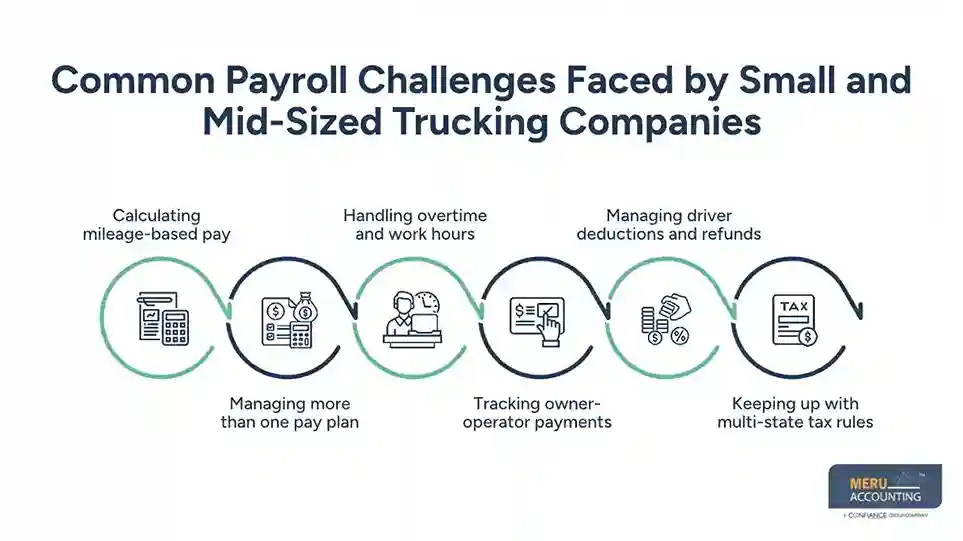
- Tracking owner-operator payments
Owner-operators may work as independent contractors or under other business setups. Their pay and tax records can differ from those of company drivers. The team must confirm worker status and use the right process for each case.
- Managing driver deductions and refunds
Fuel advances, cash advances, insurance costs, and other items may affect driver pay. Each item must be backed by clear records and handled in line with the law and the driver’s agreement.
- Keeping up with multi-state tax rules
Drivers may work in more than one state, which can make payroll tax setup more complex. Firms must review where each worker lives and works, along with the tax rules that apply. A payroll tool can help track this data, but it cannot replace sound tax review.
Key Features to Look for in Payroll Software for Trucking Companies
Not every payroll system can handle the needs of a trucking business. Before choosing payroll software for trucking companies, fleet owners should check whether it supports their pay plans, tax needs, and daily work.
Here are the key features to look for.
- Multiple driver pay options
The system should support different ways to pay drivers, such as:
- Per-mile pay
- Hourly pay
- Per-load pay
- Percentage-based pay
- Flat weekly or daily rates
This helps fleet owners manage different pay terms without keeping separate spreadsheets for each driver.
- Mileage and trip data tracking
Mileage is a key part of truck driver pay. The software should let the team enter or import approved mileage data and link it to the right driver and pay period. It should also make it easy to check trip records before payroll is run.
- Time and attendance tracking
For drivers paid by the hour, the system should help track work hours, time off, and other paid time. It should also support a review of hours before pay is approved.
- Payroll tax support
Look for tools that help work out federal, state, and local payroll taxes where they apply. The system should also help track tax forms, pay records, and filing dates. Fleet owners should check which tax tasks are included and which need extra support.
- Bonuses, advances, and deductions
Drivers may earn safety bonuses, referral pay, or other extra income. They may also have approved deductions or advances. The system should let the team record each item with a clear reason and keep a record of changes.
- Direct deposit and digital pay stubs
Direct deposit can make it easier to pay drivers on time, even when they are on the road. Digital pay stubs also let drivers view their pay details without asking the office for a paper copy.
- Reports and payroll records
Good reports help fleet owners review gross pay, taxes, deductions, overtime, and total payroll costs. The system should let users view past pay periods and find records when they need them.
- Integration with other business tools
Payroll data may need to work with accounting software, fleet tools, time tracking systems, and load management platforms. Check whether the payroll tool can connect with the systems your business already uses. This can reduce repeat data entry and help keep records in sync.
Best Practices for Accurate Truck Driver Payroll Management
Even with the right trucking payroll software, fleet owners need clear payroll steps. A good system works best when the team enters correct data, checks pay details, and keeps records up to date.
- Keep driver records up to date
Keep each driver’s name, address, tax forms, pay rate, work status, and payment details current. Review these records when a driver joins, leaves, or changes roles.
- Set clear pay terms
Give each driver a clear record of how their pay is worked out. This should cover mileage rates, hourly rates, load pay, bonuses, and any valid deductions. Clear terms can help avoid pay disputes.
- Check miles and hours before each pay run
Do not rely on estimates when working out driver pay. Compare mileage and time data with approved trip records and time logs. Fix any gaps before the payroll is processed.
- Review payroll before sending payments
Check gross pay, taxes, deductions, bonuses, and net pay. Pay close attention to large changes from the last pay period. A review can help catch missing miles, duplicate entries, or wrong rates.
- Keep payroll records in order
Save pay stubs, tax forms, time records, mileage data, and payment reports. Set a clear process for who can view or change payroll data. Good records also make it easier to answer driver questions.
- Check tax rules on a regular basis
Tax rates and filing rules can change. Review payroll settings and filing needs at set times during the year. If your fleet works across state lines, get help to confirm which rules apply to each worker.
- Review payroll costs each month
Look at total driver pay, overtime, bonuses, and other payroll costs. Compare these costs with past months and check for large changes. This can help fleet owners plan budgets and spot issues early.
How Meru Accounting's Trucking Payroll Services Can Help
A driver’s paycheck should match the work they completed, whether their pay is based on miles driven, loads hauled, or hours worked. But getting those numbers right also depends on accurate trip data, agreed pay rates, bonuses, advances, and deductions. Meru Accounting helps trucking businesses manage these details through dedicated payroll and accounting support.
Our trucking payroll services cover:
- Driver Payroll Processing: Calculate and process driver wages using approved mileage, hourly, load-based, and other pay structures.
- Mileage and Compensation Reconciliation: Match driver pay calculations with trip records, approved miles, load details, and applicable pay rates.
- Payroll Tax Preparation and Support: Assist with payroll tax calculations, filings, tax records, and reporting requirements.
- Driver Deductions and Reimbursements: Track fuel advances, approved deductions, expense reimbursements, and other pay adjustments.
- Payroll Reporting: Prepare payroll summaries, wage reports, and cost breakdowns to help fleet owners review labor expenses.
- Payroll-to-Bookkeeping Reconciliation: Record payroll expenses, tax liabilities, and payments in the books so financial reports reflect the actual cost of running the fleet.
Our accounting team also reviews payroll entries against supporting records to help identify missing data, incorrect pay amounts, and unreconciled transactions. This gives trucking businesses a clearer picture of driver compensation and labor costs while keeping payroll and accounting records aligned.
Our Expert Insight
One area trucking companies shouldn’t overlook is the link between payroll costs and fleet profitability. Driver wages are a major operating expense, but looking at total payroll alone won’t show whether labor costs are in line with revenue. Fleet owners should also review driver pay against revenue per load, cost per mile, and unpaid downtime.
We recommend reviewing these figures by truck, route, or driver where reliable data is available. For example, a rise in payroll costs may not be a concern if revenue has grown at a similar pace. But if driver costs keep rising while revenue per mile falls, it may point to route inefficiencies, excess downtime, or pricing issues. This kind of analysis turns payroll data into a useful tool for better business decisions, not just a record of employee payments.
Key Takeaways
- Trucking payroll software helps manage driver pay, hours, miles, taxes, and pay records.
- Small and mid-sized fleets need systems that support different driver pay plans.
- Mileage, overtime, bonuses, and deductions need close review before each pay run.
- Payroll software for trucking companies should support tax records, reports, and useful system links.
- Clear pay terms and up-to-date driver records help reduce payroll errors.
- Outsourced payroll support can help fleet owners save time and keep payroll work in order.
FAQs
Look for mileage-based pay, hourly wages, tax support, direct deposit, and payroll reports. The software should also fit your fleet size and pay structure.
Some systems support contractor payments and tax records. However, owner-operators must be correctly classified because their payments are handled differently from employee wages.
Yes. Many systems integrate with transportation management systems (TMS) and accounting software to reduce manual data entry and keep records in sync.
Common forms include Form W-2 and Form 941 for employees, Form 940 for federal unemployment tax, and Form 1099-NEC for eligible independent contractors.
Outsourcing can help small fleets manage payroll processing, tax filings, pay records, and reconciliations without hiring a full-time in-house payroll team.
optional anymore
on running the business