




Trust accounting is a critical aspect of financial management for law firms. It involves managing client funds separately from a firm’s own money to ensure compliance with legal regulations and protect client interests. Proper client funds management safeguards a law firm from financial errors, regulatory penalties, and loss of client trust.
In this blog, we will explore everything law firms need to know about trust accounting, including rules, compliance, best practices, and the role of the best software for trust-account compliance law firms.
What You Will Learn From This Blog
- Understand why trust accounting is essential for law firms to manage client funds safely.
- Learn the rules and regulations law firms must follow to stay compliant and avoid penalties.
- Discover practical tips for maintaining accurate and compliant Client Funds Management.
- Explore how the best software for trust-account compliance law firms can help reduce errors and improve efficiency.
- Learn how to improve transparency and build trust with clients through proper accounting practices.
- Understand the consequences of errors and non-compliance, and how to prevent them effectively.
What Is Trust Accounting And Why It Matters In Legal Practice
Trust accounting is the process of managing client funds separately from a law firm’s operational money. This ensures that client funds are used only for their intended purpose. Proper trust accounting not only protects clients’ money but also helps law firms stay compliant with strict legal and ethical requirements. It forms the foundation for transparency, accountability, and trust between a law firm and its clients.
Protecting Client Funds
By following trust accounting rules, law firms ensure clients’ money is safe, reducing the risk of mismanagement or fraud.
Legal Responsibility
Lawyers are legally required to follow trust accounting rules. Failure to do so can result in disciplinary action, fines, or loss of license.
Building Client Trust
Accurate Client Funds Management helps law firms maintain transparency and credibility with their clients.
Avoiding Financial Errors
Trust accounting minimizes errors such as misallocated funds, missed payments, or overdrafts, keeping the firm compliant with regulations.
Supporting Compliance Audits
Proper Client Funds Management ensures law firms are prepared for audits, making it easier to provide accurate records to regulators.
Enhancing Operational Efficiency
Managing trust accounts systematically reduces manual errors and saves time, allowing law firms to focus on client service and growth.
Key Rules Governing Trust Accounting For Law Firms
Separate Client Funds
All client funds must be deposited into separate trust accounts, not combined with the firm’s operating accounts.
Accurate Record Keeping
Maintain detailed records of every transaction, including deposits, withdrawals, and transfers.
Regular Reconciliation
Trust accounts should be reconciled regularly to ensure that records match bank statements.
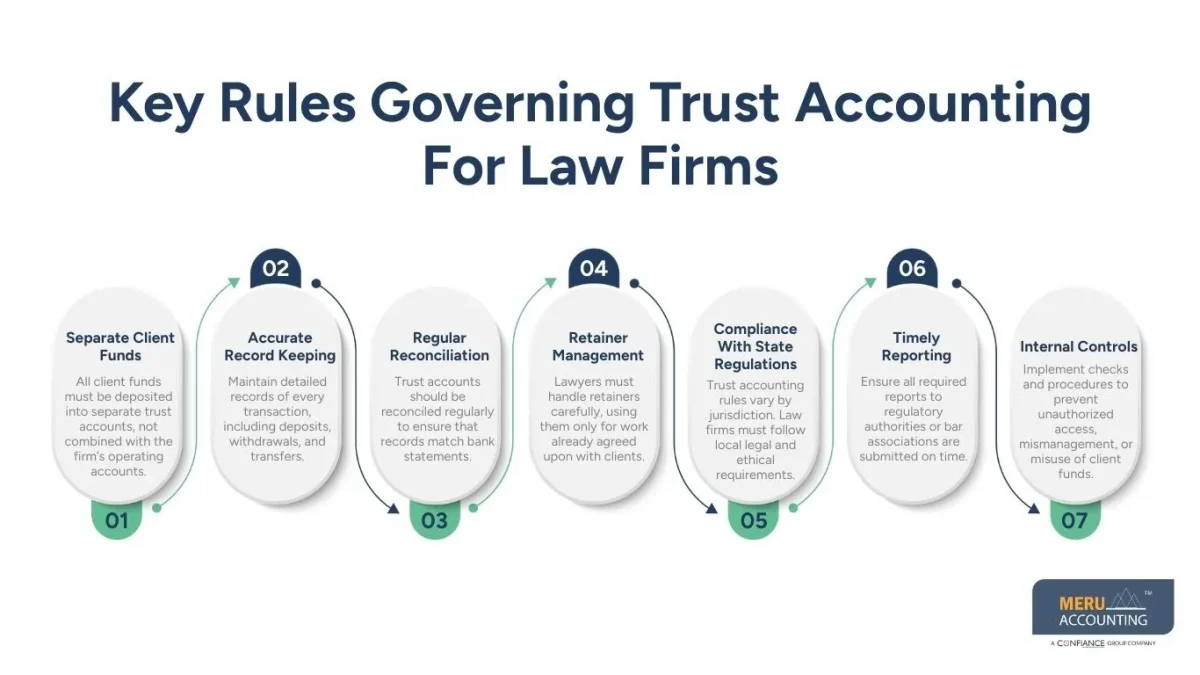
Retainer Management
Lawyers must handle retainers carefully, using them only for work already agreed upon with clients.
Compliance With State Regulations
Trust accounting rules vary by jurisdiction. Law firms must follow local legal and ethical requirements.
Timely Reporting
Ensure all required reports to regulatory authorities or bar associations are submitted on time.
Internal Controls
Implement checks and procedures to prevent unauthorized access, mismanagement, or misuse of client funds.
Common Trust Accounting Compliance Requirements Lawyers Must Follow
Client Ledgers
Keep individual ledgers for each client to track deposits and disbursements accurately.
This ensures that every transaction is properly documented and easily traceable during audits.
Monthly Reconciliation
Reconcile trust accounts monthly to catch errors early and maintain accurate balances.
Regular reconciliation helps prevent overdrafts and ensures client funds are correctly allocated.
Timely Reporting
Some states require periodic reporting to regulatory authorities or bar associations. Submitting accurate reports on time demonstrates compliance and protects the firm from penalties.
Proper Disbursement Procedures
Withdraw funds from trust accounts only for approved purposes and with proper authorization. This prevents misuse of client funds and ensures all withdrawals are fully justified.
Maintaining Backup Records
Store copies of bank statements, invoices, and receipts for audit purposes. Keeping organized backup records makes it easier to resolve discrepancies or answer regulatory queries.
Authorization Controls
Ensure that only authorized personnel can approve transactions or withdrawals from trust accounts. This reduces the risk of unauthorized access and enhances the overall security of client funds.
Regular Internal Reviews
Conduct internal reviews periodically to verify that all trust accounting practices comply with regulations and firm policies. Regular checks help identify errors early and reinforce a culture of accountability within the firm.
Consequences Of Trust Accounting Errors And Non-Compliance
Regulatory Penalties
Failing to follow trust accounting rules can lead to fines, sanctions, or license suspension.
Legal Action
Clients may file complaints or lawsuits if their funds are mishandled.
Reputation Damage
Errors in Client Funds Management can harm a law firm’s credibility and client relationships.
Financial Loss
Mismanaged client funds can lead to financial liabilities for the firm.
Increased Audit Scrutiny
Repeated errors can result in more frequent and strict audits by regulators.
Best Practices For Accurate And Compliant Trust Accounting
Use Dedicated Trust Accounts
Maintain separate accounts for client funds to avoid mixing with firm funds.
Implement Regular Reconciliation
Check accounts at least monthly to ensure records match bank statements.
Keep Detailed Client Ledgers
Track every transaction for each client to maintain transparency.
Adopt Clear Policies
Establish firm-wide procedures for handling client funds and ensure all staff follow them.
Training Staff
Educate employees about client funds management rules and compliance requirements to reduce errors.
How Law Firms Can Improve Transparency In Trust Accounting
Detailed Reporting
Provide clients with regular statements showing fund activity in their accounts. This helps clients understand exactly how their money is being managed and reassures them of proper handling.
Audit Trails
Maintain an audit trail of all transactions for internal review and regulatory purposes. A clear audit trail makes it easier to track errors or discrepancies and strengthens accountability.
Clear Communication
Inform clients about how their funds are handled and any associated fees. Transparent communication builds trust and reduces potential disputes or misunderstandings.
Regular Internal Audits
Conduct internal audits to ensure trust accounting practices are being followed. Regular audits help identify potential issues early and maintain consistent compliance.
Compliance Documentation
Keep organized records of all trust account activities to demonstrate adherence to rules. Proper documentation ensures the firm can easily provide proof of compliance when needed.
How The Best Software For Trust-Account Compliance Law Firms Reduces Risk
Automated Transactions
Software can automate deposits, withdrawals, and transfers, reducing human errors.
Real-Time Reporting
Generate reports instantly to monitor balances and track fund movement.
Error Alerts
Alerts for overdrafts, duplicate entries, or unauthorized transactions prevent mistakes.
Secure Access
Control user access to trust account information to prevent unauthorized use.
Audit Support
Provide comprehensive records for audits and regulatory compliance, simplifying reporting requirements.
Features To Look For In The Best Software For Trust-Account Compliance Law Firms
Client Ledger Management
Track each client’s funds separately to maintain accurate records.
Reconciliation Tools
Easily reconcile bank statements with software to identify discrepancies quickly.
Regulatory Compliance Checks
Ensure the system follows state-specific trust accounting regulations.
Automated Alerts
Receive notifications for important deadlines or account irregularities.
Reporting Capabilities
Generate detailed reports for clients, partners, or regulators with ease.
How To Choose The Right Trust Accounting System For Your Law Firm
Assess Firm Size and Needs
Choose software that can handle the volume of transactions your firm manages.
Check Compliance Features
Ensure it supports compliance with local and state Client Funds Management rules.
Evaluate Usability
Select software that is easy for staff to learn and use effectively.
Integration Options
Check if it integrates with existing accounting or practice management systems.
Support and Updates
Select a provider offering reliable support and regular software updates.
Why Choose Meru Accounting For Trust Accounting Support
Managing trust accounts accurately and staying compliant with legal regulations can be challenging for law firms.
Partnering with experienced accounting professionals ensures that client funds are handled securely and that your firm avoids costly mistakes. Meru Accounting provides specialized trust accounting support tailored to the needs of law firms.
Expertise in Legal Accounting
Meru Accounting specializes in providing accounting solutions for law firms, ensuring strict compliance with trust account rules. Our team understands the unique financial and regulatory requirements of legal practices.
Custom Solutions
We tailor our services to meet the unique needs of your law firm, including trust accounting management and reporting. This ensures that every client’s funds are handled accurately and according to your firm’s policies.
Technology-Driven Services
Our team uses the best software for trust-account compliance law firms to reduce errors and improve efficiency. Automated systems help streamline reporting and minimize manual mistakes.
Experienced Professionals
Our accountants are well-versed in legal trust account regulations and provide accurate and timely guidance. We stay updated on changing compliance requirements to keep your firm protected.
Key Takeaways
- Trust accounting is essential for protecting client funds and maintaining compliance.
- Law firms must follow strict rules and perform regular reconciliations.
- Errors in trust accounting can lead to serious financial, legal, and reputational consequences.
- Using the best software for trust-account compliance law firms reduces risk and simplifies reporting.
- Partnering with experts like Meru Accounting ensures accuracy, compliance, and peace of mind.
FAQs
Trust accounting is a system that keeps client funds separate from a law firm’s own money. It ensures lawyers use client money only for the intended purpose and follow legal regulations.
Lawyers must maintain separate client accounts, keep accurate records, reconcile accounts regularly, manage retainers properly, and follow state-specific client funds management regulations.
Errors can lead to fines, regulatory penalties, lawsuits, or damage to the firm’s reputation. Mismanaging client funds can also result in disciplinary action by the bar association.
Firms should look for software with client ledger management, reconciliation tools, regulatory compliance checks, automated alerts, and reporting features that simplify audits.
It automates transactions, tracks client funds in real-time, prevents errors like overdrafts, maintains audit trails, and generates reports for clients and regulators, reducing risks for law firms.


