Two vacation rentals can bring in the same amount of rent but end the month with very different profits. One may have high cleaning costs, frequent repairs, and steep booking fees, while the other runs at a much lower cost. This is why vacation rental accounting software matters. It helps owners look beyond booking totals and see where their money actually goes.
The right software can make it easier to track rent, review costs, match payouts, and compare the results of each property. In this guide, we’ll look at the best tools for vacation rental owners, the features worth paying for, and how to keep your rental finances in good shape.
What You Will Learn From This Blog
- What vacation rental accounting software does and how it works.
- Why sound vacation rental business accounting matters.
- Which features to check before you pick a tool.
- How to track booking income, fees, and refunds.
- How to sort costs and review profit by property.
- When to seek help from an outside accounting team.
What Is Vacation Rental Accounting Software?
Vacation rental accounting software helps owners and property managers record and review the money side of their rental business. It can track rent, fees, costs, bank activity, and bills. Some tools also link with booking sites or property management systems to bring in key data.
For example, an owner with three rentals may get money from Airbnb, Vrbo, and direct bookings. Each source may have its own fees, payout dates, and refund rules. A good tool helps record these items so the books show what the business earned and spent.
It is worth noting that booking software and accounting software serve two different needs. Booking tools help manage rates, guests, and stays. Accounting tools help track money, bills, bank records, and reports. Some platforms offer both, but owners should check how well each tool handles the accounting side.
Why Is Accurate Vacation Rental Business Accounting Important?
Good records help owners make sound choices and avoid gaps in their books. Without clear data, it may be hard to tell if a rise in bookings has led to more profit.
Accurate vacation rental business accounting helps in several ways:
- Track true income: Record rent, cleaning fees, extra guest fees, and other charges in the right way.
- Control costs: See how much goes toward repairs, supplies, bills, and site fees.
- Check cash flow: Know when money comes in and when bills are due.
- Review each rental: Find out which unit earns well and which one needs a closer look.
- Support tax work: Keep clear records for tax returns and help your tax pro review the right figures.
For owners with more than one unit, clear records are even more useful. A rental that gets more bookings may still earn less if it has high repair costs or fees.
optional anymore
on running the business
Key Features to Look for in Vacation Rental Accounting Software
Not all tools are built for the same type of rental business. Before you buy, check if the software can handle your day-to-day needs.
1. Income and expense tracking
The tool should let you record rent, fees, refunds, and costs with clear labels. This makes it easier to see where money comes from and where it goes.
2. Bank feeds and bank matching
Bank feeds can bring in new transactions from linked accounts. You can then match them with bills, payouts, and other records. This helps cut down on manual entry.
3. Booking platform payout tracking
Check if the tool can link with Airbnb, Vrbo, or your property management system. If not, find out how easy it is to import payout data and match it with bank deposits.
4. Multi-property reports
If you own or manage more than one rental, you need to see income and costs for each one. Look for reports that let you review each property on its own.
5. Receipt and bill storage
A tool that lets you save bills and receipts can help keep proof of each cost in one place. This is useful during month-end reviews and tax prep.
6. Financial reports
At a minimum, look for profit and loss reports, balance sheets, and cash flow reports. These help you review the health of the business.
7. User access and data safety
If an outside bookkeeper or tax pro helps with your books, check if the tool lets you set user roles. Also review its data safety, backup, and access rules.
Best Vacation Rental Accounting Software Options to Consider
The best tool depends on the size of your rental business, the number of units you manage, and how you get paid. Some tools are made for full accounting, while others focus on rental property records.
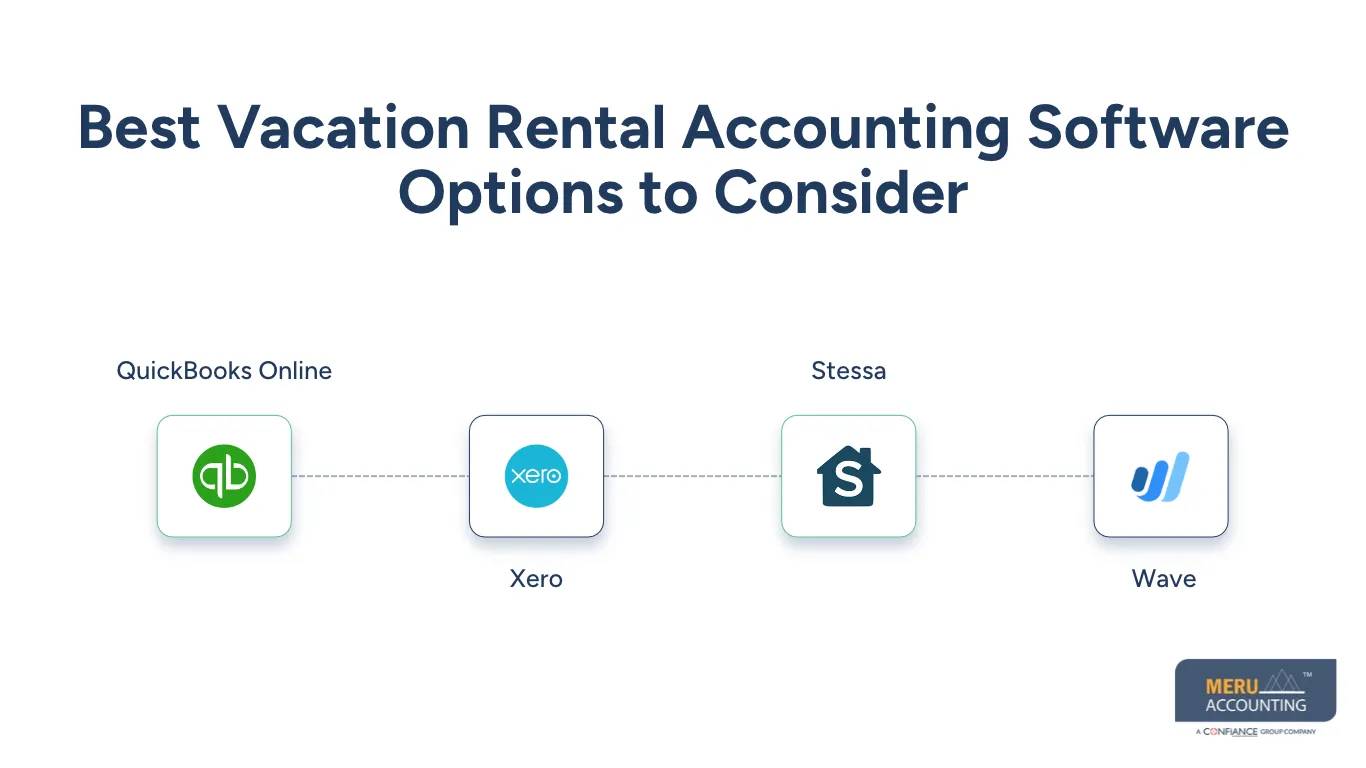
Here are four options worth looking at.
1. QuickBooks Online
QuickBooks Online can help track rent, costs, bills, bank activity, and profit. Owners can use classes or locations to group records by rental, based on their plan and setup.
It also offers bank feeds, invoice tools, and financial reports. It can work well for owners who need full books, not just a way to track rent. However, you may need to set up booking and payout links or use a third-party app to bring in rental data.
2. Xero
Xero offers bank feeds, bill tracking, bank matching, and financial reports. It can help owners keep a clear view of rental income and costs.
Xero can also work with apps that link booking and property data to the books. This can help owners who manage more than one rental. Check the app links and plan limits before you choose it.
3. Stessa
Stessa is built for rental property owners who want to track income, costs, and property-level results.
It can be useful for owners who want a rental-focused view of their finances. Before using it for a vacation rental, check its fit for short stays, booking site payouts, and your tax needs.
4. Wave
Wave offers tools for income, costs, bills, and basic financial reports. It may suit a small owner with a simple rental setup.
It may not offer all the property-level tools or booking links that a larger rental business needs. Check its current plan, bank link options, and report limits before you sign up.
How to make the right choice: Do not pick a tool just because it has a long list of features. Test how it handles a real booking, platform fee, refund, bank payout, and repair bill. The right tool should make these records easy to track and review.
How to Track Vacation Rental Income Accurately
Income tracking is one of the most vital parts of vacation rental business accounting. A booking total does not always match the cash that reaches your bank. Sites may take fees, hold funds, or send payouts after a guest checks out.
Use these steps to keep your records clear:
- Record each booking: Keep the guest name or booking ID, stay dates, rental charge, and any extra fees.
- Split each charge: Keep rent, cleaning fees, pet fees, and other charges in the right accounts. Do not group every charge under one broad label.
- Record site fees: Airbnb, Vrbo, and other booking sites may take fees before they pay you. Record these costs apart from rent.
- Match payouts with bank records: Compare each payout with the booking data. Check for fee cuts, refunds, and other changes.
- Track refunds and deposits: Record refunds in the right way. Keep guest security deposits apart from earned rent until they are due to you under the terms of the stay.
For example, say a guest pays $1,000 for a stay. The booking site takes a $30 fee and sends $970 to the owner. The books should show the $1,000 charge and the $30 fee, not just the $970 bank deposit. This gives a clearer view of both income and costs.
How to Manage and Categorize Vacation Rental Expenses
A clear cost list helps owners see where their money goes. It also makes it easier to spot costs that rise over time.
Common vacation rental costs include:
- Cleaning and laundry: Guest turnover, linen wash, and cleaning supplies.
- Repairs and upkeep: Plumbing, paint, HVAC work, and small fixes.
- Utilities: Power, water, gas, internet, and trash pickup.
- Property costs: Insurance, property tax, and other costs tied to the rental.
- Booking fees: Site charges, card fees, and payment fees.
- Guest supplies: Toiletries, paper goods, kitchen items, and other stock.
- Management fees: Payments to a property manager or service team.
Use the same cost labels each month. If you own more than one rental, tag each cost to the right unit. This helps you see if one property has higher cleaning or repair costs than the rest.
Also, do not treat every repair or upgrade in the same way. A small fix may be a current expense, while a major upgrade may need to be set up as an asset and spread over time. Ask your tax pro how to treat each cost based on the facts and tax rules.
How to Calculate Vacation Rental Profitability
High booking income does not always mean high profit. Owners must look at both income and costs to see how well each unit is doing.
Example: Monthly Vacation Rental Results
Financial Item | Amount |
Gross rental income | $5,000 |
Operating costs | -$2,000 |
Net operating income (NOI) | $3,000 |
Illustrative figures. This does not include all loan, tax, or capital costs.
To get a better view of rental performance, review these figures:
- Gross rental income: Total rent earned before costs.
- Operating costs: Costs needed to run the rental.
- Net operating income (NOI): Rental income less operating costs.
- Occupancy rate: Share of available nights that are booked.
- Average daily rate (ADR): Rental revenue divided by nights sold.
Review these figures for each unit, not just the full business. A monthly report can show which rental needs a price change, a cost review, or more work to keep guests happy.
When Should You Outsource Vacation Rental Accounting Services?
Managing the books may be easy when you have one rental and a few bookings each month. But as you add more units, guests, and booking sites, the work can take more time.
You may want to outsource your accounting when:
- You spend too much time sorting bills and booking payouts.
- Your bank records do not match your booking reports.
- You cannot see the profit made by each rental.
- You have missed costs or gaps in your monthly books.
- Tax prep takes too much time due to poor records.
- Your rental business is growing, but you do not want to hire a full-time accountant.
An outside accounting team can help with daily bookkeeping, bank matching, bill tracking, month-end close, and financial reports. You can then spend more time on guest care, property upkeep, and growth.
Vacation Rental Business Accounting Services by Meru Accounting
A property may bring in $8,000 in monthly bookings, but how much does the owner actually keep after platform fees, cleaning, repairs, utilities, and other costs? Getting that figure right takes more than recording bank deposits. It takes proper income records, cost tracking, and reports for each rental.
At Meru Accounting, we provide outsourced accounting support for vacation rental owners and property managers who need a clear view of their finances. Our team can help with:
- Booking income reconciliation: Match Airbnb, Vrbo, and direct booking records with actual bank deposits, fees, and refunds.
- Property-wise bookkeeping: Track income and expenses for each rental to show which properties perform well.
- Operating expense tracking: Record cleaning, maintenance, utilities, insurance, supplies, and management fees.
- Accounts payable and receivable: Manage vendor bills, payments, and outstanding amounts.
- Monthly financial reporting: Prepare profit and loss statements, cash flow reports, and other records to help review rental performance.
- Bookkeeping cleanup and catch-up: Correct missing entries, review past transactions, and bring overdue books up to date.
Whether you manage a single vacation home or several rental properties, our goal is to give you reliable financial data to track costs, compare property performance, and make better business decisions.
Our Expert Insight
We recommend that vacation rental owners pay close attention to how they classify property costs. For example, replacing a broken faucet is not the same as remodeling a bathroom. The first may count as a repair, while the second may need to be treated as a capital improvement under tax rules.
These details can affect financial statements, asset records, and tax deductions. A year-end review of large repairs, furniture purchases, and property upgrades can help catch errors before tax filing.
Key Takeaways
- Choose vacation rental accounting software based on your number of units and daily needs.
- Track rent, fees, refunds, and payouts as separate items.
- Use clear cost labels for repairs, cleaning, bills, and site fees.
- Review profit and cash flow for each rental each month.
- Keep bills, receipts, and bank records in one place.
- Seek expert help when the books become hard to manage on your own.
FAQs
QuickBooks Online and Xero are good options for full accounting, while Stessa is built for rental property owners. The best choice depends on your property count, reporting needs, and booking platform integrations.
Yes. QuickBooks Online can track rental income, expenses, bills, and bank transactions. You may need third-party apps or manual entries to connect booking data from Airbnb and Vrbo.
Most owners use accounting software to record rental income, platform fees, cleaning costs, repairs, and other expenses. They also reconcile booking reports with bank deposits to keep their records accurate.
Set up separate classes, locations, or tracking categories for each property. This helps you compare revenue, operating costs, and net income without maintaining separate accounting systems for every rental.
Consider hiring an accountant if you manage several properties, have complex booking payouts, or need help with financial reports and tax records. Outsourced accounting can also help as your rental business grows.
optional anymore
on running the business