
Small businesses often reach a stage where financial work becomes too heavy for one person or a small internal team. Hiring full-time accountants may feel like the next step, but it can increase fixed costs and slow down flexibility. This is where virtual accountants play an important role.
Virtual accountants provide professional financial support remotely using cloud tools and structured workflows. They help manage books, reporting, payroll, and compliance without needing a physical office presence. For growing companies, this model supports scale without increasing headcount.
Many small business owners in the United States now prefer remote financial support because it allows better control over cost and time. It also helps founders focus more on operations and growth instead of daily accounting tasks.
What You Will Learn From This Blog
- How virtual accountants support business growth without in-house hiring
- Why remote accounting support is becoming common for small businesses
- How virtual accountants reduce cost and improve accuracy
- What services are included in virtual accounting support
- How to choose the right financial partner for your business
- Which industries benefit most from this model
What Are Virtual Accountants and How They Work for Growing Businesses
Virtual accountants manage financial records entirely from remote locations by using modern cloud platforms. Instead of working inside a physical office, they handle core accounting tasks such as recording transactions, reconciling accounts, and preparing financial reports through secure online systems. This approach allows businesses to maintain accurate financial records without needing an in-house accounting team.
They typically rely on cloud-based accounting tools such as QuickBooks Online, Xero, and similar platforms. These tools give both business owners and accountants real-time access to financial data from anywhere.
With everything updated continuously, it becomes easier to track income, expenses, and overall financial performance without delays or manual coordination.
The entire process works through a structured workflow system where tasks are assigned and tracked digitally. This ensures that bookkeeping, payroll, and reporting tasks are completed on time with proper accountability.
At the same time, secure data handling practices like encryption and controlled access protect sensitive financial information, reducing risks compared to traditional manual systems. As a result, business owners also gain real-time access to financial reports, which helps them make faster and more informed decisions.
Why Virtual Accountants Are Becoming Essential for Business Scaling
Rising Cost Of Hiring In-House Staff
Hiring full-time accountants includes salary, benefits, training, and infrastructure costs. Virtual support reduces these fixed expenses. This helps small businesses manage finances better without increasing long-term fixed commitments.
Need For Flexible Financial Support
As businesses grow, accounting needs change. Virtual accountants provide scalable support based on workload. This means companies can increase or reduce services depending on seasonal or business demand.
Global Access To Skilled Professionals
Companies can now work with experienced accountants from different regions without location limits. It allows access to wider expertise that may not always be available in the local market.
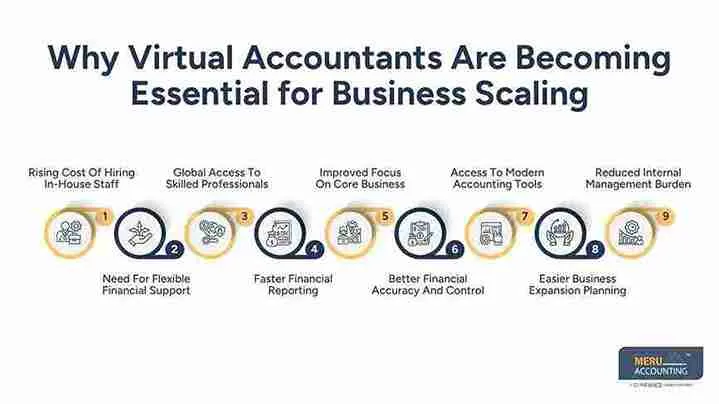
Faster Financial Reporting
Digital systems allow quicker closing of books and preparation of financial reports. This helps business owners make faster decisions based on updated financial data.
Improved Focus On Core Business
Owners spend less time on bookkeeping and more time on sales, operations, and expansion. This improves overall productivity and helps leadership focus on growth activities.
Better Financial Accuracy And Control
Virtual accountants follow structured review processes that reduce errors in records. This improves overall financial clarity and supports better control over business money flow.
Access To Modern Accounting Tools
Most virtual accountants work with advanced cloud tools and automation systems. This ensures smoother accounting processes when working with a virtual accounting firm, without additional investment from the business.
Easier Business Expansion Planning
With clear financial reports and forecasting support, businesses can plan expansion more confidently. It becomes easier to understand when and where to invest.
Reduced Internal Management Burden
There is no need to manage an internal accounting team, HR tasks, or staff coordination. This reduces management load and simplifies internal operations.
Key Benefits Of Hiring Virtual Accountants Instead Of In-House Teams
Lower Operational Costs
Businesses save on salaries, office space, and training expenses by using virtual accountants. This helps improve cash flow by reducing fixed monthly financial commitments.
Access To Skilled Experts
Virtual accountants often bring multi-industry experience, which improves financial handling quality. This experience helps businesses follow better financial practices from day one.
Scalability Without Hiring Pressure
Services offered by a virtual accounting firm can be increased or reduced based on business demand without recruitment delays. This allows businesses to adjust accounting support as they grow or face seasonal changes.
Better Time Management
Automated workflows reduce manual work and speed up accounting tasks. This gives business owners more time to focus on operations and strategic planning.
Reduced Risk Of Errors
Professional review systems improve accuracy in financial records and reporting. This helps reduce mistakes in bookkeeping and supports better financial compliance.
How Virtual Accountants Help Reduce Operational And Hiring Costs
No Office Infrastructure Required
There is no need for desks, computers, or office space for accounting staff. This immediately reduces setup and maintenance costs for small businesses.
Reduced Recruitment Expenses
Hiring processes, onboarding, and training costs are eliminated. Businesses working with a virtual accounting firm avoid long hiring cycles and the cost of replacing staff.
Pay-As-You-Use Model
Businesses pay only for required services instead of full-time salaries. This ensures spending stays aligned with actual accounting needs.
Lower Software Burden
Many virtual accounting teams already use their own licensed tools. This removes the need for businesses to invest in expensive accounting software.
Reduced Administrative Load
Internal HR and payroll management for accounting staff is not required. This reduces internal workload and simplifies overall business operations.
Role Of A Virtual Accounting Firm In Supporting Business Expansion
Structured Financial Planning
A virtual accounting firm helps create budgets and financial plans aligned with growth goals. This gives businesses a clear financial direction while planning expansion or new investments.
Cash Flow Monitoring
They track inflows and outflows to ensure stable financial health. Regular monitoring by virtual accountants helps avoid cash shortages and supports better day-to-day financial control.
Investor-Ready Reporting
Accurate reports help attract investors and support funding discussions. Well-prepared financial data builds trust and improves chances of securing funding.
Tax Compliance Support
They ensure tax filings are accurate and submitted on time. A virtual accounting firm reduces the risk of penalties and keeps the business compliant with regulations.
Strategic Financial Guidance
They help businesses understand cost patterns and profit improvement opportunities. This supports smarter decisions that improve long-term financial performance.
Services Offered By A Virtual Accounting Firm For Small Businesses
Bookkeeping Services
Daily transaction recording and ledger maintenance are handled remotely. This keeps financial records organized and up to date at all times.
Payroll Management
Salary processing, deductions, and compliance tasks are managed digitally. This ensures employees are paid correctly and on time without errors.
Tax Preparation Support
Accurate preparation of tax documents and filing assistance is provided. This helps businesses avoid penalties and stay compliant with tax rules.
Financial Reporting
Monthly, quarterly, and yearly reports are prepared for business review. These reports help owners track performance and plan future actions.
Accounts Reconciliation
Bank and credit account matching ensures financial accuracy. This helps identify mismatches early and maintain clean financial records.
How Virtual Accountants Improve Financial Accuracy And Compliance
Automated Data Entry Systems
Automation reduces manual errors in financial records. This improves consistency and saves time in daily accounting tasks.
Regular Financial Reviews
Frequent checks ensure records remain updated and accurate. This helps identify issues early before they affect financial reports.
Compliance Monitoring
They track tax laws and regulatory changes to ensure compliance. This reduces the risk of penalties and keeps the business aligned with rules.
Audit Support
Proper documentation helps during internal or external audits. This makes the audit process smoother and less time-consuming.
Error Detection Systems
Review layers help identify mismatches or missing entries early. This ensures financial data stays reliable and ready for decision-making.
Choosing The Right Virtual Accounting Firm For Your Business Needs
Experience And Industry Knowledge
Select a firm with experience in your specific industry. This ensures they understand your financial challenges and requirements.
Technology Stack Used
Ensure they use modern and secure accounting software. A virtual accounting firm helps improve efficiency and keeps your financial data protected.
Communication Process
Clear reporting and communication channels are essential. This ensures you receive timely updates and understand your financial position.
Service Flexibility
Choose a virtual accounting firm that can scale services as your business grows. This allows you to adjust support without changing your accounting partner.
Data Security Standards
Check how they protect sensitive financial information. Strong security practices help prevent data breaches and unauthorized access.
Industries That Benefit The Most From Virtual Accountants
E-Commerce Businesses
High transaction volume makes remote accounting highly efficient. This helps manage sales, returns, and payment tracking with better accuracy.
Real Estate Companies
Project-based accounting needs structured financial tracking. This helps monitor costs, revenue, and profit for each project.
Startups And SaaS Companies
Flexible cost structures help early-stage companies manage budgets. This supports growth without adding heavy fixed financial pressure.
Hospitality And Travel
Seasonal revenue patterns require adaptable accounting support. This helps manage cash flow during both peak and slow periods.
Professional Services Firms
Consultants and agencies benefit from organized financial reporting. This improves billing, expense tracking, and overall financial clarity.
Why Choose Meru Accounting For Reliable Virtual Accounting Support
Meru Accounting provides structured virtual accounting support designed for small and growing businesses. At Meru Accounting, our focus is on reducing financial workload while improving accuracy and control.
Cloud-Based Accounting Support
Meru Accounting uses modern cloud tools that allow real-time financial tracking and reporting for clients across regions. Business owners can access updated financial data anytime for better visibility.
Experienced Accounting Professionals
The team includes skilled accountants with experience across multiple industries, including real estate, IT, and services. Industry-specific knowledge ensures financial processes match business requirements.
Scalable Service Models
Businesses can start with basic bookkeeping and expand to full financial management as they grow. Service levels can be adjusted based on changing business needs.
Focus On Accuracy And Compliance
Every financial record is reviewed carefully to ensure compliance with tax and reporting standards. Structured review processes maintain consistency in financial reporting.
Dedicated Client Communication
Clients receive regular updates and clear financial reports to support decision-making. Clear communication keeps financial information easy to understand and track.
Meru Accounting’s approach helps small businesses grow without the pressure of building an in-house finance department.
Our Expert Perspective
From hands-on experience with growing businesses, one common pattern is clear: financial management becomes complex much earlier than most founders expect. Many businesses delay structured accounting until challenges appear in cash flow, reporting accuracy, or compliance.
Virtual accounting support helps address this gap at an early stage by building a clear and organized financial system. A structured approach avoids high fixed costs while ensuring financial records, reporting, and processes remain consistent as the business grows.
The real value goes beyond outsourcing routine tasks. A well-managed virtual accounting setup creates long-term financial clarity, making it easier to handle expansion, meet investor expectations, and stay compliant with regulations.
Key Takeaways
- Virtual accountants help small businesses scale without hiring full-time staff
- They reduce fixed costs and improve financial flexibility
- Cloud tools make financial data accessible in real time
- Virtual accounting firms support compliance, reporting, and planning
- Different industries benefit from remote accounting support
- Choosing the right partner improves accuracy and business growth
FAQs
Virtual accountants handle bookkeeping, payroll, tax support, and financial reporting remotely using cloud tools.
Yes, they use encrypted accounting systems and controlled access to protect sensitive financial data.
Yes, it is often more cost-effective than hiring full-time in-house staff.
Yes, many virtual accounting providers support businesses across the United States with remote services.
If managing finances takes too much time or errors are increasing, it is a sign that you may need structured accounting support.