
Retail businesses manage thousands of daily transactions, inventory updates, supplier payments, and customer purchases. Virtual bookkeeping companies help retailers organize these financial activities through cloud-based accounting systems and real-time inventory tracking.
Many retail owners now rely on them because a virtual bookkeeper helps reduce delays and errors that are common in manual accounting reporting.
Unlike traditional setups, these firms work remotely using cloud systems, POS integrations, and accounting software to manage records in real time. For retail businesses handling high transaction volume, they reduce confusion between sales data and inventory movement.
This blog explains how they manage retail finances, improve inventory tracking, and bring clarity to profitability. It also shows how they connect systems, reduce errors, and assist in decision-making.
What You Will Learn From This Blog
- How retail accounting systems are managed efficiently
- Methods to track inventory and financial data together accurately
- Role of bookkeeping in daily retail transactions and cash flow monitoring
- Ways to minimize accounting errors using automated checks and processes
- How POS integration enhances the accuracy of sales and stock records
- Impact on profit tracking, cost control, and financial planning
- Real examples demonstrating effective inventory and finance management in retail
- How firms like Meru Accounting provide structured support and tailored solutions
What Are Virtual Bookkeeping Companies And How Do They Work
Virtual bookkeeping companies operate through cloud-based accounting systems that allow financial data to be stored, updated, and accessed in real time.
In retail environments, this means sales, purchases, and inventory movements are recorded instantly without depending on physical ledgers or manual spreadsheets.
Cloud access also allows business owners to view financial information from any location, which improves control and visibility over daily operations. A virtual bookkeeper manages key financial tasks such as invoices, receipts, payroll, and expense tracking through secure accounting software while working remotely.
Instead of handling data on-site, they follow a structured digital process where every transaction is recorded, categorized, and stored for reporting and audit purposes.
Most setups also integrate directly with retail POS systems so that sales and stock data stay aligned without manual intervention. A key feature of virtual bookkeeping companies is real-time data processing, which reduces delays and mismatches in financial records.
Every purchase, return, and refund is systematically recorded and classified, ensuring accuracy in both inventory and accounting reports. This continuous flow of updated information helps retail businesses maintain clean records and make more reliable financial decisions.
How Virtual Bookkeeping Companies Optimize Inventory and Financial Management For Retail Businesses
Inventory Tracking Accuracy
Virtual bookkeeping companies monitor stock levels through automated syncing between sales and inventory systems, reducing mismatch risks. Every sale is immediately reflected in inventory records, helping prevent overstock or stockouts in retail stores.
Cost Of Goods Monitoring
Retail margins are tracked by linking purchase cost with sales data for each product. Including shipping, supplier, and handling costs provides a complete picture of product profitability.
Demand Based Stock Planning
Historical sales data helps retailers identify fast-moving and slow-moving items. Advance reorder planning prevents tying up capital in low-demand products.
Expense Classification Control
Operating expenses are clearly categorized, making financial reports more organized. Proper classification allows easier identification of unnecessary spending and supports better budget management.
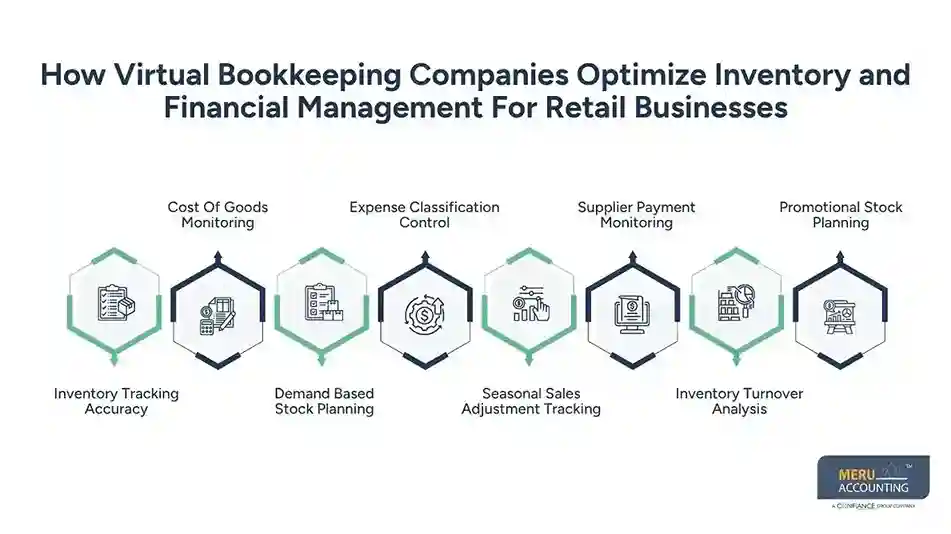
Seasonal Sales Adjustment Tracking
Inventory planning is adjusted according to seasonal demand patterns. Peak season preparation, such as for festivals or sales events, becomes more accurate without risking stock imbalances.
Supplier Payment Monitoring
A virtual bookkeeper tracks supplier payments carefully to avoid overdue balances and maintain strong vendor relationships. Timely payments also prevent disruption in stock availability and improve negotiation leverage.
Inventory Turnover Analysis
Regular review of how quickly products sell helps identify slow-moving items. Adjustments based on turnover rates ensure efficient use of storage space and reduce excess inventory costs.
Promotional Stock Planning
Retail promotions and discounts are considered when planning stock levels. Proper alignment with marketing campaigns prevents shortages or overstock during sales events.
Role of a Virtual Bookkeeper in Daily Retail Financial Management
Daily Transaction Entry Review
A virtual bookkeeper reviews all daily sales entries to ensure correctness. Errors or inconsistencies are identified quickly, helping maintain accurate records for both sales and inventory.
Supplier Payment Tracking
Payments to vendors are monitored carefully to avoid overdue balances. Tracking helps maintain strong relationships with suppliers and prevents stock interruptions.
Cash Flow Monitoring
Retail cash inflow and outflow are tracked to maintain financial balance. Regular monitoring allows managers to forecast short-term funding needs and plan expenditures effectively.
Invoice Reconciliation
Invoices are matched with payments to prevent discrepancies. Discrepancies are resolved promptly, ensuring accounts reflect true outstanding balances.
Financial Report Preparation
Financial reports created by virtual bookkeeping companies provide clear insight into retail performance. Reports highlight trends in sales, expenses, and profitability, supporting informed decision-making.
What Methods Virtual Bookkeeping Companies Use To Reduce Retail Accounting Errors
Automated Data Entry Systems
Manual entry is reduced by using automated software connections managed by a virtual bookkeeper. Automation lowers the chances of mistakes in posting sales, purchases, and inventory data.
Double Entry Verification
Every transaction is verified twice by virtual bookkeeping companies before final recording. Cross-checking entries ensures accuracy between sales, purchases, and inventory records across systems.
Error Detection Tools
Built-in tools identify mismatches in real time. Alerts highlight unusual entries, such as duplicate invoices or incorrect amounts, before they affect reports.
Audit Trail Maintenance
Each financial action is recorded for transparency and review. Clear audit trails make it easier to trace errors back to their source during internal checks or audits.
Regular Data Reconciliation
Frequent reconciliation keeps financial statements accurate. Comparing bank records, sales data, and accounting entries ensures clean and reliable books.
Integration Of POS Systems With Virtual Bookkeeping Companies For Improved Accuracy
POS To Accounting Sync
Sales data from POS systems is synced directly into accounting software. Automatic syncing reduces manual entry errors and keeps financial records current.
Inventory Level Updates
Stock updates happen automatically when POS systems communicate with inventory tools. Real-time updates ensure accurate tracking of product availability across all locations.
Sales Tax Calculation
Tax entries are calculated based on actual transaction data from POS systems. Accurate tax recording helps maintain compliance and simplifies filing processes.
Multi Store Data Consolidation
Retail chains benefit as virtual bookkeeping companies consolidate financial and inventory data from multiple outlets. Unified reporting provides a clear overview of sales, expenses, and stock across the entire business.
Refund And Return Tracking
Customer returns and refunds are recorded and reconciled with sales and inventory records. Accurate return tracking ensures stock records and revenue reports stay aligned after customer refunds.
How Virtual Bookkeepers Support Profitability Analysis In Retail Businesses
Product Wise Profit Tracking
Virtual bookkeeping companies break down profit margins for each product category. Retailers can see which items generate the most revenue and which products may need pricing or promotional adjustments.
Expense Vs Revenue Analysis
Retail owners receive structured reports comparing income and costs. Analyzing expenses against revenue helps identify areas where spending can be optimized without affecting sales.
Sales Trend Identification
Trends are recognized by a virtual bookkeeper using historical sales data. Understanding these patterns allows retailers to plan inventory, marketing campaigns, and seasonal promotions more effectively.
Performance Benchmarking
Stores are compared to identify top performers and underperforming locations. Benchmarking provides insights for improving operations and replicating successful strategies across all outlets.
Budget Planning Support
Future budgets are created using data-driven insights. Accurate planning ensures that capital is allocated efficiently, supporting both short-term operations and long-term growth.
Profitability Alerts
Alerts notify management when margins fall below target levels. Timely notifications allow retailers to take corrective measures before losses accumulate.
Meru Accounting Expert Support For Retail Businesses
Industry-Focused Retail Accounting
Meru Accounting offers structured solutions where virtual bookkeeping companies manage retail finances with accuracy and a compliance focus.
Retailers benefit from processes designed specifically for the unique challenges of inventory management, multi-store operations, and sales tracking.
Cloud-Based Retail Integration
Our team ensures smooth integration with POS and ERP systems used by retailers. Real-time data synchronization allows management to make faster, well-informed decisions about inventory and finances.
Global Accounting Experience
With international exposure, Meru Accounting handles multi-currency and cross-border retail data.
This capability supports retailers operating across regions, ensuring compliance with different tax laws and reporting standards.
Error-Free Reporting Systems
Meru Accounting designs systems to reduce manual errors and improve reporting quality. Accurate reporting provides a clear view of profitability, cash flow, and operational efficiency.
Custom Retail Solutions
Each retail business receives tailored services from a virtual bookkeeper, aligned with its size and structure. Solutions include personalized dashboards, specialized reporting, and recommendations for cost and revenue optimization.
Ongoing Support And Consultation
Meru Accounting provides continuous support to ensure smooth accounting operations. Retailers gain confidence knowing a virtual bookkeeper is available for expert advice whenever financial or inventory issues arise.
Our Expert Perspective
Retail accounting goes beyond recording numbers, as it requires a clear understanding of how stock movement and sales behavior directly influence financial results. From our experience working with retail businesses, structured systems supported by virtual bookkeeping companies often create better visibility into daily performance and financial health.
The real strength appears when sales data, inventory records, and expense tracking come together in one unified view. This connected approach reduces guesswork in decision-making and allows retailers to plan stock, manage costs, and evaluate profitability with greater confidence and clarity.
Key Takeaways
- Virtual bookkeeping companies bring structure to retail financial systems
- Inventory tracking becomes more accurate and timely
- POS integration reduces manual errors
- Profit analysis becomes clearer and more actionable
- Retail businesses gain better control over cash flow and expenses
- Automation plays a major role in reducing accounting gaps
FAQs
Virtual bookkeeping companies manage financial records, track sales, and monitor inventory for retail stores, making accounting simpler and more accurate.
Modern inventory tracking uses integrated software that updates stock levels automatically after each sale. Retailers can monitor product movement, reorder points, and stock gaps without relying on manual records.
Yes, retail bookkeeping services automate entries, reconcile invoices, and verify data to prevent mistakes in financial reporting.
POS systems sync sales and inventory data into accounting software, ensuring real-time updates and accurate records.
Virtual bookkeeping companies provide detailed reports on sales, expenses, and margins, helping businesses identify profitable products and plan budgets effectively.