
A law firm can win high-value cases, bill hundreds of hours, and still struggle to keep its finances on track. Why? Because legal work and financial performance don’t always move in the same direction. A delayed settlement, a few large unpaid invoices, or an increase in attorney payroll can change the firm’s cash position overnight. A virtual CFO for law firms helps partners look beyond billable hours and understand what is really driving the firm’s financial results.
From tracking case-related costs to planning partner draws and setting realistic growth targets, the right financial support can help law firms avoid costly decisions. Let’s look at the financial challenges that often go unnoticed and how CFO support can help address them.
What You Will Learn From This Blog
- Why law firms face common money and cash flow issues.
- What a virtual CFO does for a law firm.
- How a virtual CFO can help solve key finance issues.
- Which key numbers law firm owners should track.
- How CFO support can help a law firm plan for growth.
- What to look for in law firm CFO services.
Why Financial Management Is Challenging for Law Firms
Law firms have a unique way of earning and spending money. Income may depend on case work, fee deals, hourly rates, and when clients pay. At the same time, firms must pay staff, rent, tech costs, and other bills on time.
Here are some common issues that make it hard to manage law firm finances.
1. Unsteady Cash Flow
A firm may earn fees on a case but not get paid at once. Some clients pay late, while others may need more time to clear large bills. This can leave a firm short on cash, even when its books show high income.
2. High Operating Costs
Law firms have many costs, such as staff pay, office rent, case tools, legal research, and client intake. If these costs rise faster than fees, profit can fall. Without a clear view of each cost, it can be hard to spot where money goes.
3. Poor Billing and Collection Rates
Hours worked do not always turn into fees paid. Missed time entries, slow bills, write-offs, and late payments can cut the cash a firm brings in. This can hurt profit even when lawyers stay busy.
4. Lack of Financial Insight
Many firms check their books only to file tax returns or meet basic needs. This may show past results but not what lies ahead. Without a budget or cash flow plan, it is hard to judge if a new hire, office, or case type will add value.
What Is a Virtual CFO for Law Firms?
A virtual CFO is an outside finance expert who helps guide a firm’s money plan and key choices. Unlike a bookkeeper, who tracks daily income and costs, a CFO looks at what the data means and how it can shape future results.
A virtual CFO for law firms may help with:
- Cash flow plans and forecasts.
- Budgets and cost checks.
- Profit and loss review.
- Fee and rate analysis.
- Partner pay and draw plans.
- Monthly finance reports.
- Growth plans and risk checks.
The aim is not just to keep books in order. It is to help firm owners use sound data to make better choices.
A virtual CFO also differs from a full-time CFO. The firm gets access to senior finance skills on a set or part-time basis. This can suit small and mid-sized firms that need expert input but do not need a full-time finance lead.
optional anymore
on running the business
Common Financial Challenges Law Firms Face and How a Virtual CFO Solves Them
A virtual CFO for law firms looks beyond past results. The goal is to find the cause of a finance issue and set out steps to fix it.
1. Managing Cash Flow Gaps
A law firm may have fees due but lack the cash to pay its bills. A CFO can review cash flow, unpaid bills, and planned costs to spot gaps before they grow.
They can also set cash targets and help plan when to pay high costs. This gives firm owners a better view of the cash they can use.
2. Improving Billing and Collections
Slow billing can delay cash flow. A CFO can review the time from work done to bills sent and fees paid. They can also track write-offs, late bills, and unpaid client balances.
For example, if one team takes longer to send bills than others, the firm can review its steps and set clear targets. This can help bring in cash sooner.
3. Controlling Costs
A CFO can group costs by type, team, or office. This helps show which costs are rising and where cuts may be made.
The goal is not to cut every cost. Some tools and staff add value and help the firm earn more. A sound cost plan keeps the costs that support good work and cuts waste.
4. Tracking Profit by Practice Area
Not all case types bring the same return. Some need more staff time, research, or other costs. A CFO can help review fees, hours, and direct costs by practice area.
This helps firm owners see which areas earn well and which may need a new fee plan or work process.
5. Planning Partner Pay and Draws
Partner pay can cause cash strain if draws are not in line with cash flow and firm profit. A CFO can help set a clear plan based on firm results, cash needs, and agreed partner terms.
This gives partners a sound base for pay talks and helps keep enough cash in the firm.
6. Planning for Tax Bills
Tax bills can put a strain on cash if firms do not plan for them. A CFO can work with the firm’s tax team to set cash aside, track due dates, and plan for tax costs.
A CFO does not replace a tax expert or legal advice. Their role is to help the firm plan ahead and keep the right funds on hand.
How Law Firm CFO Services Improve Financial Performance
Good financial data is useful only when it leads to better choices. Law firm CFO services help turn reports into clear steps that support firm goals.
Key areas of support may include:
Financial Planning and Budgeting
A CFO can help set a budget based on past results, planned hires, and future costs. The firm can then check real results against the plan each month.
Cash Flow Forecasting
A cash flow forecast shows when money may come in and when bills are due. This helps firms plan for slow months, high costs, and changes in client payments.
Profit Analysis
A CFO can review profit by team, case type, or office. This helps owners see where the firm earns well and where changes may be needed.
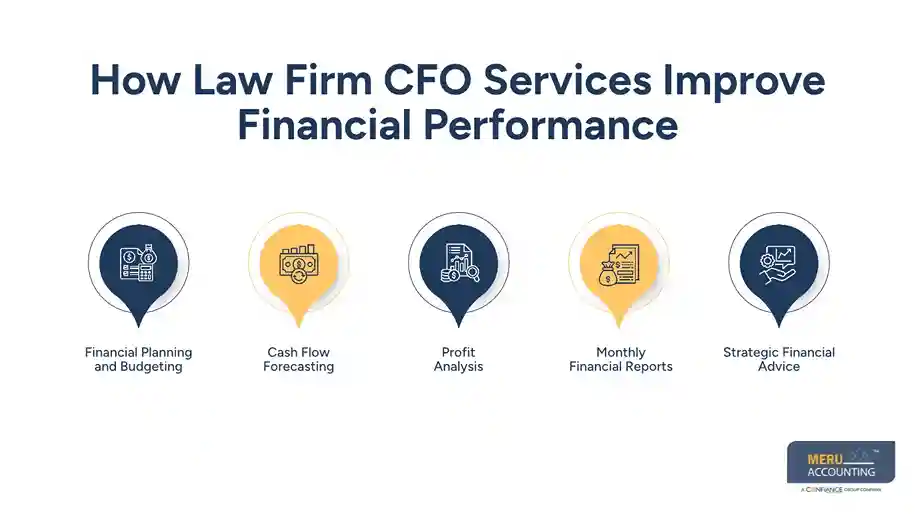
Monthly Financial Reports
Clear monthly reports help owners track income, costs, cash, and unpaid bills. A CFO can explain what has changed and what steps the firm may need to take.
Strategic Financial Advice
A CFO can help assess plans such as hiring more lawyers, adding a new practice area, or opening an office. They can review the likely cost, cash needs, and expected return before the firm makes a choice.
Key Financial Metrics Every Law Firm Should Monitor
Law firm owners need more than a profit and loss report to judge how well the firm is doing. These key metrics can give a wider view of its health.
Financial Metric | What It Tells You |
Realization rate | How much of the work billed at set rates turns into fees billed to clients. |
Collection rate | How much of the fees billed is paid by clients. |
Revenue per attorney | The income earned for each attorney in the firm. |
Profit margin | How much income remains after costs. |
Accounts receivable aging | How long client bills have been unpaid. |
Work in progress (WIP) | The value of work done but not yet billed. |
Operating cost ratio | How much of the firm’s income goes toward running costs. |
These metrics should be read as a group. For example, a firm may have a high realization rate but a low collection rate. This means it bills well but may have trouble getting paid.
A virtual CFO for law firms can help review these trends and find the cause of poor results. The right steps will depend on the firm’s size, fee model, and type of work.
How a Virtual CFO Helps Law Firms Plan for Long-Term Growth
Growth can bring more income, but it can also add costs and risk. A firm needs a clear money plan before it hires more staff, adds a new service, or opens another office.
A virtual CFO for law firms can help with long-term plans in several ways:
- Hiring plans: Review the cost of new staff and the income needed to support each role.
- Office growth: Check rent, staff costs, tech needs, and expected income before opening a new site.
- Practice area growth: Review past results to see which areas may offer a sound path for growth.
- Tech spend: Check if new tools can save time, cut costs, or improve billing.
- Cash reserves: Set a cash goal to help the firm deal with slow months and high costs.
A good growth plan should use real figures, not just hopes for more cases or clients. This helps owners judge what the firm can afford and when to act.
Meru Accounting’s Law Firm CFO Services
A law firm’s financial needs go beyond tracking income and expenses. Partners need to know which practice areas generate the best returns, how much revenue remains tied up in unpaid invoices, and whether the firm can support new hires or partner draws. Meru Accounting provides virtual CFO support to help law firms answer these questions with reliable financial data and sound planning.
Our services include:
- Law Firm Financial Planning: Budget preparation, revenue forecasts, and financial plans based on the firm’s fee structure and business goals.
- Cash Flow and Working Capital Management: Cash flow forecasts, accounts receivable reviews, payment tracking, and plans for upcoming expenses.
- Practice Area Profitability Analysis: Review of revenue, direct costs, and operating expenses to assess the financial performance of different practice areas.
- Partner Compensation Planning: Financial analysis to support partner draws, profit distributions, and compensation plans.
- Legal Billing and Collection Analysis: Review of billing trends, realization rates, collection rates, and outstanding client balances.
- Financial Reporting and KPI Analysis: Monthly management reports, budget comparisons, profit margin reviews, and key performance metrics.
- Growth and Expansion Planning: Financial assessments for attorney hiring, new office locations, technology investments, and new practice areas.
Whether your firm needs better control over cash flow, a closer look at practice area profits, or financial forecasts to support its next stage of growth, our team can provide ongoing CFO support without the expense of a full-time in-house CFO.
Our Expert Insight
A common mistake law firm owners make is treating partner compensation as a simple year-end profit decision. In reality, partner draws, retained earnings, and upcoming tax obligations need to be planned together. Distributing too much cash can leave the firm short when payroll, rent, or other large bills come due.
We recommend setting clear partner draw policies and reviewing them against the firm’s cash needs and financial commitments. This creates a fairer, more predictable approach to partner pay while keeping the firm financially stable.
Our view: A profitable law firm should be able to reward its partners without putting its day-to-day operations or future plans at risk.
Key Takeaways
- Law firms face cash flow, billing, cost, and profit issues.
- A virtual CFO helps turn finance data into clear business steps.
- Law firm CFO services can include budgets, cash forecasts, reports, and profit checks.
- Key metrics such as realization rate, collection rate, and WIP help track firm health.
- A sound finance plan can help law firms hire, grow, and manage costs with care.
- A virtual CFO can give firms expert finance support without the cost of a full-time CFO.
FAQs
Yes. A virtual CFO gives small law firms access to expert financial guidance without the cost of hiring a full-time CFO. It’s especially useful when the firm is growing or facing complex financial decisions.
Costs depend on the firm’s size, financial needs, and level of support. Monthly fees are often lower than the cost of an in-house CFO.
Yes. A virtual CFO can work with an in-house or outsourced bookkeeper. The bookkeeper handles daily records, while the CFO focuses on financial planning and business decisions.
A virtual CFO may help review trust account records and reports. However, the firm remains responsible for meeting state bar rules and protecting client funds.
Look for legal industry experience, knowledge of partner compensation, financial forecasting skills, and familiarity with legal billing systems.
optional anymore
on running the business