What is cash flow in real estate, and why does it matter when an investor owns one or more rental properties? It is the money left after collecting rent and paying the costs of owning and running a property. A property may rise in value over time, but that does not mean it earns enough cash each month to meet its bills.
For property investors, knowing what is cash flow in real estate is important when they assess rental income, loan payments, repair costs and returns. The figures become harder to track when an investor owns several properties through different companies or legal entities. In such cases, real estate cash flow management needs clear records at both property and portfolio levels.
Consolidated financial reporting brings these records together. It gives investors a wider view of income, costs, debt and cash positions, making it easier to assess the health of their property investments.
What You Will Learn From This Blog
- What is cash flow in real estate and why it matters for rental property owners.
- How to calculate rental cash flow using income, expenses and loan payments.
- Which factors can cause a property to earn or lose cash.
- How real estate cash flow management can improve budget planning.
- How consolidated reports show the financial position of a property portfolio.
- Why accurate financial records matter when making investment choices.
What Is Cash Flow in Real Estate? Understanding the Basics
It is the difference between the cash a property earns and the money spent to run, maintain and finance it during a set period. Investors often review it each month and year to see whether a property earns enough to meet its costs.
Positive Cash Flow
Positive cash flow occurs when rental income is higher than the total cash paid out. For example, if a property earns $3,000 in monthly rent and has $2,400 in cash costs, it produces $600 in positive cash flow.
Negative Cash Flow
Negative cash flow occurs when a property’s costs are higher than its rental income. An owner may need to use personal funds or other income to pay the shortfall, even when the property has a high market value.
Cash Flow Versus Rental Income
Rental income is the money received from tenants, while cash flow is what remains after expenses and debt payments. Knowing what is cash flow in real estate means looking beyond the rent shown in a lease agreement.
Cash Flow Versus Property Profit
Accounting profit and cash flow are not always the same. Depreciation is a non-cash expense, while loan principal payments use cash but are not recorded as operating expenses on an income statement.
Why Investors Track Cash Flow
Investors track cash flow to check whether rent can cover daily costs, debt payments and planned repairs. It also gives them a clear basis for comparing properties before buying or expanding a portfolio.
How to Calculate Real Estate Cash Flow: Formula and Example
A clear calculation gives investors a fair view of what a rental property earns after its costs. To understand what is cash flow in real estate, each income and expense item must be recorded in the right period.
Gross Rental Income and Vacancy Loss
Gross rental income is the total rent due from tenants before any deductions. Vacancy loss is the rent lost when a unit is empty or a tenant does not pay, so investors should use collected or expected rental income rather than the full lease value.
Operating Expenses, Property Taxes and Maintenance Costs
Operating costs include property management fees, insurance, property taxes, repairs, utilities and other day-to-day costs. These items reduce the cash available from rent and must be tracked for accurate real estate cash flow management.
Net Operating Income (NOI) and Mortgage Payments
Net operating income is the rental income left after operating expenses but before debt payments and income taxes. The formula is:
NOI = Effective Rental Income − Operating Expenses
Mortgage payments are then reviewed separately to find the cash left after financing costs.
Capital Expenditures, Debt Service and Net Cash Flow
Capital expenditure covers major work such as a new roof, heating system or major plumbing repair. Debt service includes loan principal and interest payments, while net cash flow shows the final cash position after these outflows.
Net Cash Flow = NOI − Debt Service − Capital Expenditures
Real Estate Cash Flow Calculation With a Practical Example
Consider a rental property with monthly figures as follows:
Particulars | Amount |
Gross rental income | $3,000 |
Vacancy loss | $150 |
Effective rental income | $2,850 |
Operating expenses | $850 |
Net operating income | $2,000 |
Mortgage payment | $1,200 |
Capital expenditure reserve | $200 |
Net cash flow | $600 |
The property earns $600 in monthly cash flow, or $7,200 per year, if these figures remain steady. This example shows what is cash flow in real estate after accounting for both regular costs and a reserve for major work.
Key Factors That Affect Cash Flow in Real Estate Investments
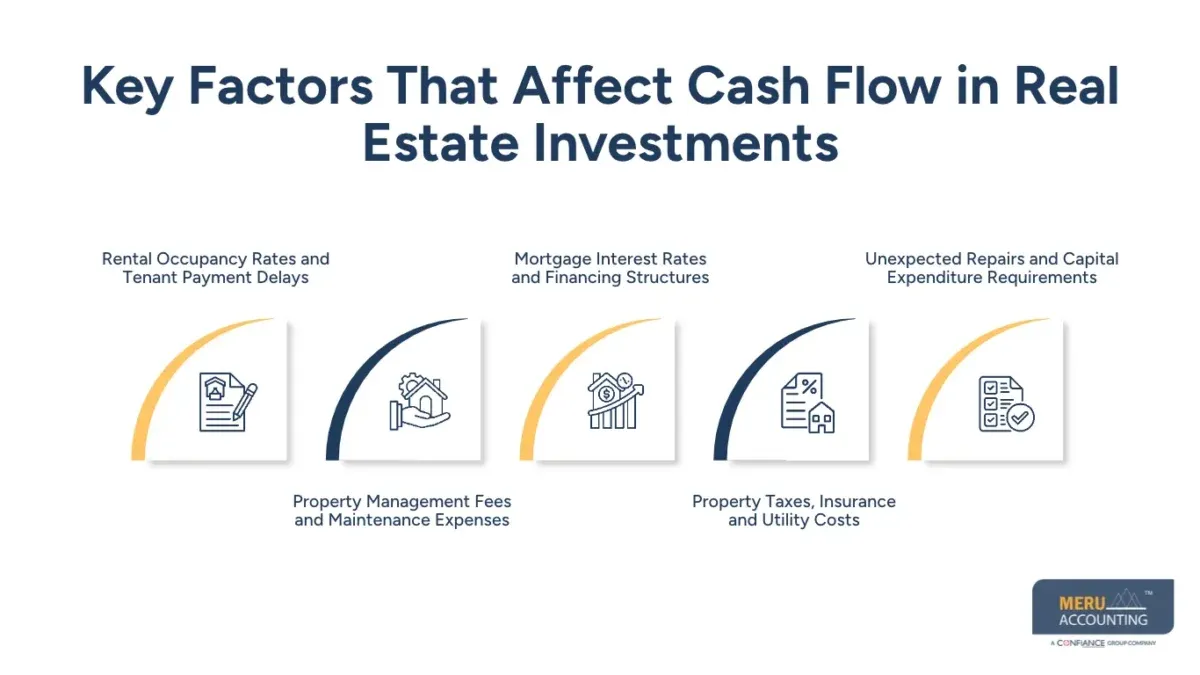
The same rent can produce very different results across two properties because their costs, loan terms and occupancy levels may differ. Real estate cash flow management requires regular checks on these factors.
Rental Occupancy Rates and Tenant Payment Delays
A vacant unit means lost rental income, while late payments can leave an owner short of cash when bills are due. Investors should track occupied units, rent due dates and unpaid balances each month.
Property Management Fees and Maintenance Expenses
Property managers may charge a fixed fee or a share of collected rent. Regular repairs, cleaning and service costs also affect what is cash flow in real estate, especially when older buildings need frequent work.
Mortgage Interest Rates and Financing Structures
Interest rates, loan terms and repayment plans affect the amount of cash available after debt service. Investors with variable-rate loans should review possible payment changes before setting rental budgets.
Property Taxes, Insurance and Utility Costs
Property taxes and insurance can rise over time, while utility bills may vary with usage and local rates. If owners fail to update these costs in their budgets, their expected cash flow may be higher than the actual amount.
Unexpected Repairs and Capital Expenditure Requirements
A damaged roof, failed heating unit or major water leak can lead to a large cash outflow. Property owners should set aside funds for such work rather than relying only on monthly rental income.
optional anymore
on running the business
Real Estate Cash Flow Management: Strategies for Property Investors
Real estate cash flow management involves tracking income, planning expenses and keeping enough cash for future needs. It also gives investors a way to spot gaps before they affect loan payments or property operations.
Monitoring Rental Income and Operating Expenses
Investors should compare rent received with rent due and review all costs against the budget. Monthly reports make it easier to see rising expenses, unpaid rent and changes in property performance.
Preparing Cash Flow Forecasts and Investment Budgets
A cash flow forecast estimates future rent, costs, debt payments and major repairs. Investors can prepare monthly and yearly budgets to test whether a property can meet its expected cash needs.
Maintaining Emergency Funds and Property Reserves
A reserve fund can cover urgent repairs, vacant periods and unexpected costs. The amount should reflect the age, condition, debt and number of units in each property rather than follow one fixed rule.
Managing Accounts Payable and Tenant Receivables
Accounts payable covers money owed to contractors, suppliers and service providers, while tenant receivables cover rent due from tenants. Clear payment records reduce missed bills and make real estate cash flow management more reliable.
Identifying Cash Flow Gaps Before They Affect Property Operations
A comparison of forecast and actual figures can reveal a shortfall early. Investors can then review rent collection, spending, loan costs and planned work before the gap affects other properties.
What Is Consolidated Financial Reporting in Real Estate?
Consolidated reporting brings the financial data of related properties or business entities into a combined view. It gives investors a wider picture of what is cash flow in real estate across their full portfolio, rather than showing each property in isolation.
Understanding Consolidated Financial Statements
Consolidated financial statements combine the financial results and position of a parent company and its controlled entities, where applicable under the relevant accounting rules. They may include a combined balance sheet, income statement and cash flow statement.
Property-Level Versus Portfolio-Level Financial Reporting
Property-level reports show the income and costs of one building or unit. Portfolio-level reports combine information from several properties, allowing investors to compare individual results with the overall position.
Combining Financial Data From Multiple Properties and Entities
An investor may own properties through separate LLCs or other legal entities. Consolidated reporting can bring eligible financial data together while keeping the required records for each entity.
Standardizing Accounting Records Across Property Portfolios
Different properties may use different account names, reporting periods or expense categories. Standardized records make it easier to compare rent, repairs, taxes, insurance and debt costs across the portfolio.
The Role of Consolidated Reporting in Investment Decisions
Combined reports show which properties earn cash, which have high costs and where debt payments place pressure on funds. This wider view makes real estate cash flow management more useful when investors plan new purchases or review existing assets.
Why Choose Meru Accounting?
Managing accounts across several rental properties can involve a large number of rent entries, bills, loan records and repair costs. Meru Accounting provides accounting services for property investors who need clear financial records and regular reporting.
- Rental income and tenant payment records.
- Property-level expense tracking and account reconciliation.
- Accounts payable and accounts receivable records.
- Cash flow reports and budget comparisons.
- Financial statements and consolidated reporting.
- Accounting records for multiple property entities.
With consistent records, investors can review property results and understand how each asset affects the wider portfolio. We also provide accounting and financial reporting services that can form part of a structured real estate cash flow management process.
Our Expert Perspective
A property with high rental income is not always a strong investment. The real test is whether its income can meet operating costs, debt payments and future repair needs without putting pressure on the owner’s other funds.
When reviewing what is cash flow in real estate, investors should also look at the timing of payments. A property may show positive cash flow for the year but still face a shortage in a month with a vacant unit or a major repair bill.
For owners with several properties, consolidated reports add another level of insight. They show how each asset affects the full portfolio and give investors a sound basis for reviewing budgets, debt, and future purchases.
Key Takeaways
- What is cash flow in real estate? It is the cash left after rental income and property-related cash expenses are accounted for.
- Positive cash flow means income is higher than cash outflows, while negative cash flow means the owner must cover a shortfall.
- Vacancy, late rent, loan payments, taxes, insurance and repairs can change property cash flow.
- Real estate cash flow management requires regular checks on income, costs, reserves and unpaid bills.
- Consolidated reporting brings eligible financial data from several properties and entities into a combined view.
- Property-level and portfolio-level reports give investors a clearer basis for reviewing returns and making investment decisions.
FAQs
Cash flow in real estate is the money left after rental income covers operating expenses, mortgage payments and other cash costs. It is calculated by subtracting total cash outflows from rental income after vacancy losses.
Positive cash flow means rental income is higher than property expenses and debt payments, while negative cash flow means the owner must pay the shortfall from other funds.
Property investors can manage cash flow by tracking rent, controlling operating costs, planning repair budgets, collecting overdue payments and keeping funds for unexpected expenses.
Consolidated financial reporting combines financial data from multiple properties and eligible business entities, giving investors a clear view of rental income, expenses, debt and overall cash flow.
It allows investors to compare the financial performance of different properties, identify cash shortages, track total expenses and make informed decisions about future investments.
optional anymore
on running the business