
Real estate firms work in a finance setup that is more complex than most other fields. Managing many properties, tracking rent income, handling repair costs, and keeping clear finance reports all need a strong accounting system. For property managers and real estate firms, finance clarity is not just useful—it is needed for sound decisions, steady growth, and long-term success. This is where knowing what is real estate accounting becomes important. It is not limited to basic record keeping or tax work. Instead, it is a clear accounting system built to manage the specific finance tasks linked to property ownership, leasing, and real estate investment.
In addition, legal rules and report needs make finance accuracy even more important. Keeping proper records and following compliance in real estate helps firms avoid fines and run with full clarity. This blog explains what is real estate accounting in detail and shows why it plays a key role in the success of property managers and real estate firms.
What You Will Learn From This Blog
In this blog, you will understand:
- What is real estate accounting and its scope
- Why it matters for property managers and real estate firms
- The key parts involved in managing property finances
- How it is different from general accounting
- The role of clear financial systems in business growth
- Practical ways to keep records accurate and aligned with rules
What Is Real Estate Accounting?
To understand what is real estate accounting, it helps to look at how real estate deals work. Unlike many other fields, real estate involves long-term assets, steady income streams, and ongoing costs tied to each property. Real estate accounting is a focused system that tracks, manages, and reviews financial data linked to properties. This includes rent income, lease terms, property costs, value changes, and capital spend.
It goes beyond basic record keeping by giving a clear view of each property and the full portfolio. This helps firms check profit, manage cash flow, and plan future moves with better clarity. Another key part is proper records and reporting. Clear and correct data helps firms meet legal needs while also helping better business decisions.
Why Understanding What Is Real Estate Accounting Matters for Growing Businesses
For growing firms and expanding property portfolios, financial tasks become more complex over time. Managing one property may be simple, but handling many units across areas brings new risks and gaps.
Knowing what is real estate accounting helps firms build a system that can grow with them. Without it, firms may face wrong records, missed income, and poor cost tracking.
A clear system supports:
- Better cash flow control across properties
- Accurate tracking of income and costs
- Strong planning and budgeting
- Clear reports for owners and investors
As firms grow, clear financial insight becomes more important. Real estate accounting gives that insight by structuring data in a way that supports both daily work and long-term plans.
Key Components of Real Estate Accounting
Real estate accounting has several key parts that work together to give a full financial view. Each part plays a role in keeping data clear and correct. A well-structured approach across these areas helps reduce errors and supports better financial control.
Revenue Tracking and Rent Management
Tracking rent income is a core task. This includes recording rent, checking unpaid dues, and managing lease terms. Clear tracking ensures no income is missed and helps keep cash flow steady. It also helps in identifying payment delays early and taking timely action to avoid cash flow gaps.
Expense Recording and Cost Allocation
Properties bring ongoing costs such as repair work, upkeep, utilities, and service fees. Recording these costs in the right way and linking them to the correct property helps show true profit. Proper cost allocation also helps in understanding which properties require higher maintenance and where cost control is needed.
Asset and Property Valuation
Property value can change over time. Accounting tracks buy cost, upgrades, and value loss over time to show the real worth of assets. This helps in long-term planning and return checks. Accurate valuation also supports better decisions when planning property sales or new investments.
Financial Reporting and Analysis
Regular reports give insight into income, costs, and overall results. These reports help managers and owners make clear and informed choices. Consistent reporting also ensures that financial data is ready for review, audits, or stakeholder discussions when required.
Together, these parts form a system that supports both daily work and long-term control. This structured system helps businesses maintain clarity, improve decision-making, and reduce financial risks over time, which reflects the true value of understanding what is real estate accounting.
How Real Estate Accounting Differs From General Accounting
You already know what is real estate accounting now. But, how does it differ from general accounting? Here’s how it does:
Focus on Industry-Specific Needs
While general accounting tracks common finance data, real estate accounting focuses on field-specific needs. The gap becomes clearer as the number of properties grows. This includes handling rental income cycles, property-linked costs, and long-term investment tracking, which need a more clear and focused approach for accurate finance control.
Property-Level Tracking
One key difference is property-level tracking. Each property is treated as a separate unit. This helps firms review each asset on its own instead of using mixed data. It also supports better result review, allowing firms to find which properties are making profit and which ones may need cost control or work changes.
Handling of Long-Term Assets
Another difference is how long-term assets are handled. Real estate needs value tracking, cost spread over time, and capital spend review, which is not as detailed in general accounting. Proper handling of these parts is important for accurate finance records and helps in making informed decisions related to buying, selling, or improving properties.
Lease and Tenant Tracking
Lease tracking is also unique. Managing rent terms, renewals, and tenant data adds a layer not found in most other fields. It also needs timely updates and clear records to avoid income gaps, disputes, or missed payments, which can directly affect cash flow stability.
Stricter Rules and Reporting Requirements
Also, rules and report needs are more strict. Keeping records aligned with compliance in real estate is key, as errors can lead to risk and loss. Clear records, proper grouping of entries, and timely reports help reduce legal risk and ensure that finance records can be checked or reviewed when needed.
Why Real Estate Accounting Is Essential for Property Managers
Along with understanding what is real estate accounting, it is also essential to know why it is important for property owners and managers. Here’s why:
Managing Daily Financial Tasks
To understand what is real estate accounting in real use, property managers handle daily tasks like rent collection, cost tracking, and tenant-linked finances. Without a clear system, these tasks can become hard to manage. Errors in tracking or delays in updates can lead to cash flow issues and affect overall property results.
Structured Financial System
Real estate accounting gives a strong structure for handling these tasks with ease. It ensures income is tracked, costs are logged, and reports stay up to date. A clear system also reduces manual errors and helps keep consistency across all financial records.
Handling Multiple Properties Efficiently
This is very important when many properties are involved. A single system helps keep data clear and avoids mix-ups across sites. It also allows managers to compare results across properties and take action based on clear financial data.
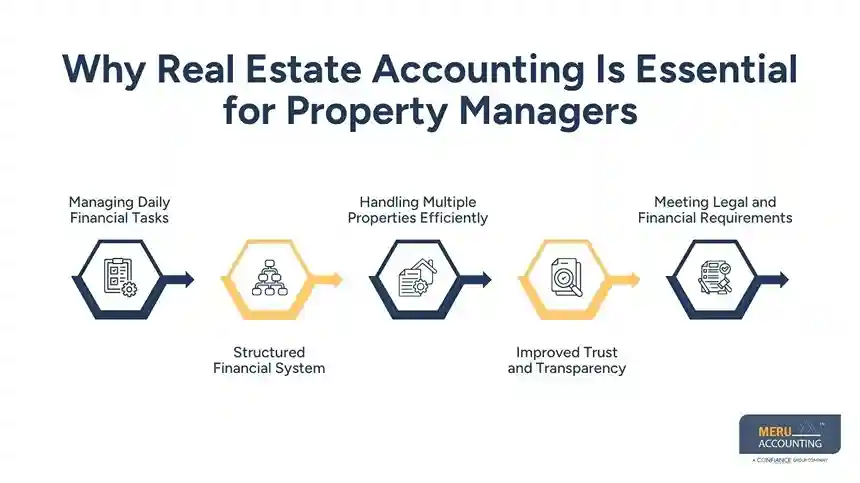
Improved Trust and Transparency
It also builds trust with owners and stakeholders. Clear reports show how each property is doing and support better talks and decisions. Clear financial data helps build strong work ties and ensures that all parties have a full view of financial results.
Meeting Legal and Financial Requirements
Another key point is meeting rules. Property managers must follow many legal and financial rules, and a clear system helps maintain compliance in real estate without delay or error. This includes keeping proper records, supporting tax filings, and making sure that all financial work is recorded in a way that meets required rules.
Meru Accounting’s Real Estate Accounting Services
At Meru Accounting, we provide clear and reliable real estate accounting services built for real business needs. We fully understand all the aspects of what is real estate accounting and our work goes beyond basic data entry. We aim to give full financial clarity so firms can manage properties with ease and make sound decisions.
Our services include:
- Accurate tracking of rent income and property costs
- Property-wise reports for better review
- Support with records and reporting needs
- Cash flow tracking for better control
- Help in keeping records aligned with required rules
We understand the daily challenges of managing many properties. Our team works to simplify financial work, reduce errors, and bring clarity to all records.
With a clear system in place, firms can focus on growth while keeping strong control over finances.
Our Expert Perspective
At Meru Accounting, we often see real estate firms face issues not due to low income, but due to unclear financial tracking and late reporting. Even small gaps in rent tracking or cost allocation can affect cash flow and business decisions over time.
From our work and understanding of what is real estate accounting, keeping property-level records and checking reports on a set basis helps avoid errors and supports better control. A clear system also makes it easier to stay aligned with compliance in real estate and handle audits or financial checks without stress. In day-to-day use, clear and steady accounting is not just about records—it directly supports better planning, risk control, and long-term business stability.
Key Takeaways
- Knowing what is real estate accounting is key for managing property finances
- It covers income tracking, cost control, and financial reporting
- A clear system supports growth and better decisions
- It differs from general accounting due to property-level focus
- Following compliance in real estate helps avoid risk and ensures transparency
- Expert support can improve accuracy and reduce workload
FAQs
It is the process of tracking and managing financial data linked to properties, such as rent, costs, and asset value.
It helps maintain clear records, manage cash flow, and give proper reports to property owners.
It focuses on each property, lease tracking, and long-term asset handling, which are not common in general accounting.
Challenges include tracking many income streams, managing costs across properties, and keeping records correct.
It ensures records meet legal rules, reduces risk of fines, and improves financial transparency.