
Managing money coming into your business is just as important as handling the money going out. In 2025, smart businesses will focus more on how to manage accounts receivable effectively. This helps keep their cash flow strong and cuts down on missed payments. Strong receivable management techniques give you better control, reduce risk, and help your business grow.
In this guide, we’ll walk you through five simple yet strong strategies. We’ll also share key receivable management techniques that work and show you how experts can help.
Why Accounts Receivable Management Matters
When customers take too long to pay, your business can run low on cash. Even if sales look good, slow payments can cause big problems. That’s why managing accounts receivable is more than just sending bills. It’s about building a plan to get paid faster and more often.
Using the right receivable management techniques helps you avoid money trouble, stay on track with bills, and grow with confidence. Applying proven techniques of receivable management from the start ensures your business keeps cash flow healthy and minimizes risk.
How to Prepare for Effective Accounts Receivable Management Strategies
Before you start the five strategies, it is key to know how to manage accounts receivable effectively. Simple systems, supported by the right techniques of receivable management, help you get paid faster, make fewer mistakes, and keep cash steady. Using proven receivable management techniques makes sure every step, from credit checks to sending invoices, works well.
Now that your business is set, let’s look at five easy strategies to manage receivables well.
Strategy 1: Set Clear Credit Policies
Start with a clear plan before you sell on credit. Know who can buy now and pay later. Not every customer is a good credit risk.
Know Your Customer
Learn about the customer’s payment history and financial behavior. This gives you a better idea of who is likely to pay on time. It’s one of the vital receivable management techniques for credit risk reduction.
Set Credit Limits
Give each customer a limit based on their credit strength. This helps reduce the chance of losing money on unpaid bills.
Define Payment Terms
Write clear rules for when payments are due. This includes the due date, early payment discounts, and any late fees.
Explain Late Fees
Tell customers early about extra charges for late payments. This keeps things open and helps avoid conflicts later.
Get Agreements Signed
Always get written approval on your credit terms. This makes your policy official and avoids future confusion.
Update Policies Often
Check your credit policies every few months. Make updates based on the market, customer behavior, and your cash flow needs.
Strategy 2: Invoice Promptly and Accurately
The faster you send bills, the faster you get paid. Errors in invoices cause delays, and delays hurt cash flow. Using tested receivable management techniques in billing can reduce such mistakes.
Send Invoices Fast
Send the bill right after the work is done. Waiting too long may confuse and delay payment.
Include All Details
Add item names, quantities, price, and tax in every bill. Missing details often lead to disputes and delays.
Double-Check Each Invoice
Before sending, review each bill for errors. Simple mistakes like wrong dates or numbers can slow down payment.
Add Easy Payment Links
Include links for online payment options. This makes it easier for customers to pay you quickly and is part of efficient techniques of receivable management.
Set Reminders for Billing
Use alerts to remind you when to bill. Doing this keeps your income regular and cash flow steady.
Use Templates
Use saved formats for common bills. It helps you finish faster and keeps you from skipping key parts. This way, your work stays smooth and on point.
Strategy 3: Monitor Customer Payment Behavior
Don’t just wait and hope. Watch how and when your customers pay by applying smart techniques of receivable management that track payment behavior.
Keep a Payment Record
Log each payment by customer, date, and invoice number. This makes it easy to spot who pays late.
Look for Changes
Notice when regular payers start paying late. This may be a sign of cash flow issues on their side.
Set Alerts
Create automated alerts for unpaid invoices. This helps you take fast action before payments get too late.
Communicate Early
Reach out to the customer before the due date passes. A quick phone call or short message can help stop a payment from being late.
Block Repeat Offenders
If a customer often delays payment, stop offering credit. Ask for advance payment or shorten their terms.
Check Payment Trends
Review reports to see who pays on time and who doesn’t. Use this data to update your credit policies. It is a data-driven technique of receivable management.
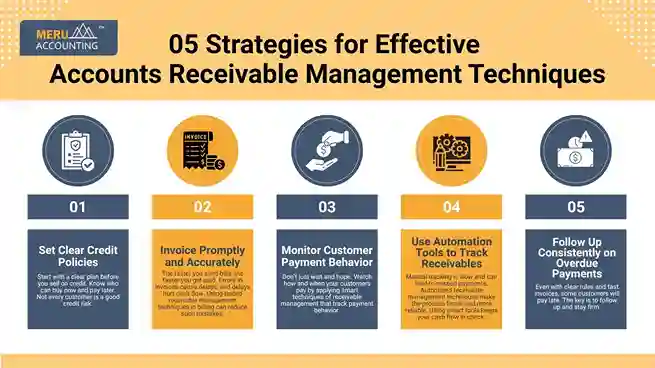
Strategy 4: Use Automation Tools to Track Receivables
Manual tracking is slow and can lead to missed payments. Automated receivable management techniques make the process faster and more reliable. Using smart tools keeps your cash flow in check.
Use Cloud Accounting
Access your account details from any device. Cloud tools keep your team in sync with real-time updates.
Automate Reminders
Set your system to send reminders before the due date. It saves time and keeps your follow-up timely.
Create Dashboards
Use visuals like graphs and tables to show unpaid bills. This gives you a quick view of who owes what.
Choose Smart Tools
Pick software that fits your business needs. Don’t overpay for features you won’t use, but use smart techniques of receivable management to stay efficient.
Track in Real-Time
Use live tracking tools to update payment status. You’ll always know the exact amount due.
Strategy 5: Follow Up Consistently on Overdue Payments
Even with clear rules and fast invoices, some customers will pay late. The key is to follow up and stay firm.
Set a Follow-Up Schedule
Don’t wait a month. Start reminders a few days after the due date. Send emails, make calls, and keep notes on each action.
Stay Calm But Firm
Polite messages work best, but don’t let customers delay forever. Consistent follow-ups are one of the most effective techniques of receivable management. If needed, pause future sales until the account is current.
Document Everything
Record all emails and calls about late payments. This helps you stay organized and provides proof if needed. It is a key technique of receivable management in handling disputes.
Escalate When Needed
If reminders don’t work, move to formal notices. Legal steps may be needed for repeat delays.
Reward Prompt Payers
Offer discounts or gifts to early payers. It builds loyalty and improves your overall cash flow.
Hold Future Orders
If a client keeps paying late, stop new orders until old bills are paid. This gives them a reason to clear old dues. It’s a powerful receivable management technique.
Review Collection Process
Check how well your team handles follow-ups. Make changes to improve your recovery rate.
Regular follow-ups show that you take payments seriously.
How to Manage Accounts Receivable Effectively – Best Practices
Review Credit Before Selling
- Always check a buyer’s financial background. Knowing their payment habits helps you set the right credit terms.
Set Clear Invoice Dates
- Always show both the issue and due dates on your invoices. This removes confusion and improves payment timing.
Follow Up Weekly
- Don’t wait until the end of the month. Weekly check-ins on unpaid bills help avoid long delays.
Limit Credit Exposure
- Only give as much credit as your cash flow allows. Keep limits low for new or risky clients.
Recheck Your Policy Often
- Review your credit rules regularly. Adjust them to reflect changes in your business or market.
Train Your Staff
- Teach your staff to manage invoices and follow-up calls. A trained team makes your system more effective.
Use Software Daily
- Update your receivable software every day. It helps you track payments better and stay up to date.
Receivable management techniques protect your business. They help you plan better and avoid cash problems.
Handling receivables can take up time and energy. At Meru Accounting, we help small and mid-size businesses manage their accounts receivable the right way. Our experts know the best receivable management techniques to improve your cash flow. With smart techniques of receivable management, we help you grow without worry.
FAQs
- What are the best receivable management techniques for small businesses?
The best receivable management techniques are to set credit rules, send invoices fast, track each bill, and use tools to send alerts. These steps help you get paid on time and avoid cash flow stress. - How do I manage accounts receivable effectively every month?
To manage accounts receivable well, check bills each week, follow up on late payers, and limit credit risk. Use real-time tools to track money due and cut the chance of overdue accounts. - Why is setting clear credit policies so important in receivable management?
Clear credit rules show you who you can trust with delayed pay. They cut the risk of missed bills and give you fair steps to follow if a client pays late. - What should I include on an invoice to avoid payment delays?
An invoice should show the date, items sold, full amount, and due date. Add clear terms and an online pay link so the client can pay with ease. - How can I reduce overdue invoices without hiring more staff?
You can use auto tools to send pay alerts, track debts, and remind clients. These receivable management steps save time and help you keep cash flow strong.