The 2026 E-File Requirements may change how businesses report financial data online. Companies may need new systems and tools to meet deadlines. These rules may seem hard at first, but careful planning can make compliance easier. Digital records and safe submissions are key. Businesses may also train staff and adjust workflows to follow the 2026 rules. Starting early can make the process simpler and cut errors.
Knowing these rules can help firms avoid fines and report data more efficiently. Each business may face different issues, but knowing the main points can help with planning. This post looks at the key parts of the 2026 e-file rules and ways to meet the digital standards.
Understanding the 2026 E-File Requirements
The 2026 e-file requirements may focus on digital submissions, secure transfers, and structured records. Firms may need to adjust workflows to comply. Some parts of these rules may feel unfamiliar at first, yet gradual adoption may ease the process.
Digital Records May Be Essential
Maintaining accurate digital records may support the 2026 e-file requirements and improve reporting efficiency. Clear recordkeeping may reduce errors when submitting files.
Timely Submissions May Reduce Risk
Meeting deadlines may prevent penalties or unnecessary follow-ups. Businesses may plan in advance to align with submission timelines.
Secure Data Transfer May Be Crucial
Using secure portals may protect sensitive information and meet the 2026 digital compliance requirements. Compliance may require encryption or approved transfer channels.
Automated Checks May Simplify Reporting
Automation may help verify totals and identify mistakes. It can save time and reduce manual effort.
How Early Planning Can Benefit Businesses
Early planning may help firms adjust to the 2026 digital compliance requirements smoothly. Staff may adapt more easily, and workflows may become more efficient.
Reducing Stress Through Planning
Knowing steps in advance may lower staff anxiety. Teams may follow procedures confidently under digital regulations.
Time Management May Improve Efficiency
Breaking tasks into segments may reduce bottlenecks. This approach may support the smooth adoption of digital processes.
Optimizing Resource Allocation
Assigning staff and tools effectively may prevent confusion. Resources may be allocated to priority areas efficiently.
Testing May Reveal Gaps Early
Trial runs may identify weak points in reporting. Firms may correct issues before official submission.
Key Components of the 2026 E File Requirements
Businesses may find several critical elements in the 2026 e-file requirements, including recordkeeping, secure submission, and verification processes.
Mandatory Digital Records
Properly maintained records may ensure smooth reporting. Businesses may need software capable of storing invoices, receipts, and transactions.
Secure Submission Channels
Submitting via secure portals may prevent data breaches. Approved channels may be required to meet compliance expectations.
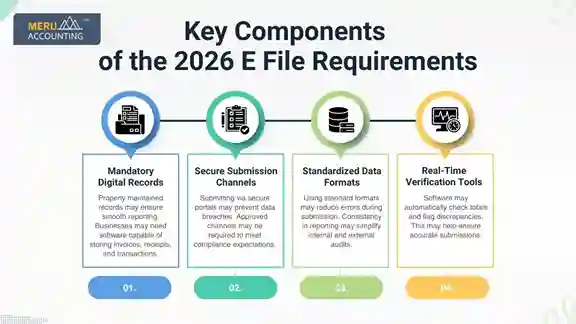
Standardized Data Formats
Using standard formats may reduce errors during submission. Consistency in reporting may simplify internal and external audits.
Real-Time Verification Tools
Software may automatically check totals and flag discrepancies. This may help ensure accurate submissions.
Impact on Small Businesses
Small businesses may face challenges in meeting the 2026 digital compliance requirements. Adjusting workflows and training staff may be necessary.
Updating Tools and Software
Affordable, compatible software may help small firms maintain records efficiently. Tools may support workflow automation.
Staff Training for Digital Compliance
Training sessions may improve familiarity with digital processes. Short programs may reduce errors and build confidence.
Optimizing Workflow
Clear responsibilities and structured tasks may simplify compliance. Small firms may find planning particularly valuable.
Ensuring Data Accuracy
Accurate and clean data may prevent mistakes and ensure adherence to the 2026 digital compliance requirements. Regular checks may ensure smooth filing and meet compliance standards.
Considerations for Large Businesses
Larger firms may face increased volumes of data. They may need stronger systems and more structured procedures.
Managing Large Data Sets
Large datasets may require dedicated staff for review. Structured processes may support timely and accurate reporting.
System Upgrades
Legacy software may not meet compliance standards. Updating systems may reduce errors and save time.
Staff Coordination
Coordinating multiple departments may prevent miscommunication. Clear procedures may support adherence to digital standards.
Automating Repetitive Tasks
Automation may reduce workload and improve consistency. It may also assist in meeting deadlines efficiently.
How Daily Operations May Change
The 2026 digital compliance requirements may influence daily tasks across businesses.
Daily Recordkeeping
Recording data promptly may reduce the end-of-month workload. Businesses may adopt simple routines for accuracy.
Regular Audits
Frequent internal checks may prevent errors. Teams may identify discrepancies before official submissions.
Data Security Practices
Implementing encryption or secure logins may protect sensitive information. Businesses may review security protocols regularly.
Integrating Tools with Existing Workflows
Software may need to align with current procedures. Integration may reduce errors and improve efficiency.
Preparing Staff for the 2026 E-File Requirements
Staff may need support to adapt to new procedures. Training and ongoing updates may be critical.
Short Training Sessions
Brief sessions may teach essential skills. Staff may gain confidence without feeling overwhelmed.
Ongoing Updates
Rules may change, so updates may be needed. Staff may receive notes or notifications for clarity.
Support Resources
Guides and internal documentation may aid staff. Quick reference materials may simplify task execution.
Risks and Challenges
Businesses may encounter difficulties when implementing new digital requirements.
Data Errors
Incorrect entries may delay filing. Regular checks may prevent issues and support compliance.
System Failures
Old software may fail under new processes. Businesses may need updated tools to avoid disruption.
Staff Inexperience
Teams unfamiliar with new rules may make mistakes. Training may reduce errors and improve confidence.
Increased Workload
Initial adoption may require extra effort. Structured plans may minimize strain and improve efficiency.
Benefits of Early Compliance
Early action may reduce stress and improve accuracy. Planning may support smoother adoption of digital standards.
Reduced Last-Minute Pressure
Completing tasks early may prevent rushes. Staff may work calmly and meet deadlines efficiently.
Confidence Through Familiarity
Understanding requirements may give teams confidence. They may complete tasks with fewer errors.
Smooth Integration With Existing Systems
Early adaptation may align new tools with current workflows. Processes may be more consistent and efficient.
The 2026 E-File Requirements may change how firms report taxes online. Early planning, staff training, and the right tools can make it easier. Businesses may see smoother work and fewer mistakes when they follow the rules. With clear steps, digital filing can be simple. Meeting the 2026 rules may improve accuracy and boost team confidence.
Meru Accounting provides accounting and bookkeeping work that meets digital rules. We have certified staff who make sure businesses keep correct records and meet all deadlines. Our team can manage financial data, keep clear records, and follow all rules. Businesses can feel secure knowing their finances are handled well. Partner with us to make sure your business meets all 2026 e-file rules on time.
FAQs
- What are the 2026 e-file requirements for businesses?
Businesses must keep correct digital records and send them safely. They may need to use set formats for data. - Who must follow the 2026 e-file rules?
Firms that file taxes online must comply. This includes most VAT-registered firms and firms that report tax online. - When should a business start preparing for 2026 e-file requirements?
Start before the year or report period. Early steps give time to set up tools and train staff. - What types of records are needed for compliance?
Invoices, receipts, bank slips, and digital logs. Other proof of income or spend may also be needed. - Do businesses need special software for e-filing?
Yes, HMRC-approved tools are needed. Tools may need updates to stay correct. - How do the 2026 digital compliance requirements affect small businesses?
They may need new tools and training. Small firms may also change how they work to stay correct. - Can automation help meet the 2026 e-file requirements?
Yes, tools can sum and report data fast. Automation can cut human mistakes. - Are secure submission channels required by law?
Yes, data must be sent via safe, encrypted sites. This also keeps financial info secure. - What happens if digital records are inaccurate?
Errors may delay filing and raise checks. Fixing mistakes later takes time and work. - Do businesses need to maintain digital records long-term?
Yes, records must stay for audits and checks. They help if there are disputes or tax questions later. - Can early preparation reduce risks of non-compliance?
Yes, early steps can prevent mistakes. It also gives time to test systems and fix gaps. - Are manual spreadsheets acceptable for the 2026 e-file requirements?
Mostly no, approved software is needed. Spreadsheets can be used only inside the firm, not for filing. - How do large businesses manage complex digital compliance?
They use clear systems and auto checks. Teams often review records to keep them correct. - Is staff training necessary for digital reporting compliance?
Yes, it improves accuracy and keeps rules met. Refresh sessions keep staff up to date. - Do cloud systems meet the 2026 e-file rules?
Yes, if they are HMRC-approved and safe. They also allow firms to access records from anywhere. - Are there penalties for failing the 2026 e-file requirements?
Yes, fines or delays can happen. Repeat failures may trigger extra HMRC checks. - Can businesses test their systems before filing?
Yes, trial runs can spot errors. It ensures data and sums are correct. - Do digital compliance requirements apply to all business types?
Most VAT-registered or tax-reporting firms must follow rules. Some small firms may have fewer rules. - How often should businesses update their e-filing tools?
Updates are often needed to stay correct. This avoids problems when sending data. - Can proper compliance improve long-term operational efficiency?
Yes, work runs smoother and mistakes drop. Processes take less staff time and effort.