Small business taxes can feel hard when sales, costs, staff, and tax dates all need care. For US firms, the tax due can vary by the firm type, net gain, staff count, and state. The IRS lists income tax, estimated tax, self-employment tax, employment tax, and excise tax as key business taxes.
Knowing what to pay is only one part of the task. Owners also need accurate and well-organized financial records, the right tax forms, timely payments, and supporting documentation for income and expenses. The IRS says records should show business income, expenses, deductions, and credits reported on a return.
This blog explains small business taxes in simple terms. It focuses on US federal tax rules, while noting that state and local tax rules can differ.
What You Will Learn From This Blog
- Understand which small business taxes may apply to your business.
- Learn how taxes for small businesses vary by business structure and activity.
- Identify the main types of small business taxes you may need to pay.
- Understand how your business structure affects tax duties and filing requirements.
- Learn how to calculate taxable business income using income and eligible expenses.
- Know which financial records and documents to prepare before filing.
- Follow the key steps for filing and paying business taxes on time.
- Recognize common tax filing errors that may lead to penalties or extra tax.
- Understand when professional tax guidance may be useful for your business.
Understanding Small Business Taxes and Tax Obligations
Know Your Tax Duties
Small business taxes are not the same for every firm. Your tax duties depend on how the firm is set up, how it earns money, whether it has staff, and what it sells.
The IRS says the form of business can decide both the tax due and the way it must be paid.
Check Federal Tax Rules
Federal taxes for small businesses can include income tax, self-employment tax, payroll tax, estimated tax, and some excise taxes. Not every firm pays every tax.
A sole owner with no staff may face a very different tax mix from a firm with many staff.
Check State And Local Rules
Federal tax is only one part of managing small business taxes. A state may have income, sales, franchise, payroll, or other tax rules.
Local rules may also apply. Owners should check the rules where the firm is based and where it does business.
Track Tax Due Dates
Tax work is not just an annual task. Some tax payments and forms are due during the year.
For example, people who are self-employed may need estimated tax payments during the year. The IRS notes that late or low estimated payments may lead to a penalty.
Keep Clear Tax Records
Accurate financial records form the basis of reliable tax preparation. Sales records, invoices, payroll data, receipts, bank statements, and asset records should be maintained in an organized system.
The IRS states that records should support the income, expenses, deductions, and credits reported on a tax return.
What Taxes for Small Business Owners Need to Pay
Income Tax
Income tax is one of the main taxes for small business owners. The way income tax is filed depends on the firm’s legal and tax setup.
A sole owner often reports business profit on an individual return, while a corporation may file a separate return.
Estimated Tax
Paying estimated amounts during the year can keep small business taxes from building up until the annual filing. Estimated tax can cover income tax and self-employment tax.
The IRS says sole owners, partners, and S corporation owners may need estimated payments when they expect to owe at least $1,000 when filing.
Self-Employment Tax
Self-employment tax mainly covers Social Security and Medicare tax for people who work for themselves. It can apply to sole owners and other self-employed people.
The IRS generally requires self-employment tax when net self-employment earnings reach $400 or more.
Employment Tax
Hiring staff creates extra tax work. Employers may need to manage several parts of their small business taxes, including federal income tax withholding, Social Security, Medicare, and federal unemployment tax.
The IRS also requires employers to report wages and related tax data through the proper forms and deposits.
Excise Tax
Certain businesses may be subject to excise tax based on specific products, services, or business activities. These tax requirements apply only to businesses that meet the relevant federal criteria.
Business owners should determine whether their products or activities are subject to excise tax before preparing and filing the required tax forms.
Types of Small Business Taxes You Should Know
Income-Based Taxes
The first group in the types of small business taxes is income-based tax. The amount can depend on taxable profit and the firm’s tax structure.
Income tax rules can differ for sole owners, partnerships, corporations, and S corporations.
Payroll Taxes
Payroll taxes are part of the taxes for small business owners when a firm has employees. Employers may need to withhold federal income tax and handle Social Security, Medicare, and federal unemployment tax.
Payroll duties also include timely deposits, wage reports, and required employment tax forms.
Self-Employment Taxes
Self-employment tax may apply when an owner earns income from self-employment. It mainly covers Social Security and Medicare taxes.
A person may owe both income tax and self-employment tax, so these two charges should not be treated as the same.
Estimated Taxes
Some owners may need to make estimated tax payments during the year. These payments cover tax that is not fully paid through withholding or other tax payments.
Estimated payments can be based on expected income, deductions, credits, and prior-year tax data.
State and Local Taxes
The types of small business taxes can also include state and local taxes. These rules vary by place and business activity.
Sales tax is one common example, but state rules can also cover income, franchise, payroll, or other taxes.
How Business Structure Affects Your Tax Responsibilities
Sole Proprietorship
A sole proprietorship is owned by one person and is not a separate corporation. The owner generally reports business income and costs on an individual return.
The IRS lists Schedule C and Schedule SE among forms that may apply to sole proprietors.
Partnership
A partnership normally files an information return, while each partner reports their share of business income or loss on their own tax return.
The firm’s records must clearly track each partner’s share and the items that flow to the owners.
S Corporation
An S corporation has specific rules for reporting small business taxes, with certain income, losses, deductions, and credits passed through to its owners.
Owners should not assume that an S corporation follows the same process as a sole proprietorship.
C Corporation
A C corporation is generally treated as a separate taxpayer for federal income tax. It files its own corporate income tax return.
The exact filing and payment duties depend on the corporation’s facts and tax year.
Limited Liability Company
An LLC can have different small business taxes responsibilities because its federal tax treatment depends on its ownership and tax classification. An LLC may be taxed as a sole proprietorship, partnership, or corporation, based on its ownership and elections.
How to Calculate Your Small Business Taxable Income
Start With Total Income
Begin with all business income for the tax period. Include sales, service fees, and other taxable business receipts that apply.
A complete income list lowers the risk of leaving out a payment or source when calculating taxes for small business.
Subtract Valid Business Costs
Next, identify costs that qualify as business deductions. These deductions can reduce taxable income and may affect the amount owed for small business taxes.
Review Asset Costs
Large purchases may not always be treated like daily operating costs. Assets such as equipment, vehicles, or property can have separate tax rules.
Depreciation or other treatment may apply based on the asset and current tax rules.
Check Deductions And Credits
After listing income and costs, review deductions and tax credits that may apply. Keep proof for each item claimed.
The IRS says records should support the items reported on the tax return.
Estimate Tax Due
Taxable income is not always the same as the amount of tax owed. Tax rates, filing status, self-employment tax, credits, deductions, and payments already made can affect the final amount of small business taxes. For that reason, owners should review the full tax picture before sending a return.
optional anymore
on running the business
How to Prepare for Small Business Tax Filing
Gather Income Records
Collect invoices, sales reports, bank statements, payment records, and other proof of business income needed to prepare taxes for small businesses.
Electronic records are acceptable when they provide a complete and accurate record of business activity.
Gather Expense Records
Collect receipts, paid bills, invoices, credit card statements, and other documentation that verifies business expenses. Proper classification also makes it easier to report small business taxes with fewer record gaps.
Complete and well-organized expense records make tax preparation more accurate and provide supporting evidence if the reported expenses are reviewed later.
Review Payroll Data
If the firm has staff, collect payroll reports, wage data, tax deposits, and employee forms.
Employment tax records need careful review because errors can affect both the firm and its workers.
Reconcile Bank Accounts
Compare the accounting records with bank and card statements. Find missing entries, duplicate entries, and items posted to the wrong account. A clean bank record gives the tax preparer a better base for the return.
Check Prior Returns
Review the prior tax return before filing the current one. Prior returns may show carryovers, asset data, payments, elections, and other details that can affect the new filing. Changes in income or business structure should also be reviewed.
How to File Small Business Taxes Step by Step
Confirm the Business Type
Start by confirming the legal and tax status of the firm, since the structure can affect how taxes for small businesses are reported. The filing form depends in part on the business structure.
The IRS states that business structure affects which income tax return a firm must file.
Select the Correct Forms
Use the forms that match the business and its tax duties. A sole owner may need Form 1040 with Schedule C, while other structures may need different returns.
Employment and information returns may also be needed.
Enter Income and Costs
Report business income and valid deductions from your records. Check totals against bank statements, sales reports, payroll data, and accounting reports.
Avoid using estimates when reliable source records are available.
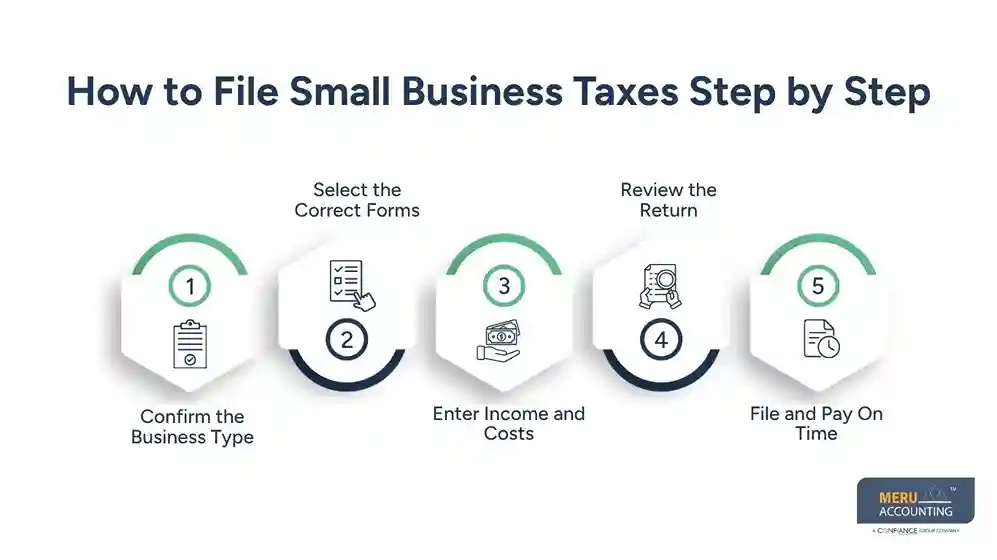
Review the Return
Check names, tax IDs, income, deductions, credits, payments, and bank details before filing.
A second review can catch a wrong figure or missing form before the return is sent.
File and Pay On Time
File the return through an approved filing method and pay any amount due by the applicable deadline. The IRS provides electronic filing and payment options for many business taxes.
Keep these records after filing as proof of how small business taxes were reported and paid.
Common Small Business Tax Filing Mistakes to Avoid
Mixing Personal and Business Costs
Personal spending should not be entered as a business cost just because the payment came from a business account.
Separate accounts and clear records make this issue easier to manage.
Missing Business Income
All taxable business income should be reviewed before filing taxes for small businesses. Payment apps, cards, cash, online sales, and direct bank payments can all create records that need review.
A sales report should match the accounting records where possible.
Claiming Weak Deductions
A cost should not be claimed only because it seems related to the business. The expense must meet the applicable tax rules.
The IRS states that business expenses generally must be ordinary and necessary to qualify as deductions.
Missing Estimated Payments
Owners who need estimated tax payments should track each due date. Waiting until the annual filing can create a large balance or a possible penalty.
The amount should be reviewed during the year when income changes.
Filing the Wrong Form
Different structures can require different returns and schedules. Using a form meant for another business type can cause delays or errors.
A tax professional can review the filing setup when the rules are not clear.
How Meru Accounting Can Assist With Small Business Tax Work
Review Your Tax Records
Meru Accounting can review income, costs, bank data, payroll records, and other tax records before filing.
A structured review can find missing data and entries that need more proof.
Organize Business Tax Data
Our team can organize financial data into clear records for tax work. Better records give owners a clearer view of income, costs, and tax items.
The IRS also stresses the need for records that support tax return entries.
Support Filing Preparation
Tax filing needs more than data entry. Each item should be checked against the right tax rule and filing requirement.
Professional review can be useful when a business has staff, multiple income sources, assets, or a complex structure.
Plan For Tax Payments
Meru Accounting can help owners review expected tax payments during the year. Regular reviews can reduce the risk of a large surprise balance at filing time.
Tax rules can change, so current rules should always be checked before a return is filed.
Our Expert Perspective
From our experience, effective tax preparation begins well before the filing deadline. Maintaining accurate and well-organized financial records throughout the year can reduce missing information and make the year-end review more efficient.
The right tax process depends on the business structure, income sources, number of employees, state requirements, and nature of business activities. Each tax review should be based on current IRS guidance and the specific federal, state, and local rules that apply to the business.
Key Takeaways
- Small business taxes depend on business structure and activity.
- Taxes for small businesses can include income, payroll, self-employment, estimated, and excise tax.
- The types of small business taxes that apply can differ from one firm to another.
- Keep income and expense records throughout the year.
- Separate personal and business spending.
- Check estimated tax due dates before each payment date.
- Keep proof for deductions, credits, income, and payments.
- Seek tax advice when business facts are complex.
FAQs
A small business may have to pay income tax, self-employment tax, payroll tax, estimated tax, and some state or local taxes, depending on its business structure and activities.
Small business taxes are generally based on taxable business income, deductions, credits, business structure, and other factors that apply to the owner or company.
The main types of small business taxes include income tax, self-employment tax, employment tax, estimated tax, excise tax, and certain state or local taxes.
Some small business owners need to pay estimated taxes during the year when their expected tax liability is not fully covered by withholding or other payments.
A small business should keep records of income, expenses, invoices, receipts, bank statements, payroll, asset purchases, tax payments, and other documents that support its tax return.
optional anymore
on running the business