




Real estate accounting and taxation is a key part of managing rental property income, costs, assets, loans, and tax records. For property investors, clean books are not only about filing a tax return. They also give a clear view of cash flow, property profit, debt, and future tax costs.
A rental property can bring regular income, but many costs need the right treatment. Repairs, improvements, mortgage interest, insurance, property taxes, and depreciation can affect your records in different ways. In 2026, investors should review their books throughout the year instead of waiting until tax filing time.
This blog explains the main accounting and tax areas that property investors should review in 2026. It also covers tax planning for real estate investors, common errors, and practical ways to keep property records in order.
What You Will Learn From This Blog
- Learn how to track rental property income and expenses accurately throughout the year.
- Understand why proper real estate accounting and taxation records matter for property investors.
- Identify the key accounting tasks that should be completed each month.
- Review the main tax areas that may affect property investors in 2026.
- Explore practical tax planning strategies for real estate investors.
- Recognize common bookkeeping and tax errors that property investors should avoid.
- Understand how Meru Accounting can assist with property accounting and financial records.
Introduction To Real Estate Accounting And Taxation
Real estate accounting and taxation start with keeping accurate records for every property you own. Begin by tracking rental income such as monthly rent, late fees, parking charges, and other payments received from tenants. Property costs should also be recorded under the right accounts, including repairs, insurance, property taxes, management fees, utilities, advertising, and mortgage interest.
Keeping these transactions separate gives you a clear record of where money comes from and where it goes. For investors with more than one property, maintaining property-level records can make it easier to review the income and costs linked to each investment.
Property assets and loans also need close attention. Buildings, appliances, furniture, and major upgrades should have clear asset records because some costs may need to be depreciated over time rather than treated as current expenses.
Mortgage payments should also be split between principal and interest, since each part has a different accounting and tax treatment. Monthly profit reports can then bring these records together by showing rental income against operating costs.
Regular reviews also support tax planning for real estate investors by helping identify deductible expenses, upcoming property costs, and potential tax considerations early.
Why Real Estate Accounting And Taxation Matters For Property Investors
Gives a Clear Cash View
Real estate accounting and taxation gives investors a better view of money moving through each property. Monthly reports can show rent received, bills paid, debt payments, and available cash.
Reduces Record Errors
Small errors can grow when transactions are left unchecked for many months. Regular account reviews make missing entries, duplicate costs, and incorrect amounts easier to find.
Protects Tax Records
Tax returns depend on reliable records. Receipts, invoices, bank statements, loan records, and asset details give useful support when income and deductions are reviewed.
Guides Investment Choices
A property with strong rent may still have weak cash flow after debt, taxes, insurance, repairs, and other costs. Real estate accounting and taxation help investors assess the after-tax financial impact before they buy, sell, or refinance.
Makes Tax Work Easier
Organized records reduce the amount of work needed before tax filing. Clean records also give your tax professional better information for tax planning for real estate investors throughout the year.
Key Accounting Practices For Real Estate Investors
Separate Property Transactions
Keep property income and costs separate from personal spending. Investors with several properties should also track each property on its own where practical.
Use a Clear Chart Of Accounts
Create accounts for rent, repairs, insurance, property taxes, interest, management fees, utilities, advertising, legal costs, and other regular items. A clear structure supports accurate real estate accounting and taxation and makes reports easier to read.
Reconcile Accounts Monthly
Compare your books with bank and credit card statements each month. Check deposits, payments, transfers, and outstanding items before closing the period.
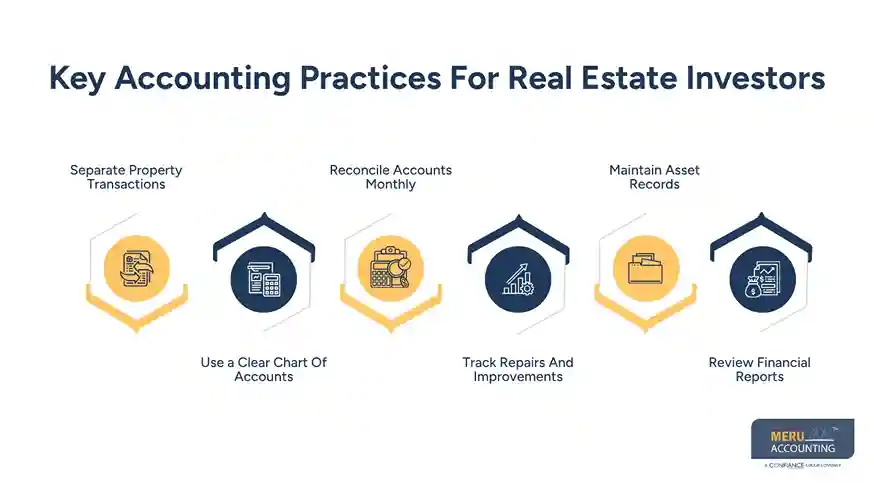
Track Repairs And Improvements
Not every property cost should be treated as a current repair. A major upgrade may need to be added to the property’s cost and recovered through depreciation under the applicable tax rules.
Maintain Asset Records
Detailed asset records give investors a stronger foundation for real estate accounting and taxation, future tax reporting, and tax planning for real estate investors. These records may also matter when the property is sold.
Review Financial Reports
Review the profit and loss statement, balance sheet, rent records, and cash flow each month. Look for unusual changes instead of waiting for year-end to find them.
optional anymore
on running the business
Important Tax Considerations For Real Estate Investors In 2026
Rental Income
Most rental income must be reported for tax purposes. Income may include more than the basic monthly rent, depending on the payment received and the facts of the rental arrangement.
Deductible Expenses
Common rental expenses can include maintenance, insurance, taxes, mortgage interest, management costs, advertising, and certain professional fees. The correct treatment depends on the type of expense and the property use.
Depreciation
Depreciation is an important part of real estate accounting and taxation, as qualifying property costs are recovered over time. Residential rental property generally follows specific recovery rules, so investors should maintain a proper depreciation schedule.
Passive Loss Rules
Rental losses may be subject to passive activity and at-risk limits. Your income, participation, ownership structure, and type of activity can affect how these rules apply.
Property Sale
Accurate real estate accounting and taxation records are important when calculating the taxable gain from a property sale. The calculation may depend on adjusted basis, improvements, depreciation, selling costs, and other factors recorded during ownership.
Tax Planning For Real Estate Investors: Strategies For 2026
Review Your Numbers Early
Tax planning for real estate investors should begin before year-end. Review rental income, expected costs, depreciation, debt, and planned property work before making major decisions.
Plan Major Property Work
Separate routine repairs from major improvements as part of your real estate accounting and taxation process. A repair may receive different treatment from an improvement that adds value or extends the useful life of the property.
Check Depreciation Records
Review depreciation schedules regularly. Check the purchase basis, improvement costs, placed-in-service dates, and prior depreciation before preparing the return.
Review Ownership Structure
Consider how each property is owned. An individual, partnership, corporation, or other structure can create different reporting and tax needs.
Prepare Before a Sale
Tax planning becomes especially important before selling property. Review the expected gain, adjusted basis, depreciation, selling costs, and possible tax impact before closing.
Keep Records All Year
Tax planning for real estate investors is easier when records are current. Store receipts, invoices, bank statements, loan documents, closing papers, and asset records throughout the year.
Common Real Estate Accounting And Taxation Mistakes To Avoid
Mixing Personal Costs
Personal expenses should not be recorded as property expenses. Mixed transactions make books harder to review and may create questions about the business purpose of a cost.
Missing Property-Level Records
Combining several properties into one income and expense account can hide the results of individual units. Separate records give a clearer view of each property’s income and costs.
Expensing Major Improvements
Treating every large project as a repair can lead to incorrect records. Investors should review the nature of the work before deciding how it should be recorded.
Forgetting Depreciation
Some owners track cash expenses but forget non-cash depreciation, an important part of accurate real estate accounting and taxation. That can leave tax records incomplete and may also affect the property’s adjusted basis.
Ignoring Personal Use
Vacation homes and properties used by the owner or family may need expense allocation, making this an important consideration in tax planning for real estate investors. Rental and personal use can affect how much of certain costs may be claimed under real estate accounting and taxation rules.
Waiting Until Tax Time
Trying to rebuild a full year of records at tax time creates extra risk. Monthly bookkeeping gives investors more time to find missing documents and correct errors.
How Meru Accounting Supports Real Estate Investors
Property-Level Bookkeeping
Meru Accounting can organize income and costs for each property. Separate records make it easier to see rent, repairs, loan costs, taxes, and other key figures.
Monthly Account Reconciliation
Our team can review bank and credit card records against your books. Regular checks can catch missing entries, duplicate transactions, and account differences before they grow.
Financial Reporting
Clear reports give investors a view of property income, costs, profit, and cash flow. These reports can also give tax professionals better records when preparing tax filings.
Multi-Property Accounting
Investors with several rental units may find it hard to track each property in one set of books. Meru Accounting can maintain organized property-level records that make real estate accounting and taxation easier to manage across multiple properties.
Tax-Ready Records
Good accounting records make tax work more orderly. We can organize income, expenses, asset details, and other financial data so your tax professional has the records needed for review.
Ongoing Accounting Support
Real estate books need attention throughout the year, not just during tax season. Meru Accounting provides ongoing accounting support so investors can keep their records current and ready for review.
Our Expert Perspective
Strong real estate accounting and taxation start with clean records, clear property-level books, and regular monthly reviews. Investors should check income, costs, loans, depreciation, and cash flow for each property before making major decisions such as buying, refinancing, or selling. Keeping accounting and tax records connected gives tax professionals better data for deductions, gains, and other tax items. As a portfolio grows, professional accounting and tax guidance can keep records accurate, reports clear, and financial decisions better informed.
Key Takeaways
- Maintain accurate income records for each rental property throughout the year.
- Keep personal transactions separate from property-related income and expenses.
- Reconcile bank accounts each month to find missing or incorrect entries.
- Record loan principal and interest as separate financial items.
- Classify major property improvements correctly and record them as assets when required.
- Keep depreciation schedules updated for all applicable properties and assets.
- Review rental income, expenses, and profit each month to track property performance.
- Begin tax planning for real estate investors before year-end to allow time for proper review and informed decisions.
- Store property sale documents, closing statements, and related records in an organized file.
- Consult a qualified tax professional when dealing with complex real estate tax matters.
FAQs
Real estate accounting and taxation means tracking property income, expenses, assets, loans, depreciation, and tax records in an organized way.
Real estate investors should keep rent records, receipts, invoices, bank statements, loan documents, closing papers, and depreciation records.
Real estate investors may owe tax on rental income and property sales, with the amount depending on income, deductions, depreciation, and other tax rules.
Tax planning for real estate investors can include reviewing eligible expenses, depreciation, property sales, ownership structure, and year-end tax decisions.
Rental property income and expenses should be recorded by property and account type, then reviewed and reconciled each month.
optional anymore
on running the business


