




Financial planning for real estate often looks simple until a property has its first bad month. Rent may be due, but a tenant may leave. A roof may leak just before insurance is due. A furnace may fail while the mortgage still needs to be paid. These events show why cash in the bank can matter as much as profit on paper.
Proper financial planning for real estate gives each dollar a job before a surprise bill arrives. It brings rent, debt, repairs, taxes, insurance, and daily costs into one view. A clear real estate financial strategy then sets a cash target based on the needs of the actual property, rather than a random amount.
The goal is not to keep too much cash sitting idle. It is to hold enough to keep the property running during weak months while still leaving room for future investment.
What You Will Learn From This Blog
- How much cash a real estate investor may need for normal costs and unexpected bills.
- Seven ways to build and protect strong property cash reserves.
- How financial planning for real estate can shape better cash decisions.
- How a real estate financial strategy connects reserves with property results.
- How to calculate a reserve with a simple rental property example.
- Which common reserve mistakes can put a property under cash strain.
How Much Cash Reserve Should A Real Estate Investor Keep?
Operating expenses and property reserves
Start with the bills that do not wait for rent to arrive. Property taxes, insurance, maintenance, utilities, management fees, and loan payments all need a place in the reserve plan. Financial planning for real estate should use actual past costs where possible.
Vacancy and rental income shortfalls
A full rent roll can create a false sense of safety. One vacant unit can reduce monthly income fast, especially in a small rental. A real estate financial strategy should allow for empty units, late rent, tenant turnover, and leasing costs.
Unexpected repairs and capital expenditures
A $500 repair may be easy to absorb, but a $12,000 roof bill is a different story. HVAC systems, plumbing, roofs, and major appliances can create large cash needs. The IRS also treats repairs and improvements differently for tax purposes, so records matter.
Debt payments and other fixed obligations
A mortgage does not shrink because a unit is empty. Loan payments, insurance, and taxes can still fall due during a weak month. Financial planning for real estate should therefore treat fixed costs as a first claim on reserve cash.
A practical reserve range
There is no universal reserve number for every investor. A useful starting point is several months of core costs, plus money for known repairs. Lender rules may also set reserve requirements, so the loan terms should be checked before the final target is set.
7 Proven Ways To Build Strong Cash Reserves
Set a property-specific cash reserve target
A $20,000 reserve may be strong for one property and too low for another. Financial planning for real estate should consider rent, debt, vacancy, property age, repair history, taxes, and insurance for each asset.
Separate operating cash from investment reserves
Cash for next month’s bills should not be treated as money available for a new deal. A real estate financial strategy can split funds into operating cash, emergency reserves, planned capital funds, and investment cash so each amount has a clear use.
Build vacancy and income-loss reserves
Look beyond the rent shown on the lease. Ask what happens if a unit sits empty for two months or a tenant pays late. Financial planning for real estate should include lost rent, cleaning, marketing, repairs between tenants, and possible rent concessions.
Budget for repairs and capital expenditures
Make a list of major items in the property and note their age and likely replacement period. Saving $400 each month for future work can be easier than finding $9,600 at once when a major system fails.
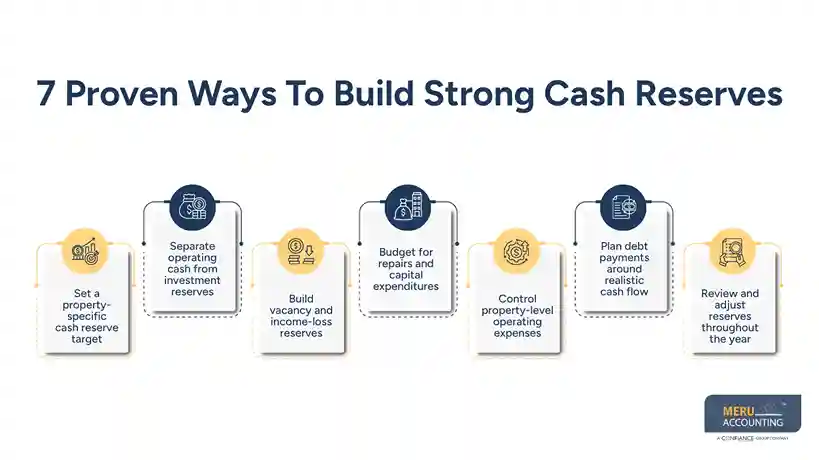
Control property-level operating expenses
Small cost increases can become large over a full year. Review insurance, utilities, maintenance, management fees, and service contracts. Accurate financial planning for real estate is not about cutting essential work; it is about knowing where cash is going.
Plan debt payments around realistic cash flow
Use a cautious income figure rather than the best month of the year. A real estate financial strategy should test debt payments against vacancy, repairs, taxes, insurance, and lower rent before excess cash is committed elsewhere.
Review and adjust reserves throughout the year
A reserve target set three years ago may no longer fit today’s property. Review rent, costs, debt, repairs, and upcoming work at set points during the year. Financial planning for real estate should change when the facts change.
optional anymore
on running the business
How A Real Estate Financial Strategy Improves Cash Flow Management
Aligning reserves with property performance
A new property with stable tenants may have a different cash need from an older building with frequent repairs. Financial planning for real estate links the reserve to the property’s real income and cost pattern.
Managing short-term and long-term cash needs
Monthly bills are only one part of the picture. A roof, parking lot, HVAC system, or major plumbing job may need cash years later. A real estate financial strategy keeps both near-term and future needs visible.
Using cash-flow forecasts to guide decisions
A monthly forecast can show expected rent, costs, debt payments, and reserve changes. Financial planning for real estate becomes more useful when those figures come from actual results rather than ideal occupancy and perfect rent collection.
Testing weak income periods
Try a simple stress test: one vacant unit, one large repair, or a 10% fall in collected rent. A real estate financial strategy can show how long current cash could carry the property under each case.
Linking cash needs with investment plans
Buying another property can be tempting when cash is available. But some of that cash may already belong to the existing properties. Financial planning for real estate separates true surplus cash from funds needed for current obligations.
How To Calculate A Real Estate Cash Reserve
Basic cash reserve formula
Use this simple starting formula:
Cash reserve = monthly core property costs × reserve months + planned near-term capital costs
Financial planning for real estate can then adjust the result for vacancy risk, property age, debt structure, and known repairs.
Example calculation for a rental property
Suppose monthly core costs are $4,000. A six-month reserve gives a base target of $24,000. If a $6,000 repair is expected within the next year, the planning target becomes $30,000.
Add vacancy risk
If a property has long gaps between tenants, the reserve should reflect that history. A real estate financial strategy should use real occupancy data when available instead of assuming every month will produce full rent.
Add known capital work
Known work should be funded before it becomes urgent. If a roof may cost $15,000 in two years, the owner can save toward it each month rather than treating the full amount as an emergency.
Review lender requirements
Loan terms can affect reserve needs. Financial planning for real estate should therefore consider lender rules along with property costs, especially when an investor plans to refinance or buy another investment property.
Common Cash Reserve Mistakes In Real Estate Investing
Keeping too little cash on hand
A property can show positive annual income and still face a cash shortage. Financial planning for real estate should account for costs that appear only once or twice a year.
Treating all cash as available for investment
A bank balance is not the same as free cash. A real estate financial strategy should first set aside money for taxes, debt, insurance, repairs, and other known needs.
Ignoring irregular property expenses
Annual insurance, property taxes, inspections, permits, and major repairs are easy to miss in a monthly budget. Add these costs to a yearly plan and divide them into monthly savings targets.
Using optimistic rental income projections
Full occupancy and perfect collections make forecasts look better than they may be. Financial planning for real estate should use realistic rent, vacancy, and collection assumptions.
Failing to update reserve targets
Insurance may rise, taxes may change, debt may reset, or a major repair may move closer. A real estate financial strategy should be updated when these factors change.
Financial Planning For Real Estate Across Different Property Types
Residential rental properties
For a single-family rental, one vacant home can remove most or all rental income for that asset. Financial planning for real estate should therefore focus on mortgage costs, vacancy, taxes, insurance, and repairs.
Multifamily properties
Several tenants create more income sources, but larger buildings can bring larger repair bills. A real estate financial strategy should track unit vacancy as well as major building systems.
Commercial real estate
Commercial properties may have longer lease gaps, tenant improvement costs, and large maintenance bills. Reserve planning should reflect lease terms, tenant concentration, and expected capital work.
Real estate investment portfolios
Owners with several properties should track each asset first and the portfolio second. Financial planning for real estate can show which properties produce excess cash and which may need additional funds.
Mixed property holdings
Homes, multifamily buildings, and commercial assets can have very different cash cycles. A real estate financial strategy should reflect those differences rather than apply one reserve rule to every property.
How Meru Accounting Supports Financial Planning For Real Estate
Property-level bookkeeping and accounting
Meru Accounting provides bookkeeping and accounting services that organize rental income, operating expenses, loan payments, repairs, taxes, insurance, and other property-level transactions into clear financial records.
Cash-flow tracking and reporting
Meru Accounting provides cash-flow tracking and financial reporting that shows how much cash each property generates, spends, and retains, giving investors useful information for reserve planning.
Reconciliation of property transactions
Meru Accounting provides account reconciliation services to match bank activity with recorded property transactions, helping identify missing entries, duplicate transactions, unusual expenses, or timing differences.
Tracking repairs and capital expenses
Meru Accounting separates property expenses based on their accounting treatment and maintains organized records for repairs, maintenance, and capital expenditures, creating a stronger foundation for financial review and tax preparation.
Multi-property accounting
For investors with multiple properties, Meru Accounting provides property-level accounting records that allow income, expenses, and cash activity to be reviewed by individual property as well as across the portfolio.
Financial records for reserve decisions
Accurate accounting records give investors a clearer view of recurring costs, irregular expenses, debt payments, and cash-flow patterns, making it easier to set and review a real estate cash reserve target.
Our Expert Perspective
A strong reserve should reflect each property’s actual income, expenses, debt obligations, vacancy history, age, insurance, taxes, and upcoming repairs rather than follow a fixed rule. We recommend reviewing property-level cash flow regularly to confirm whether available funds can cover recurring bills and larger costs such as HVAC work or roof replacement.
Accurate bookkeeping makes these reviews more reliable, while separate property-level analysis can reveal cash needs that portfolio figures may hide. Updating reserves as rent, occupancy, financing, taxes, insurance, and repair costs change keeps financial planning for real estate practical and supports a real estate financial strategy based on current property conditions
Key Takeaways
- Set a cash reserve target for each property based on its actual costs and risks.
- Keep operating cash separate from emergency and investment funds.
- Include vacancy, repairs, debt, taxes, insurance, and capital work.
- Use realistic rent and expense figures in cash-flow forecasts.
- Review reserve targets when property income or costs change.
- Track known future repairs before they become urgent bills.
- Use clear financial records as the base for financial planning for real estate.
FAQs
A real estate reserve commonly covers several months of core property expenses, with the exact amount based on vacancy, debt, repairs, and property-specific risks.
A real estate cash reserve should account for mortgage payments, property taxes, insurance, maintenance, utilities, vacancies, repairs, and planned capital expenditures.
Build rental property cash reserves by setting a monthly savings target based on operating costs, vacancy risk, expected repairs, and future capital expenses.
Operating cash covers routine property bills, while real estate reserves are set aside for unexpected expenses, vacancies, major repairs, and future capital needs.
Real estate cash reserves should be reviewed regularly and adjusted when rent, operating costs, insurance, taxes, debt payments, vacancy patterns, or repair needs change.
optional anymore
on running the business


