
Bookkeeping for Gyms needs more than a record of cash that reaches the bank. Gyms often take dues, class fees, personal training fees, retail sales, and other charges through payment tools such as Stripe, Square, PayPal, or card systems. The amount shown by the payment tool may not be the same as the amount that lands in the bank.
Payment processor reconciliation links these records. It checks gross sales, fees, refunds, chargebacks, and bank deposits so that the books show the right amount. Precise Bookkeeping for Gyms also makes it easier to spot missing deposits, wrong entries, and old items that still need review.
What You Will Learn From This Blog
- What payment processor reconciliation means for a gym and why it matters.
- How to match processor records with bank deposits in Bookkeeping for Gyms.
- How to deal with fees, refunds, chargebacks, and timing gaps.
- Which errors are common in gym bookkeeping and how to spot them.
- How gym accounting services can bring more control to payment checks.
- What records a gym should keep for each payment cycle.
What Is Payment Processor Reconciliation?
Payment processor reconciliation is the process of checking payment records against bank records to make sure the amounts in the books are correct. A gym may receive payments through cards or online payment tools, but the amount shown by the processor may not match the amount deposited into the bank.
For example, a processor may show $5,000 in card sales, while the bank shows a deposit of $4,850. The $150 difference may be due to processing fees, refunds, chargebacks, or other payment adjustments. Bookkeeping for Gyms should trace these differences rather than treating the net bank deposit as total sales.
Processor fees are often deducted before the funds reach the bank, so they should be recorded separately from sales when required by the gym’s accounting method.
Refunds and chargebacks also need to be checked because they can reduce the amount received after a sale has been recorded. In Bookkeeping for Gyms, each payment batch should be matched with the related processor report and bank deposit to confirm that the amounts agree.
Any payment or deposit that does not match should be marked for review. The difference may be caused by a delayed settlement, a batch deposit that combines several payments, a refund, or an entry posted to the wrong account.
By tracing these unmatched items to the processor and bank records, Bookkeeping for Gyms can keep payment activity clear and reduce errors in the financial records.
Why Payment Processor Reconciliation Matters For Gym Bookkeeping
Checks Cash Records
Gym bookkeeping relies on clear cash records. A daily or weekly check of processor deposits can show if the bank activity agrees with the sales data.
Separates Sales From Fees
A bank deposit is not always the same as sales income. Bookkeeping for Gyms must keep sales and payment fees distinct so income is not understated.
Finds Missing Deposits
A processor report may show a payment that has not yet reached the bank. A regular check can flag such items before they remain open for too long.
Tracks Refund Activity
Refunds can create gaps between sales and deposits. Recording the refund at the right date and amount keeps the income record more accurate.
Gives Better Cash Data
Clean payment records give gym owners a clearer view of cash received. This can aid cash planning and make month-end account review more useful.
How To Reconcile Payment Processor Transactions In Bookkeeping For Gyms
Start With The Processor Report
Download the payment report for the same period as the bank statement. Bookkeeping for Gyms should use the same date range when possible to make the first check easier.
Check The Gross Sales
Review total payments before fees, refunds, and chargebacks. Compare this figure with the sales recorded in the books for the same period.
Record Processing Fees
Check the fee shown by the processor and compare it with the amount posted to the bank. Record the fee in the correct expense account rather than treating the lower bank deposit as total sales.
Match Bank Deposits
Payment tools may group many customer payments into one bank deposit. Match the total batch, deposit date, and net amount rather than trying to match every customer payment to a separate bank entry.
Review Exceptions
Any difference should be listed and checked. Bookkeeping for Gyms can use an exception list for pending payments, refunds, chargebacks, and deposits that need more review.
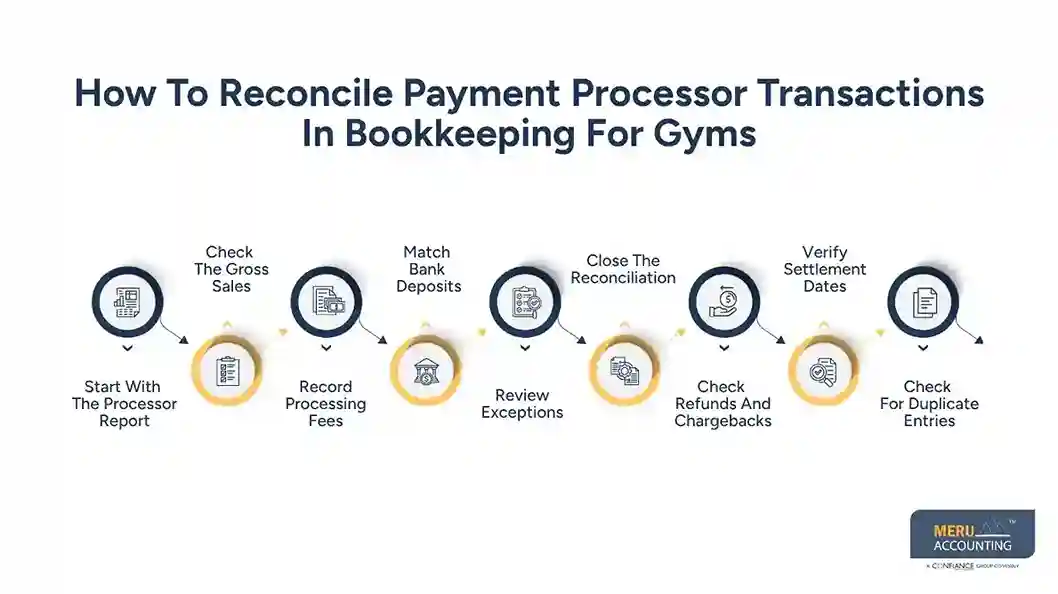
Close The Reconciliation
Once all key differences are explained, mark the period as reviewed. Keep the processor report, bank record, and reconciliation notes together for later review.
Check Refunds And Chargebacks
Review all refunds and chargebacks shown in the payment processor report. Match each item with the related customer payment and bank activity so the books reflect the amount that was actually retained.
Verify Settlement Dates
Compare the payment date with the processor settlement date and the bank deposit date. A payment made near a weekend or month-end may reach the bank on a later date, creating a normal timing difference.
Check For Duplicate Entries
Review the books for duplicate payment or deposit entries before closing the reconciliation. Duplicate entries can overstate sales or cash, so each unmatched amount should be checked against the processor and bank records.
How Gym Bookkeeping Handles Timing Differences Between Payments And Bank Deposits
Same-Day Payments
A customer may pay on Monday while the bank receives the funds on Tuesday. Gym bookkeeping should account for this timing gap instead of treating it as a missing payment.
Weekend Transactions
Payments made on a weekend may not reach the bank until the next business day. This can cause a normal difference between the processor date and bank date.
Month-End Payments
Month-end activity needs extra care. A payment made on the last day of a month may be deposited in the next month, so Bookkeeping for Gyms should review cut-off dates.
Batch Deposits
Some processors group many payments into one deposit. This can also affect bookkeeping for personal trainers when individual training payments are combined with other gym transactions in a single processor deposit. The bookkeeper should trace the batch total to the processor report before marking it as matched.
Pending Transactions
A payment may stay pending before the processor sends the funds. It should not be treated as a completed bank deposit until the transaction status and related records are clear.
optional anymore
on running the business
Common Payment Reconciliation Errors In Gym Bookkeeping
Recording Net Sales
One common error in bookkeeping for gyms is recording the net bank deposit as total sales. This can leave processing fees hidden inside income and make sales data less clear.
Missing Processor Fees
A gym may record the bank deposit but forget the fee taken by the processor. Gym bookkeeping should check the processor statement for each fee.
Duplicate Transactions
An imported payment may be entered twice. This can cause sales and cash to be overstated, so duplicate checks should form part of each reconciliation.
Ignoring Refunds
A refund may be missed if only bank deposits are checked. The processor report should also be reviewed for refunds and chargebacks.
Using Wrong Dates
A payment date, settlement date, and bank deposit date may differ. Bookkeeping for Gyms should use the proper date for each accounting entry and explain timing gaps.
Leaving Old Items Open
Old unmatched items should not remain on the reconciliation list without review. Each item should be traced to a source record or corrected when an error is found.
How Gym Accounting Services Improve Payment Reconciliation Accuracy
Regular Reconciliation
Gym accounting services can set a regular review cycle based on transaction volume. A busy gym may need more frequent checks than a small studio with fewer payments.
Clear Account Mapping
Accurate account mapping is a key part of Bookkeeping for Gyms because sales, processor fees, refunds, and chargebacks affect the books in different ways. This gives the books a clear record of what each payment amount means.
Better Exception Review
Gym accounting services can keep a list of unmatched items and track them until they are cleared. This is useful when deposits cover many customer payments.
Month-End Checks
A month-end review can check open processor items, bank deposits, fees, and refunds. This makes the close process more orderly and gives the owner cleaner reports.
Multi-Location Review
A gym group may have several locations or payment accounts. Gym accounting services can review each processor and location before totals are combined.
Personal Training Records
When a gym also sells personal training sessions, Bookkeeping for Gyms should keep these payments identifiable from other membership and class income. Bookkeeping for personal trainers can require similar checks between client payments, processor fees, refunds, and bank deposits.
How To Maintain Records For Payment Processor Reconciliation
Keep Processor Reports
Save monthly processor reports with the related bank records. These reports show payment totals, fees, refunds, and other activity used in the reconciliation.
Keep Bank Statements
Bank statements provide the final record of funds that reached the bank and give bookkeeping for gyms a reliable source for matching processor deposits. They should be kept with the matching accounting period.
Keep Refund Records
Retain refund details, including the date and amount. This gives the bookkeeper a source record when a refund causes a difference in the deposit total.
Keep Fee Details
Processor fees should have source records. This lets Bookkeeping for Gyms trace expense entries back to the processor statement.
Keep Reconciliation Notes
For each material difference, note why it exists and how it was cleared. A short note can save time when an old transaction is reviewed later.
Review Records Each Month
A monthly review can catch small issues before they grow into a large clean-up task. Gym bookkeeping is easier to manage when reconciliation is part of the normal close process.
Choose Meru Accounting For Reliable Gym Bookkeeping
Meru Accounting provides Bookkeeping for Gyms with a focus on clear transaction records, account review, payment checks, and month-end bookkeeping work. Its accounting team can review payment processor activity, bank deposits, fees, refunds, and unmatched items as part of the bookkeeping process.
For gyms that need wider accounting coverage, gym accounting services can also include account reconciliation and financial record review based on the business need. Meru Accounting provides bookkeeping and accounting services for businesses across the US and works with common accounting systems used by small and growing businesses.
With a clear reconciliation process, Meru Accounting can keep payment records aligned with bank activity and accounting records. This gives gym owners a cleaner view of recorded income, fees, refunds, and outstanding payment items during regular account reviews.
Our Expert Perspective
Payment reconciliation is best treated as a routine accounting check, not a task saved for year-end. In our view, the key test is simple: every material processor balance should have a clear path from the customer payment to the processor record and then to the bank.
For Bookkeeping for Gyms, this check matters because gyms can have many small payments each day. A simple monthly review may not be enough for a high-volume gym, while a smaller studio may be able to use a weekly or monthly cycle based on its transaction volume.
Key Takeaways
- Payment processor reconciliation checks processor records against bank deposits.
- Record gross sales, processor fees, refunds, and chargebacks in the right accounts.
- Do not treat every difference between sales and deposits as an error.
- Review payment and deposit dates because settlement timing can create normal gaps.
- Keep processor reports, bank statements, refund records, and reconciliation notes.
- Use regular Bookkeeping for Gyms checks to find duplicate, missing, or unmatched entries.
- Gym accounting services can bring a regular review process to high-volume payment activity.
- Bookkeeping for personal trainers may need similar checks when personal training payments run through a processor.
FAQs
Payment processor reconciliation matches gym payment records with bank deposits, fees, refunds, and chargebacks.
Compare the processor report with the bank statement, match deposits, check fees and refunds, and resolve unmatched transactions.
Gym payment deposits can differ from sales because processors may deduct fees or process refunds, chargebacks, and pending transactions.
Gym payment processing fees should be recorded separately from sales income based on the gym’s accounting method.
A gym should reconcile payment processor accounts based on transaction volume, with high-volume gyms often needing more frequent reviews.
optional anymore
on running the business