Rental property bookkeeping software becomes most useful when a landlord has to answer a simple question: “Where did the money go?” Imagine owning three rentals. One tenant paid late, one house needed a $1,200 repair, and the third property had a higher insurance bill. By December, those small events can turn into a pile of bank entries, receipts, and notes.
That is where the right system can make the records easier to sort. It can show income and costs by property, keep receipts with transactions, and give your tax preparer a cleaner set of records for Schedule E. The IRS requires rental income and allowable expenses to be reported under the applicable tax rules, so good records matter beyond simple bookkeeping.
What You Will Learn From This Blog
- How rental property bookkeeping software works for landlords.
- Which features matter when tracking rental income and costs.
- Ten software options worth considering for rental records.
- How rental property accounting connects with Schedule E reporting.
- Which bookkeeping errors can cause trouble at tax time.
- When professional bookkeeping may make sense for a growing portfolio.
What is Rental Property Bookkeeping Software?
Rental property bookkeeping software records rental income, expenses, receipts, and other financial transactions in one place. It can group rent by property or unit, sort costs such as repairs, insurance, taxes, utilities, and management fees, and make it easier to see how much each property earns and costs. This is useful when a landlord has several properties and needs clear property-level records.
Many platforms also offer tax reports based on common rental categories. These reports can give a tax preparer a useful starting point, but they should not be treated as final tax advice because tax treatment can vary based on property use, ownership, and the type of expense.
Bank feeds can bring transactions into the books, while regular reconciliation checks those entries against bank statements. This can help identify missing, duplicated, or incorrectly recorded transactions before the books are used for tax reporting.
Key Features to Look for in Rental Property Bookkeeping Software
Income and Expense Categories
Rental property bookkeeping software should make it easy to tell rent from repairs, insurance from utilities, and mortgage interest from other costs.
Clear categories make rental property accounting easier to review and reduce the need to sort transactions again before tax filing.
Property and Unit Tracking
Suppose a plumber charges $600 for Property A while Property B needs a $250 repair. Both payments may leave the same bank account.
Your software should still let you assign each cost to the correct property.
Receipt Storage
A bank entry tells you that $450 was paid. A receipt can show what the $450 was for, when the work took place, and who was paid.
Keeping this detail with the transaction gives you a stronger record when expenses are reviewed later.
Reporting and Export
When choosing rental property bookkeeping software, look for reports that show income, expenses, transactions, and property-level results.
Export tools also matter because your CPA or tax preparer may use a different system from yours.
Bank Feeds and Reconciliation
Automatic feeds can reduce manual data entry, especially when there are many monthly transactions.
Still, imported data needs a review. A bank feed can bring in a transaction, but it cannot know whether a $900 payment was a repair, an improvement, or a personal cost.
Depreciation Records
Depreciation is one area where landlords should take extra care. The amount is not simply based on the cash paid during the year.
Tax treatment can depend on basis, property type, recovery period, and other factors, so a tax professional should review depreciation records.
How to Choose Rental Property Bookkeeping Software for Your Portfolio
One Rental Property
If you own one rental, you may not need a large property management platform.
A system that tracks rent, expenses, receipts, bank activity, and useful reports may be enough for your needs.
Several Rental Properties
As the number of properties grows, sorting transactions becomes harder.
Look for rental property bookkeeping software that lets you filter records by property, category, date, and account.
Multiple Owners
A property owned by two or more people can bring extra recordkeeping needs.
Your system should make ownership details and property transactions easy to review, while your tax professional handles the tax treatment that applies to the ownership structure.
Rental and Personal Use
Some properties are not used only as rentals. An owner may live in a property for part of the year or use a vacation home personally.
That can change how certain expenses are treated, so the books should clearly show rental and personal activity where required.
Accountant Access
A landlord may keep the books, while a CPA prepares the tax return.
Choose software that makes it easy to share reports or provide appropriate access so the tax preparer does not have to rebuild the records from bank statements.
10 Best Rental Property Bookkeeping Software Options for Schedule E Reporting
Stessa
Stessa is built with rental property owners in mind. Its tools include income and expense tracking, property reports, and tax-related reporting features.
It can be a fit for landlords who want a rental-focused system rather than a general accounting platform.
Landlord Studio
Landlord Studio focuses on landlord bookkeeping and property records. Its features include expense tracking, receipt storage, bank feeds, mileage tracking, and tax reports.
The ability to view records by property can be useful when one landlord owns several rentals.
QuickBooks Online
QuickBooks Online is a broad accounting platform rather than a rental-only tool. With the right account structure and tracking setup, it can record rental income and expenses.
It may suit landlords who already use QuickBooks or need more traditional accounting reports.
DoorLoop
DoorLoop combines property management and accounting features, giving landlords a rental property bookkeeping software option alongside tools for managing day-to-day rental operations
This can be useful when bookkeeping is only one part of a larger property management process.
Rentec Direct
Rentec Direct is designed for landlords and property managers. Its features cover rental income, expenses, property records, and financial reporting.
It may suit owners who want property management functions alongside financial records.
Buildium
Buildium is aimed at property managers and larger rental operations. Its platform includes accounting, reporting, rent collection, maintenance, and other property management tools.
For a small landlord with one property, its broader feature set may be more than necessary.
Baselane
Baselane focuses on banking and financial tools for rental property owners. It can organize rental income and expenses by property.
It may appeal to landlords who want banking activity and bookkeeping records tied closely to their rental portfolio.
RentRedi
RentRedi is built around the day-to-day needs of rental owners, so its bookkeeping tools sit alongside rent collection and property management features. Landlords can organize income and costs by property and keep financial records in the same system they use for rental tasks.
For owners who want a more direct path from property transactions to tax records, RentRedi is worth considering because its current tools include Schedule E reporting.
Hemlane
Hemlane combines rental management tools with financial features, making it a rental property bookkeeping software option for landlords who also need tenant and property management tools.
It may be worth considering when tenant and property management are as important as bookkeeping.
AppFolio
AppFolio is aimed more at property managers and owners with larger or more complex portfolios. Its accounting setup brings property transactions, bank activity, bills, and financial reports into one system.
It may make more sense when bookkeeping is only one part of the workflow, and the portfolio also needs tools for rent, maintenance, owners, tenants, and property operations.
optional anymore
on running the business
How Rental Property Accounting Supports Schedule E Tax Reporting
Rental Income
Rental property accounting starts with knowing what you actually received from each property.
Rent is the obvious example, but other payments may also need review. Keeping a full income record gives your tax preparer a better base for the return.
Operating Expenses
Rental property bookkeeping software can track the many costs a rental may have during the year. Insurance, repairs, taxes, advertising, management fees, utilities, and mortgage interest can all require proper classification.
Accurate records make it easier to identify these costs and review whether they qualify under the applicable tax rules.
Repairs and Improvements
This is a common area of confusion. Replacing a small broken item may be treated differently from a major renovation. The invoice, nature of the work, and tax rules matter, so do not assume every property cost is a current-year repair deduction.
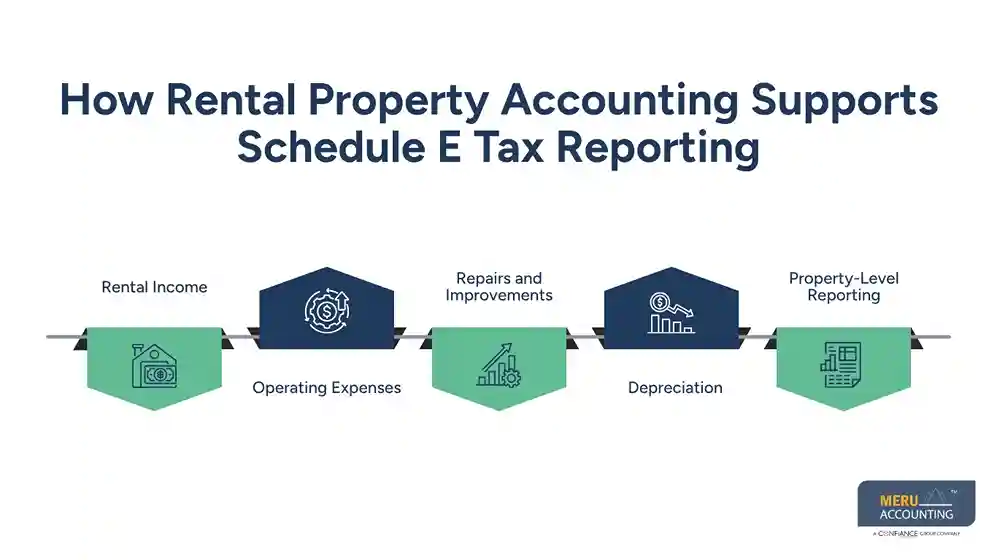
Depreciation
A property owner may spend a large amount when buying or improving a property, but that does not mean the full amount is reported as a normal expense in the year paid.
Depreciation generally spreads the cost of qualifying property over the applicable recovery period.
Property-Level Reporting
Schedule E requires rental activity to be reported with property-level information.
That is why rental property accounting should not simply show one large annual expense total. Your records should make it possible to trace amounts back to the property and transaction.
Common Rental Property Bookkeeping Mistakes to Avoid
Mixing Personal and Rental Costs
Using the same account for groceries, personal bills, and rental repairs can make the books difficult to review.
Separate accounts are often easier to manage and make the source of each transaction clearer.
Missing Small Expenses
A $35 repair may not seem important when it happens.
But dozens of small costs can add up over a year. Recording them as they occur is easier than trying to remember them months later.
Treating Improvements as Repairs
A new roof or major renovation should not automatically be entered as a normal repair.
Keep the invoice and project details so the proper tax treatment can be determined.
Ignoring Reconciliation
A bookkeeping file can look neat and still contain errors.
Reconcile the books with bank and credit card statements on a regular schedule instead of waiting until tax season to find missing entries.
Losing Asset Records
Keep purchase documents, improvement invoices, depreciation details, and other records tied to the property.
These records may matter not only for annual tax reporting but also when the property is sold.
How Meru Accounting Supports Rental Property Bookkeeping
Rental Income and Expense Recording
Meru Accounting provides bookkeeping services to record rental income and property expenses in an organized manner. Rent, repairs, insurance, utilities, property taxes, and other costs can be recorded under clear accounts for easier review.
Property-Wise Bookkeeping
When an owner has several rental properties, mixing all transactions can make the books hard to review. We provide property-wise bookkeeping to keep income and expenses linked to the right rental where the accounting setup allows it.
Bank Reconciliation
Meru Accounting provides regular bank and credit card reconciliation to compare recorded transactions with actual account activity. This can bring missing, duplicate, or incorrectly recorded transactions to attention before they affect financial reports.
Expense Classification
A rental property can have many types of costs, and not every payment should be recorded in the same account. We classify transactions based on the bookkeeping setup and keep supporting records available for review.
Financial Reporting
Meru Accounting provides income and expense reports that show how rental properties are performing during a selected period. These reports can give owners and their tax professionals a clearer record to review before Schedule E tax reporting.
Bookkeeping Software Support
Meru Accounting provides bookkeeping services using accounting platforms and rental property bookkeeping software based on the client’s setup. This allows rental transactions, reconciliations, and financial reports to be maintained within the system already used for the property records.
Our Expert Perspective
A landlord does not need the most feature-heavy software just because it has more features. The better question is whether the system can keep your records clear when the portfolio grows.
From a bookkeeping view, three things matter most: every transaction should have a clear purpose, every expense should belong to the right property, and important records should be easy to trace. Rental property bookkeeping software can make this process easier, but the quality of the setup and review still matters.
Key Takeaways
- Choose rental property bookkeeping software based on your property count and reporting needs.
- Keep income and expenses separate for each property.
- Reconcile bank and credit card accounts on a regular basis.
- Save receipts, invoices, and property records.
- Review repairs and improvements before assigning tax categories.
- Keep depreciation records separate from normal operating expenses.
- Give your CPA reports that can be traced back to the source transactions.
- Use rental property accounting throughout the year instead of rebuilding the books at tax time.
FAQs
The best rental property bookkeeping software depends on your property count, reporting needs, bank feeds, and tax reporting setup.
Yes, many rental property bookkeeping software tools can track rent, repairs, insurance, taxes, interest, and other expense categories used for Schedule E reporting.
Track rent, repairs, insurance, property taxes, management fees, utilities, mortgage interest, supplies, and other applicable rental costs.
Yes, rental property accounting keeps income and expenses organized by property, making Schedule E records easier to review.
Choose rental property bookkeeping software that can separate income, expenses, receipts, and reports for each rental property.
optional anymore
on running the business