Late payments can put a small firm under strain even when sales are strong. The issue is often not a lack of sales, but the gap between sending a bill and getting cash. Accounts receivable services for small businesses can close this gap by keeping bills clear, due dates in view, and follow-ups on time. The goal is not to chase each client all day. It is to set a clear way to bill, track, and collect what is due.
The need is clear. The Federal Reserve found that about four in five small firms faced some type of payment issue in its 2023 Small Business Credit Survey. Slow-paying clients were also a noted issue for some firms, such as those in professional services, real estate, and trade.
What You Will Learn From This Blog
- How accounts receivable services for small business can cut delays in the pay cycle.
- Why clear bills and pay terms matter.
- How aging reports show which bills need action.
- When outsourced accounts receivable services may make sense.
- Which AR results small firms should track each month.
- Signs that your AR process needs more help.
What are Accounts Receivable Services For Small Business?
Due Date Tracking
An effective AR plan keeps each due date in view. Accounts receivable services for small business can sort open bills by age and due date so no bill is left unseen.
Invoice Setup and Review
AR work starts with the right bills. The bill should show the right client, amount, date, terms, tax, and payment data. A small error can slow a paycheck.
Payment Follow-up
Follow-up should match the age and cause of the bill. A due-soon note can be polite, while a much older bill may need a direct call or an account review. The AR team should also record each reminder, client reply, dispute, and next action so that no overdue account depends on memory alone.
Dispute Checks
Some late bills are not due to a client who will not pay. A missing PO, wrong amount, or work issue can hold up payment. Finding the cause is key.
Aging Review
An aging report groups unpaid bills by age, such as current, 1–30 days late, 31–60 days late, and older. This gives the team a clear list of accounts that need action.
optional anymore
on running the business
Why Late Payments are a Problem For Small Businesses
Cash Can Get Stuck
A sale is not the same as cash in the bank. If a client takes 45 or 60 days to pay, the firm still has rent, wages, tax, and bills to pay.
Bills Can Pile Up
When cash comes in late, owners may hold back bills or use credit to cover day-to-day costs. This can add fees and costs that were not part of the sale.
Plans Can Get Pushed Back
A small firm may plan to hire staff, buy stock, or add a new service. If cash stays tied up in old bills, these plans may have to wait.
Owner Time Gets Lost
Late bills can lead to emails, calls, checks, and notes. Accounts receivable services for small business give this work a set place in the daily or weekly plan.
Bad debts can grow
The longer a bill stays unpaid, the more care it may need. A clear follow-up plan can flag risk before a small delay turns into a large loss.
How Better AR Management Helps Customers Pay On Time
Sending Accurate Invoices Without Delays
A bill should go out soon after the sale or work. Accounts receivable services for small business can check key data before a bill is sent, which cuts the risk of a hold due to bad data.
Setting Clear Payment Terms
Clients should know when payment is due and how to pay. Clear terms cut doubt and give both sides the same date to work from.
Tracking Upcoming Due Dates
A due-date list gives the AR team time to act before a bill turns late. Outsourced accounts receivable services can keep this list up to date and flag bills that are close to the due date.
Sending Timely Payment Reminders
A short note before the due date can keep a bill on the client’s mind. The note should state the bill number, amount, due date, and payment link or method.
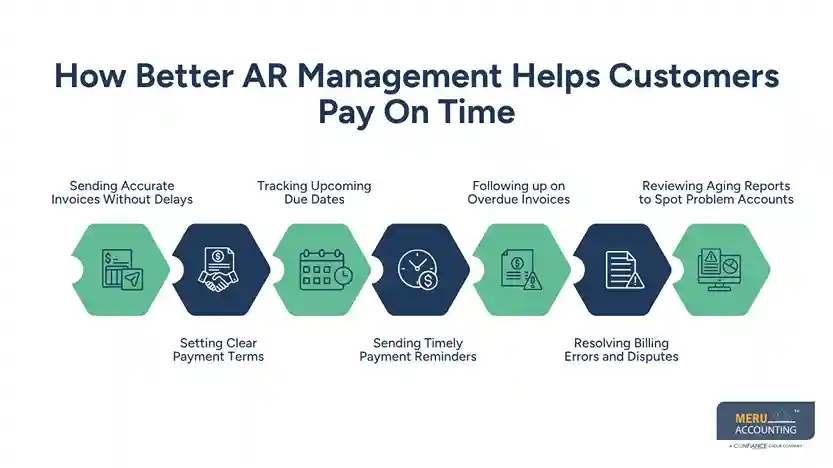
Following up on Overdue Invoices
Once a bill is late, the follow-up should not stop after one email. Accounts receivable services for small business can set a clear path from a first note to a call and then to a review of the account.
Resolving Billing Errors and Disputes
If a client raises a valid issue, the firm should check it without delay. Outsourced accounts receivable services can log the issue, pass it to the right team, and track it until the bill is ready for payment.
Reviewing Aging Reports to Spot Problem Accounts
Aging reports show where cash is stuck. Accounts receivable services for small business use these reports to rank accounts by age, amount, and risk rather than treat each unpaid bill the same way.
How AR Aging Reports Help Identify Late Payments
Current Bills
Current bills are not late, but they still need review. A clean list makes it easy to see what cash should come in soon and which accounts may need a reminder before the due date.
1–30 Days Late
A bill in this range may need a simple reminder and a check for any payment issue. Accounts receivable services for small business can flag these bills before they move into a more serious age band.
31–60 Days Late
At this stage, the cause of non-payment should be checked. The team may need to call the client, confirm the invoice was received, or ask if there is a dispute.
61–90 Days Late
Old debt needs closer review. Outsourced accounts receivable services can track each call, client response, dispute, and next step instead of relying on memory.
Over 90 Days Late
A bill this old may carry a higher collection risk. The firm should review the client’s payment history, dispute status, credit terms, and bad-debt policy before deciding the next action.
How Better Invoicing Can Prevent Late Payments
Use the Right Customer Details
A bill should go to the right person or AP inbox. A bill sent to the wrong place may sit unseen till the due date has passed.
Show Each Charge Clearly
The client should be able to see what they pay for. Accounts receivable services for small business can check the bill with the sale, order, or work record.
State the Due Date
“Pay in 30 days” is useful, but a clear date is even easier to act on. It cuts doubt about when payment is due.
Make Payment Easy
More payment options can cut delays. The bill should state the payment method and give clear steps for payment.
Keep Invoice Records
A copy of each bill, note, reply, and payment should be easy to find. Outsourced accounts receivable services can keep these files in order for review.
How to Measure the Results of AR Services
Days Sales Outstanding
DSO shows the mean time it takes to get cash from credit sales. A lower DSO can be a good sign when sales mix and pay terms stay much the same.
Overdue Invoice Rate
Track the share of open bills that are past due. Accounts receivable services for small business can check this rate each month.
Average Days Late
This shows how far past the set date clients tend to pay. It can show a shift even when total sales stay the same.
Aging Balance
Track the total value in each age band. Outsourced accounts receivable services can use this view to spot a rise in old debt.
Collection Rate
Compare cash got with the sum billed or due for the time frame. Use the same method each month so the trend stays clear.
Signs Your Small Business Needs Accounts Receivable Support
Invoices Often Go Out Late
If billing waits till someone has spare time, cash may also wait. Accounts receivable services for small business can give billing a set plan and time.
Customers Often Ask for Invoice Copies
Repeated requests may point to poor files or an unclear bill. Outsourced accounts receivable services can keep bill copies and payment data easy to find.
Overdue Bills are Hard to Track
If staff use email, notes, and many sheets, some bills can slip by. One AR record gives the team one place to check.
Owners spend too much time chasing cash
Owners should know what is due, but they should not need to chase each old bill. Accounts receivable services for small business can take on day-to-day tracking and follow-up.
Old balances keep rising
A rise in 60- or 90-day debt is a warning sign. Outsourced accounts receivable services can give more focus to old debt and the cause of each delay.
Why Choose Meru Accounting For Accounts Receivable Services
Meru Accounting provides accounts receivable services for small businesses that cover bill entry, payment tracking, client balances, follow-ups, aging review, and account checks. The work is built on clear files and a set follow-up plan.
Meru Accounting can also provide outsourced accounts receivable services for firms that need regular AR work but do not want to add a full in-house team. The work can fit the firm’s current accounting system and report needs.
Our Expert Perspective
Late pay is often a process issue, not just a client issue. Our view is simple: send the right bill, state the right due date, watch the age of each balance, and act before small delays turn into old debt. This basic routine can make cash flow easier to plan.
Key Takeaways
- Accounts receivable services for small business set a clear process for billing, tracking, and cash collection.
- Clear bills and pay terms can cut common causes of delay.
- Aging reports show which client balances need action first.
- Outsourced accounts receivable services can take day-to-day AR work off a small team’s plate.
- DSO, overdue rates, aging balances, and average days late can show whether accounts receivable services for small business are improving payment performance.
- Regular AR review can spot pay risk before old debt grows.
FAQs
Regular bill tracking, due-date checks, reminders, and overdue follow-ups can cut delays in client pay.
Clear bills, firm pay terms, early notes, and timely follow-ups can speed up client pay.
An accounts receivable service includes bill tracking, payment notes, overdue follow-ups, dispute checks, and aging reports.
Outsourcing may help when old bills rise, AR work takes too much staff time, or bill tracking gets hard to manage.
Accounts receivable services for small businesses use AR aging reports to show unpaid bills by age and identify which accounts need action.
optional anymore
on running the business