Construction tax services help small firms plan tax costs, keep financial records in order, and meet tax rules on time. Small builders often face late client payments, high costs for tools and stock, worker pay, and job costs at once. Without a sound tax plan, a firm may face a large tax bill when cash is low. Effective tax planning links each job’s income and costs with the firm’s tax needs. This helps owners make sound choices all year.
For small construction firms in the United States, tax rules can vary by firm type, state, and job. A sole owner, LLC, and S corp may each face its own tax rules. Construction tax services help owners track these rules, key tax dates, and costs that may qualify for tax relief. With clear financial records and regular checks, small firms can cut errors, plan cash needs, and stay on top of daily work.
What You Will Learn From This Blog
- What construction tax services cover and why small firms need them.
- How tax plans link to small business cash flow management.
- Which tax breaks and credits may apply to small builders.
- How a construction tax consultant can review tax forms and books.
- How to plan cash needs, meet tax dates, and track job costs.
- How Meru Accounting provides accounting services for small construction firms.
What are Construction Tax Services?
Construction tax services cover tax plans, tax return prep, and tax filing for small construction firms. These services include checks of firm income, job costs, tax bills, and the rules that apply to each firm.
Each job may have costs for labor, tools, stock, and subcontractors. Clear job records help firms track income and costs. Firms with staff must also track wages, tax withheld from pay, and payroll tax dates. Payments to subcontractors need clear records to check worker status and tax form needs.
Construction tax services also cover checks of sales and use tax rules. These rules may vary by state, town, and type of work.
Firms may need to check how these rules apply to stock, tools, and job costs. Keep bills, bank records, pay data, job deals, and proof of payment in order. This makes tax return prep easier and gives firms proof to answer tax agency queries. Clear books and regular checks help small builders meet tax rules and cut filing errors.
How Construction Tax Planning Affects Small Business Cash Flow Management
Plan for Tax Payments
A firm may show a profit in its books but lack cash when tax is due. A tax plan sets funds aside for tax bills. This cuts the risk of using cash set aside for wages or stock.
Track Income by Project
A builder may get an advance in one month and the final payment much later. Construction tax services can check how income is logged under the firm’s tax method and how pay dates affect cash needs.
Match Costs With Job Progress
Stock costs and wages often arise before a client pays a bill. A monthly check of job costs, bills due, and cash due from clients can show when funds may run low and when the firm needs to act.
Set Aside Money for Tax
Small firms can set aside part of each client payment for tax, based on an estimate from a tax expert. The right sum will vary by profit, firm type, tax rules, and other income.
Review Estimates During the Year
A tax estimate made at the start of the year may no longer fit after a large job, a new hire, or a rise in costs. Regular checks help owners update tax payments and cash plans before a due date is missed.
Key Tax Deductions and Credits for Construction Businesses
Tools and Small Equipment
Tools, safety gear, and small items used for work may qualify as business costs. The tax rules for costly tools and gear may differ. Keep bills and check the rules before you claim a tax break.
Vehicle and Travel Costs
A firm may be able to claim tax relief for the work use of a truck, van, or other vehicle. Keep trip logs, fuel bills, and work travel records. Keep records of personal use apart from work use.
Wages and Subcontractor Costs
Wages, payroll costs, and fees paid for subcontract work may count as business costs if they meet tax rules. Keep signed deals, bills, proof of payment, and all tax forms needed for each worker or trade firm.
Insurance and Work Supplies
Business cover, site supplies, office costs, and some fees may qualify for tax relief if they meet tax rules. Keep proof of each cost and link it to the right firm or job.
Depreciation and Tax Credits
Some gear costs may be claimed over time through depreciation. Other assets may qualify for a faster tax write-off under current rules. Some firms may also qualify for tax credits linked to staff or other eligible work. The rules and limits depend on the firm, the facts, and the tax year.
A construction tax consultant can review these claims and check current federal and state rules before a tax return is filed. Do not claim a cost just because the firm paid it. The cost must meet the tax rules.
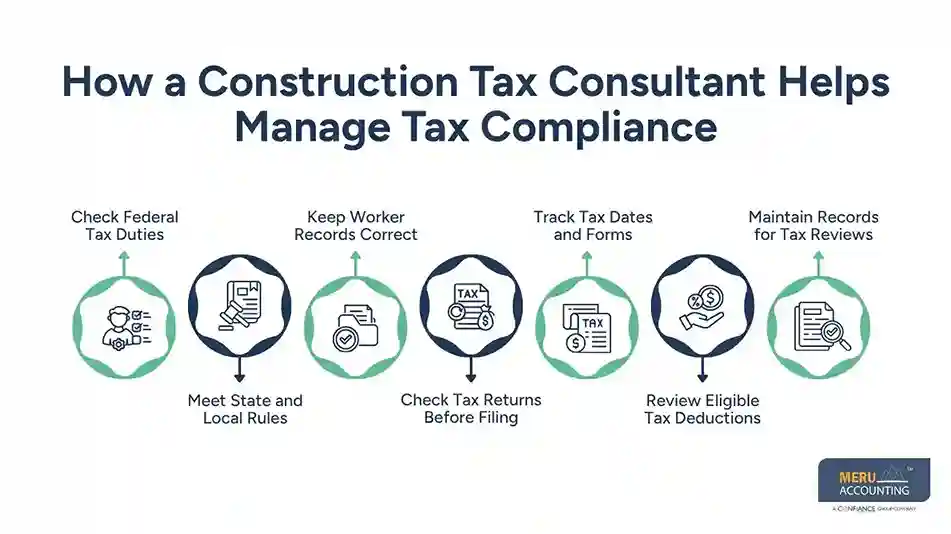
How a Construction Tax Consultant Helps Manage Tax Compliance
Check Federal Tax Duties
A construction tax consultant reviews the firm’s type, income, costs, and federal tax duties. This check shows which tax forms may be due and when tax payments must be made.
Meet State and Local Rules
Tax duties may vary by state, even when two firms do the same type of work. Construction tax services can include checks of state tax rules, local fees, and sales or use tax duties that apply to a job.
Keep Worker Records Correct
Worker status can affect payroll tax, tax forms, and other legal duties. A construction tax consultant can check work terms and pay records. The final status must be based on the facts and tax rules, not just the name used in a deal.
Check Tax Returns Before Filing
A tax return should match the firm’s books, bank records, pay data, and job costs. A review can find missing bills, wrong sums, and costs in the wrong account before the return is sent to the tax agency.
Track Tax Dates and Forms
Late tax returns and missed payments may lead to fines or interest. Construction tax services can include a tax date plan for tax payments, payroll forms, yearly returns, and other filings that apply to the firm.
Review Eligible Tax Deductions
A construction tax consultant checks business costs, equipment costs, insurance, and other eligible items to see which tax breaks the firm may claim. Clear bills and pay records help prove these claims and cut the risk of errors on tax returns.
Maintain Records for Tax Reviews
Construction tax services include keeping bills, job deals, pay records, and bank data in order for future checks. Full records make it easier to answer tax agency queries and prove income, costs, and tax claims when needed.
optional anymore
on running the business
Best Practices for Small Business Cash Flow Management in Construction
Prepare a Monthly Cash Plan
List cash on hand, client payments due, wages, supplier bills, loan payments, and tax costs for each month. Check the plan against actual results to spot a cash gap before it affects a job.
Send Client Invoices on Time
Late bills can delay cash even when the work is done. Set clear pay terms, send bills as soon as the job deal allows, and follow up on unpaid bills with dates and sums.
Track Costs for Each Job
Log labor, stock, gear hire, travel, and fees paid to subcontractors under the right job. This makes it easier to check the first cost plan against the final cost and spot jobs that earn less than planned.
Keep Business and Personal Funds Apart
Use a firm bank account and card for business costs. Keep personal spending apart. Clear bank records make tax prep easier and cut the risk of claiming personal costs as business costs.
Build a Cash Reserve
Set cash aside for tax, repairs, slow months, and urgent site costs. The right sum will vary by firm, but even a small monthly transfer can cut the need to borrow when a client pays late.
Review Reports With a Tax Professional
Check profit, unpaid bills, supplier costs, and tax estimates each month or quarter. Construction tax services can link these reports with tax plans, so owners can act on real figures rather than guess.
Why Choose Meru Accounting for Construction Tax Services?
Small construction firms need clear books, sound tax records, and timely reports to track jobs and meet tax rules. Meru Accounting provides accounting and bookkeeping services for firms that need a clear view of income, costs, bills, and cash flow.
Bookkeeping and Job Cost Records
Meru Accounting logs firm income and costs, with job-level data as set out in the agreed scope. Clear records give owners a better view of job costs and make tax prep easier.
Payroll and Expense Records
Clear pay and cost records are key to tax compliance. Meru Accounting can sort wage data, supplier bills, and expense records so the firm has the details needed for review and filing.
Reports for Cash Planning
At Meru Accounting, we prepare reports that show income, costs, unpaid bills, and other key figures. Owners can use these reports to plan payments, check job profit, and set cash aside for tax bills.
Tax Preparation Coordination
Construction tax services work best when tax advice and book data match. Meru Accounting can sort and share financial data for review by the firm’s tax expert, based on the agreed scope and the rules that apply.
A Clear Process for Small Firms
Each firm has its own jobs, pay terms, and record needs. Meru Accounting can set up a bookkeeping process that fits the firm’s size, current software, and reporting needs. This lets owners focus on their work while keeping financial records in order.
Our Expert Perspective
Tax planning should start well before a return is due. In construction, firms often pay for labor and stock before cash comes in from clients. This gap can put a strain on cash. A monthly check of job costs, unpaid bills, tax estimates, and cash on hand gives owners time to act. Construction tax services should rely on real records and the tax rules that apply to the firm, not broad guesses. Owners should also ask a tax expert to review claims and filing duties before making key tax choices.
Key Takeaways
- Construction tax services cover tax plans, book checks, tax return prep, and tax filing based on the firm’s needs.
- Small construction firms should plan tax payments as part of cash flow management.
- Keep bills, job deals, pay data, trip logs, and proof of payment in order.
- Check tax breaks and credits against current federal, state, and local rules before making a claim.
- A construction tax consultant can review tax duties, worker status, filing dates, and tax claims.
- Monthly job cost reports and cash checks can show pay gaps before they become urgent.
- Meru Accounting provides bookkeeping and finance reports that help construction firms keep records ready for tax review.
FAQs
Construction tax services cover tax plans, tax return prep, cost tracking, payroll tax records, and tax filing based on the firm’s needs.
Construction tax services help firms plan tax payments, track job costs, and set funds aside for tax bills without harming daily cash needs.
Small construction firms may claim eligible costs for tools, gear, insurance, wages, work vehicle use, and site supplies, based on current tax rules.
A small construction firm should hire a construction tax consultant when tax rules, payroll duties, subcontractor pay, or job costs become hard to track.
Meru Accounting provides bookkeeping, cost tracking, payroll record support, and financial reports that give a firm’s tax expert the data needed to review tax duties and prepare tax returns.
optional anymore
on running the business