Not all small business payroll companies offer the same level of service. One may handle paychecks and tax filings, while another may leave tasks like tax payments, employee queries, and year-end forms to your team. These differences can affect both your costs and the time you spend managing payroll.
Before choosing a provider, look beyond the monthly fee. Check what services are included, how payroll errors are handled, and whether the company can support your business as it grows. The right choice should make payroll easier to manage without adding extra work or unexpected costs.
What You Will Learn From This Blog
- What payroll firms do and which tasks they can handle.
- Why it is worth comparing providers before you sign up.
- Which features and service terms matter most.
- What small business payroll services may cost.
- What to ask before you sign a service deal.
- How Meru Accounting can support your payroll work.
What Do Small Business Payroll Companies Do?
Small business payroll companies help firms manage staff pay and related tasks. Their role can range from running pay cycles to handling tax forms and payroll records.
The exact scope depends on the plan you choose. Some firms only process pay, while others offer wider support.
Common payroll tasks include:
- Pay calculation: Work out gross pay, overtime, bonuses, and net pay based on staff hours and pay rates.
- Tax withholdings: Work out the right amount to hold from each paycheck for federal, state, and local taxes.
- Tax filing: Prepare and file payroll tax forms and make tax payments based on the agreed service terms.
- Pay slips: Create pay stubs that show wages, taxes, and other deductions.
- Year-end forms: Help prepare forms such as W-2s and 1099s, where needed.
- Staff records: Keep pay data, tax details, and other key records in order.
- Deductions: Track health plan costs, retirement plan payments, and other approved deductions.
Some providers also offer time tracking, staff portals, and reports. Before you hire one, check which tasks are part of the plan and which may cost extra.
Why Should Small Businesses Compare Payroll Providers Before Hiring One?
Payroll is a task that must be done on time and with care. A poor choice can lead to wrong pay, missed tax dates, and extra work for your team.
Here are a few reasons to compare providers first.
- To find the right level of support
Not every firm needs the same help. A small team with a few staff may only need pay runs and tax support. A firm with staff in many states may need help with local tax rules and more complex pay needs.
- To avoid hidden fees
A low base fee may not cover tax filing, year-end forms, setup, or extra pay runs. A full cost check helps you see what you will pay each month and each year.
- To reduce payroll errors
A good provider should have clear checks for pay data, tax amounts, and staff details. Ask how they spot errors and fix them before pay is sent.
- To save time
Payroll can take up hours each month. The right provider can cut manual work and let you focus on sales, staff, and daily tasks.
- To plan for growth
Your payroll needs may change as you hire more staff or add new sites. Choose a provider that can grow with your firm without a costly shift to a new system.
Key Factors to Consider When Comparing Small Business Payroll Companies
A fair review should go beyond the price. Look at the tasks covered, the tools used, the level of support, and the terms of service.
1. Payroll Processing and Pay Schedule Options
Check if the provider can meet your pay cycle. You may pay staff each week, every two weeks, twice a month, or once a month.
Ask if the plan can handle hourly wages, fixed salaries, overtime, tips, bonuses, and paid leave. If you have staff with varied pay terms, make sure the provider can manage them with ease.
2. Payroll Tax Calculation and Filing Support
Payroll tax work needs close care. Errors in tax amounts or late filings can lead to fines and extra work.
Ask which tax tasks the provider will handle. Find out if they calculate tax amounts, file forms, make tax payments, and send year-end forms.
Also, ask who is liable if the provider makes an error. Do not assume that hiring a payroll firm removes all tax duties from your business. Your firm may still need to check pay data and meet some tax rules.
3. Employee Self-Service and Payroll Access
A staff portal can make it easy for workers to view pay stubs, tax forms, and leave details. This can also cut down on routine requests to your team.
Check if staff can view their records on a phone or computer. Ask if access is safe and if the provider has steps to guard private pay data.
4. Time Tracking and Attendance Support
If you pay staff by the hour, time data must be right. Ask if the provider can link with your time and attendance tools.
The system should help track work hours, overtime, paid leave, and shift data. Find out how it handles missed clock-ins or changes to staff hours.
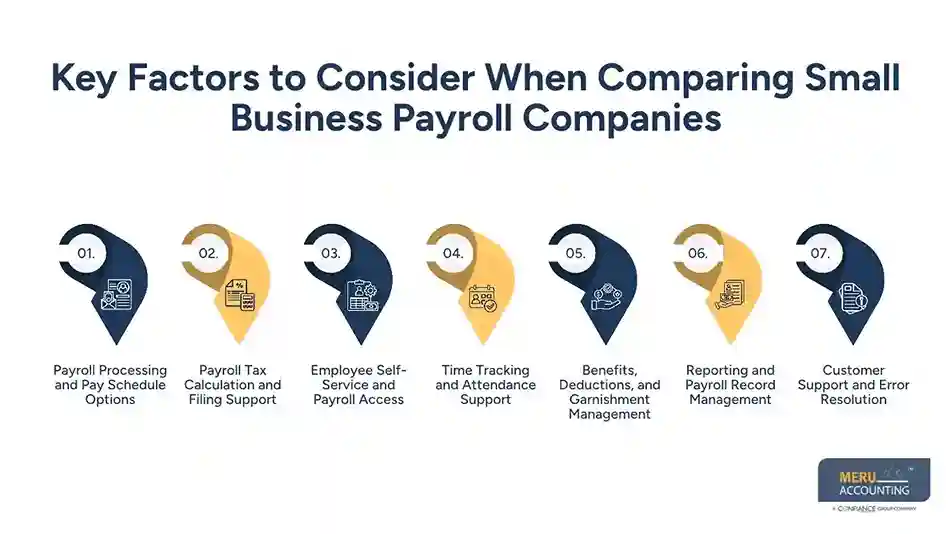
5. Benefits, Deductions, and Garnishment Management
Some firms need help with health plan costs, retirement savings, and other staff deductions.
Ask if the provider can track these amounts and apply them to each pay run. If your firm has wage garnishments, check if the service can manage the set amounts and keep the right records.
6. Reporting and Payroll Record Management
Good reports help you track labor costs and plan your budget. Ask what reports are part of the plan.
Useful reports may show:
- Total gross and net pay.
- Tax withholdings and tax payments.
- Pay by staff member or team.
- Overtime and bonus costs.
- Employer tax costs.
- Paid leave and other deductions.
Also, ask how long records are kept and how you can get them if you leave the service.
7. Customer Support and Error Resolution
Payroll issues can affect staff pay, so help must be easy to reach.
Ask if support is offered by phone, email, or live chat. Check the hours and the time it takes to get a reply. Find out who will handle your account and how urgent pay issues are fixed.
How Much Do Small Business Payroll Services Cost?
The cost of payroll support can vary by staff count, pay cycle, and the work included. Many providers use a base monthly fee plus a set charge for each worker.
For example, a plan may have a flat fee of $40 per month plus $6 for each worker. For a team of 10, the total would be $100 per month before any extra fees. This is only an example; actual rates vary by provider.
Monthly Base Fees and Per-Employee Charges
Ask how the fee is set. Some firms charge per pay run, while others charge a flat monthly rate.
If you pay staff each week, a per-run fee may add up fast. Check the full cost based on your real pay schedule and team size.
Extra Fees for Tax Filing, Year-End Forms, and Setup
Some plans charge extra for tasks such as:
- Initial account setup.
- Tax form filing.
- W-2 and 1099 forms.
- Extra pay runs.
- Time tracking tools.
- Staff benefit links.
- Reports and record copies.
Ask for a full price list in writing before you sign up.
Factors That Affect Payroll Service Pricing
The main cost factors include staff count, work sites, pay types, tax needs, and the level of support. Firms with staff in more than one state may face extra costs due to local tax rules.
When you compare small business payroll companies, use the total cost for the same tasks. This gives you a fair view of which offer is the best fit.
optional anymore
on running the business
Questions to Ask a Payroll Company Before Signing a Contract
Before you pick a provider, ask clear questions about the work, fees, and terms. Here are some key ones:
- Which payroll tasks are part of the plan? Get a list of all tasks covered by the fee.
- Who files and pays payroll taxes? Check who will handle each tax task and who is liable for errors.
- Can you manage our pay schedule? Make sure the service can meet your pay dates and pay types.
- How do you fix payroll errors? Ask how fast they act and what happens if staff are paid the wrong amount.
- Can we link our current tools? Check if the service works with your time, HR, and accounting tools.
- What support can we expect? Ask about support hours, response times, and account help.
- Can we leave the service at any time? Review the notice period, exit fees, and steps to move your data.
Do not rely on verbal claims alone. Ask for a written service scope, price list, and contract terms.
Payroll Solutions for Small Businesses: How Meru Accounting Can Help
Payroll needs vary across industries, from hourly wages and overtime to bonuses, deductions, and tax records. Meru Accounting provides payroll and accounting support backed by experience across multiple industries. Our team helps small businesses manage payroll tasks with accuracy and clear records.
Our payroll services include:
- Payroll Processing: Calculate wages, overtime, bonuses, and other pay.
- Payroll Tax Support: Maintain tax records and assist with payroll tax reporting.
- Payroll Record Management: Track employee wages, deductions, and pay details.
- Payroll Reconciliation: Review payroll entries against payment records to identify errors.
- Payroll Reporting: Prepare payroll summaries for financial review and bookkeeping.
We work with your existing processes and define a clear scope based on your business needs. With Meru Accounting’s payroll solutions for small businesses, you get dedicated support for routine payroll tasks without the cost of building a full in-house team.
Our Expert Insight
One area small businesses often overlook is how unpaid payroll taxes and employee deductions affect their books. A paycheck may be issued on time, but the related tax payments and benefit deductions may still be due. If these amounts aren’t recorded as liabilities, payroll expenses and cash balances can be misleading.
We recommend reconciling payroll reports with the general ledger each month. Check gross wages, employer payroll taxes, employee withholdings, benefit deductions, and net pay separately. This helps catch duplicate entries, missing liabilities, and differences between payroll records and bank activity.
A payroll provider may process every paycheck correctly, but your books still need to reflect the full cost of payroll.
Key Takeaways
- Compare service scope, not just the monthly fee.
- Check tax filing, tax payments, and year-end form support.
- Make sure the provider can meet your pay dates and staff needs.
- Review data safety, staff access, and report options.
- Ask how errors are found and fixed.
- Read all fees and exit terms before you sign a contract.
- Choose a provider that can support your firm as it grows.
FAQs
Many providers support state and local tax calculations and filings, but coverage varies. Confirm that the provider supports every state and locality where your employees work.
Yes. Depending on the issue, the provider may process an off-cycle payment, void a check, or make an adjustment in the next pay run. Ask how corrections are handled and whether extra fees apply.
Payroll software is useful if you want to manage pay runs in-house. A payroll company is a better fit if you want outside help with processing, tax tasks, and payroll records.
Some providers support final pay calculations, unused vacation payouts, and termination records. Final paycheck deadlines vary by state, so confirm that the provider can meet the rules where your employees work.
You should be able to obtain employee records, pay history, tax filings, and year-to-date wage details. Get a copy before closing your old account so the new provider can set up accurate records.
optional anymore
on running the business