Payroll tax management requires more than paying tax on time. Businesses must check staff details, calculate tax due, file returns, and keep clear proof of each payment. A small error can lead to extra costs, missed deadlines, or a tax notice. A clear process makes each step easier to check and keeps payroll records in an organized order.
As a business grows, payroll tax management can become harder to handle. More staff, new work sites, and changes in tax rules can raise the risk of errors. Some firms use outsourced payroll tax services to manage complex tasks, while others keep the work in-house with clear rules and regular checks.
What You Will Learn From This Blog
- How payroll tax management keeps tax data, filings, and payments in order.
- How to meet tax deadlines and check tax amounts before payment.
- How to store staff tax records in a safe place and limit access.
- How to set clear checks for payroll changes, tax returns, and bank payments.
- When outsourced payroll tax services may suit your business needs.
What is Payroll Tax Management and Why Does It Matter?
Payroll tax management is the process of working out, withholding, reporting, paying, and recording taxes linked to staff wages. The rules depend on the country, state, and local area where a business has tax duties.
Effective payroll tax management keeps wage reports, tax returns, and payment records in line. It also gives finance teams a clear way to spot errors and show proof of compliance. For U.S. employers, the IRS sets rules for federal employment tax reports, deposits, and records.
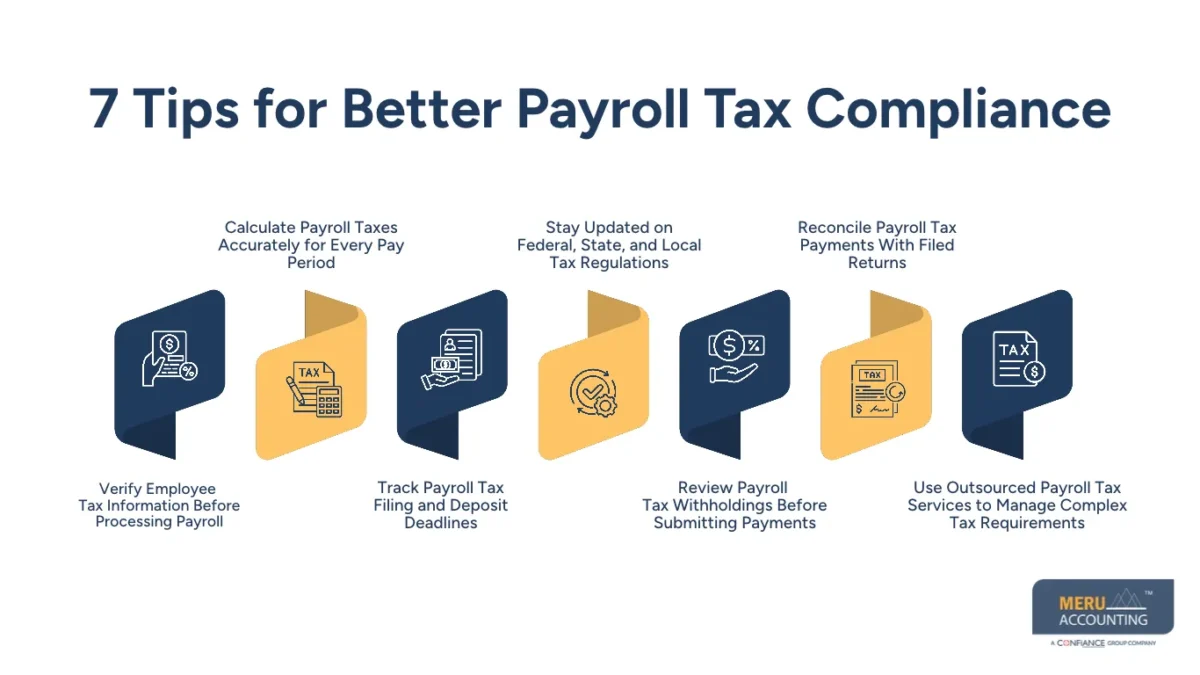
7 Tips for Better Payroll Tax Compliance
Verify Employee Tax Information Before Processing Payroll
Check each worker’s name, tax ID, address, and tax forms before the first pay run. Ask staff to report changes and keep proof of each update.
Calculate Payroll Taxes Accurately for Every Pay Period
Effective payroll tax management requires current tax rates and accurate pay data to calculate the amount due for each pay period. Review overtime, bonuses, benefits, and other pay items, as these can change the amount to withhold.
Track Payroll Tax Filing and Deposit Deadlines
Keep a shared calendar of tax filing dates, payment dates, and report due dates. Assign a person to each task and set alerts before the deadline.
Stay Updated on Federal, State, and Local Tax Regulations
Review official tax agency updates and check which rules apply to each work site. Update payroll settings when a new rate or rule takes effect, rather than relying on old data.
Review Payroll Tax Withholdings Before Submitting Payments
Effective payroll tax management requires businesses to compare tax totals in payroll reports with the amounts due before sending payments. Check unusual changes, missing deductions, and large gaps between pay periods.
Reconcile Payroll Tax Payments With Filed Returns
Match tax returns with payroll reports, payment receipts, and entries in the accounts. If the amounts do not match, find the cause and record the steps taken to fix the error.
Use Outsourced Payroll Tax Services to Manage Complex Tax Requirements
Businesses with staff in many locations may use outsourced payroll tax services for tax calculations, filing, and payment tracking. Before hiring a provider, check its scope, review steps, data safety rules, and terms for fixing errors.
7 Tips for Secure Payroll Tax Records
Store Payroll Tax Records in a Secure, Centralized System
Keep tax forms, wage reports, returns, and payment proof in one approved system. A central record set makes files easier to find and improves payroll tax management by lowering the risk of lost or mixed records.
Restrict Access to Sensitive Employee Tax Information
Give access only to staff who need tax data for their work. Review access when staff change roles or leave the firm, and remove rights that are no longer needed.
Use Multi-Factor Authentication for Payroll Systems
Require a second check when users sign in, such as an app code or security key. This adds a layer of safety if a password is stolen or shared by mistake.
Encrypt Payroll Tax Files During Storage and Transfer
Use approved tools that protect files while stored and when sent to other systems. Avoid sending staff tax details through personal email or open file-sharing links.
Maintain Regular Backups of Payroll Tax Records
Back up records on a set schedule and keep a protected copy apart from the main system. Test file recovery to check that records can be restored after a system fault or cyberattack.
Set Clear Record Retention and Secure Disposal Policies
Write down how long each type of record must be kept under the laws that apply. For U.S. federal employment tax records, the IRS generally requires at least four years of retention; other rules may apply to some records.
Monitor Payroll System Access and Record Changes
Keep logs of sign-ins, data edits, tax changes, and file exports where possible. Review unusual activity and record who made each key change, when it took place, and why.
7 Tips for Stronger Payroll Internal Controls
Separate Payroll Preparation, Approval, and Payment Duties
Avoid giving one person full control over payroll setup, tax review, and payment release. If the team is small, ask an owner or outside reviewer to check key steps before funds leave the bank.
Require Approval for Payroll Changes and Tax Adjustments
Set a rule that changes to pay rates, tax details, bank data, and tax entries need proof and approval. Keep the request, approval, and date on file so the team can trace each change.
Reconcile Payroll Registers With Tax Liabilities and Bank Records
Compare payroll totals with tax amounts in the accounts and sums paid from the bank. Check each gap and record how the team fixed it.
Review Payroll Reports Before Tax Filing and Deposits
Ask a second person to check payroll totals, tax withholdings, and payment amounts before filing. This review can catch duplicate entries, missing staff, and sums that differ from past periods.
Establish Clear Procedures for Payroll Tax Corrections
Document payroll tax management procedures covering how staff reports errors, who approves corrections, and how records must be changed. Keep the old entry, corrected amount, and reason for the change.
Conduct Regular Payroll Audits and Compliance Reviews
Check a sample of payroll runs, tax filings, and payment records each month or quarter. Record each finding, name the person who must fix it, and set a due date.
Document Internal Controls and Review Them Periodically
Documenting payroll checks, tax filing, payment approval, and record storage strengthens payroll tax management and keeps internal procedures consistent. Review these rules when the firm adds staff, changes payroll software, or enters a new state.
optional anymore
on running the business
Common Payroll Tax Management Mistakes Businesses Should Avoid
- Using Old Tax Rates: Review official tax updates before making changes to payroll settings.
- Missing Due Dates: Use a tax calendar with named owners and early alerts.
- Keeping Poor Records: Save reports, returns, payment proof, and correction notes in one approved system.
- Giving One Person too Much Control: Add a second review for key payroll and tax steps.
- Ignoring Small Gaps: Match payroll reports, tax returns, and bank records on a set schedule.
- Relying Only on Software: Check the data entered and reports produced, as wrong inputs can lead to wrong tax amounts.
How to Build Strong Internal Controls for Payroll Tax Management
Start by listing each step, from collecting staff data to filing returns and paying tax. Name the person who prepares, checks, and approves each task, and keep proof that each step took place.
Next, set a review plan for tax reports, system access, and payment records. Strong payroll tax management makes errors easier to spot, corrections easier to trace, and duties clear to every person involved. Firms that lack staff or tax skills can assess outsourced payroll tax services as one way to assign routine tasks to an outside provider while retaining oversight.
How to Measure the Effectiveness of Your Payroll Tax Process
- Track Late Filings: Record missed filing dates and late tax payments each month to find gaps in deadline management.
- Measure Tax Errors: Count errors in tax calculations, withholdings, and payments to check the accuracy of payroll tax management.
- Review Payroll Corrections: Track how often payroll reports need changes after approval and identify the cause of each error.
- Check Reconciliation Gaps: Compare payroll reports, tax returns, and payment records to find and resolve differences.
- Measure Resolution Time: Record how long the team takes to fix each issue and check whether similar errors occur again.
- Set Clear Improvement Goals: Use monthly review results to improve data checks, tax settings, filing schedules, and internal controls.
Meru Accounting’s Payroll Services for Better Tax Compliance
Managing payroll taxes requires accurate wage records, timely reports, and regular checks. Meru Accounting provides payroll, bookkeeping, tax-related, and financial reporting services to help businesses maintain clear records and manage payroll tasks.
- Payroll Processing and Tax Records: Keep wage data, payroll reports, and tax records organized for review and reporting.
- Payroll Reconciliation: Compare payroll reports with tax liabilities and payment records to find and resolve differences.
- Payroll Tax Compliance: Track filing dates, review tax records, and follow the rules that apply to your business.
- Secure Record Management: Apply clear procedures for handling employee tax data and restricting access to sensitive files.
- Financial Reporting: Keep payroll entries aligned with accounting records for accurate financial reports.
Meru Accounting can review your existing payroll process and identify gaps in recordkeeping, reporting, and internal controls. Our team can discuss your business needs and recommend suitable payroll services based on your current process and reporting requirements.
Our Expert Perspective
Effective payroll tax management requires accurate calculations, secure records, and clear approval rules. Businesses should review tax amounts, filing dates, and payroll reports before releasing payments. Regular checks can catch errors early and keep records ready for review.
Firms with complex tax duties may consider outsourced payroll tax services after checking the provider’s data safety rules and service terms. Regular reviews keep payroll processes in line with changing tax rules and business needs.
Key Takeaways
- Check staff tax details before the first pay run and update them when needed to maintain accurate payroll tax management.
- Use current tax rules and track each filing and payment date.
- Keep records in a secure system with limited access and regular backups.
- Separate payroll preparation, approval, and payment duties where possible.
- Match payroll reports, tax returns, and payment records on a set schedule.
- Review errors, document corrections, and test internal controls throughout the year.
- Review outsourced payroll tax services when tax duties become too complex for the current team.
FAQs
Businesses can improve payroll tax management by checking employee tax details, tracking filing dates, reviewing tax payments, and keeping accurate records.
The best practices include using current tax rules, checking tax calculations, meeting filing deadlines, and matching tax returns with payment records.
Businesses can secure payroll tax records by limiting access, using data encryption, enabling multi-factor authentication, and keeping regular backups.
A business should consider outsourced payroll tax services when it lacks in-house skills, manages complex tax rules, or needs help with tax filings and deadlines.
Internal controls reduce payroll tax errors by separating duties, requiring approval for changes, reviewing tax reports, and matching tax payments with filed returns.
optional anymore
on running the business