The pros and cons of tax preparation websites matter when freelancers and self-employed professionals need to file taxes without spending too much time or money. Unlike salaried workers, freelancers may earn money from many clients, pay business costs, and face tax rules that depend on how their business is set up.
Choosing the right tax tool can make filing easier, but the wrong choice may lead to errors, missed deductions, or extra costs. Online tax filing platforms let users enter income, record expenses, work out tax amounts, and submit returns online.
Some offer basic filing tools, while others include expense tracking, tax advice, and links to accounting software. Before choosing a service, freelancers should weigh its cost, features, privacy rules, and limits against their tax needs.
What You Will Learn From This Blog
- The main pros and cons of tax preparation websites for freelancers and self-employed workers.
- How online tax filing platforms handle business income, expenses, and tax forms.
- Which features matter when comparing tax tools and paid plans.
- Common tax filing errors and ways to avoid them.
- How to choose a tax service that fits your business and when to seek expert advice.
How Tax Preparation Websites Work for Self-Employed Taxpayers
Tax preparation websites guide users through a set of forms based on their income, costs, and tax status. Most ask for details about client payments, business expenses, and any tax paid during the year before they work out the tax due.
For example, a freelance designer may enter payments from five clients, add eligible costs for design software and office supplies, and review the tax summary. The final steps may include checking the return, paying any amount due, and filing it with the tax authority. The exact forms and rules depend on the country and business type, so users should check that the service fits their tax needs.
Pros and Cons of Tax Preparation Websites for Freelancers and Self-Employed Professionals
Pros
Lower Tax Preparation Costs Compared With Traditional Tax Services
When weighing the pros and cons of tax preparation websites, many tax tools cost less than hiring a tax expert to prepare a basic return. This can suit a freelancer with clear income records and a small number of business costs, though extra forms or paid features may raise the total fee.
Convenient Tax Filing From Any Location
Users can often prepare returns from home or while travelling, as long as they have a secure internet link. Online tax filing platforms also let many users work on their returns in stages instead of arranging a visit to an office.
Step-by-Step Guidance for Reporting Income and Expenses
Most tools ask clear questions about work, client payments, and business costs. This format can make tax forms less hard to follow, though users still need to enter correct details and keep proof of their claims.
Built-In Tools for Identifying Eligible Business Deductions
Some services ask about costs such as work software, supplies, and business travel. These prompts may remind freelancers of costs they can claim under the tax rules, but a prompt does not mean every cost is tax-deductible.
Faster Tax Calculations and Electronic Filing
Tax software can add income, apply its built-in rules, and flag some missing fields in less time than manual work. Electronic filing may also reduce the need to print and post forms, where the local tax authority accepts online returns.
Easy Access to Digital Tax Returns and Filing Records
Many services let users view past returns, save copies, and download tax summaries. Keeping these records in one place can make it easier to answer tax office questions or prepare the next year’s return, provided the files remain available and backed up.
Cons
Limited Guidance for Complex Tax Situations
A basic tool may not cover every case, such as income from more than one country, a change in business structure, or a dispute over a tax claim. Freelancers with these needs may require advice from a qualified tax professional.
Risk of Errors From Incorrect Data Entry
Software can calculate figures from the data entered, but it cannot always know when a user has missed income or listed a personal cost as a business expense. A wrong figure can lead to an incorrect return even when the software works as designed.
Additional Fees for Self-Employment Tax Features
A low-cost plan may cover only simple returns, while business income forms, state returns, or expert review may cost extra. Users should compare the full price before paying, rather than choosing a service based on its opening offer.
Difficulty Handling Multiple Income Sources and Business Expenses
Freelancers may earn from client work, online sales, contract jobs, and other sources. If the service has weak tools for sorting these records, users may need to check figures by hand or keep separate accounts to avoid missed or duplicate entries.
Limited Access to Personalized Tax Planning
Automated tools tend to focus on preparing a return rather than giving advice for future business choices. A freelancer who plans to hire staff, buy costly equipment, or change their business structure may need tailored advice on the tax impact.
Data Security and Privacy Concerns
Tax returns contain private details about income, identity, bank accounts, and business activity. Before using a service, users should review its privacy policy, account security options, data storage rules, and process for dealing with a data breach.
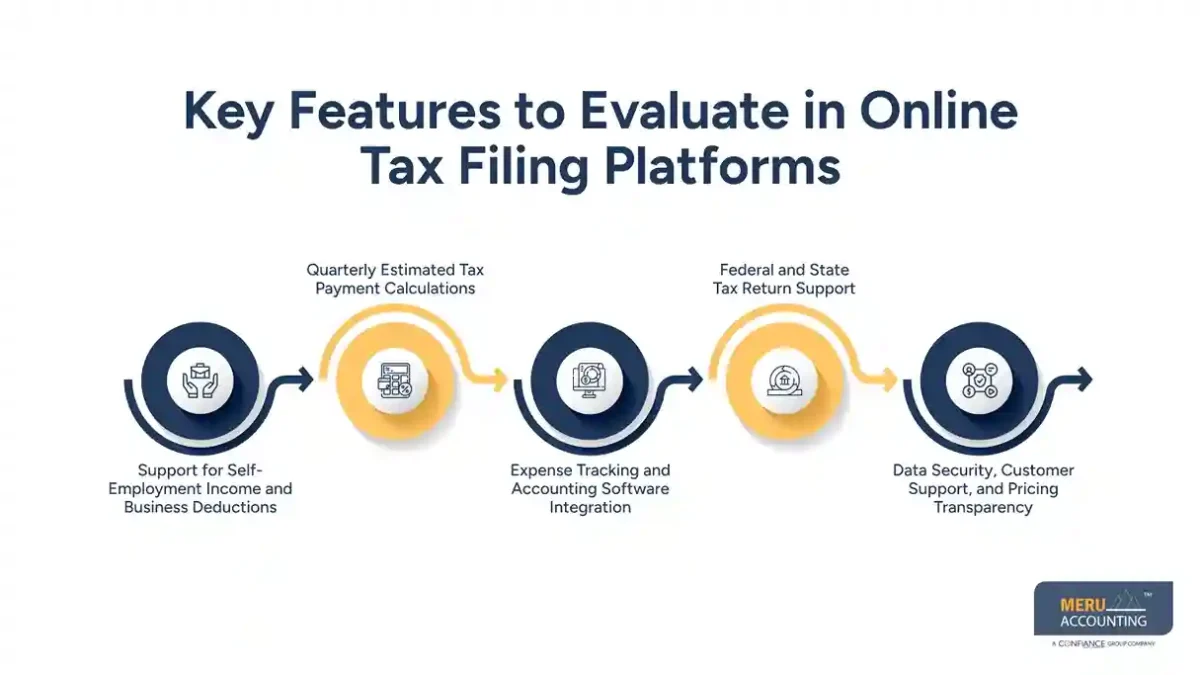
Key Features to Evaluate in Online Tax Filing Platforms
Support for Self-Employment Income and Business Deductions
Check whether the service can report freelance income, business costs, and the tax forms required for your type of work. Online tax filing platforms should also explain what records you need to keep and which claims may need extra proof.
Quarterly Estimated Tax Payment Calculations
Some self-employed workers must pay tax during the year rather than wait until the final return. Look for tools that estimate these payments and show the dates that apply to your case, then check the figures against official tax guidance.
Expense Tracking and Accounting Software Integration
Links with accounting tools can reduce repeated data entry and make it easier to match income with business costs. Check which apps the service connects with and whether you can review imported figures before they enter the return.
Federal and State Tax Return Support
In the United States, freelancers may need both federal and state returns, depending on their situation. Confirm that the plan covers the states and forms you need, as some services charge extra for each state return.
Data Security, Customer Support, and Pricing Transparency
Review the service’s security controls, ways to reach customer care, and full fee list. A clear price, useful help options, and access to saved records matter when a tax question comes up near a filing deadline.
Common Tax Filing Mistakes Freelancers Should Avoid
Missing Deductible Business Expenses
Freelancers may forget costs for software, supplies, business travel, or other eligible work needs. Keep receipts and check the tax rules before claiming each expense, as personal costs may not qualify.
Misreporting Income From Multiple Clients
A freelancer may receive money through bank transfers, payment apps, and online work sites. Match these records with invoices and tax forms so that all income is reported once and no payment is left out.
Overlooking Self-Employment Tax Obligations
In the United States, self-employed people may owe income tax as well as Social Security and Medicare taxes. Tax preparation websites should make these amounts clear, but users must still check their own tax duties.
Missing Estimated Tax Payment Deadlines
Some freelancers must pay estimated taxes during the year. Set reminders for the dates that apply to your tax year and check each payment against official guidance to avoid a possible penalty.
Filing Without Reviewing Tax Forms and Supporting Records
Never submit a return just because the software shows no errors. Compare the final figures with invoices, bank records, expense receipts, and tax forms, then save a copy of the filed return and its confirmation.
optional anymore
on running the business
How to Choose the Right Tax Preparation Website for Your Business
Assessing Business Structure and Tax Filing Needs
Start by listing your income sources, business costs, location, and business type. A sole proprietor with a few clients may need fewer features than a business owner with staff, overseas income, or several business activities.
Comparing Free and Paid Tax Preparation Plans
Compare the full cost of each plan, including state returns, business income forms, and expert review. The pros and cons of tax preparation websites become clearer when you compare the final price with the work you would otherwise do yourself.
Checking Software Features and Professional Assistance Options
Choose a service that covers the forms you need and gives clear answers when you face a tax question. Online tax filing platforms may offer live expert help, but check whether the fee includes advice or only basic technical support.
Reviewing Security Policies and Customer Feedback
Read the privacy policy, check for multi-factor authentication, and look at how the service stores your records. Reviews can show common issues with fees or customer care, but do not rely on ratings alone when choosing a tax tool.
Meru Accounting’s Services for Freelancers and Self-Employed Professionals
Managing income, business costs, and financial records can take time away from client work. Meru Accounting provides accounting and financial services that meet the day-to-day needs of freelancers and self-employed professionals.
- Accounting Services: We manage business accounts, track income and expenses, and maintain accurate financial records.
- Bookkeeping Services: Our team records transactions, reconciles bank accounts, and keeps your books up to date.
- Payroll Services: We handle payroll processing, wage records, and payroll-related tasks for businesses with employees.
- Accounts Payable and Receivable: At Meru Accounting, we manage records of supplier bills and client payments to keep track of money due and received.
- Financial Reporting: We prepare reports that show your business income, expenses, and financial position.
- Tax-Related Accounting Services: We organize financial records and provide accounting assistance for tax preparation based on your business needs.
At Meru Accounting, we offer these services to keep your financial records organized and your accounts up to date. Our team works with software such as QuickBooks, Xero, Zoho Books, NetSuite, and Odoo to manage business accounts and financial data.
Our Expert Perspective
Tax preparation websites are most useful when a freelancer has a clear record of income, expenses, and tax payments. The key issue is not just choosing the right software; it is knowing whether the figures entered match invoices, bank records, and eligible business costs.
At Meru Accounting, we believe freelancers should compare the limits of a tax tool with their actual filing needs. If income comes from several clients, expense records are incomplete, or a tax claim is unclear, a review by a qualified tax professional can reduce the risk of filing errors and missed tax duties.
Key Takeaways
- Compare the pros and cons of tax preparation websites before choosing a plan.
- Check that the service covers your income sources, business costs, and required tax forms.
- Read the full price list to find extra fees for business features or state returns.
- Keep invoices, receipts, bank records, and tax forms in an orderly place.
- Review every figure before submitting your return.
- Seek qualified tax advice when your business, income, or tax duties are complex.
FAQs
Tax preparation websites offer lower costs and easy filing, but may have extra fees, limited tax advice, and risks from incorrect data.
The best tax preparation website covers self-employment income, business deductions, required tax forms, and expert help within your budget.
Yes, many online tax filing platforms can report freelance income and eligible business expenses, but users must check all entries for accuracy.
Tax preparation websites often cost less for simple returns, while complex tax cases may need paid expert advice or professional tax services.
Freelancers should consider a tax professional when they have complex tax rules, income from several sources, overseas earnings, or questions about business deductions.
optional anymore
on running the business