A job needs 200 metal parts, but the storekeeper issues enough steel for 230. No one logs the extra use, and the finance team ends the month using the planned amount. The job is done, but the stock count and product cost are wrong. If this happens across many jobs, it can affect buying plans, sale prices, and reported profit. This is why manufacturing inventory management is more than a stock count.
It links the goods a plant buys, the stock workers use, the work still in progress, and the goods sold. It also gives the accounts team the data needed to work out the cost of goods manufactured (COGM) and the cost of goods sold (COGS).
The goal is not to keep every shelf full. It is to hold the right stock, log costs with care, and show where money goes. Effective inventory control for manufacturing makes these tasks part of daily work, not just a task for month-end.
What You Will Learn From This Blog
- How manufacturing inventory management affects material costs, cash flow, and profit.
- How raw materials, work in progress, and finished goods differ.
- Seven ways to improve inventory control for manufacturing.
- How to work out COGM and COGS with simple formulas.
- How stock data leads to better cost reports.
- How stock value affects reported costs.
- Which common stock errors lead to loss and wrong cost reports.
What is Manufacturing Inventory Management?
Manufacturing inventory management tracks stock from the time a firm buys it to the time it becomes a finished good and is sold. It logs raw stock received, used, returned, and held. It also tracks work in progress (WIP), which may include raw stock, direct labor, and a fair share of factory costs tied to goods not yet done. Once goods pass quality checks, staff log the units made and their costs.
Effective manufacturing inventory management links purchase orders, supplier bills, delivery notes, stock issue slips, job records, and accounts data. Matching these records can show short deliveries, double entries, and stock gaps. It also helps the accounts team work out true product costs and draw up sound reports based on stock use and valid factory costs.
How Manufacturing Inventory Management Affects Material Costs and Profit
A plant can sell more goods and still earn less if it fails to track stock use, waste, and costs. Effective manufacturing inventory management gives managers facts they can use before small losses grow.
Lower Material Waste
Suppose a firm that makes wood goods plans to use 12 boards for a batch but uses 15. A record of the gap and its cause may show poor cut plans, damaged wood, or wrong sizes.
Fewer Production Delays
A low-cost part can hold up a costly job if it is out of stock. Accurate stock data tells buyers when to order and gives the team time to plan for late supply.
Better Cash Flow
Stock that sits unused ties up cash that could pay wages or bills. Inventory control for manufacturing links order size to need, which cuts the risk of buying goods the plant will not use soon.
More Accurate Product Costs
If a plant logs planned stock use instead of actual use, a product may seem cheaper than it is. Correct records give managers a sound base for setting prices and checking profit margins.
Clearer Profit Reports
Closing stock affects COGS and gross profit. Manufacturing inventory management links stock value to buy and make records, so the team can explain monthly results with ease.
Key Types of Inventory in Manufacturing: Raw Materials, WIP, and Finished Goods
One stock total cannot show what a plant owns or how much cash is tied up in work. Inventory control for manufacturing classifies stock into defined categories, helping managers track material costs and monitor production status.
Raw Materials
Raw materials are items used to make goods, such as steel, wood, flour, or cloth. Their value enters the cost of a job when staff issue and use them.
Work in Progress
WIP means goods that are partly made but not yet done. Its value may include raw stock, direct labor, and a share of factory costs.
Finished Goods
Finished goods are items that are ready for sale. Their recorded cost moves to COGS when the goods are sold.
Maintenance and Factory Supplies
Oil, cleaning goods, and spare parts keep tools and work areas in good shape. The way these costs are logged depends on how the firm uses the goods and its set rules.
Goods in Transit
Manufacturing inventory management tracks goods sent by a supplier but not yet at the plant, as well as goods moved between sites. Before adding them to stock value, the team must check who owns them and the date of the report.
optional anymore
on running the business
7 Best Practices for Inventory Control for Manufacturing
A stock system works well only when staff enter data on time and check it often. These steps make inventory control for manufacturing part of daily plant work.
Track Raw Material Use and Costs
Log each stock issue against a job, product, or batch as part of manufacturing inventory management. Compare actual use with the planned amount, then check any gap instead of just changing the stock count.
Set Reorder Points and Safety Stock Levels
Use demand, supplier lead times, and past use to set reorder points. Keep extra stock for items that could stop work if they run out, but avoid large buys without a clear need.
Track Work-in-Progress Stock
Check open jobs and batches at set times. A job that stays open for weeks may point to missing parts, machine faults, poor plans, or records that need an update.
Cut Scrap, Waste, and Material Gaps
Compare planned stock use with actual use and log why the amounts differ. Split normal waste from high or odd losses so managers can focus on issues that need action.
Use Cycle Counts to Keep Stock Records Right
Count chosen items throughout the year instead of relying only on an annual stock count. Check costly and fast-moving items more often, then find the cause of any gap before changing the records.
Link Buying With Production Plans
Share job plans, stock levels, and supplier lead times with buyers to improve manufacturing inventory management. This form of inventory control for manufacturing can cut rush orders, excess stock, and delays in work.
Check Stock Turnover and Slow-Moving Goods
Check which items sell or get used often and which sit unused for long periods. Decide if slow-moving stock can be used in future jobs, sent back to a supplier, or written down under the rules that apply.
How to Calculate COGM and COGS in Manufacturing
COGM shows the cost of goods made and finished in a set period. COGS shows the recorded cost of goods sold in that period. Manufacturing inventory management links both figures to stock changes and job costs.
Work Out Direct Materials, Direct Labor, and Factory Overhead
Direct materials are stock that can be traced to a product. Direct labor covers pay for work done to make it. Factory overhead covers various plant costs, such as machine wear and power used in the factory.
Formula:
Total Manufacturing Cost = Direct Materials Used + Direct Labor + Manufacturing Overhead
For example, a plant logs ₹2,00,000 in direct materials, ₹1,00,000 in direct labor, and ₹50,000 in overhead. Its total cost is ₹3,50,000.
Work Out the Cost of Goods Manufactured (COGM)
COGM shows the cost of goods made and finished in a set period. Manufacturing inventory management tracks work-in-progress (WIP) balances at the start and end of the period to calculate the cost of completed goods accurately.
Formula:
COGM = Opening WIP + Total Manufacturing Cost − Closing WIP
If opening WIP is ₹40,000, total manufacturing cost is ₹3,50,000, and closing WIP is ₹60,000, COGM is ₹3,30,000.
Work Out the Cost of Goods Sold (COGS)
COGS shows the recorded cost of finished goods sold in a set period. The figure takes account of opening and closing stock of finished goods.
Formula:
COGS = Opening Finished Goods + COGM − Closing Finished Goods
If opening finished goods are ₹80,000, COGM is ₹3,30,000, and closing finished goods are ₹70,000, COGS is ₹3,40,000.
These are simple examples. Real reports may need changes for stock write-downs, odd losses, and other items under the rules that apply to the firm.
7 Ways to Improve COGM/COGS Reporting Through Manufacturing Inventory Management
A cost report can look right but still be wrong if job records are not complete. Manufacturing inventory management links stock data with account checks so that reported costs match the work done.
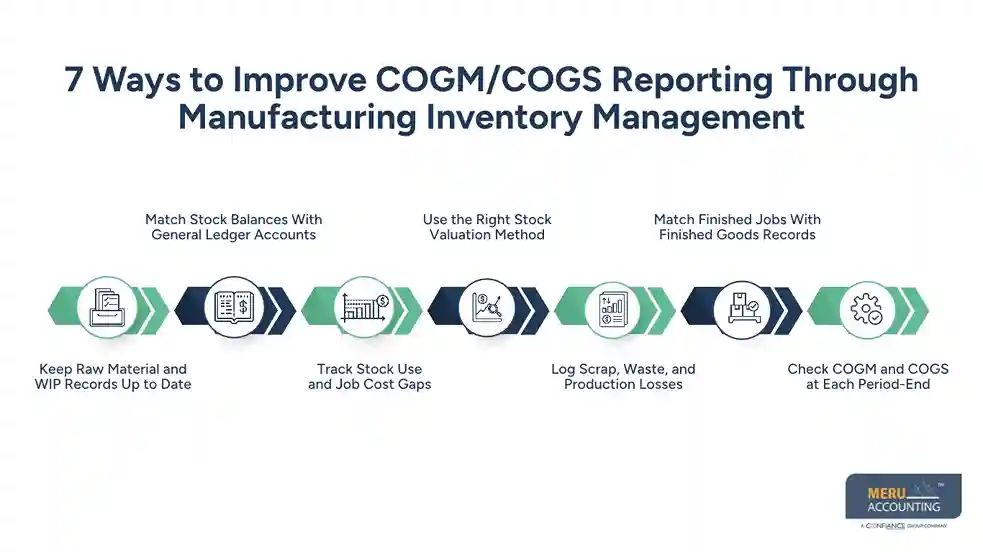
Keep Raw Material and WIP Records Up to Date
Log stock issues, returns, units made, and open jobs in the right period. Effective inventory control for manufacturing keeps these records current and helps teams assign costs to WIP or finished goods correctly.
Match Stock Balances With General Ledger Accounts
Compare stock reports with stock accounts in the general ledger. Check gaps caused by missing entries, double bills, date errors, or wrong account codes.
Track Stock Use and Job Cost Gaps
Compare actual costs with planned or set costs. Check price and use gaps to spot supplier price rises, low output, and stock record errors.
Use the Right Stock Valuation Method
Use a valid method, such as FIFO or weighted average, under the rules that apply. Manufacturing inventory management must follow a clear policy and use it in a steady way.
Log Scrap, Waste, and Production Losses
Log damaged goods, scrap, and job losses with clear reasons and proof. Check large or odd losses on their own, as the rules may treat them in a way that differs from normal job costs.
Match Finished Jobs With Finished Goods Records
Move costs from WIP to finished goods only after production staff confirms that the goods are complete. Check the completed quantity and production cost before updating the inventory records.
Check COGM and COGS at Each Period-End
Check opening stock, closing stock, job costs, and sales records before closing the books. Fix odd changes and missing entries before the team signs off on the reports.
How Stock Valuation Methods Affect COGM/COGS Reporting
Stock valuation determines the cost assigned to stock on hand and goods sold. Inventory control for manufacturing keeps stock records consistent, while the valuation method affects closing stock, COGS, and gross profit when purchase prices change.
First-In, First-Out (FIFO)
FIFO means the cost of the oldest stock is first used for goods sold. When prices rise, newer stock with higher costs often stays in closing stock.
Weighted Average Cost
Weighted average sets an average cost for like stock items. It can reduce the effect of single price changes when used in the right way.
Choose a Suitable Method
The right method depends on the rules that apply, the type of stock, and the needs of the firm. Manufacturers should check which methods they can use and record their choice.
Check Stock Value
Manufacturing inventory management checks should cover damaged goods, expired stock, and items that may no longer be worth their recorded cost. Where the rules call for it, write down the stock value.
Common Manufacturing Inventory Management Mistakes That Raise Costs
Many stock issues start when staff leave tasks undone or log them too late. Manufacturing inventory management needs clear checks to stop small gaps from harming cost reports.
Late Stock Entries
Late entries may show stock as ready to use even after workers have used it. Set clear time limits for logging receipts, issues, returns, and finished jobs.
Buying Too Much Stock
Effective manufacturing inventory management prevents excess stock purchases that tie up cash and raise storage costs. Check demand, stock on hand, and supplier lead times before placing orders.
Poor WIP Tracking
Open jobs may stay in the system after work has stopped or plans have changed. Check open jobs and confirm their true status before changing the records.
Wrong Cost Allocation
Missing labor or factory overhead can make product costs look too low. Set clear rules for cost allocation and check how each product or batch gets its share of overhead.
Weak Period-End Checks
Stock moves logged in the wrong period can distort COGM and COGS. Check receipt, dispatch, job, and sales dates before closing the books.
How Meru Accounting Manages Manufacturing Costs and Stock Reports
Meru Accounting provides manufacturing inventory management through accounting, bookkeeping, and financial reporting services that link stock records with job costs and finance data. We check stock balances, job costs, and account entries to give manufacturers a clearer view of material costs and COGM/COGS reports.
Stock Account Reconciliation
We match stock balances with general ledger accounts and check gaps caused by missing entries, wrong stock values, or date errors.
Production Cost Review
Our team reviews direct material costs, labor costs, and valid factory overhead to give manufacturers a clear view of the cost to make goods.
COGM and COGS Reporting
We prepare and review COGM and COGS reports by checking opening stock, job costs, goods made, and closing stock records.
Period-End Bookkeeping
Our bookkeeping services include checks on stock entries, supplier bills, and period-end changes to keep accounts right and ready for reports.
Our Expert Perspective
Manufacturing inventory management can show which jobs use too much stock before month-end. Each week, managers can check key materials and jobs, compare planned use with actual use, and log the cause of large gaps. Meru Accounting recommends linking these checks with monthly stock reviews so owners can act on cost issues before they affect prices and profit reports.
Key Takeaways
- Manufacturing inventory management starts with tracking raw materials, WIP, and finished goods as separate stock groups.
- Log stock use and finished jobs in the right period.
- Set reorder points based on demand, lead time, and supply risk.
- Check waste and job cost gaps on a set schedule.
- Use the COGM formula to find the cost of goods made and finished.
- Use the COGS formula to find the cost of goods sold.
- Follow valid stock valuation rules under the right accounting framework.
- Match stock records with the general ledger at each period-end.
- Check slow-moving stock and review odd changes in stock value.
- Keep clear records of stock counts, cost changes, and job losses.
FAQs
Manufacturing inventory management controls material costs by tracking stock use, cutting waste, limiting excess buys, and checking job costs.
Add opening WIP to total manufacturing costs, then subtract closing WIP to work out COGM.
COGM shows the cost of goods made and finished in a period, while COGS shows the recorded cost of finished goods sold.
Key steps include tracking stock use, setting reorder points, counting stock, checking WIP, and reviewing slow-moving goods.
Methods such as FIFO and weighted average affect closing stock value, COGS, and gross profit when buy prices change.
optional anymore
on running the business