
Meru Accounting

7 Ways a Real Estate Tax Expert Can Help Maximize Investment Returns

Contents
Looking for Reliable Accounting Support?

Let our experts help you simplify accounting, manage compliance and focus on growing your business.

    7 Ways a Real Estate Tax Expert Can Help Maximize Investment Returns

    A real estate tax expert can help property investors lower eligible tax costs, manage rental income, and plan property sales with greater care. Real estate investments involve many costs, and poor tax planning can reduce the profit an investor keeps after tax. A clear tax plan can make these costs easier to track and manage.

    A real estate tax expert reviews property records, checks eligible deductions, and explains tax rules that apply to each investment. The right plan also considers future tax bills, not just current savings. Investors with several properties may also consider Outsourced real estate tax preparation to manage records and tax work more efficiently.

    What You Will Learn From This Blog

    • How a real estate tax expert reviews deductions and depreciation.
    • Ways to plan for tax on rental income and property sales.
    • How Outsourced real estate tax preparation can reduce routine work.
    • Common tax errors that can affect investment returns.
    • How to choose a tax professional for your property portfolio.

    Key Roles and Responsibilities of a Real Estate Tax Expert

    Review Property Income and Costs

    A real estate tax expert checks rental income, repair bills, insurance, loan interest, and other costs. Clear records make it easier to report income and claim eligible expenses.

    Check Applicable Tax Rules

    Tax rules vary by country, state, and property type. The expert reviews the rules that apply to each investment before suggesting a tax approach.

    Plan Property Sales

    A property sale may create a taxable gain. The expert reviews purchase costs, eligible improvements, sale expenses, and possible tax relief before the sale.

    Maintain Accurate Records

    Invoices, rent statements, loan records, and purchase documents provide evidence for tax claims. Good records also make tax reviews easier.

    Good financial management isn't
    optional anymore
    Meru Accounting handles the accuracy, so you can focus
    on running the business

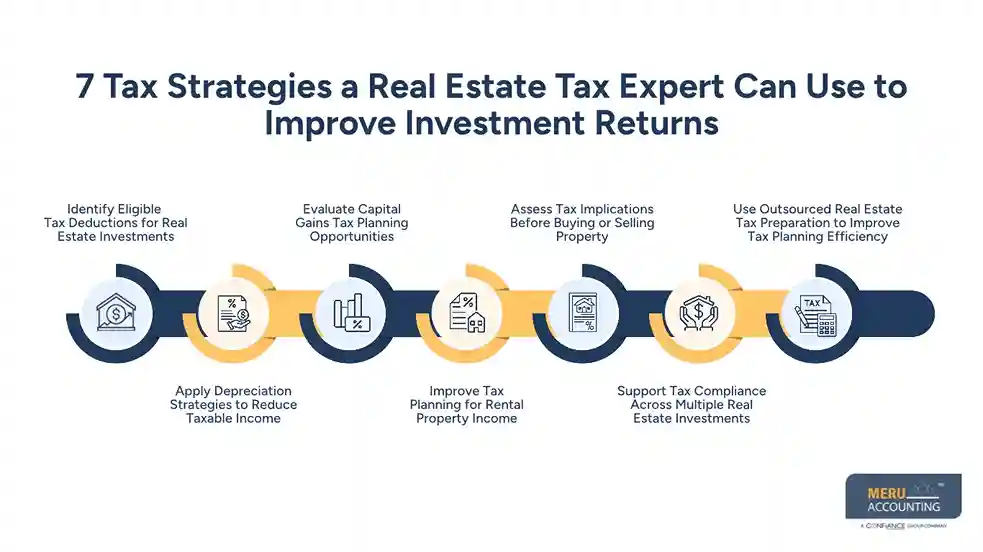
    7 Tax Strategies a Real Estate Tax Expert Can Use to Improve Investment Returns

    Identify Eligible Tax Deductions for Real Estate Investments

    A real estate tax expert reviews costs such as insurance, property management fees, repairs, and loan interest where local rules allow these claims. Proper records can prevent valid expenses from being missed.

    For example, fixing a damaged door may count as a repair, while adding a new room may need different tax treatment. Correct classification can reduce errors and protect the accuracy of a tax return.

    Apply Depreciation Strategies to Reduce Taxable Income

    A property tax expert checks whether a building or certain assets qualify for depreciation under the relevant tax rules. The expert reviews the asset cost, eligible value, and period over which the claim can be made.

    Land often receives different treatment from buildings. Investors must also consider how past depreciation claims may affect tax when the property is sold.

    Evaluate Capital Gains Tax Planning Opportunities

    A real estate tax expert reviews the likely gain from a sale and checks which costs may affect the taxable amount. Holding periods, ownership details, and local tax relief can also affect the final bill.

    Planning before a sale gives investors time to compare options. No tax rate or exemption should be assumed without checking the rules that apply to the specific property.

    Improve Tax Planning for Rental Property Income

    A property tax expert reviews rent received, eligible expenses, vacancy periods, and other costs that affect rental profit. These details give investors a clearer view of income after operating costs and taxes.

    For example, an owner of three rental homes should track income and costs for each home separately. This makes it easier to compare performance and prepare accurate tax reports.
    7 Tax Strategies a Real Estate Tax Expert Can Use to Improve Investment Returns

    Assess Tax Implications Before Buying or Selling Property

    A real estate tax professional can review purchase costs, transfer taxes, local property taxes, expected repairs, and possible tax on a future sale. These costs can change the expected return from a property.

    Before buying, investors should compare likely rental income with total costs. Before selling, they should review the expected gain and any tax duties that may arise.

    Support Tax Compliance Across Multiple Real Estate Investments

    A real estate tax expert can set up a process for tracking income, costs, tax dates, and supporting records across a portfolio. This is useful when investors own different types of property.

    Regular reviews can identify missing income, duplicate expenses, and incorrect entries before filing. Investors should keep records for each asset and confirm that all claims follow local rules.

    Use Outsourced Real Estate Tax Preparation to Improve Tax Planning Efficiency

    Outsourced real estate tax preparation allows investors to assign agreed accounting and tax preparation tasks to an outside service provider. Tasks may include sorting invoices, preparing tax schedules, and checking records for missing details.

    Outsourced property tax preparation can reduce routine work for investors with several properties. Investors should check the provider’s experience, data security, review process, and responsibility for filing before signing an agreement.

    How Outsourced Real Estate Tax Preparation Supports Real Estate Investors

    Organize Property Records

    Outsourced real estate tax preparation brings rent reports, invoices, and loan records into a clear process. This makes missing documents easier to find.

    Reduce Routine Accounting Work

    An outside team can handle agreed data entry and expense sorting tasks. Investors can spend more time reviewing property performance and future plans.

    Check Figures Before Filing

    Outsourced real estate tax preparation can include checks for duplicate costs, missing entries, and differences between reports. A qualified tax professional should still review the tax treatment and final return.

    Manage Filing Deadlines

    A set schedule for collecting records and reviewing draft returns can reduce last-minute work. Investors should confirm who approves and files each return.

    Common Real Estate Tax Planning Mistakes Investors Should Avoid

    Mixing Personal and Property Costs

    Separate accounts make it easier to identify costs linked to each property. Mixed records can lead to errors and unsupported tax claims.

    Missing Eligible Deductions

    Investors may overlook small expenses when they fail to keep receipts. Regular record checks can identify eligible costs under the relevant rules.

    Misclassifying Improvements

    Major upgrades may receive different tax treatment from routine repairs. Keep detailed invoices and ask a tax professional how each cost should be reported.

    Ignoring Future Tax Bills

    Current tax savings do not always mean lower tax over the full period of ownership. Review the possible tax impact before making major property decisions.

    How to Choose the Right Real Estate Tax Expert for Your Investment Portfolio

    Check Property Tax Experience

    Choose a professional with experience in rental income, property sales, depreciation, and portfolio reporting. Ask about work with properties similar to yours.

    Confirm Local Knowledge

    Check that the expert understands the tax laws that apply to your properties. Confirm relevant qualifications where local rules require them.

    Review Service Fees

    Ask for a clear list of included tasks and extra charges. Compare fees, experience, and review standards before choosing a provider.

    Check Data Security

    Property tax records contain private financial details. Ask how the provider stores documents, limits access, and protects shared files.

    How Tax Planning Influences Real Estate Cash Flow and ROI

    Track Cash After Tax

    A real estate tax expert can review income, eligible costs, and likely tax payments to estimate the cash left from an investment. Actual results depend on rent, expenses, and the tax rules that apply.

    Compare Property Returns

    Two properties with similar rent may have different operating costs and tax effects. Reviewing these details before purchase gives investors a better basis for comparison.

    Plan for Long-Term Costs

    Depreciation may lower taxable income now but affect the tax due on a later sale. A long-term plan considers both current claims and future tax costs.

    Meru Accounting’s Services for Real Estate Financial Management

    Meru Accounting provides bookkeeping, accounting, accounts payable and receivable, and financial reporting services for real estate investors and property businesses. Our services keep property income, expenses, vendor payments, and financial records organized.

    Rental Income and Expense Tracking

    We record rental income, maintenance costs, insurance, and property management fees based on the documents provided. Separate records help investors compare income and expenses for each property.

    Accounts Payable and Vendor Payments

    Our accounting services track contractor bills, repair costs, and other vendor payments. Investors can review unpaid bills, due dates, and property maintenance expenses.

    Bank Reconciliation and Transaction Checks

    Meru Accounting compares bank statements with recorded rental receipts, vendor payments, and other transactions. These checks can reveal missing entries, duplicate records, and payment differences.

    Property Financial Reporting

    We prepare reports showing rental income, operating expenses, outstanding payments, and net operating income. Investors can use these figures to review property performance and cash flow.

    Financial Records for Tax Preparation

    Meru Accounting organizes income records, expense details, invoices, and payment reports for tax review. These records give tax professionals a clear basis for assessing eligible deductions and preparing tax returns under applicable rules.

    Our Expert Perspective

    A real estate tax expert should review more than the current tax bill. Investors need a clear view of eligible costs, future sale plans, and the records required to support each claim.

    Outsourced real estate tax preparation can make routine work easier to manage, but it does not replace sound tax advice. Investors should ask for clear reasons behind each recommendation and confirm that it follows the rules that apply to their property.

    Key Takeaways

    • A real estate tax expert reviews eligible deductions, depreciation, rental income, and property sale costs.
    • Good records make it easier to report income and support tax claims.
    • Outsourced real estate tax preparation can reduce routine work and organize property records.
    • Investors should review both current tax savings and possible future tax costs.
    • Meru Accounting provides accounting and reporting services for property-related financial records.

    FAQs

    A real estate tax expert can review eligible deductions, depreciation, rental income, and capital gains to reduce tax costs and improve net returns.

    Real estate investors may claim eligible costs such as repairs, insurance, property management fees, and loan interest, depending on local tax rules.

    Outsourced real estate tax preparation can organize property records, reduce routine accounting work, and improve the review of tax figures before filing.

    A real estate tax expert can review the property’s adjusted cost, eligible improvements, sale expenses, and available tax relief under applicable laws.

    Real estate investors should consider hiring a tax expert before buying or selling property, managing multiple rentals, or preparing complex tax returns.

    Good financial management isn't
    optional anymore
    Meru Accounting handles the accuracy, so you can focus
    on running the business